Article
How an Alexandria Café Owner Bought a Home Without Hurting Cashflow
A real Alexandria café owner bought a home and kept their business strong. This case study shows how they protected cashflow, sized their borrowing safely, and set up buffers and loan splits you can copy this week.
Key Takeaway
This article explains how an Alexandria café owner successfully bought a home while keeping their hospitality business financially stable, by capping borrowing based on business resilience instead of maximum bank approval, protecting at least 3–6 months of business and home buffers, and using separate loan splits for personal and business purposes. It provides a worked case study, cashflow rules, and serviceability checks tailored to self‑employed borrowers. Readers get a practical checklist they can apply to their own home purchase planning this week.
Watch the short answer
Carrying ATO debt into a new financial year and your lending options
If tax debt is hanging over you, this video shows how it can shape your lending options.
Read the transcript
Carrying an ATO debt into the new financial year is the fastest way to trigger an automated bank rejection. The ATO is the most aggressive, high-interest lender you can have. Mainstream banks view tax debt as a massive red flag, but if you have equity in your home or commercial property, we can restructure that liability. Through specialised private and non-conforming lending, we consolidate that ATO debt into a manageable single-digit facility, cleaning your credit file and giving your business room to breathe. Don't let the tax office dictate your cash flow this year. DM me 'CLEAR' to unlock your equity.
General information only, not personal advice. Your situation is assessed before any recommendation.
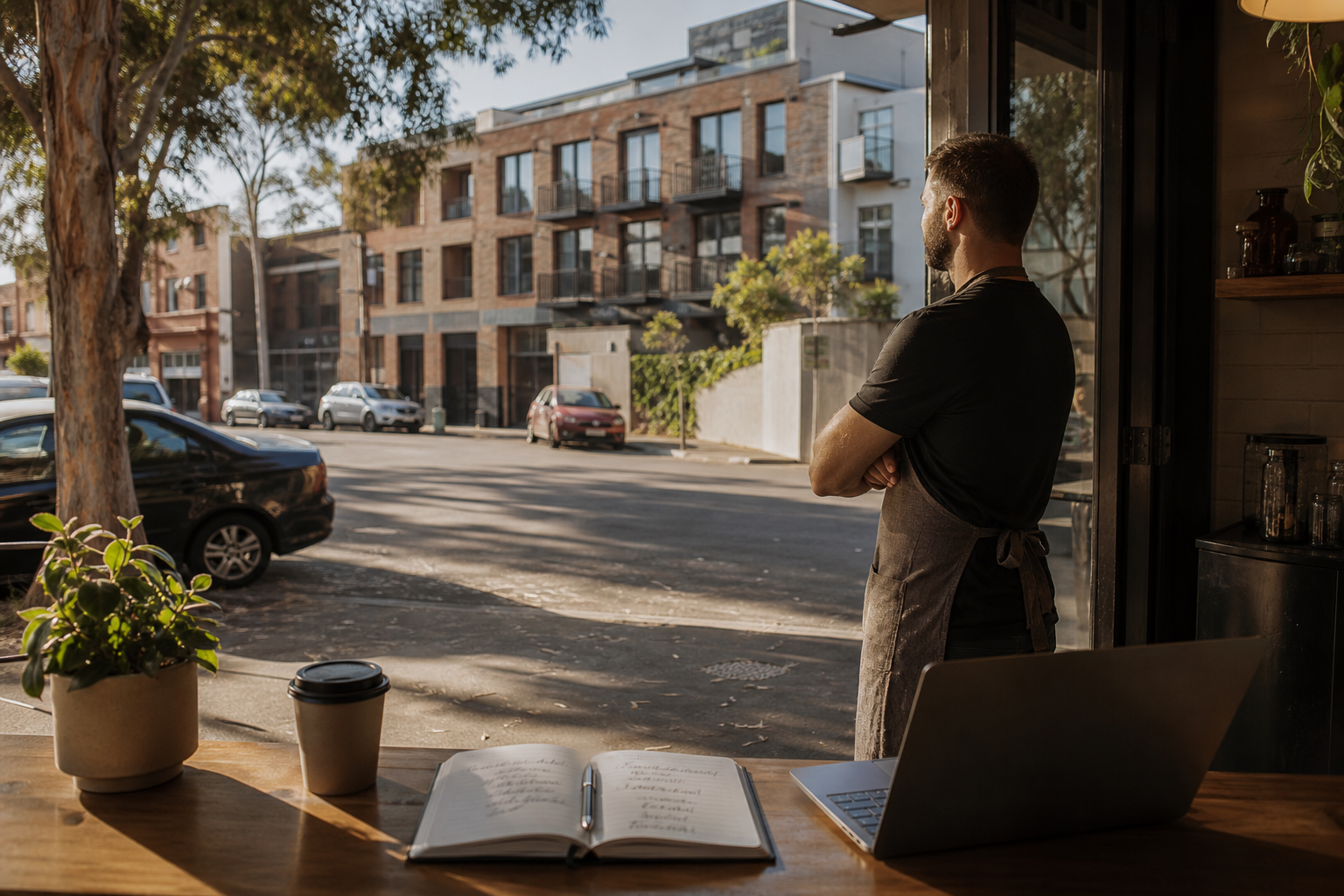
When you run a café in Alexandria, buying a home can feel impossible. Your income is lumpy, costs keep rising, and every dollar you pull out of the business feels like you’re taking it from wages or coffee beans. Yet our client – a local café owner on Henderson Road – bought a family home and kept the business strong.
The key was simple but disciplined: we sized the home loan around business resilience, not the bank’s maximum, and we protected separate buffers for home and café. You can apply the same playbook to your numbers this week.

1. The Alexandria café owner: where we started
1.1 Their situation in plain English
Our client, let’s call her Emma, runs a busy café in Alexandria. Like many hospitality owners, she was asset‑light but working incredibly hard:
- Trading for 3.5 years
- Revenue trending up, but volatile week to week
- Rising wage and supplier costs
- Renting a 2‑bed apartment with her partner and young child
Her goals:
- Buy a modest 2–3 bedroom unit in Alexandria or nearby (budget around $1.2m–$1.3m)
- Keep at least three months of business expenses in cash
- Avoid turning the home loan into a de facto business overdraft
This case study mirrors many of the themes from our Green Square café owner story at /insights/self-employed-cafe-owner-green-square-home-loan-case-study, but with slightly different numbers and decisions.
1.2 The numbers on the table
Emma’s key figures (rounded and simplified for privacy):
- Café turnover (last FY): ~$1.35m
- Net profit before owner’s wage: ~$210k
- Accountant‑recorded wage to Emma: $90k
- Additional drawings: ~$40k
- Business buffer in the bank: ~$90k (about 3 months’ overheads)
- Personal savings: $160k
- Super: modest, around $110k
Like many owners, her taxable income looked lower than her true economic income because of legitimate deductions and some conservatism in how profit was declared. That matters because lenders work off tax returns, not what you know the café really makes.
2. First principle: the business must survive a bad year
2.1 Why we didn’t chase maximum borrowing
On paper, with combined taxable income of around $160k–$170k (Emma plus partner salary), some lenders might have offered up to $1.1m–$1.2m in borrowing – especially if we stretched all assumptions.
We deliberately ignored that number.
For small‑business owners, any property strategy that materially erodes working capital or buffers can damage both business resilience and home‑loan approval odds (see /insights/rent-rentvest-or-buy-small-business-owners).
Instead, we worked backwards from this question:
“What size home loan still lets the café survive a 30–40% drop in Emma’s drawings for 6 months?”
That “dual shock” approach – a rate rise plus an income drop – echoes our guidance that self‑employed borrowers should test their gearing using both stressors at once (see /insights/rate-rise-rents-stall-gearing-strategy-australia).
2.2 The stress‑test we used
We ran a simple serviceability and stress‑test:
- Assume home loan rate of ~6.5% p.a. (illustrative only).
- Apply APRA’s 3% buffer – we test affordability at 9.5%.
- Cut Emma’s drawings by 40% for 6 months.
- Keep 3 months’ café costs in the business account untouched.
Only then did we ask: what repayment size still works?
We found Emma’s comfortable monthly repayment range was around $4,000–$4,500, not the $5,500+ that a bank model might technically support.
3. Turning a $1.3m dream into a workable structure
3.1 The target property and basic maths
Emma and her partner found a $1.25m older 2‑bed unit in Alexandria.
Indicative numbers:
- Purchase price: $1,250,000
- Stamp duty (NSW, owner‑occupier, not FHB): ~ $53,000 (approximate)
- Legals, inspections, moving: ~$7,000
- Total on‑top costs: ~$60,000
- Desired minimum personal buffer post‑purchase: $25,000–$30,000
With $160,000 in personal savings, using all of it would have:
- Left no personal buffer
- Tempted Emma to dip into café cash if anything went wrong
We refused to do that.
3.2 The safer deposit decision
We settled on this target structure:
- Cash used toward purchase + costs: ~$135,000
- Cash left as personal buffer: ~$25,000
- Loan size: approx. $1,175,000 (including LMI capitalised)
That meant borrowing at a higher LVR and wearing LMI, but keeping both household and café buffers intact. For business owners, LMI is often the lesser evil compared with stripping cash out of the business.
4. Clean financials: turning café chaos into lender‑friendly income
4.1 What lenders want from self‑employed hospitality
For a standard (full‑doc) home loan, most mainstream lenders will ask for:
- 2 years of business tax returns
- 2 years of personal tax returns
- Detailed financials, including profit and loss and balance sheet
- BAS statements and business bank statements if income is volatile
They then typically:
- Average the last 2 years’ income; or
- Take the lower year if income is falling; or
- Use the latest year if clearly trending up and supported.
Our job was to tell a clear story with Emma’s numbers: revenue trend, profit margin stability, and a sensible, regular pattern of drawings.
For more detail on how this works, see /insights/serviceability-planning-self-employed-investors-smoothing-lumpy-income.
4.2 Fixing three common problems
We worked with Emma and her accountant ahead of the application to clean up:
-
Owner’s wage vs drawings
We increased her consistent PAYG wage to reflect a more realistic base income and reduced ad‑hoc drawings. Lenders like structured income. -
One‑off equipment spend
A big one‑off espresso machine and fit‑out upgrade distorted the last year’s net profit. We prepared explanations and supporting invoices to help the lender normalise this. -
Personal expenses running through the business
Some borderline personal costs were being run through the café. With the accountant, we pulled these back or at least disclosed them clearly so the lender could see the underlying profitability.
4.3 Why we avoided alt‑doc
Alt‑doc (e.g. BAS or bank‑statement loans) can look attractive when tax returns are messy, but they usually mean:
- Higher rates
- Stricter LVR limits
- Fewer lender options
Because we had time to clean up two sets of tax returns, a full‑doc loan was safer and cheaper over the long run.
The strategy continues below
You've seen the problem and the groundwork — now unlock the exact steps our CPA-certified brokers use, including 6 more sections. Enter your email for instant, free full access.
Free access. No spam — unsubscribe anytime. Your details stay confidential.
Frequently asked questions
How long should my café be trading before I apply for a home loan?▾
Can I use my café’s cash as a home-loan deposit?▾
Is an alt-doc loan a good idea for hospitality owners?▾
How big should my household buffer be before buying a home?▾
Should I consolidate café debts into my home loan?▾
How do lenders treat my owner’s wage and drawings from the café?▾
Speak with a specialist advisor
Confidential consultation, bespoke advice for your situation.