Article
Strata Capital Works Plans: Balancing Investor Yield And Owner Lifestyle
How to prioritise strata capital works so investors, owner‑occupiers and lenders can all live with the plan – and you can vote confidently this year.
Key Takeaway
Aligning strata capital works plans with investor and owner‑occupier priorities means ranking projects by legal risk, building safety, value protection and cashflow impact, then comparing levy-only versus strata loan options using per‑lot modelling. Because strata loan affordability should be stress-tested at interest rates 2–3% higher than today, owners need scenario tables that show how levies affect yields and household budgets. The most effective committees lock in a rolling 10‑year plan, link it to tax and lending advice, and revisit priorities at least annually before voting.
Watch the short answer
Private lending isn’t always a desperation move
Wondering if private lending is only for trouble This video reframes when it can be a smart tool.
Read the transcript
Private lending isn't a desperation move. It is a sophisticated tool used by elite property investors to execute at lightning speed. When an undervalued asset hits the market, waiting months for institutional red tape means losing the deal. Private capital bypasses the standard bureaucracy, focusing purely on asset backing so you can close the transaction in days and exit cleanly later. Move faster than the market. DM me 'PRIVATE' to connect.
General information only, not personal advice. Your situation is assessed before any recommendation.
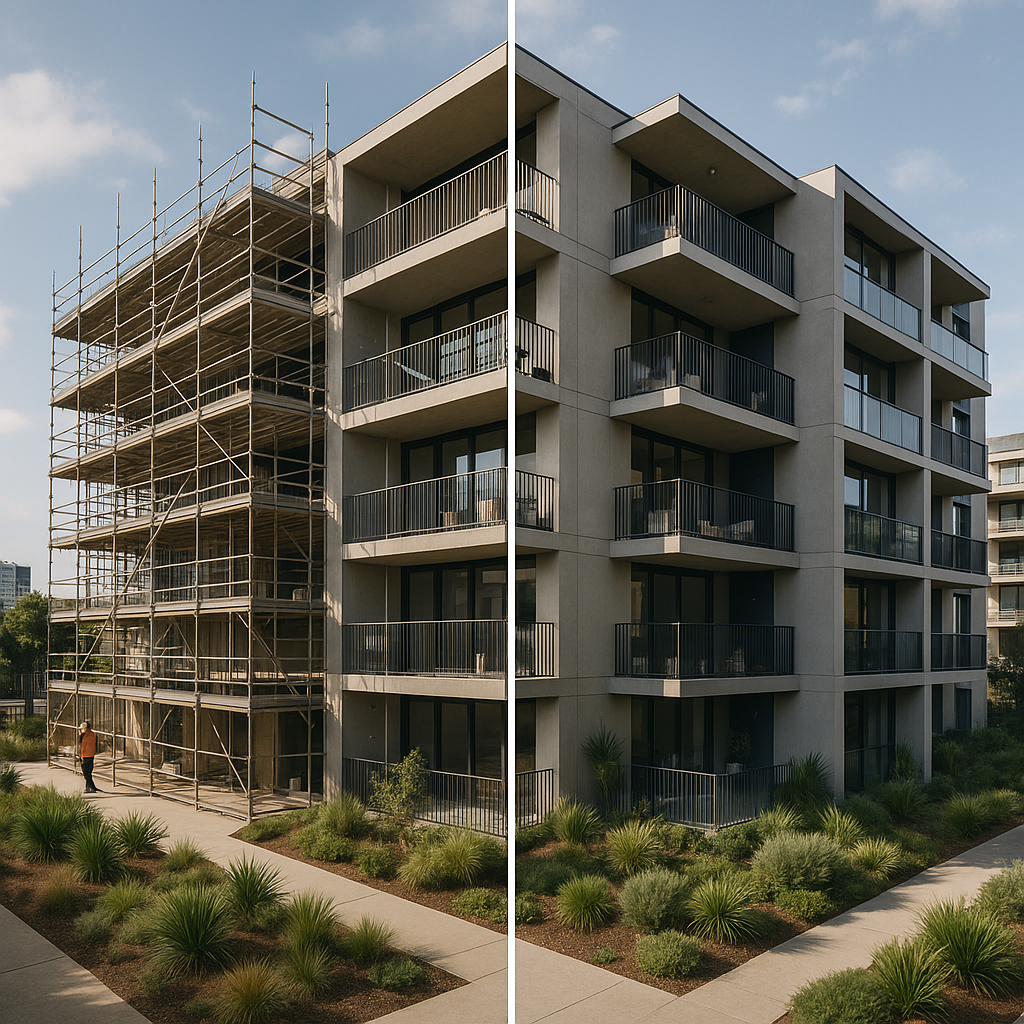
Strata capital works plans matter because they decide what gets fixed, what gets upgraded and who pays when. Aligning them with both investor and owner‑occupier priorities means ranking projects by risk, value and cashflow impact, then funding them in a way most owners can live with. If you own (or are buying) in a strata building, this is the framework to use before your next AGM or special levy vote.
In plain terms: start with safety and legal obligations, protect the asset, then argue about lifestyle and yield. For big projects, model different levy and strata loan options so you can see – in dollars per lot – what each path does to your cashflow and returns.

1. Capital works plans 101: what you’re really deciding
1.1 What is a strata capital works plan?
A capital works plan (sometimes called a sinking fund forecast) sets out:
- Major repairs and renewals (e.g. roof, lifts, waterproofing, windows)
- Compliance upgrades (fire, access, cladding, safety)
- Discretionary improvements (lobbies, gyms, EV chargers, solar)
- Estimated timing and costs, usually over 10 years or more
The plan then drives how much the owners corporation should collect in capital works levies each year.
In NSW and many other states, having a plan is mandatory for most schemes, but following it is not. That’s where the politics begins: committees constantly juggle what should happen with what owners will vote and pay for.
1.2 Different owners, different priorities
Owner‑occupiers usually care about:
- Liveability and comfort (noise, lifts that work, water tightness)
- Aesthetics and amenity (lobby, common gardens, gyms, pools)
- Safety and security (lighting, cameras, compliant balustrades)
- Predictable levies that won’t wreck the household budget
Investors usually focus on:
- Net rental yield after levies and maintenance
- Vacancy risk and tenant appeal
- Long‑term capital growth and resale
- Tax treatment of works and finance
Portfolio landlords will also ask: “If this building borrows, how does that flow through to my personal borrowing capacity and cash buffers across all properties?” (See the cashflow lens in [/insights/refinancing-3-5-property-portfolio-step-by-step-lvr-lmi-game-plan].)
1.3 Why alignment matters now
With the RBA keeping financial conditions on the tight side and Roy Morgan showing mortgage stress at multi‑year highs, a lot of owners are close to the edge. Higher levies or poorly timed special levies can:
- Push owner‑occupiers into genuine hardship
- Force investors to tip in extra cash or sell
- Trigger arrears that scare strata lenders and future buyers
Good capital works planning is less about picking a perfect upgrade list and more about sequencing and funding works so they don’t break owners’ cashflow.
2. The non‑negotiables: safety, law and building survival
Before debating lifestyle or yield, your plan needs to lock in projects that keep the building safe, legal and watertight.
2.1 Category 1: life safety and legal compliance
These are works where delay can mean:
- Breaching fire, WHS or disability access rules
- Insurer push‑back or exclusions
- Regulatory or council notices
Examples:
- Fire stairs, doors, alarms, sprinklers, hydrants
- Balcony balustrade upgrades to meet current codes
- Essential services testing infrastructure
- Serious electrical or gas safety defects
Priority rule: these sit at the top of the plan, regardless of whether owners are investors or residents.
2.2 Category 2: keep water out, keep structure sound
Waterproofing and structural works often don’t feel urgent – until they are. Left too long, they turn into:
- Large insurance claims (with rising excesses)
- Major defects litigation
- Valuation and lending issues for buyers
Examples:
- Roof membrane replacement
- Façade and window frame remediation
- Basement slab or podium waterproofing
For buyers, this is where a good strata report is critical. In suburbs like Mascot, we’ve already seen how cladding and waterproofing issues can restrict lender appetite and valuations [/insights/old-vs-new-mascot-apartments-finance-strata-resale].
2.3 Category 3: essential services and asset preservation
This bucket covers major items that keep the building functioning:
- Lifts and lift controllers
- Plumbing stacks and sewer lines
- Main switchboards and risers
- Common hot water systems
Delaying these can mean:
- Frequent breakdowns
- Higher reactive maintenance
- Tenant churn and vacancy
For investors, these works don’t always look sexy, but they protect the base asset that underpins rent and resale.
3. Where priorities diverge: lifestyle vs yield projects
Once the fundamentals are covered, you move into projects where investor and owner‑occupier preferences are often different – but can still be aligned with the right framing.
3.1 Common friction points
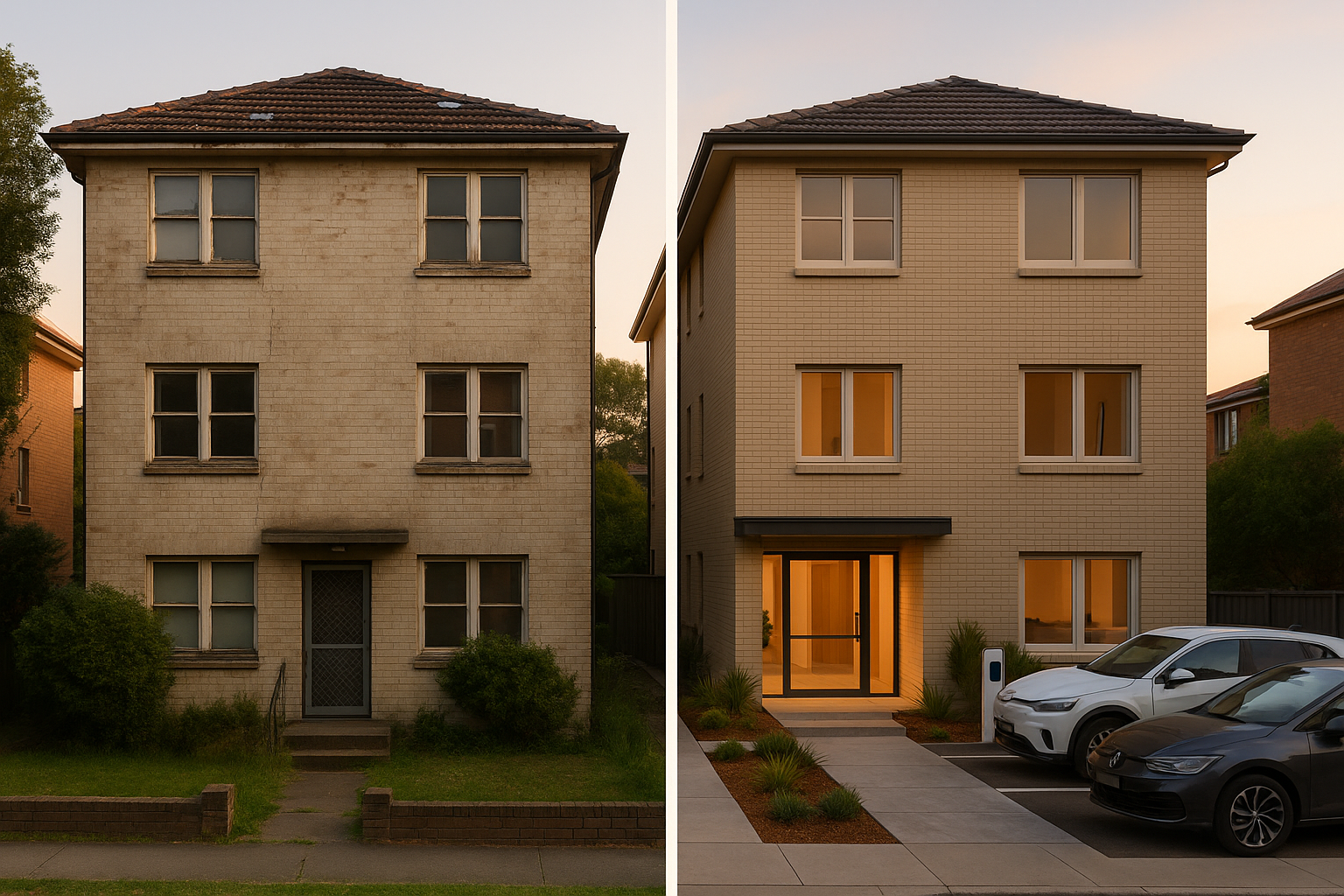
- Cosmetic upgrades – lobbies, hallways, landscaping, façade refreshes
- Amenities – gyms, pools, rooftop decks, communal rooms
- Green and tech – solar, EV charging, security systems, fibre upgrades
Typical arguments:
- Owner‑occupier: “We live here, this matters for our quality of life.”
- Investor: “Will this increase rent or resale enough to justify my share?”
3.2 Turning lifestyle projects into investor language
To align priorities, reframe each discretionary project into three questions:
- Does this reduce vacancy or lift achievable rent?
- Does this protect or improve resale outcomes?
- Is there a tax or running‑cost benefit that offsets the spend?
Example – installing EV chargers:
- Inner‑city building, young professional tenants
- Moderate capital spend funded via a green strata loan
- Expectation of 3–5% rent premium on EV‑equipped spaces
Framed well, this becomes a yield play as much as a lifestyle upgrade. For more complex green projects like solar and batteries, your building might blend strata loans, green loans or PPA/embedded networks [/insights/solar-batteries-ev-chargers-strata-finance-dont-own-roof].
3.3 Owner‑occupiers: don’t ignore yield logic
For owner‑occupiers, it’s tempting to push hard for lifestyle upgrades. The safeguard is to always ask:
- “If I had to rent or sell this unit in 12–18 months, would this project help or hinder?”
In downturns, suburbs and buildings with a deep owner‑occupier buyer base and constrained supply hold up better [/insights/prestige-vs-fringe-eastern-suburbs-economic-shocks]. Capital works that improve liveability for future buyers tend to be safer spends than niche nice‑to‑haves.
4. Ranking projects: a simple, shared scoring system
To cut through emotion, use a simple scoring matrix at committee level.
4.1 Four lenses to score every project
Score each proposed project from 1 (low) to 5 (high) on:
- Legal/safety risk if delayed
- Asset protection and valuation impact
- Rent and resale uplift potential
- Owner cashflow impact and timing risk
Then calculate a total score and sort.
4.2 Example scoring table
| Project | Legal/Safety (1–5) | Asset Protection (1–5) | Rent/Resale (1–5) | Cashflow Impact (1–5)* | Total (max 20) |
|---|---|---|---|---|---|
| Roof waterproofing | 5 | 5 | 3 | 2 | 15 |
| Lift controller replacement | 4 | 4 | 3 | 2 | 13 |
| Lobby refurbishment | 1 | 2 | 4 | 3 | 10 |
| EV charger backbone install | 1 | 3 | 4 | 3 | 11 |
| Gym fit‑out in unused room | 1 | 1 | 3 | 4 | 9 |
*Cashflow impact is reversed – a lower score means easier on cashflow.
This makes it obvious that roof works go ahead before gym fit‑outs, even if the gym gets more airtime at meetings.
The strategy continues below
You've seen the problem and the groundwork — now unlock the exact steps our CPA-certified brokers use, including 6 more sections. Enter your email for instant, free full access.
Free access. No spam — unsubscribe anytime. Your details stay confidential.
Frequently asked questions
How often should a strata capital works plan be updated?▾
When does a strata loan make more sense than a special levy?▾
Do cosmetic upgrades ever really pay off for investors?▾
How do capital works affect my borrowing capacity with banks?▾
What if I disagree strongly with the committee’s priorities?▾
Speak with a specialist advisor
Confidential consultation, bespoke advice for your situation.