Article
Borderline valuations: practical ways to defend your LVR this week
A low bank valuation can blow up your LVR, deposit and loan approval. This guide shows how to use local sale evidence, lender choice and smart timing to challenge borderline valuations and protect your borrowing power in Australia.
Key Takeaway
This guide explains how Australian borrowers can respond when a borderline bank valuation threatens their loan-to-value ratio (LVR), with lenders typically applying at least a 3% APRA serviceability buffer to repayments. It details how to gather local comparable sales, request a valuation review, and where policy allows, order a second valuation through a different valuer panel. By choosing the right lender, sequencing valuations and using strong local evidence, borrowers can often restore a workable LVR without overpaying or breaching policy. The key actionable step is to get a local broker to pre‑model low, mid and high valuation scenarios before any valuation is ordered.
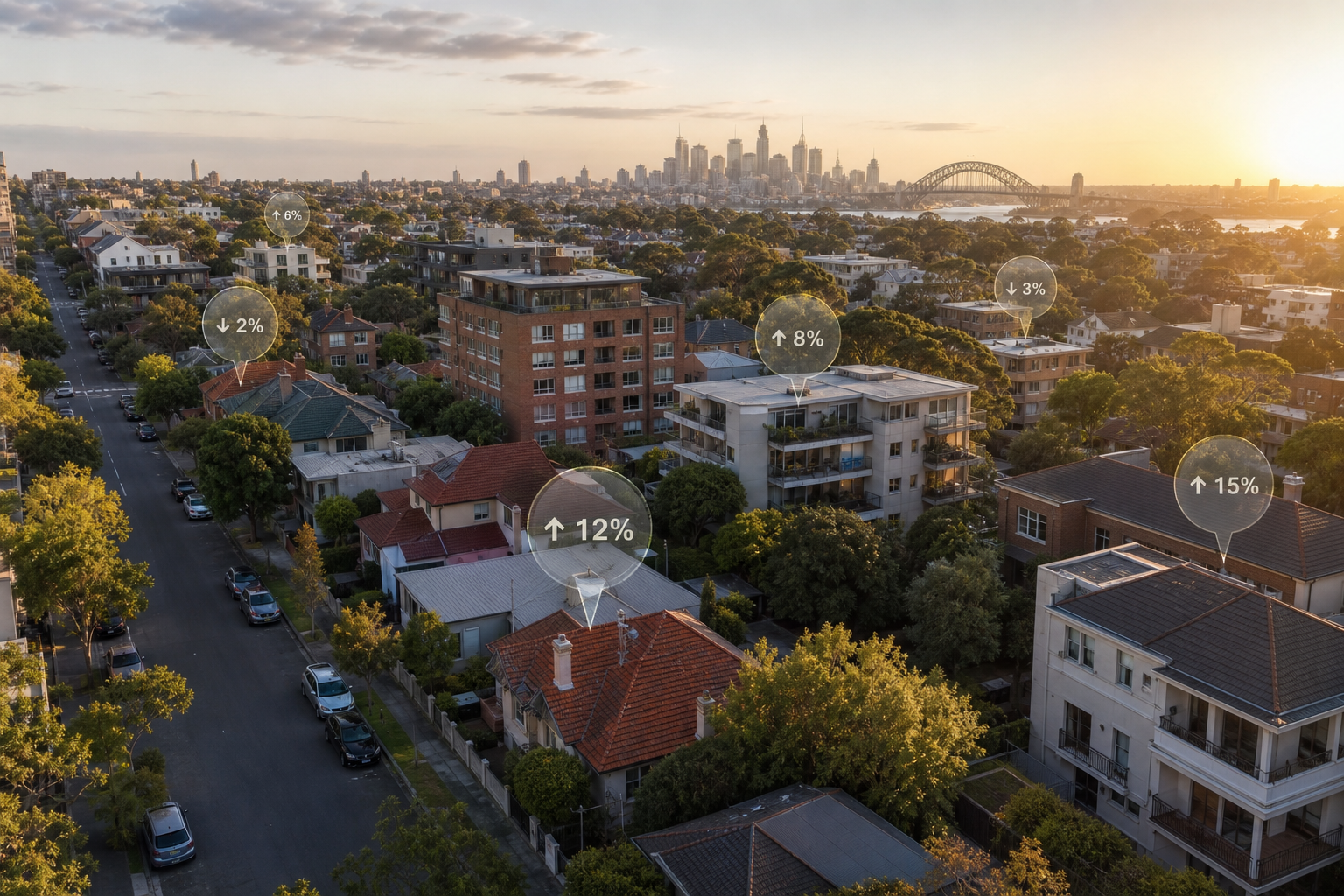
Most home loans in Australia live or die on the bank valuation. A borderline valuation can turn a comfortable 80% loan‑to‑value ratio (LVR) into an ugly 88–90% LVR, trigger lenders mortgage insurance (LMI), or kill your refinance. The good news: while you can’t bully a valuer, a smart, evidence‑based approach – and the right lender – can often rescue your LVR.
In this guide we’ll step through how to use local sale evidence, policy‑savvy valuer selection and timing to improve borderline outcomes without breaching any rules.
Fast answer: You generally can’t tell a valuer what number to use, but you can (1) pre‑model low, mid and high valuation scenarios, (2) supply strong, relevant comparable sales, (3) request a formal valuation review, (4) in some cases, get a second valuation via a different valuer panel by switching lender or product, and (5) change strategy quickly if the valuation shortfall makes the property or refinance uneconomic.
1. Why borderline valuations matter so much to your LVR
1.1 What is a borderline valuation in practice?
A valuation is “borderline” when a small difference in the valuer’s number changes your LVR band or approval outcome.
Common tipping points:
- 80% LVR (above this, most lenders charge LMI)
- 85% LVR (LMI usually higher, some lenders cap policy here)
- 90% LVR (tighter credit, higher interest, stricter scrutiny)
- 95% LVR (only a minority of lenders, strong file required)
Example – purchase scenario
Contract price: $1,000,000
Your deposit (cash + grants): $200,000
You’re aiming for an 80% loan = $800,000.
Two valuation outcomes:
-
Valuation = $1,000,000
- Max 80% lend = $800,000
- Loan: $800,000, LVR = 80% ✔
-
Valuation = $950,000
- Max 80% lend = $760,000
- But you need $800,000 to settle
- To still borrow $800,000, LVR = $800,000 / $950,000 = 84.2%
- That pushes you into LMI territory, or short of funds.
A 5% difference in valuation just cost you:
- Extra deposit or gifted funds, or
- Thousands of dollars in LMI, or
- A sale falling over.
1.2 Why banks care more about valuation than contract price
Australian lenders lend against the lower of:
- The contract price (purchase), or
- Their independent valuation.
This is particularly brutal with:
- Off‑the‑plan units (valuations often come in below contract – see also /insights/off-the-plan-valuation-shortfall-what-to-do-next)
- Rapidly cooling markets
- Unique properties with few direct comparables
A valuer’s job is to protect the lender, not to “make your deal work”. That’s why smart preparation and local data are so important.
1.3 The quiet link between valuation and your interest rate
Even if your loan is approved, the valuation number influences:
- Pricing tiers – many lenders offer sharper rates below 80% LVR
- Cashback eligibility (for refinances) – some promos exclude high LVRs
- Future flexibility – higher LVR now can limit future equity release
Example – refinance with borderline valuation:
- Current loan: $900,000
- Target lender offers best pricing to 70% LVR
- If valuation = $1,300,000 → LVR = 69.2% → access to best rate
- If valuation = $1,250,000 → LVR = 72% → falls into a more expensive tier
A $50k valuation swing could add 0.10–0.30% p.a. to your rate for years.
2. How valuers actually work (and why your evidence matters)
2.1 Who chooses the valuer – bank, broker, or you?
Most Australian banks use valuation panel systems run by firms like CoreLogic or Valex. The key points:
- The lender (or its platform) allocates a valuer; you cannot directly pick one.
- Brokers sometimes can choose the panel firm (e.g. Valuer A vs Valuer B) within that system, depending on the lender.
- For some low‑risk deals, banks rely on desktop or automated valuations, not a full inspection.
So you can’t hire your own valuer and expect the bank to use that number. But a broker who knows each lender’s panel and appetite can often influence which valuer gets the job simply by choosing the right lender, order type and timing.
2.2 What counts as a good comparable sale?
Valuers must follow professional standards (e.g. API/ANZ Valuation and Property Standards). That means:
- 3–6 comparable sales where possible
- Settled sales, preferably within the last 3–6 months
- As close as possible in:
- Location (same or immediate neighbouring streets)
- Land size and topography
- Dwelling type, quality, age, condition
- Legal issues (strata vs company title, encumbrances)
Good comparable:
You’re buying a 2‑bed, 1‑bath, 1‑car strata unit in Randwick, 75 sqm internal, in a 1970s building. A similar 2‑1‑1 in the same street, similar level and condition, sold 6 weeks ago for $950k.
Weak comparable:
A 2‑bed penthouse 700m away with ocean views, 30% larger and fully renovated, sold at $1.2m.
Presenting strong comparables is one of the fastest ways to support a borderline valuation.
2.3 Why online estimates are not valuation evidence
AVMs (automated valuation models) from portals can be:
- Useful for sanity‑checking a price range; but
- Too broad and lagging for borderline decisions.
Valuers must rely on actual, verifiable sales – not algorithms. In tight markets like the Eastern Suburbs or inner‑south Bayside/Randwick, even a $20k–$40k swing can matter. Local, human judgement still wins.
For more on how local data shifts your borrowing power, see /insights/inside-local-mortgage-knowledge-suburb-savvy-brokers-hidden-data.
3. Step‑by‑step: what to do when a valuation comes in low
3.1 First 24–48 hours checklist
When you’re told the valuation is lower than expected:
- Ask for the valuation report (where policy allows) or at least:
- Final value
- Key comparable sales used
- Any noted issues (e.g. condition, easements, zoning)
- Confirm the consequence:
- New LVR
- LMI impact
- Shortfall in funds or equity
- Pause emotional reactions – numbers first, decisions second.
- Speak to your broker about options before you:
- Lower your offer
- Cancel the contract
- Throw more cash at the problem
If you’re dealing directly with a bank and feel stuck, this is often the point to bring in a broker – especially one who understands both credit policy and tax, not just interest rates. See /insights/when-bank-says-no-home-loan-how-broker-can-help for how this re‑assessment works.
3.2 Quantify the damage: worked examples
Example A – purchase, small shortfall
Contract price: $900,000
Deposit: $150,000
Target LVR: 80% (loan $720,000)
Valuation comes in at: $870,000
- Max 80% lend = $696,000
- To keep the same $720,000 loan, LVR = 82.8%
- Rough LMI (illustrative only) on $720,000 at ~83% LVR might be $7,000–$9,000.
You now have options:
- Find an extra $24,000 cash to stay at 80% LVR
- Pay LMI and accept 83% LVR
- Negotiate the price down
- Try to improve the valuation using evidence
Example B – refinance, borderline LVR band
Current loan: $1,000,000
Goal: refinance to 80% LVR to remove LMI and get better rate.
If valuation = $1,250,000 → LVR = 80% (you’re just on target).
If valuation = $1,200,000 → LVR = 83.3%; you miss your goal.
The difference is just 4% in value, but it changes your pricing and costs.
3.3 When to request a valuation review
Most lenders allow a one‑time valuation review if:
- There are recent, obvious sales not considered, or
- The property details are clearly wrong (e.g. valuer missed a bedroom).
You’ll usually need to provide your broker with:
- 3–6 concrete, recent comparable sales with:
- Address
- Sale date
- Sale price
- Key property specs
- Notes on why each is comparable (same street, same layout, etc.).
The broker then submits a formal review request through the lender/valuation platform. This is not a chance to argue subjectively – it must be factual.
3.4 How often do reviews work?
In our experience:
- If the valuation is clearly out of line with hard evidence, reviews can work.
- If the valuation is within a reasonable range, panels often stand by the original figure.
On borderline cases, a small uplift (say $10k–$30k) can be enough to:
- Keep your LVR under 80%; or
- Just reach the target refinance band (e.g. 70% vs 75%).
But you shouldn’t rely on a review as your only Plan A.

The strategy continues below
You've seen the problem and the groundwork — now unlock the exact steps our CPA-certified brokers use, including 8 more sections. Enter your email for instant, free full access.
Free access. No spam — unsubscribe anytime. Your details stay confidential.
Frequently asked questions
Can I challenge a low bank valuation in Australia?▾
How do I request a second valuation for my home loan?▾
What kind of sales count as good comparable evidence for a valuation review?▾
Is it worth paying lenders mortgage insurance to overcome a low valuation?▾
Do brokers really get better valuation outcomes than going direct to a bank?▾
How much can a bank valuation differ from my property’s market value?▾
What should I do before bidding at auction to reduce valuation risk?▾
Speak with a specialist advisor
Confidential consultation, bespoke advice for your situation.