Article
How to Budget for Solar When You’ve Already Got a Big Mortgage
Already carrying a large home loan but want solar? Learn how to weigh bill savings against extra repayments, choose safer finance structures and set hard safety limits so you don’t tip into mortgage stress.
Key Takeaway
Australians with large mortgages can still budget for solar by first checking that total home loan repayments, including any solar finance, remain under about 30–35% of after-tax income when modelled at interest rates 3% higher, in line with APRA-style buffers and Roy Morgan stress benchmarks. A key safeguard is using a separate 5–10 year home loan split or green loan for the solar system rather than blending it into a 30-year mortgage. The actionable step is to model bill savings versus repayments this week before signing any quote.
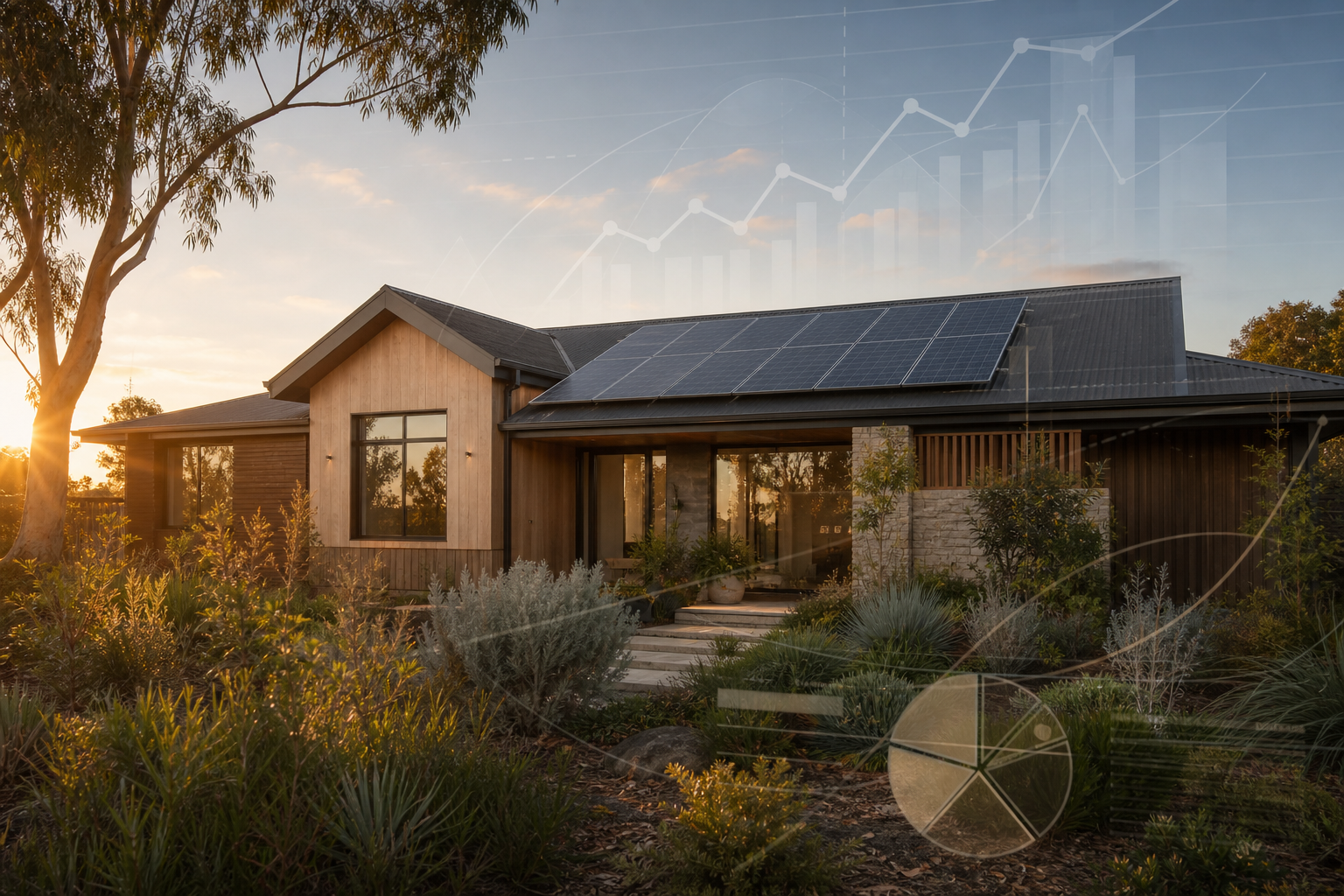
If you already have a big mortgage, you can still budget for solar, but only if the added repayments stay safely within your cashflow and are realistically covered by bill savings. The key steps are: size the system correctly, choose a short-term, separate loan split or green loan, stress‑test repayments at interest rates 3% higher, and protect your cash buffer so you don’t drift into mortgage stress.
Decision in one line: only proceed with solar if, on conservative numbers, your extra solar loan repayments are clearly lower than your expected bill savings and your total home repayments stay under roughly 30–35% of after‑tax income when modelled at higher rates.
1. Start with your stress limits, not the solar quote
Before talking to installers or lenders, you need a hard ceiling for how much extra repayment you can safely carry.
1.1 Use a 3% buffer and 30–35% income rule
Across multiple guides we use a consistent safety test: model total home (and investment) loan repayments at current rates plus 3%, and keep them under about 30–35% of your after‑tax income.
This aligns with APRA’s 3% serviceability buffer and Roy Morgan’s ‘At Risk’ stress benchmarks, where borrowers start getting into trouble once a large slice of income goes to the mortgage.
If you’re already near that 30–35% band at stressed rates, you simply don’t have room to add debt for solar. In that case, you’re looking at:
- a smaller system
- staged upgrades (panels now, battery later)
- or waiting until you’ve refinanced or reduced other debts.
1.2 Check your real repayment breathing room
Quick test this week:
- Add up all home and investment loan repayments at today’s rates.
- Multiply by 1.3 (rough proxy for a 3% rate rise on a variable loan).
- Divide that number by your monthly after‑tax income.
If the result is already above 35%, adding more debt for solar is high‑risk. Use this as your go/no‑go gate before you even look at finance quotes.
For a deeper stress-testing framework, see our guide on planning a prestige home upgrade with a large mortgage.
The strategy continues below
You've seen the problem and the groundwork — now unlock the exact steps our CPA-certified brokers use, including 5 more sections. Enter your email for instant, free full access.
Free access. No spam — unsubscribe anytime. Your details stay confidential.
Frequently asked questions
Can I afford solar if I already have a big mortgage?▾
Is it better to add solar to my mortgage or get a green loan?▾
How much should I allow in my budget for a solar system?▾
Will solar actually reduce my mortgage stress?▾
Should I use my offset account to pay cash for solar?▾
Speak with a specialist advisor
Confidential consultation, bespoke advice for your situation.