Article
Working Out If a Rose Bay Home Is Actually Affordable
A straight numbers walkthrough to test whether buying in Rose Bay is genuinely affordable for you this year, not just what the bank says you can borrow.
Key Takeaway
A Rose Bay home is affordable when, after modelling prices around $1.6–$2.3 million, the mortgage repayments at rates 3% above current levels stay within about 30–35% of net income and you keep at least 3–6 months of expenses in cash buffers. This guide shows how to translate Rose Bay prices into loan sizes, repayments and required income using simple rules of thumb, then adjust price, deposit or timing. Buyers should run these numbers before bidding to avoid mortgage stress.
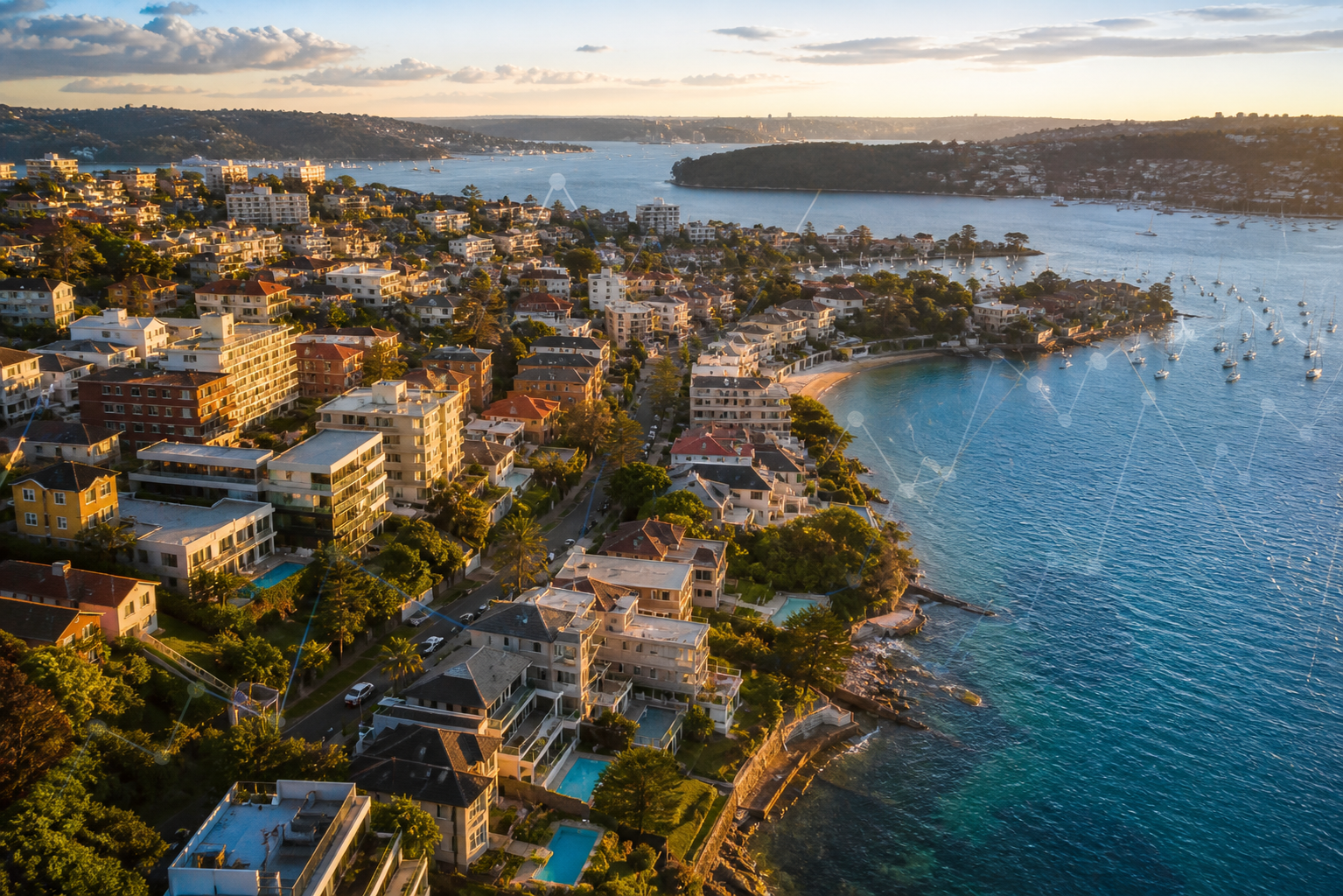
You can afford to buy in Rose Bay when your stress‑tested mortgage repayments stay under about 30–35% of your after‑tax income and you still keep decent cash buffers. The bank’s maximum borrowing limit is not the same as “safe for your family”. Let’s run through realistic Rose Bay numbers you can sanity‑check this week.
1. Anchor the price: what does Rose Bay actually cost?
Ignore outliers and look at brackets.
As at 2026, indicative Rose Bay ranges are:
- 1‑bed apartment: ~$1.2m–$1.5m
- 2‑bed apartment: ~$1.6m–$2.0m
- 3‑bed apartment / small semi: ~$2.1m–$2.6m
- Family house: often $3m+ (many well above)
You don’t need perfect data for this exercise. Pick:
- Your “realistic” target (e.g. 2‑bed unit at $1.8m).
- Your “stretch” target (e.g. $2.0m).
- A cheaper backup (e.g. $1.6m or nearby suburb).
We’ll work with a 2‑bed example at $1.8m and a 20% deposit.
2. Turn Rose Bay prices into a loan and repayments
Example: $1.8m 2‑bed unit, 20% deposit
- Purchase price: $1,800,000
- 20% deposit: $360,000
- Estimated stamp duty (NSW, non‑FHB): ~$80,000+ plus legals/other costs
- Total cash needed: roughly $460k–$500k
- Loan amount (80% LVR): $1,440,000
Now repayments. We won’t guess live rates, just use an indicative range.
Say your actual rate might be ~6% today. APRA already makes banks test about 3% higher (around 9%) for serviceability.
Let’s use a middle ground stress test at 8% on a 30‑year principal and interest loan:
- Loan: $1.44m
- Rate (stress test): 8% p.a.
- Term: 30 years
- Monthly repayment: ≈ $10,600
- Annual repayments: ≈ $127,000
For most households, that’s only comfortable if after‑tax income is at least ~$360k–$420k, so repayments sit roughly in the 30–35% of net income band.
Quick rule of thumb for Rose Bay
At current price levels, for a 30‑year P&I loan:
- Every $1m of loan costs roughly $7,300–$8,000 per month under a realistic stress‑test rate band.
- Keep total loans (home plus any investment debt) below 30–35% of after‑tax income, in line with our renovation and gearing safety benchmarks across other Eastern Suburbs guides.
If you’re already geared or renovations are on the cards, that 25–30% of net income range is safer (see /insights/rose-bay-home-equity-major-renovation-without-overstretching).
The strategy continues below
You've seen the problem and the groundwork — now unlock the exact steps our CPA-certified brokers use, including 4 more sections. Enter your email for instant, free full access.
Free access. No spam — unsubscribe anytime. Your details stay confidential.
Frequently asked questions
How much do I need to earn to buy a $2m Rose Bay property?▾
Is 10% deposit enough to buy in Rose Bay?▾
Should I stretch for a house instead of an apartment in Rose Bay?▾
Speak with a specialist advisor
Confidential consultation, bespoke advice for your situation.