Article
Building a Safe Cash Buffer When Buying Multiple Off‑the‑Plan Units
Buying several off‑the‑plan apartments multiplies settlement and cashflow risk. This guide shows you how to size, fund and protect a practical cash buffer so you can survive valuation shocks, rate rises and rental delays without panic selling.
Key Takeaway
When buying multiple off‑the‑plan apartments, investors should typically hold a cash buffer equal to 6–12 months of stressed loan repayments plus essential living costs, and add 5–15% of each property’s price to cover valuation and rental shocks. With around 32.5% of Australian mortgage holders already ‘At Risk’ of stress (Roy Morgan, July 2026), sizing and building this buffer before signing further contracts is critical. The key actionable step is to set a dollar target this week and create a 6–12 month savings and refinance plan to reach it.

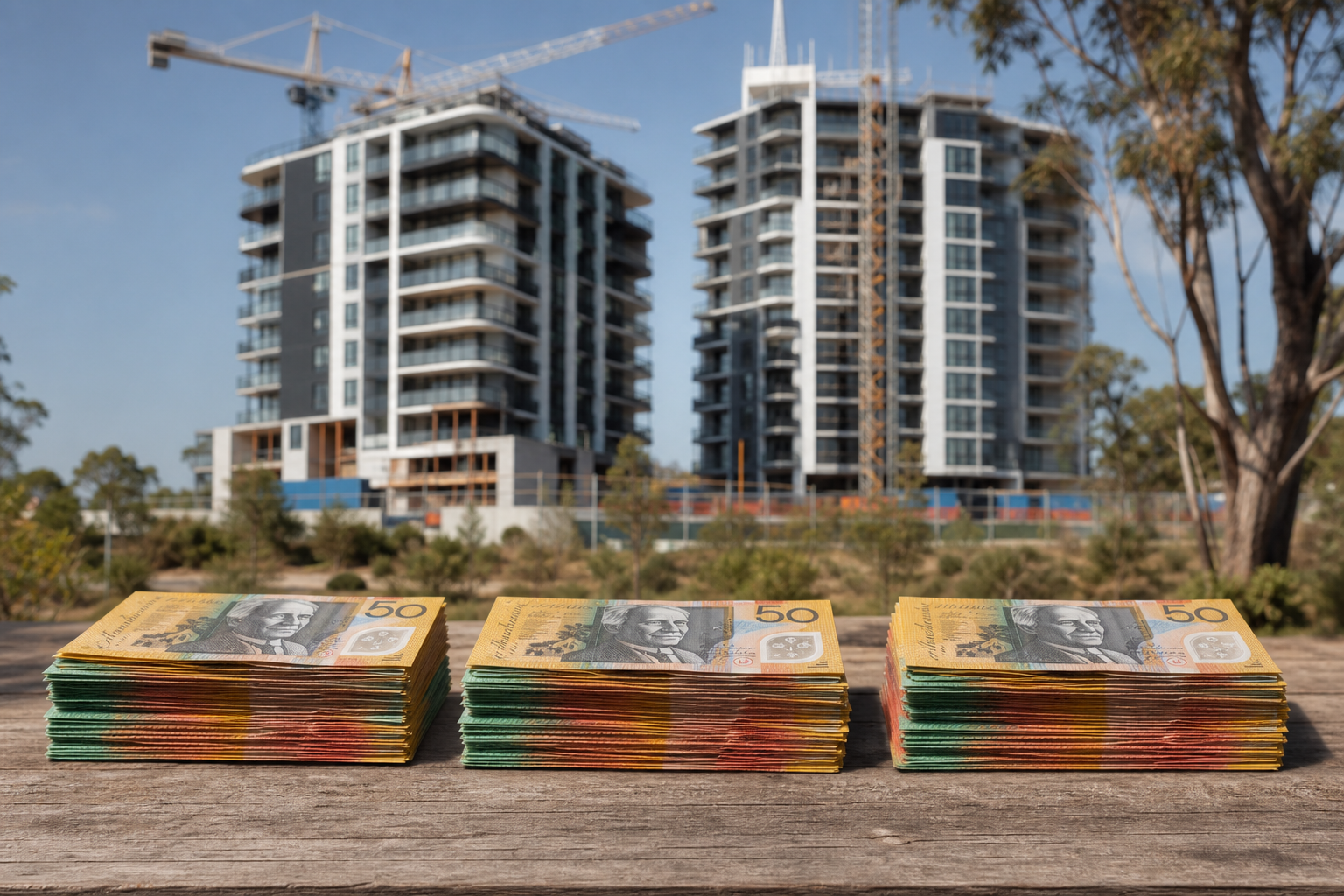
Buying multiple off‑the‑plan apartments magnifies one specific risk: running out of cash right when the developer calls for settlement.
In practice, a cash buffer for multiple off‑the‑plan apartments is the money you hold in cash or a true offset account to cover: (1) higher‑than‑expected repayments if rates jump, (2) valuation shortfalls or extra equity you must tip in at settlement, and (3) rent or sale delays after completion. The right buffer is usually 6–12 months of stressed repayments and living costs, plus a separate contingency for settlement shocks.
This guide shows you how to size that buffer, where to hold it, and how to build it over the next 6–12 months so you can act this week, not at handover.
1. Why multiple off‑the‑plan apartments demand a bigger buffer
1.1 What’s different about off‑the‑plan risk?
A single off‑the‑plan purchase already carries extra risk compared to an established property:
- Longer time between contract and settlement
- No guaranteed final valuation
- No real rent until completion
- Policy, tax and rate changes mid‑build
When you buy two or more, those risks stack:
- Clustered settlements – two or three settlements in the same 6–12 month window can create massive, sudden cash calls.
- Correlated valuations – if the market or the building is out of favour, all your valuations can come in low together.
- Concentrated rental risk – vacancy or discounting in that building or suburb hits multiple properties at once.
Roy Morgan’s July 2026 research shows 32.5% of owner‑occupier borrowers are ‘At Risk’ of mortgage stress, with 22% ‘Extremely At Risk’, largely from higher rates and softer incomes. Off‑the‑plan investors are even more exposed because everything happens at once at settlement.
A robust cash reserve for property investors is what stops a paper loss turning into a forced sale.
1.2 Baseline buffer rules – then dial up for risk
Across our guides, a consistent risk rule has emerged:
- PAYG borrowers: at least 3–6 months of essential living costs plus total loan repayments in cash or true offset after settlement.
- Self‑employed or volatile income: 6–12 months is more realistic.
For off‑the‑plan, with APRA’s 3% serviceability buffer and clustered risk, it’s sensible to step up a notch:
- Multiple off‑the‑plan, PAYG: aim for 6–9 months.
- Multiple off‑the‑plan, self‑employed: 9–12 months+.
That’s just the base. You then add a separate contingency for settlement and valuation risk, which we’ll quantify shortly.
For broader context on buffer philosophy, see Sizing Your Cash and Offset Buffer When You’re Geared.
2. Step 1: Define your “stressed month” number
Before you can design a buffer, you need a stressed monthly cost for your whole life and portfolio.
2.1 What goes into a stressed month?
Include:
- Home loan repayments – model at an interest rate 3% higher than today (in line with APRA guidance and our cluster-wide rules).
- All investment loan repayments – existing plus the future off‑the‑plan loans, also at +3%.
- Essential living costs – food, utilities, transport, insurance, kids’ basics, not holidays or renovations.
- Core property costs – strata, council, water, landlord insurance for current properties.
You can use your bank statements plus a realistic HEM‑style baseline for living costs, but adjust to your real spending.
2.2 Worked example: stressed month for a dual‑income couple
Assume:
- Current home loan: $900,000 P&I, 25 years remaining.
- Two off‑the‑plan investment apartments, each expected loan: $600,000 IO at 80% LVR.
- Today’s assumed rate: 6.0% p.a. (illustrative only). Stressed rate: 9.0%.
-
Home loan repayment at 9.0% (P&I, 25 years)
Approx monthly repayment ≈ $7,545. -
Each investment loan at 9.0% (Interest‑Only)
Repayment = 600,000 × 9% / 12 = $4,500 per month × 2 = $9,000. -
Essential living costs (tightened)
Say $5,000 per month. -
Other property costs (strata etc.)
Say $1,000 per month total.
Stressed month total = $7,545 + $9,000 + $5,000 + $1,000 = $22,545.
If you’re PAYG and buying two off‑the‑plan apartments, a prudent buffer might be 9 months:
- Buffer target = 9 × $22,545 ≈ $203,000.
If self‑employed, you’d usually push that toward 12 months (~$270,000), because your income is more variable.
3. Step 2: Add a dedicated settlement and valuation contingency
Your general buffer covers repayment and living shocks. You also need a specific pot of cash for off‑the‑plan settlement risk.
3.1 The three big settlement shocks
When buying multiple off‑the‑plan apartments, the most common cash shocks at settlement are:
- Valuation shortfall – bank val comes in below contract price, so at your chosen LVR the bank lends less and you must tip in extra.
- LVR cut or policy change – lenders, or your specific lender, decide they only want to be at 70–80% LVR on that building or postcode.
- Cost blowouts and finishing costs – higher stamp duty (if thresholds change), more expensive legals, blinds, appliances, and initial strata levies.
3.2 How much contingency per property?
A simple working rule for off‑the‑plan contingency funds:
- Budget 5–10% of each property’s contract price as a separate settlement contingency if buying one.
- For two or more, consider 10–15% across the group, especially if they’re in the same building or high‑density postcode.
Worked example: two apartments, both $750,000
- Contract price (each): $750,000.
- Total contract exposure: $1.5m.
- Target contingency at 10%: $150,000.
Scenario:
- Bank values both at $700,000 instead of $750,000.
- At 80% LVR, each loan becomes 80% of 700,000 = $560,000.
- Your settlement contribution per property: 700,000 − 560,000 = $140,000.
If you already paid a 10% deposit (75,000), you now need an extra $65,000 per property at settlement (140,000 − 75,000):
- Extra equity call = 2 × 65,000 = $130,000.
Your 10% contingency of $150,000 covers this without raiding your living/repayment buffer.
3.3 Contingency vs buffer – keep them separate
Treat these as two different buckets:
- Bucket A – General buffer: 6–12 months of stressed living + repayments.
- Bucket B – Settlement contingency: 5–15% of total contract price across your off‑the‑plan deals.
Your rule should be: don’t touch Bucket A to solve a valuation problem unless you are absolutely cornered.

The strategy continues below
You've seen the problem and the groundwork — now unlock the exact steps our CPA-certified brokers use, including 8 more sections. Enter your email for instant, free full access.
Free access. No spam — unsubscribe anytime. Your details stay confidential.
Frequently asked questions
How big should my cash buffer be if I’m buying two off‑the‑plan units?▾
Should I include my deposit in the buffer calculation?▾
Can I rely on a credit card or personal loan as my contingency?▾
What if I can’t build the recommended buffer before settlement?▾
Do I still need a buffer if the apartments will be positively geared?▾
Where is the best place to hold my cash buffer for off‑the‑plan properties?▾
Speak with a specialist advisor
Confidential consultation, bespoke advice for your situation.