Article
Comparing ‘Interest‑Free’ Solar Deals With Using Your Home Loan
A practical Australian guide to work out whether ‘interest‑free’ solar promotions or topping up your home loan is really cheaper once you strip out the marketing and do the maths.
Key Takeaway
This guide explains how to compare ‘interest-free’ solar deals with using a standard home loan by converting every option into a true annual percentage cost and total dollars repaid. It shows that ‘0%’ offers often hide costs in higher system prices and fees, while shorter terms can mean higher monthly repayments despite savings on interest. Using a separate 5–10 year home loan split at mortgage rates can reduce total interest, but borrowers must stress-test repayments at 3% higher to avoid mortgage stress.
Watch the short answer
Is Your Accountant Only Looking Backwards at Your Tax Papers?
Thinking about a move but your tax is behind This clip shows how lenders can still assess you.
Read the transcript
If your accountant is still working on your past tax papers, traditional bank branch staff will tell you that you cannot apply for a loan. They're wrong. We use alternative documentation frameworks that allow us to verify your true financial trajectory using your active rolling business bank statements. Don't let backlogged accounting portals freeze your personal wealth. DM me 'ALTDOC' to run your assessment today.
General information only, not personal advice. Your situation is assessed before any recommendation.
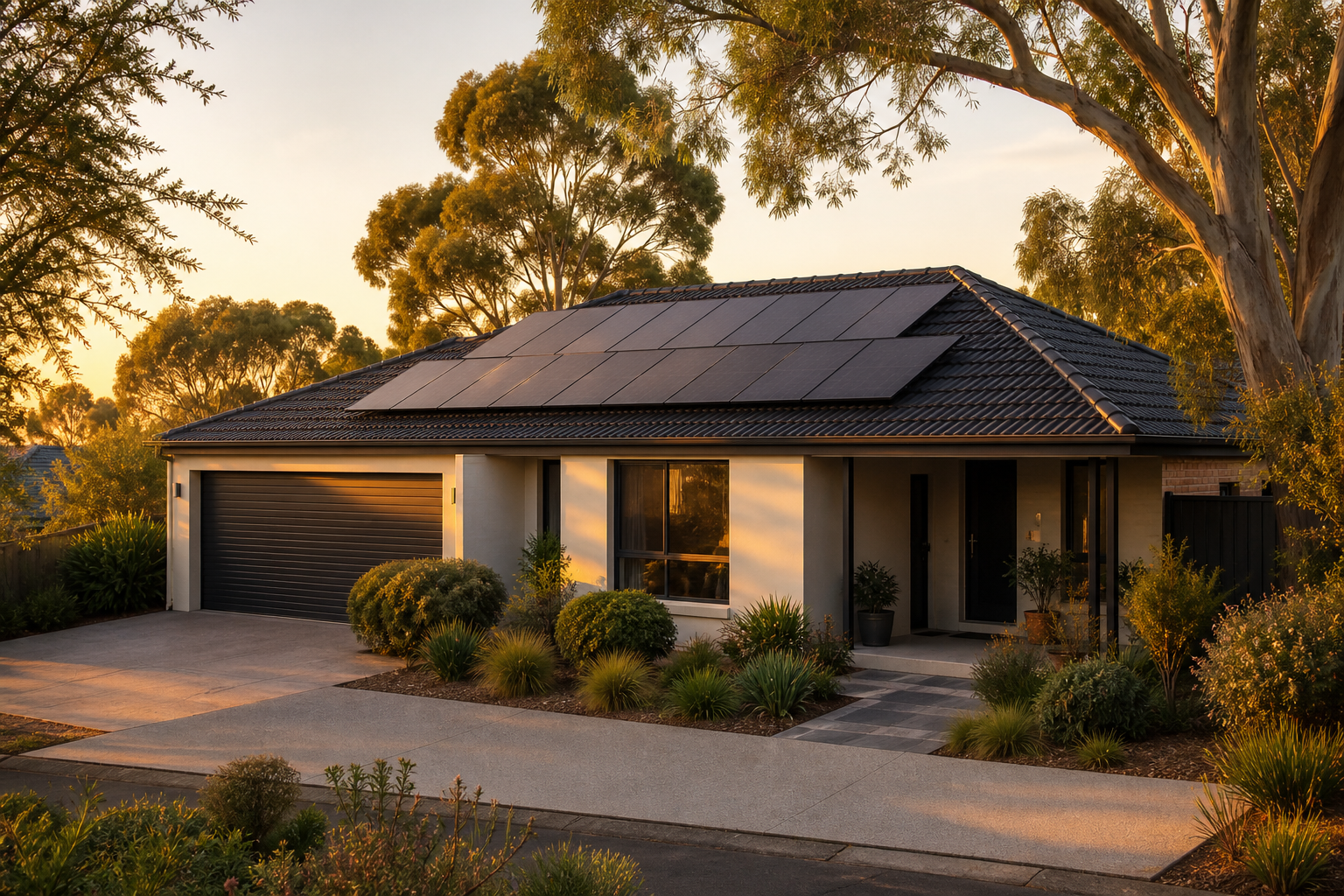
Most ‘interest‑free’ solar deals in Australia aren’t really free. The cost is usually baked into higher system prices, account fees and short terms. To compare them fairly with using your home loan, you need to strip every option back to the same basics: cash price, fees, term, interest and total dollars you’ll repay.
In this guide, we’ll walk through a simple, decision‑grade method you can use this week to compare a shiny “0% interest” offer against topping up, splitting or refinancing your home loan.

1. The quick answer: how to compare ‘0%’ solar vs mortgage
To compare an ‘interest‑free’ solar promotion with using your home loan:
- Get a clean cash quote for the same system, from the same installer if possible.
- Compare that to the “interest‑free” financed price, including establishment, monthly and account‑keeping fees.
- Work out the effective extra cost of the finance (financed price + all fees – cash price).
- Divide that extra cost by the loan amount and term to get a rough effective interest rate.
- Compare that rate (and the total repaid) with a separate 5–10 year home‑loan split at your current mortgage rate plus 3%.
In many cases, the ‘0%’ deal works out like paying a 10–20%+ p.a. rate on a normal loan, especially once you include higher system prices and fees. A short 3–5 year term can still be fine if your cashflow handles the payments and you want the debt gone quickly. But if the repayments feel tight, a dedicated 5–10 year principal‑and‑interest home‑loan split can be safer, as long as you don’t stretch the term out to 25–30 years.
2. What “interest‑free” solar really means in practice
2.1 Where the cost usually hides
Most 0% solar offers are built on:
- Higher system prices than a genuine cash quote.
- Account and payment processing fees (sometimes $5–$10 per month).
- Upfront establishment or platform fees.
- Merchant fees charged to the installer, which they pass through in the price.
So instead of charging you interest openly, the provider recovers its margin via the price and fees.
This is why we always say in our red‑flags guide [/insights/red-flags-solar-finance-contracts]: never compare finance options without a clean cash price for the same system.
2.2 Why term length matters more than the sticker rate
With solar, the term can matter more than the rate:
- Solar systems typically have a 15–25 year useful life.
- Most ‘interest‑free’ deals run 3–7 years.
- A standard mortgage runs 25–30 years.
If you stretch a $12,000 system over 30 years at a low rate, you can easily pay more total interest than a 5–7 year high‑rate loan – but the monthly repayments are much lower.
That’s why our broader solar borrowing guidance is to:
- Keep solar/battery borrowing on a separate 5–10 year home‑loan split, not blended into the main 25–30 year term.1
- Model all your home and investment debt at current rates + 3%, and keep repayments under roughly 30–35% of after‑tax income.2
3. Step‑by‑step: turning a solar promotion into a real interest rate
3.1 Start with a worked example
Imagine you’re quoted:
- Cash price: $12,000 for a 10 kW system
- “Interest‑free” promotion:
- Advertised as 0% over 5 years
- Financed price: $13,800 (same system)
- Establishment fee: $299
- Monthly account fee: $8
- Term: 60 months
Step 1: Calculate total cost of the “interest‑free” deal
- Extra price over cash: $13,800 – $12,000 = $1,800
- Monthly fees: $8 × 60 = $480
- Establishment fee: $299
Total extra cost of finance = $1,800 + $480 + $299 = $2,579
Total paid under ‘0%’ deal = $13,800 + $480 + $299 = $14,579
Step 2: Approximate the effective interest cost
Treat the cash price ($12,000) as the amount borrowed.
- Extra cost of finance: $2,579
- Over 5 years, that’s about $2,579 ÷ 5 = $516 per year in finance costs on an average balance of roughly $6,000.
A rough effective rate ≈ $516 ÷ $6,000 ≈ 8.6% p.a.
A proper calculator would land a bit higher or lower depending on the repayment profile, but it’s clearly not 0%.
3.2 Compare with a home‑loan split
Assume:
- Current mortgage rate: 6.50% p.a. variable (illustrative only)
- You set up a separate 7‑year P&I split for solar (to align with useful life and our guidance on shorter splits).
Use a basic repayment formula (or a calculator) for $12,000 over 7 years at 6.50%:
- Monthly repayment ≈ $179
- Total repaid ≈ $179 × 84 = $15,036
- Total interest ≈ $3,036
On raw dollars, the 0% deal over 5 years ($14,579) looks slightly cheaper than the 7‑year mortgage split ($15,036). But the home‑loan split has:
- A longer term, so lower monthly strain.
- A rate that can move up or down.
- Security over your home – raising the stakes if you hit trouble.
Now stress‑test that mortgage rate at 9.5% (6.5% + 3% APRA‑style buffer). The same $12,000 over 7 years at 9.5% is about:
- Monthly repayment ≈ $196
- Total repaid ≈ $16,464
- Total interest ≈ $4,464
Once you stress‑test, the ‘0%’ deal is clearly cheaper in total dollars – but the monthly repayment will be higher because the term is only 5 years.
This is why you must compare both:
- Total dollars repaid; and
- Monthly cashflow impact under realistic stress‑tested scenarios.
Footnotes
The strategy continues below
You've seen the problem and the groundwork — now unlock the exact steps our CPA-certified brokers use, including 7 more sections. Enter your email for instant, free full access.
Free access. No spam — unsubscribe anytime. Your details stay confidential.
Frequently asked questions
Is an ‘interest‑free’ solar deal ever actually 0%?▾
Is it safer to add solar to my mortgage instead of using vendor finance?▾
How long should I take to pay off solar if I use my home loan?▾
What if my bank won’t create a separate split just for solar?▾
How do rising interest rates change this decision?▾
Speak with a specialist advisor
Confidential consultation, bespoke advice for your situation.