Article
Should You Cross-Collateralise Property and Equipment Loans? Read This First
Cross‑collateralising property and equipment loans can lower rates but ties your home or investment property to business risk. Learn how it works, key dangers, safer alternatives and a practical plan to unwind crossed structures without derailing cashflow or growth plans.
Key Takeaway
Cross‑collateralising property and equipment loans means using property and business equipment as combined security for one or more facilities, typically to marginally reduce interest rates or boost approval odds. This structure increases concentration risk on the family home and can trap equity or force sales if the business falters, with many lenders requiring 60–80% maximum LVR on commercial property. A safer approach is to favour stand‑alone equipment finance and plan to unwind any crossed loans over 6–24 months.

Cross‑collateralisation between property and equipment loans means one lender takes security over both your real estate and your business gear for one or more facilities. It can slightly improve pricing and approval odds, but it also concentrates risk on your home and can quietly trap your equity. For most self‑employed clients and investors, it should be the exception, not the default.
Fast answer: Cross‑collateralising home, investment or commercial property with equipment debt can work if leverage is low and you have a clear exit plan. But in most cases, stand‑alone equipment finance over 3–7 years and ring‑fenced property loans are safer, even if the equipment rate is a bit higher.
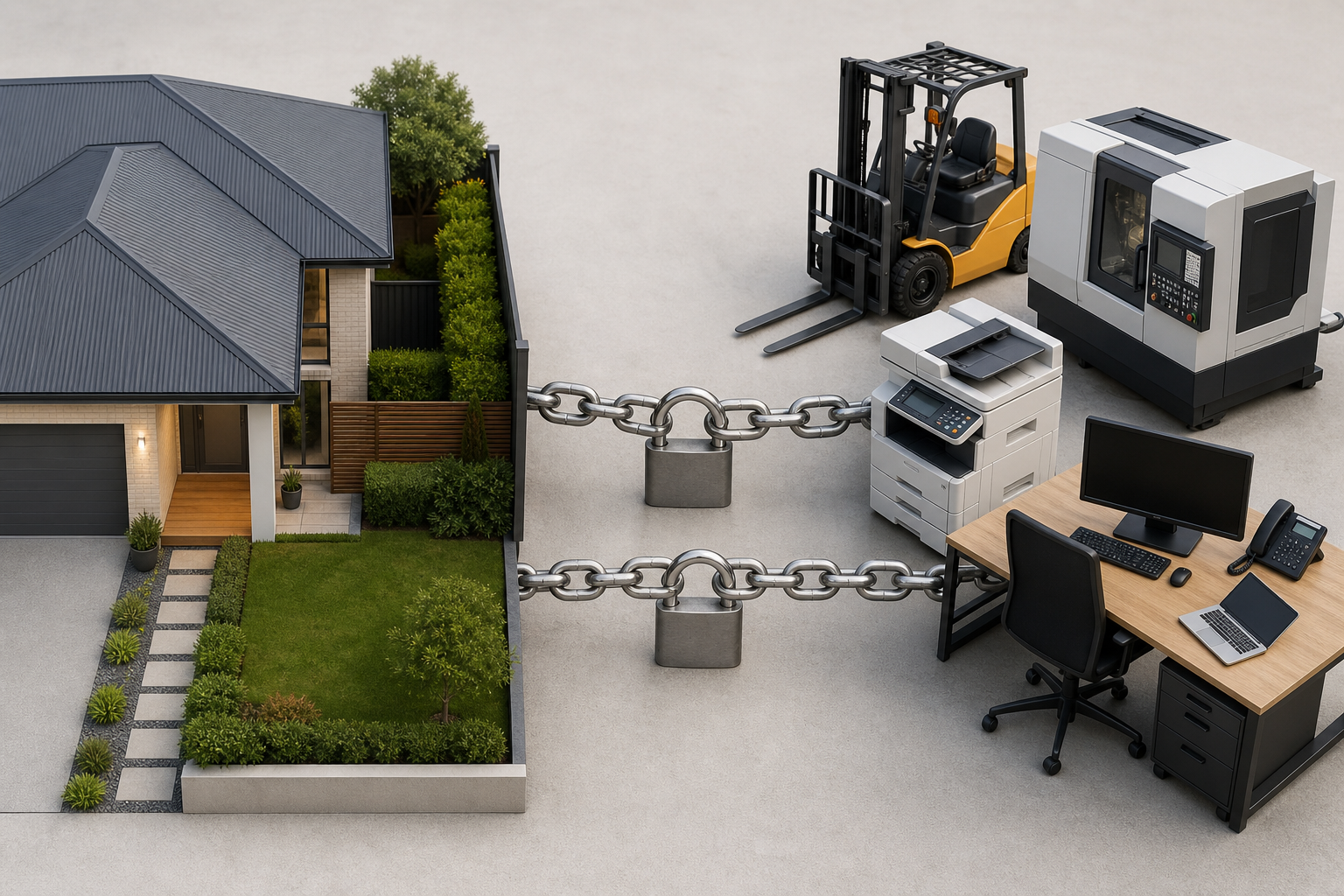
1. What is cross‑collateralisation between property and equipment?
1.1 The basic structure
Cross‑collateralisation happens when a lender links two or more assets (for example, your home and your machinery) to secure one or more loans.
Common patterns:
- Home + equipment securing an overdraft and term loan.
- Investment property + trucks securing multiple business facilities.
- Commercial premises + fit‑out and equipment rolled into one big facility.
If the business struggles, the lender can enforce against all linked assets, not just the bit of equipment that caused the problem.
1.2 How it differs from stand‑alone equipment finance
With stand‑alone equipment finance, the facility is usually secured mainly by the asset and maybe a director’s guarantee. Property is not automatically on the line.
By contrast, when you link home to business loan or cross‑collateralise, you turn a contained business risk into a whole‑of‑family‑balance‑sheet risk. Prior articles show that rolling short‑life equipment into 25–30 year property debt can drastically increase total interest and concentration risk on the family home (/insights/using-property-as-security-business-equipment-guide).
2. Pros and cons of crossing property and equipment loans
2.1 Why lenders and borrowers do it
Potential advantages:
- Higher approval odds – property security can tip a marginal deal into “yes”, especially after a credit blip or ATO debt (/insights/equipment-finance-after-credit-blip-ato-debt).
- Lower interest rate or fees – the blended LVR across property and equipment looks safer to the lender.
- Single banking relationship – one lender for home, investment and business loans can be simpler to manage (/insights/one-broker-home-investment-business-dover-heights).
2.2 The main dangers
Key risks when you cross‑collateralise property and equipment:
- Concentration risk on the home – if the business fails, you can lose the house as well as the gear. This is a recurring concern across our property‑secured equipment guides.
- Trapped equity – you may not be able to access equity or refinance one property without renegotiating all crossed facilities.
- Forced sales or blocked moves – selling a single property can require lender consent to rework the entire security pool, which they might refuse.
- Asset–loan mismatch – short‑life equipment dragged into long‑term property loans increases total interest and can leave you paying for assets you no longer own.
2.3 Quick comparison: crossed vs separate securities
| Feature | Cross‑collateralised (property + equipment) | Separate securities / stand‑alone asset finance |
|---|---|---|
| Typical rate on equipment* | Slightly lower | Slightly higher |
| Risk to family home | High (home directly on the line) | Lower (usually unsecured by home) |
| Ability to sell a single property | Often constrained by lender | Generally easier |
| Ability to refinance selectively | Difficult – all loans reviewed together | Much more flexible |
| Match to equipment asset life | Often poor (20–30 years) | Better (3–7 years typical) |
*Indicative only – actual rates vary by lender, credit, asset and term.
For most small businesses, safer equipment finance structures use separate securities asset finance – gear funded over its realistic life, not over the remaining 25 years on the home loan (/insights/using-property-as-security-business-equipment-guide).
The strategy continues below
You've seen the problem and the groundwork — now unlock the exact steps our CPA-certified brokers use, including 5 more sections. Enter your email for instant, free full access.
Free access. No spam — unsubscribe anytime. Your details stay confidential.
Frequently asked questions
Is cross‑collateralisation always bad between property and equipment loans?▾
How do I know if my loans are cross‑collateralised?▾
Can I unwind cross‑collateralisation without refinancing everything?▾
Is it safer to use my home or an investment property for equipment loans?▾
What should I do this week if I’m worried about cross‑collateralisation?▾
Speak with a specialist advisor
Confidential consultation, bespoke advice for your situation.