Article
Using Alexandria Home Equity To Consolidate Debts Without Repeating Mistakes
A fast, decision‑grade guide for Alexandria and inner‑south households on when using home equity to consolidate debts is smart, when it’s dangerous, and how to model repayments properly before you sign anything.
Key Takeaway
This article explains how inner-south Sydney borrowers can safely use home equity to consolidate higher-interest debts, focusing on cashflow, buffers, and lender serviceability rules. It outlines when consolidation helps, its main risks, and how HEM and the APRA 3% buffer affect post-consolidation borrowing. A worked Alexandria household example shows how to compare pre- and post-consolidation repayments and target a 3–6 month buffer so borrowers can act confidently within a week.

Using home equity to consolidate debts can be smart for inner‑south borrowers when it cuts interest, smooths cashflow and comes with strict guardrails: a lower overall rate, total repayments in safe ranges, old debts closed, and a clear plan to rebuild buffers.
If a consolidation doesn’t hit all four, you’re often just turning short‑term spending into long‑term mortgage debt.
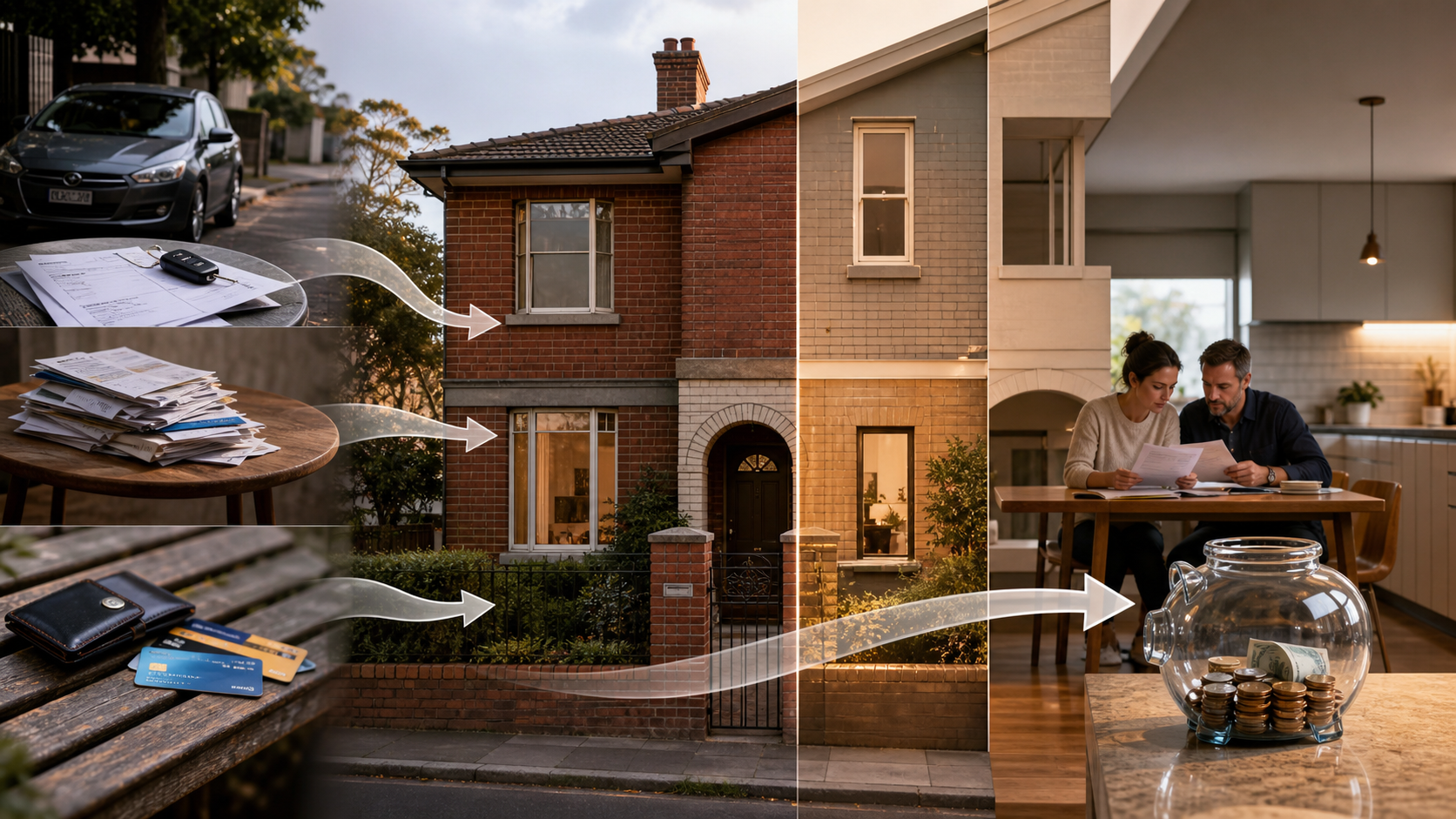
Step 1: Decide if consolidation is actually the right move
Debt consolidation means rolling multiple higher‑rate debts (credit cards, personal loans, BNPL, tax debt) into a single home‑loan split secured by your property.
Used well, it:
- Lowers your average interest rate
- Reduces monthly minimums
- Buys time to reset your budget
Used badly, it:
- Extends short‑term spending over 25–30 years
- Encourages re‑using cleared cards (a key failure driver noted in earlier guidance on consolidation)
- Over‑exposes the family home to lifestyle debt
When it usually makes sense in Alexandria / inner south:
- You’re paying 14–22% on cards and 10–15% on personal loans.
- You have 10%+ equity even after the new consolidated loan.
- You can commit to closing or heavily reducing limits on cleared facilities.
- You’re willing to treat the new split like a 3–7 year term, not a second 30‑year mortgage.
If your situation also includes business loans, tax debt or multiple properties, you’re firmly in the “get local, integrated advice” camp – see how to choose in /insights/digital-broker-vs-local-alexandria-specialist.
The strategy continues below
You've seen the problem and the groundwork — now unlock the exact steps our CPA-certified brokers use, including 4 more sections. Enter your email for instant, free full access.
Free access. No spam — unsubscribe anytime. Your details stay confidential.
Frequently asked questions
Is rolling credit cards into my mortgage always a good idea?▾
How much home equity do I need to consolidate debts safely?▾
Can I consolidate tax or business debts into my home loan?▾
Speak with a specialist advisor
Confidential consultation, bespoke advice for your situation.