Article
How To Build Buffers And Contingency Plans For Strata Loans
Practical buffer and contingency rules for Australian strata schemes taking on a building loan. Clear targets, worked examples and what to do if things go wrong.
Key Takeaway
When a strata scheme borrows, it should set explicit cash buffers, levy buffers, and cost contingencies to protect owners if works or interest costs run over budget. A practical approach is to add 10–20% to capital works budgets, maintain at least one year of loan repayments in the capital works fund, and stress‑test levies at 2–3% higher interest rates. Clear contingency triggers and pre‑agreed responses help schemes act quickly if arrears or builder issues emerge.
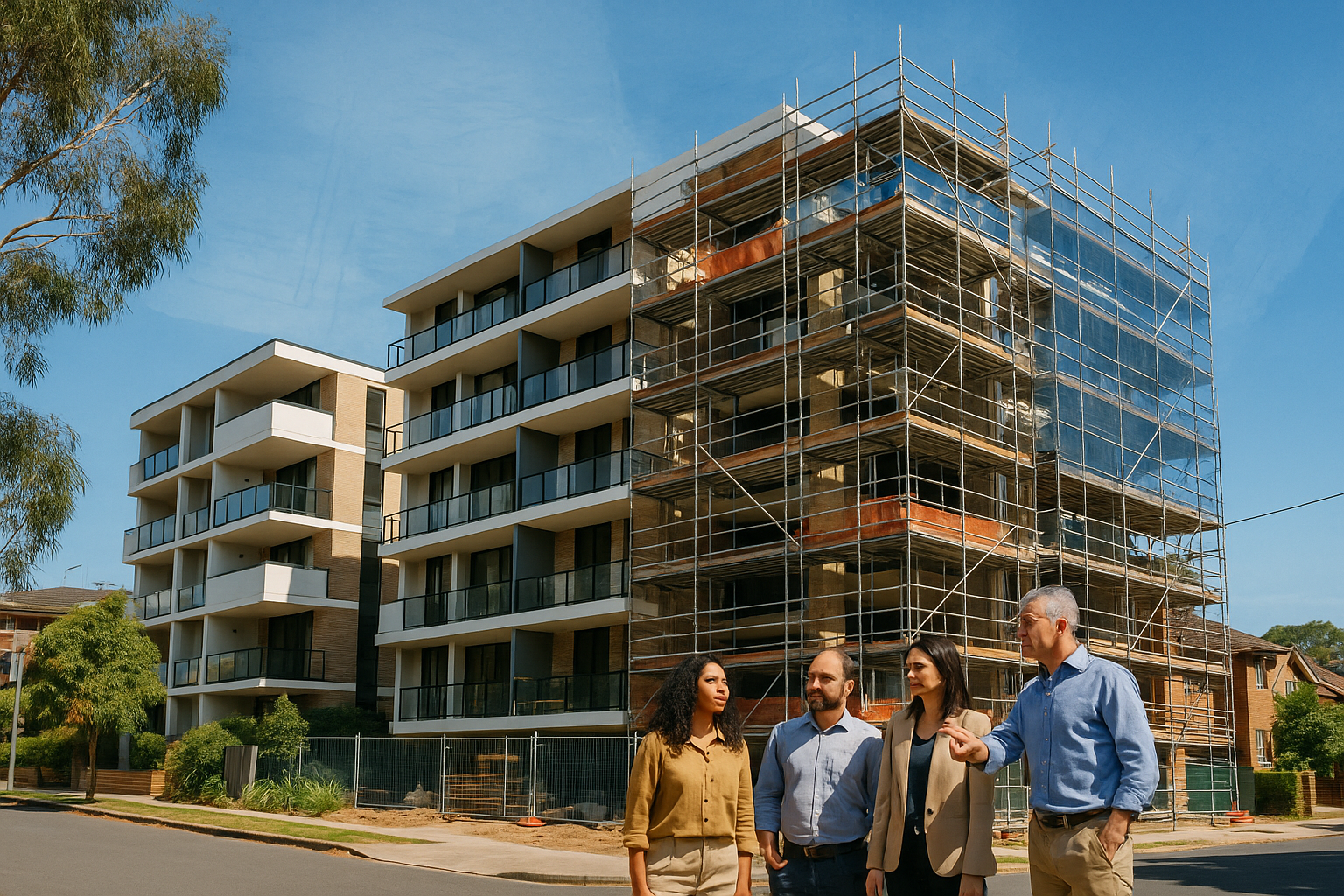
Designing buffers and contingency plans when your strata scheme borrows isn’t about being pessimistic. It’s about making sure one surprise bill, rate rise or slow‑paying neighbour doesn’t tip the whole building into stress.
In practice, that means setting clear buffer targets (cash, levies and costs), stress‑testing them, and agreeing in advance what happens if things go off script. This guide walks you through a decision‑ready plan your committee can adopt this week.

1. Why buffers matter more when your building has a loan
When an owners corporation takes on a strata loan, every owner is effectively leveraging their home or investment to fix or improve the building. That amplifies both upside and downside.
Key risks to plan for include:
- Cost overruns – works come in 10–30% above quote once defects are exposed.
- Levy stress – some owners struggle with higher levies, especially if interest rates rise.
- Arrears clusters – a few non‑paying lots can shift more cost onto everyone else.
- Timing shocks – delays extend interest‑only periods and temporary levy increases.
Roy Morgan’s 2026 research shows over 30% of Australian mortgage holders are already “At Risk” of stress based on repayment‑to‑income ratios. Add a building loan on top, and you can easily push marginal owners over the line.
A well‑designed buffer framework reduces the odds that:
- urgent repairs are delayed because “we’re out of cash”, or
- the loan has to be refinanced under stress on bad terms, or
- you’re forced into emergency special levies that trigger owner hardship.
If you need a refresher on how strata loans themselves work, read “Strata Building Loans In Australia: What Really Happens Step‑By‑Step” alongside this guide.
2. The three buffer layers every borrowing strata should have
Think in layers. A resilient scheme doesn’t rely on one number in one bank account.
2.1 Building‑level cash buffer
This is the money sitting in your:
- administrative fund – day‑to‑day running costs; and
- capital works (sinking) fund – long‑term repairs and loan repayments.
For schemes with a building loan, a practical target is:
- Admin fund buffer: 3–6 months of ordinary running costs (insurance, cleaning, utilities, basic maintenance).
- Capital works buffer: at least 6–12 months of strata loan repayments (interest plus principal) once the loan is fully drawn.
These align with personal buffer rules we use for borrowers – 3–6 months of total living costs and loan repayments is a sensible minimum for stable incomes, and 6–12 months for more volatile situations.
2.2 Levy and interest‑rate buffer
Don’t set levies assuming today’s interest rate lasts forever. APRA already expects banks to apply a 3% buffer above current mortgage rates when assessing individuals. Your scheme should borrow with similar caution.
That means:
- Modelling repayments at 2–3% above the loan’s starting rate; and
- Designing levies so the scheme can still cover:
- loan repayments at the stressed rate,
- planned capital works contributions, and
- a small surplus to rebuild buffers over time.
2.3 Project‑level cost contingency
Major works almost never land exactly on budget. For most capital works and defect projects, a sensible contingency is:
- 10–20% of construction cost for known scope in a sound building.
- 20–30% if you’re opening up an older building with water ingress, structural issues or cladding risks.
Notice how this echoes the renovation buffer rules we use for owner‑builders: separate the construction contingency (10–20%+) from your personal living cost buffer.
3. How to size your strata loan buffers with real numbers
Let’s put some numbers around this so your committee can walk into the next meeting with a concrete proposal.
3.1 A worked building example
Assume:
- Loan amount: $1,200,000
- Term: 10 years, principal and interest
- Interest rate (illustrative only): 7.0% p.a.
Approximate annual repayment (using a standard amortisation formula) is about $167,000, or $13,900 per month.
Minimum capital works buffer
Using the 6–12 month guideline:
- 6‑month buffer ≈ $83,500
- 12‑month buffer ≈ $167,000
So a practical policy could be:
“Within 24 months of drawing the strata loan, the capital works fund will maintain a minimum balance equal to nine months of loan repayments (currently $125,000), in addition to reserves for planned future works.”
3.2 Stress‑testing interest rates and levies
Now stress‑test at a 3% higher rate – not because you expect that this year, but because it’s what makes the building robust.
- Stressed rate: 10.0% p.a.
- Approx. annual repayment ≈ $195,000 (about $16,250 per month)
That’s an extra $28,000 per year compared with the base scenario.
If the building has 40 lots, that extra cost works out to roughly:
- $28,000 ÷ 40 ≈ $700 per lot per year, or
- about $13.50 per week per lot.
Your job is to decide:
- Would most owners in this building cope with that extra $13–20 per week?
- Do you need to phase in higher levies early to build a buffer while times are relatively good?
This kind of per‑lot comparison is the same logic we use in “Strata Building Loans In Australia: What Really Happens Step‑By‑Step”: owners understand the numbers once they’re converted into weekly impacts.
3.3 Comparing buffer strategies: cash vs higher levies vs bigger loan
Your scheme can build resilience in three main ways:
| Strategy | How it works | Pros | Cons |
|---|---|---|---|
| Larger cash buffer up‑front | Raise extra funds now via levies or loan for reserves | Strong safety margin; fewer surprises later | Higher levies or debt from day one |
| Higher ongoing levies (no extra loan) | Set levies above bare minimum and accumulate surplus slowly | Less initial shock; owners see gradual buffer building | Takes years to build; vulnerable early in the loan |
| Bigger strata loan facility | Borrow more than works cost and park surplus in capital fund | Cash buffer in place immediately; flexible if issues arise | More interest over life of loan; needs discipline not to spend it on non‑essentials |
There’s no one right choice. In practice, many schemes combine:
- a modest additional borrowing (say 5–10% of project cost) to seed the buffer; and
- levies set slightly above minimum to rebuild and maintain it.
If the scheme is already stretching, keep an eye on later options like refinancing once the building is de‑risked – see “Refinance Or Restructure Your Strata Building Loan The Smart Way”.
The strategy continues below
You've seen the problem and the groundwork — now unlock the exact steps our CPA-certified brokers use, including 6 more sections. Enter your email for instant, free full access.
Free access. No spam — unsubscribe anytime. Your details stay confidential.
Frequently asked questions
How big should our capital works fund buffer be when we have a loan?▾
Should we borrow extra to build a buffer, or just raise levies?▾
What contingency percentage should we allow for construction cost overruns?▾
How do we protect owners who might struggle with higher levies?▾
What happens if we still run into trouble despite our buffers?▾
Speak with a specialist advisor
Confidential consultation, bespoke advice for your situation.