Article
How One Dover Heights Investor Turned Home Equity Into Three Properties
How a Dover Heights owner used home equity to buy two more properties, stay safely geared and protect the family home. Simple numbers, clear structure, and steps you can copy this week.
Key Takeaway
This case study shows how a Dover Heights investor used equity from a $4.2m family home to safely fund two additional properties while keeping total portfolio LVR under 70% and maintaining six months of holding costs in offset. It explains the loan splits, buffers, and stress-testing used, factoring in 2026–27 negative gearing changes and APRA’s 3% serviceability buffer. Readers gain a practical, repeatable framework to structure their own equity-release and portfolio plan.
You can use Dover Heights home equity to build a balanced property portfolio if you cap your leverage, ring‑fence the family home and keep serious cash buffers. This case study walks through a real‑world style structure and numbers you could adapt this week, using conservative assumptions and the coming 2026–27 tax changes.
The starting point: strong equity, low debt, busy life
Our investor, "Sarah", is a mid‑40s professional living in Dover Heights.
- Family home value: ~$4.2m
- Existing home loan: $1.4m (P&I, 25 years remaining)
- Existing LVR: ~33%
- Household income: solid but variable bonuses
- Goal: build a 3‑property portfolio (home + 2 investments) to support work flexibility in her 50s.
Like many Eastern Suburbs clients, she was time‑poor and risk‑aware, not chasing maximum gearing.
We’d already sketched a 10–15 year map similar to the one in "How a Dover Heights Family Can Build a 15‑Year Property and Mortgage Game Plan".
Step 1: How much Dover Heights equity was safe to tap?
We use the same guardrails outlined in "How Much Equity Can You Safely Tap From a Dover Heights Home?":
- Cap home LVR at 60–65% (not 80%).
- Keep 6 months of full holding costs in offset.
- Model no tax benefit from rental losses on new established properties after 1 July 2027.
Quick equity maths
- Target home LVR: 60%
- 60% of $4.2m = $2.52m
- Existing loan: $1.4m
- Potential equity release pool (theoretical): $1.12m
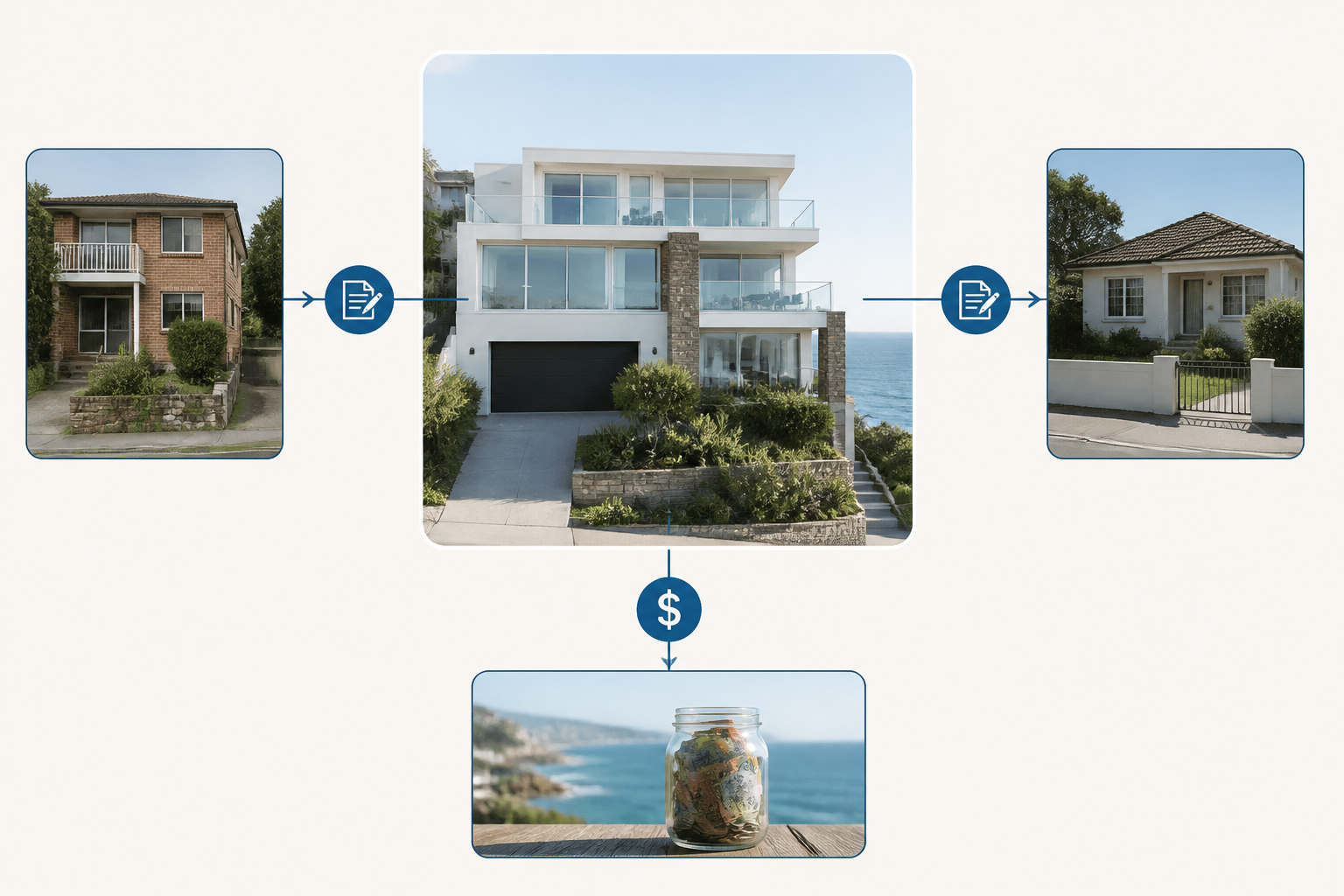
We did not use the full $1.12m. We carved it into:
- $700k: investment deposits + costs
- $200k: pure cash buffer (6+ months total holding costs)
- Rest: left untouched as extra safety margin
This kept the actual LVR just under 58% after the equity release.
The strategy continues below
You've seen the problem and the groundwork — now unlock the exact steps our CPA-certified brokers use, including 4 more sections. Enter your email for instant, free full access.
Free access. No spam — unsubscribe anytime. Your details stay confidential.
Frequently asked questions
How much equity should a Dover Heights owner use for investing?▾
Is it risky to use one Dover Heights home to fund multiple investment properties?▾
Should I focus on new builds or established properties after the 2026 negative gearing changes?▾
Speak with a specialist advisor
Confidential consultation, bespoke advice for your situation.