Article
Dover Heights borrowers: local broker, big bank or online lender?
For most Dover Heights borrowers, a strong local mortgage broker will beat a bank branch or non‑local broker on lender fit, valuation management and long‑term structuring. This guide shows who should use which option – and what to do this week.
Key Takeaway
For most Dover Heights borrowers, a local mortgage broker who works the suburb daily is usually a better first call than a bank branch or non-local broker, particularly for higher-value homes and complex incomes. With 28.2% of Australian mortgage holders now ‘At Risk’ of stress, according to Roy Morgan, lender choice, policy fit and realistic valuations matter more than ever. The actionable insight: map your situation and speak to a Dover Heights-focused broker before lodging any loan application.
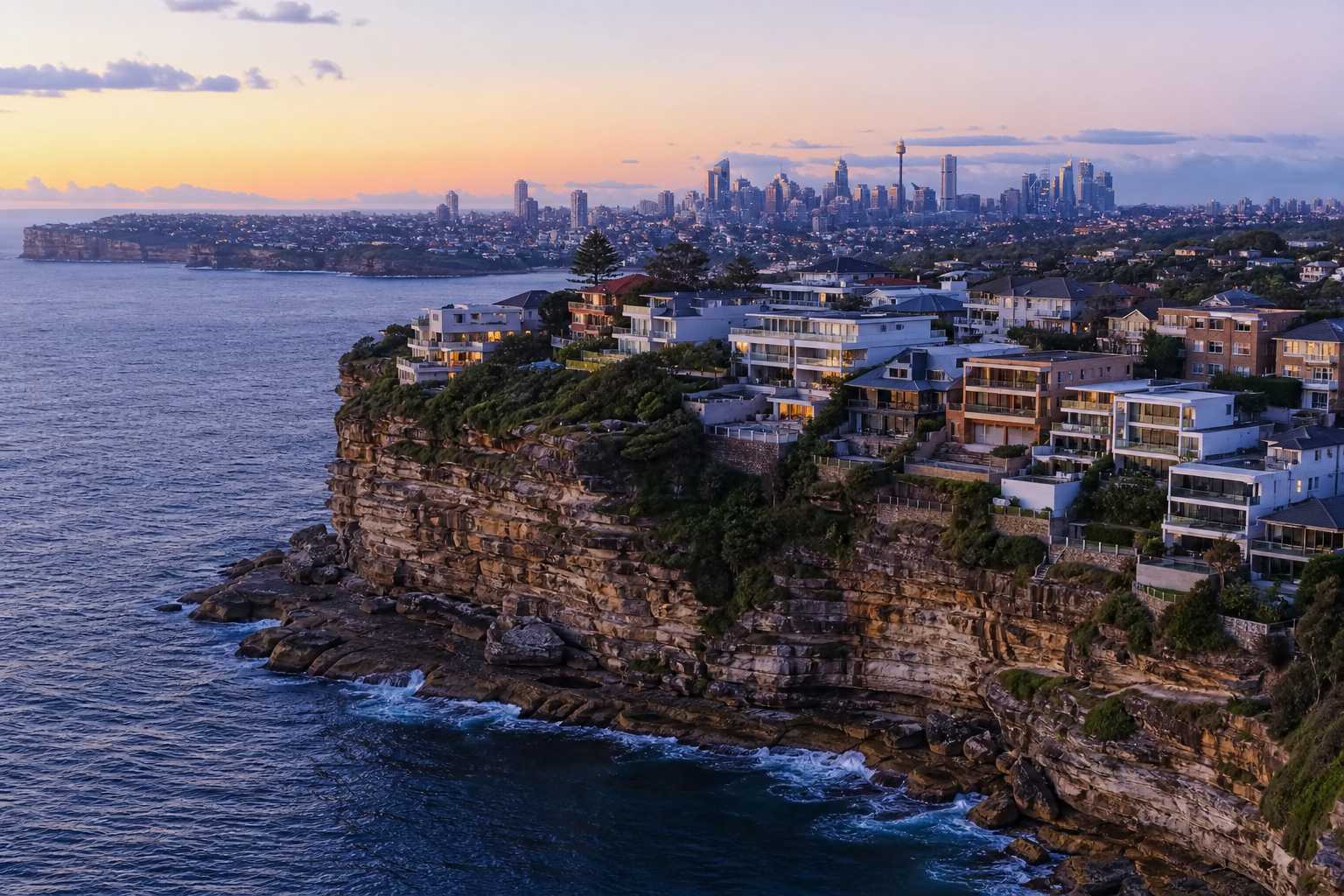
Dover Heights borrowers: local broker, big bank or online lender?
For most Dover Heights buyers, upgraders and investors, a strong local mortgage broker will usually beat a bank branch or non‑local broker on lender fit, valuation management and long‑term structuring. Banks and simple online options can still work for very straightforward PAYG loans where you value speed and sticking with your existing lender, but they rarely give you the best overall outcome in a high‑value, nuanced market like Dover Heights.
According to Roy Morgan, 28.2% of Australian mortgage holders were already ‘At Risk’ of mortgage stress in early 2026, with more pressure expected if interest rates rise further. In that environment, the decision about who you speak to first – local broker, bank or online lender – is not just about a headline rate; it’s about risk, flexibility and how well they understand Dover Heights.
This guide is written so you can make a decision this week, not “one day”.

1. The real decision: who should you talk to this week?
When you strip away the marketing, you’re choosing between three broad options:
- A Dover Heights–focused local broker – independent, usually accredited with 20–40 lenders, and bound by Best Interests Duty for consumer loans.
- Your main bank – one lender’s products and policies, with staff not subject to Best Interests Duty.
- A non‑local or online broker/app – broader lender access than a bank, but often with weaker local valuation insight and less tailored structuring.
Quick rule-of-thumb
You probably lean local Dover Heights broker if:
- You’re buying or refinancing a $2m–$6m home or investment locally.
- You’re self‑employed, a professional with variable income or own a small business.
- You expect to upgrade, convert a home to an investment, or build a portfolio over the next 5–15 years.
- You’ve had a knock‑back or low valuation from a bank before.
You might lean your bank if:
- You’re PAYG, borrowing at a low LVR (e.g. ≤60–70%).
- Your income, property and plans are all straightforward.
- Your current lender is already offering sharp pricing and you value simplicity over optimisation.
If you’re unsure, reading how local and non‑local options differ across the Eastern Suburbs more broadly in /insights/boutique-broker-vs-banks-eastern-suburbs and /insights/rose-bay-mortgage-broker-vs-banks-non-local will help you triangulate your situation.
2. How a Dover Heights-focused broker actually differs from your bank
A lot of people still think the main broker vs bank difference is just “who has the best rate”. That’s only one piece – and often not the decisive one.
2.1 Lender choice, policy fit and Best Interests Duty
Most established Australian mortgage brokers are accredited with roughly 20–40 lenders, including major banks, second‑tier banks and non‑banks (Fact 1). That means a Dover Heights broker can:
- Match your income type (PAYG, self‑employed, trust distributions, bonuses) to lenders that treat it most generously.
- Work around quirks like existing investment debt, HELP, car loans or business facilities.
- Avoid wasting time with lenders whose credit policy will clearly say no (Fact 11).
By contrast, your bank can only ever offer its own products. If its policy doesn’t like your income, property type or postcode, the answer is effectively “no”, even if five other lenders would happily say yes.
Since 1 January 2021, brokers arranging consumer home loans must comply with a statutory Best Interests Duty, while bank staff are not (Fact 5; see /insights/mortgage-broker-myths-australia). Practically, this means a Dover Heights broker must be able to explain:
- Why they shortlisted certain lenders for you.
- Why they’re recommending one over another.
- How it aligns with your long‑term goals, not just today’s rate.
Also important: broker commissions are built into lenders’ distribution costs whether or not you use a broker, so going straight to the bank rarely leads to a “cheaper because no broker” rate (Fact 8).
2.2 Local valuation know‑how in a clifftop market
Dover Heights is not a vanilla suburb. You have:
- Dramatic clifftop and harbour views where small differences in outlook can shift value by hundreds of thousands.
- Streets with very different buyer demand and depth.
- Older homes with knock‑down potential beside high‑spec architectural builds.
In similar high‑value suburbs like Rose Bay, valuation outcomes and lender appetite for specific streets and buildings can materially change borrowing capacity and LVR‑driven costs like LMI (Fact 12). Dover Heights is no different.
A local broker who works these streets week in, week out will generally know:
- Which lenders’ valuation panels tend to be more conservative or realistic here (Fact 15).
- Where a desktop or kerbside valuation is likely to come in low – and when to push for a full internal inspection with better comparables.
- How to frame the property’s features in the valuation request to support a fair market value.
A 3–5% valuation difference on a $3m Dover Heights property is $90k–$150k – enough to:
- Push your LVR above 80% and trigger LMI.
- Reduce or increase how much equity you can safely access.
- Change which lenders will touch the deal at all.
2.3 Structuring for future upgrades, investments and tax
A local boutique broker is more likely to design loan structures that anticipate you later converting a home to an investment or adding properties, keeping deductible and non‑deductible debt clearly separated from day one (Fact 6; see /insights/boutique-broker-vs-banks-eastern-suburbs).
Done well, this looks like:
- Separate splits for your current home, each investment property and any equity used for future deposits (Facts 17 and 18).
- Clear labelling of each split by purpose (home, investment, business).
- Offsets aligned with non‑deductible debt to prioritise cash savings in the right place.
For self‑employed owners or professionals running a practice, a broker who understands both residential and business lending can also structure separate loan splits for home, investment and business purposes to preserve future interest deductibility and flexibility (Fact 10; see /insights/specialist-support-self-employed-professionals-eastern-suburbs).
Many bank staff simply default to “one big loan” or put business and personal borrowings in the wrong bucket – fine in year one, costly by year ten.

The strategy continues below
You've seen the problem and the groundwork — now unlock the exact steps our CPA-certified brokers use, including 7 more sections. Enter your email for instant, free full access.
Free access. No spam — unsubscribe anytime. Your details stay confidential.
Frequently asked questions
Is a Dover Heights mortgage broker more expensive than using my bank?▾
Can a local broker actually get better rates than my bank?▾
How does a local broker help with refinancing in Dover Heights?▾
I’m self-employed in Dover Heights and my bank said no. Can a broker still help?▾
Do I need to meet a Dover Heights broker in person, or is online fine?▾
How early should I talk to a broker before buying in Dover Heights?▾
Speak with a specialist advisor
Confidential consultation, bespoke advice for your situation.