Article
Getting Equipment Finance After a Credit Blip or ATO Debt
A practical Australian guide to getting equipment finance when you’ve had a recent credit blip, late payments or an ATO debt – and what to fix first this week.
Key Takeaway
Australian businesses can still access equipment finance after a credit blip or ATO debt if they stabilise cashflow, document repayment history, and choose the right lender tier. Lenders focus on recent conduct, with many wanting 6–12 months of clean bank statements and proof of ATO arrangements. By sequencing tax clean-up, using realistic terms and deposits, and avoiding unnecessary home security, owners can secure productive assets while rebuilding their credit profile.
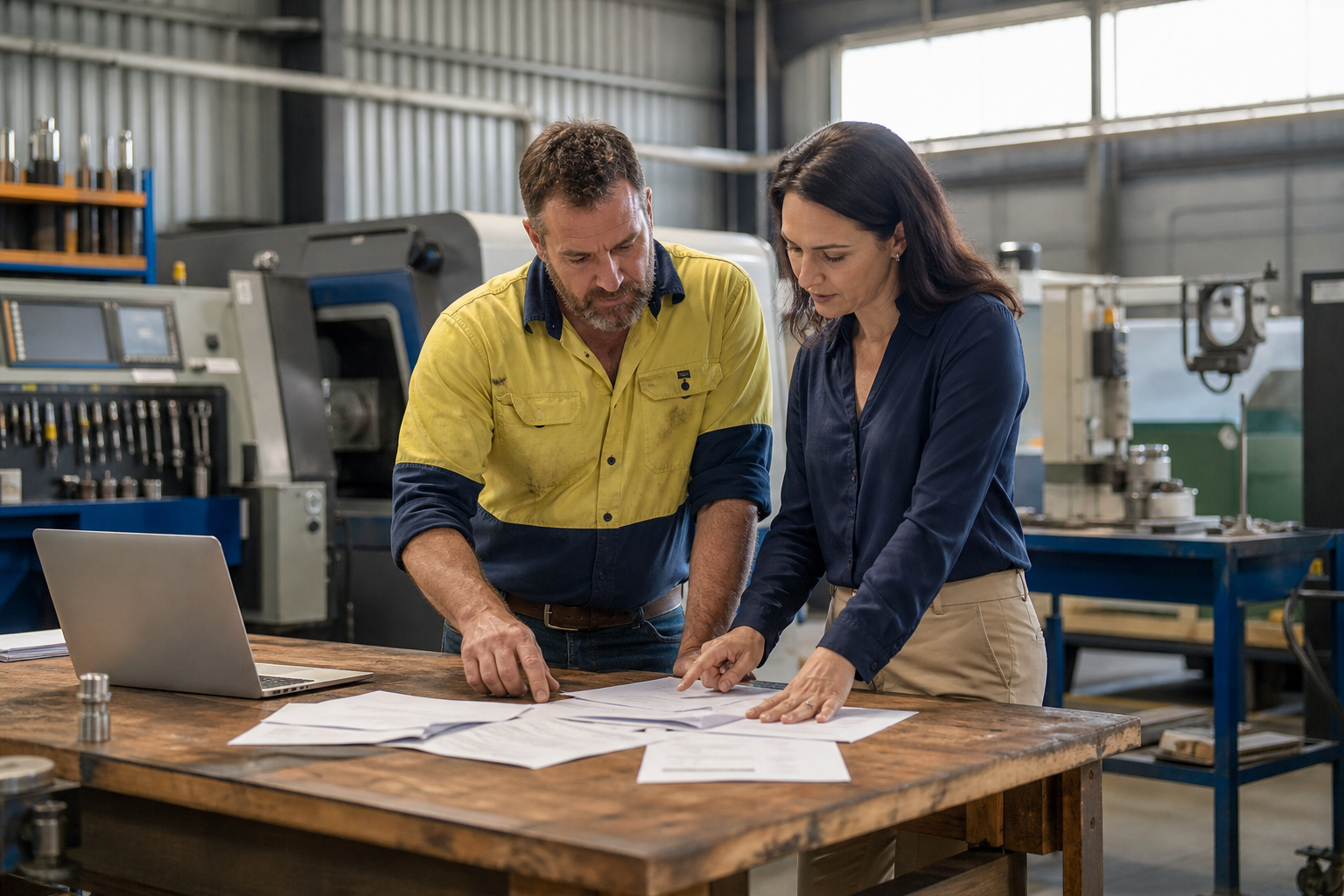
You can still get equipment finance after a credit blip or an ATO debt, but it won’t be a “tick and flick” approval. Lenders will want to see that the issue is under control, that your cashflow supports repayments, and that the new gear will genuinely lift income. The key is sequencing: fix the right things first, then apply in a way that fits how lenders think.
In this guide, we’ll step through what credit blips and tax debts actually mean to equipment lenders, which options are realistic, and what you can do this week to improve your chances – without automatically putting your home on the line.

1. How lenders see credit blips and ATO debt
1.1 What counts as a “credit blip”?
For equipment finance, a “credit blip” is anything that suggests you might struggle to meet future repayments. Common examples:
- Late payments on credit cards, personal loans or business facilities
- Overdrawn business accounts or regular dishonours
- Small paid defaults (telco, utilities, supplier)
- A prior arrangement to pay with a lender
- One-off missed BAS or super payments
A serious impairment is a step up from that:
- Unpaid defaults or judgments
- External administration, Part IX/X, bankruptcy
- Multiple recent arrears across facilities
Some mainstream equipment lenders will decline serious impairments outright. But specialist and “near-prime” lenders exist for exactly this space – they just price and structure for the risk.
1.2 How ATO debt changes the conversation
Nearly every small business has had a tight period where PAYG or GST slipped. For lenders, ATO debt is less about morality and more about priority:
- The ATO sits above other unsecured creditors.
- If things go wrong, the ATO gets paid before the lender.
So lenders want to know:
- Is there an ATO debt now?
- Is there a formal payment plan in place?
- Have the last 3–6 payments been made on time?
- Has the ATO ever issued recovery action (garnishee, director penalty notice)?
A disclosed, well-managed ATO plan is usually better than a hidden or erratic one. Trying to bury it will often backfire once bank statements and tax portals are reviewed.
1.3 The three questions every lender asks
Behind all the policy, most equipment lenders are asking:
- Can you pay? – Cashflow, not just turnover, after expenses and owners’ drawings (see fact 14).
- Will you pay? – Your conduct: bank statements, repayment history, ATO behaviour.
- If you don’t, what can we recover? – The resale value and liquidity of the gear.
When you’ve had a blip or an ATO issue, you can’t change the past. But you can work hard on the next two: strong, stable cashflow and a cleaner story from today.
2. What’s still possible – and what probably isn’t
2.1 Likely scenarios after a credit blip
Depending on how recent and serious your issues are, your equipment finance options generally fall into four buckets:
| Situation | Likely lender tier | Typical term | Pricing (illustrative only) | Conditions |
|---|---|---|---|---|
| Minor paid default, 12+ months clean conduct | Mainstream bank / prime | 3–7 years | Lower, more competitive | Standard docs, asset as security |
| ATO plan in place, 6–12 months on-time payments | Prime or near-prime | 3–5 years | Slightly higher | Evidence of plan & statements |
| Recent arrears, unpaid defaults, cashflow tight | Near-prime / specialist | 2–5 years | Noticeably higher | Lower LVR, more deposit, tighter terms |
| Current external administration or bankruptcy | Very limited | Case-by-case | Highest | Often needs security / guarantors |
All pricing ranges are indicative only and will vary by lender, asset and risk profile. They are not quotes or promises.
2.2 New vs used gear when credit is impaired
When your file isn’t perfect, lenders are more sensitive to the underlying asset:
- New, standard gear (vans, common machinery, mainstream medical equipment) is easier. Resale is strong, so lenders are more comfortable funding 100% for good operators.
- Used gear often attracts lower maximum LVRs, shorter terms and higher pricing because of weaker resale value and higher reliability risk (see fact 12).
- Specialised or one-off assets are harder again – you may need more cash in or additional security.
If your credit is bruised, prioritise equipment that is easy to value and sell. It keeps more lenders on the table.
2.3 Will they want your home as security?
Some lenders will ask to secure the loan against your home, especially if:
- You’re a start-up with limited trading history
- You want a high LVR on older or niche equipment
- You have significant past arrears or unpaid defaults
Using home equity can shave the rate slightly, but it materially increases the risk of losing the family home if the business fails (see fact 11 and /insights/using-property-security-mascot-business-equipment-risks-alternatives).
For many owners, it’s safer to:
- Use stand-alone equipment finance over 3–7 years that matches the asset life (facts 2 and 6)
- Keep home and business debt ring‑fenced, even if the headline rate is a bit higher
A broker who works across home, business and tax can help you stress-test the trade-offs.
The strategy continues below
You've seen the problem and the groundwork — now unlock the exact steps our CPA-certified brokers use, including 6 more sections. Enter your email for instant, free full access.
Free access. No spam — unsubscribe anytime. Your details stay confidential.
Frequently asked questions
Can I get equipment finance with an active ATO payment plan?▾
How long after a default should I wait before applying for equipment finance?▾
Will I be forced to use my home as security for equipment finance?▾
Is it smarter to clear my ATO debt before buying equipment?▾
What documents do lenders need if I’ve had a credit blip?▾
Are there specialist lenders for bad credit equipment loans?▾
Speak with a specialist advisor
Confidential consultation, bespoke advice for your situation.