Article
How to Finance a New or Off‑the‑Plan Apartment in Green Square
A practical, decision‑grade guide to financing a new or off‑the‑plan apartment in Green Square, including deposits, contract‑to‑settlement timelines, valuation risk and how to choose the right loan structure this week.
Key Takeaway
This guide explains how to finance a new or off‑the‑plan apartment in Green Square by planning for deposit size, contract‑to‑settlement timelines, and valuation risk. Buyers typically need a 5–10% deposit at exchange plus around 3–6% for costs, and must pass APRA’s 3% serviceability buffer at settlement. It outlines loan structure options, local high‑density postcode issues, and a concrete one‑week action list so readers can make a finance‑ready decision quickly.
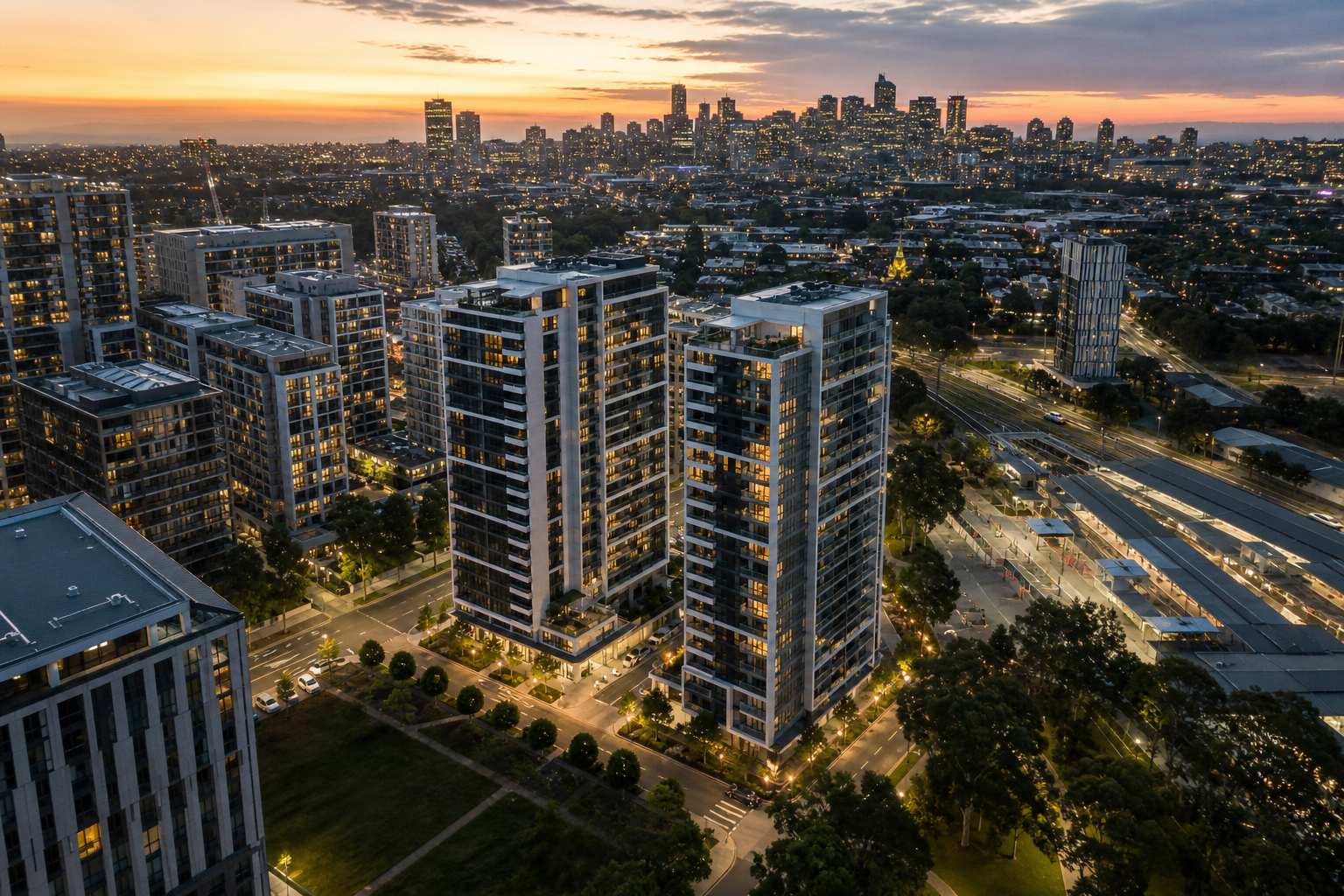
Buying a new or off‑the‑plan apartment in Green Square is all about matching your finance to a long, moving timeline. You’ll usually need a 5–10% deposit at exchange, another 3–6% for costs, and a loan that will still pass APRA’s 3% serviceability buffer at settlement. The key is to plan for valuation changes, lender policy shifts and your own income or business position over the whole build.
This guide focuses on Green Square specifically — Zetland, Waterloo, Rosebery and surrounds — so you can decide, this week, whether a particular project and price point are actually financeable for you.

1. Why Green Square finance is different to a suburban build
Financing in Green Square isn’t the same as buying a house in a middle‑ring suburb. It’s a dense apartment market, with high‑rise, mixed‑use and some buildings that lenders treat as higher risk.
1.1 High‑density postcode rules
Many lenders classify parts of Green Square as high‑density postcodes.
That can mean:
- Lower maximum loan‑to‑value ratios (LVRs) – e.g. 80% instead of 90–95% for some projects.
- Stricter valuation methods and more conservative comparable sales.
- Some lenders declining certain buildings entirely.
For the same Green Square apartment, different lenders can offer different maximum LVRs and very different valuations, which directly changes your required deposit and usable equity (Fact, src: /insights/local-green-square-broker-building-knowledge).
1.2 Off‑the‑plan rules: valuation at completion
With off‑the‑plan, lenders don’t rely on the contract price alone. At settlement they generally lend against the lower of:
- Your contract price, and
- The valuer’s opinion of market value at completion.
If your $900,000 contract comes back with an $850,000 valuation at settlement, the bank will usually use $850,000. That can push your LVR above 80% and trigger Lenders Mortgage Insurance (LMI) and/or a larger cash contribution (Fact, src: /insights/off-the-plan-valuation-change-before-settlement).
1.3 Green Square: concentrated developer and building risk
In some stages of the cycle, a lot of stock in one pocket of Zetland or Waterloo can complete at the same time. That can:
- Put pressure on resale prices and rents in the short term.
- Make valuers more conservative.
- Change lender appetite for specific developers or projects.
Off‑the‑plan buyers in Green Square face the combined risk of valuation shortfall and policy drift if lender appetite for their building changes between contract signing and completion (Fact, src: /insights/local-green-square-broker-building-knowledge).
If you’re new to off‑the‑plan lending generally, it’s worth pairing this guide with Off‑the‑Plan Home Loan Basics and Eligibility in Australia.
2. Working out your budget and deposit for Green Square
Before you fall in love with a display suite, you need to know your numbers: deposit, costs and a realistic borrowing limit after buffers.
2.1 What price range is realistic?
Lenders assess your borrowing capacity using:
- Your income (PAYG, self‑employed, rental, dividends, etc.).
- Existing debts and credit cards.
- Living expenses benchmarked against HEM (Household Expenditure Measure).
- APRA’s required serviceability buffer – most lenders test that you can afford repayments if rates were 3% higher than today.
In a rapidly changing rate environment (the RBA cash rate moved from 0.10% to over 4% in just a few years), that buffer matters. It can cut capacity far more than most buyers expect.
2.2 How much deposit do you really need?
For a Green Square new or off‑the‑plan apartment, you’ll typically need:
- 5–10% deposit at exchange – paid from savings, equity, or family assistance.
- Another ~3–6% for costs, including stamp duty, legal fees, inspections and loan costs.
If your final LVR ends up above 80%, you’ll also pay LMI, which can be several thousand to tens of thousands of dollars depending on loan size.
Planning Deposits and Upfront Costs for Off‑the‑Plan Apartments walks through the national numbers in more detail; here we’ll anchor them in a Green Square‑sized purchase.
2.3 Worked example: Green Square off‑the‑plan purchase
Assume:
- Contract price: $950,000 (2‑bed in Zetland).
- Target LVR at settlement: 80%.
- Loan: $760,000.
- Required total contribution (20% + costs): say ~24% = $228,000.
Possible structure:
- $95,000 (10%) deposit at exchange.
- Another ~$133,000 saved or built up before settlement for the remaining contribution and costs.
If your final valuation came in at $900,000 instead, 80% LVR would cap the loan at $720,000. You’d suddenly need $230,000 in cash/equity rather than $190,000 — a $40,000 shortfall you must plug with extra savings, family help or a different lender.
2.4 Government schemes and first‑home buyers
If you’re a first‑home buyer, check whether you may be eligible for:
- State first‑home buyer stamp duty concessions or exemptions (thresholds change, and off‑the‑plan rules can differ).
- Federal guarantee schemes (which can allow 5% deposits without LMI, subject to price caps and allocation limits).
- First Home Super Saver Scheme (FHSS) – withdrawing voluntary super contributions.
These schemes can shorten the path to a Green Square apartment, but they don’t remove valuation or settlement risk. You still need capacity to clear APRA’s 3% buffer at settlement.

The strategy continues below
You've seen the problem and the groundwork — now unlock the exact steps our CPA-certified brokers use, including 6 more sections. Enter your email for instant, free full access.
Free access. No spam — unsubscribe anytime. Your details stay confidential.
Frequently asked questions
Can I get a 10% deposit loan for a Green Square off-the-plan apartment?▾
What if my Green Square apartment values below the contract price at settlement?▾
Is it harder to get a loan for a small Green Square unit (under 50 m²)?▾
How does being self-employed affect my Green Square off-the-plan finance?▾
When should I refinance after settling on a new Green Square apartment?▾
Is it safer to buy an established Green Square apartment instead of off-the-plan?▾
Speak with a specialist advisor
Confidential consultation, bespoke advice for your situation.