Article
Funding a Mascot Second‑Storey or Extension Without Wrecking Cashflow
A decision‑grade guide for Mascot owners planning a second‑storey addition or major extension. Learn how banks assess post‑renovation value, structure loans, and protect cashflow so your project is funded properly without putting your home or business at risk.
Key Takeaway
To finance a second-storey addition or extension near Mascot safely, owners usually use either a construction loan or an equity top‑up secured against current property value, while keeping a 10–15% contingency buffer in cash or offset and clear separation from business funds. Banks typically lend up to 80% of the lower of build cost plus land or post‑renovation value, subject to APRA’s 3% serviceability buffer. The key actionable step is modelling post‑reno repayments and cash buffers before signing any fixed‑price contract.
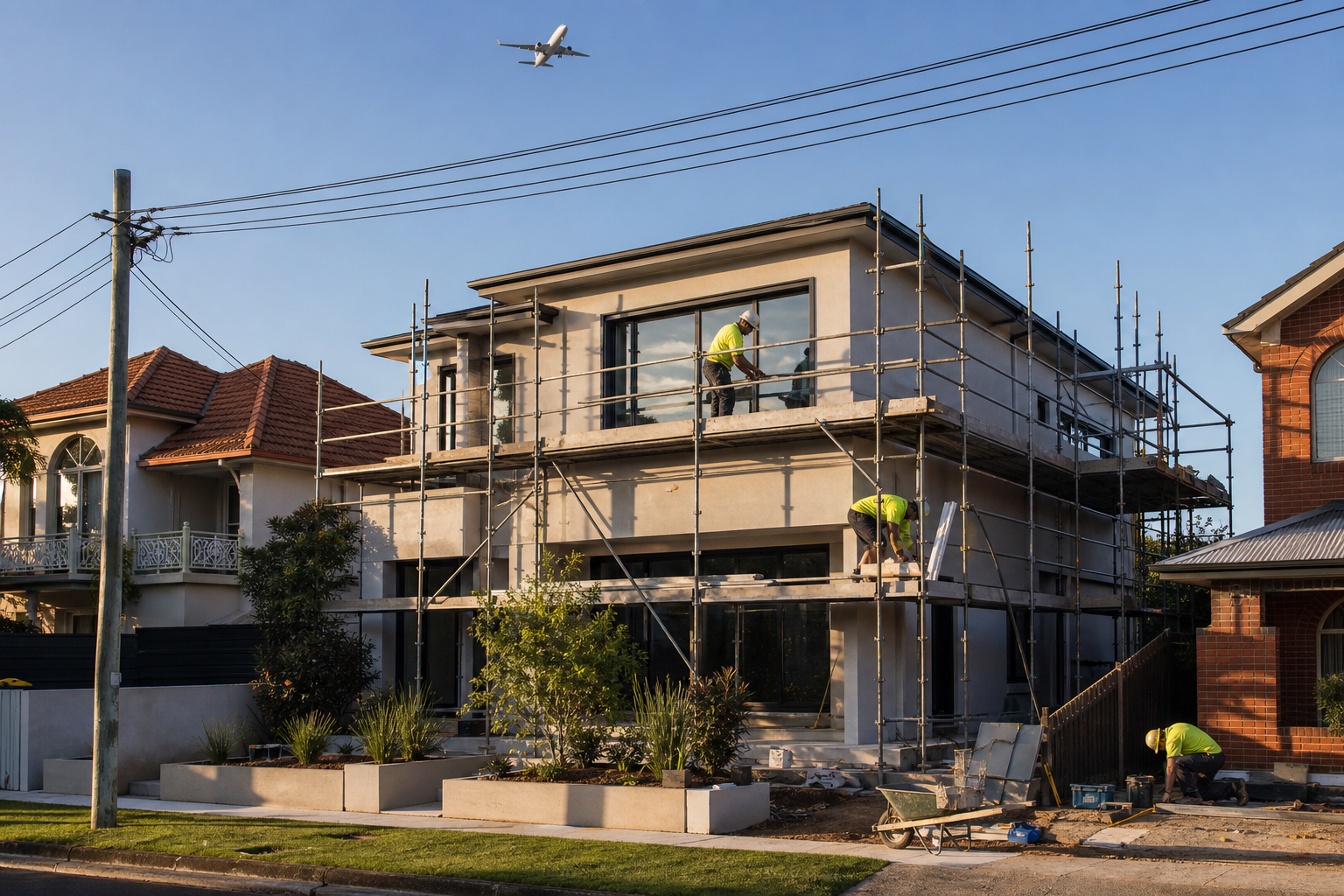
Planning a second‑storey addition or big extension around Mascot is exciting – more rooms, more light, and a home that finally fits your life.
In finance terms, though, it’s a construction project. That means banks, valuers and your cashflow all need to line up before you sign anything.
In simple terms: to fund a second‑storey or extension near Mascot, you’ll normally combine a construction‑style loan or equity top‑up with a cash buffer of 10–15% of build cost, and a clear plan for how the bank will value the finished home. The goal is a structure where your progress payments, living costs and (if you’re self‑employed) business cashflow can all survive delays, cost overruns and rate rises.
This guide is written so you can make two or three concrete decisions this week – not someday.
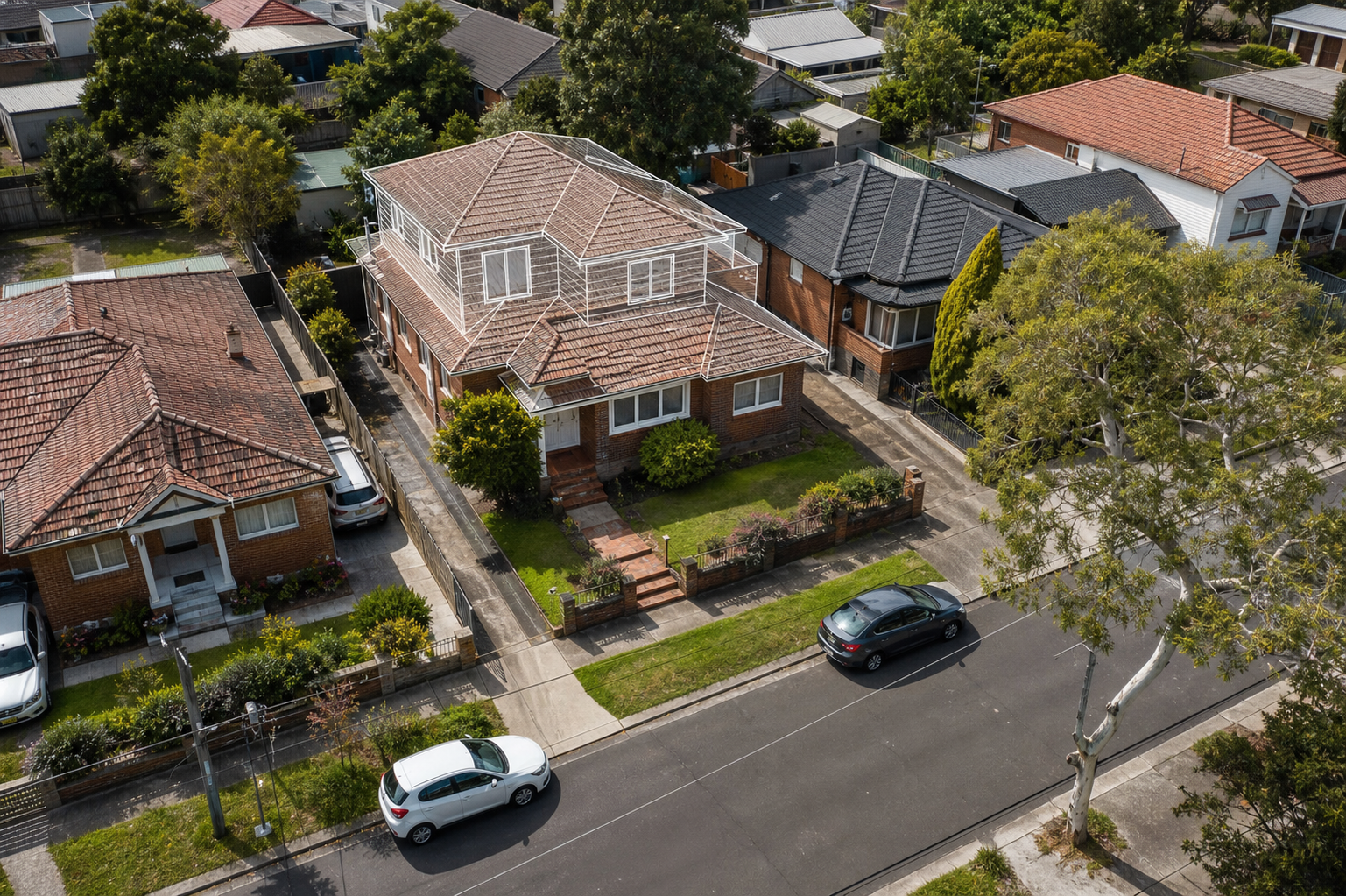
1. The finance basics for a Mascot second‑storey or extension
1.1 What you’re actually asking the bank to fund
When you add a second storey or major extension, the bank is really being asked to fund two things:
- Your current home plus land – what you already own.
- The proposed works – the build contract, approvals and associated costs.
Banks generally lend against whichever is lower:
- Current land + build contract cost; or
- The end value (post‑renovation valuation).
That “lower of” test is why you can’t assume that “spending $450k adds $450k of value”. In Mascot, value uplift usually tracks behind build cost, especially if you’re already near the top of the local price range.
1.2 Typical loan‑to‑value (LVR) limits
Indicative owner‑occupied bands many lenders work with:
- Up to 80% LVR – usually no LMI (Lenders Mortgage Insurance).
- 80–90% LVR – LMI usually payable; tougher shading on income.
- >90% LVR – niche territory, often unsuitable for major builds.
For a sizeable second‑storey or big extension, staying at or under 80% of end value (including the new loan) is usually the safest lane.
1.3 Serviceability and the 3% buffer
APRA expects banks to assess your ability to repay at at least 3% above the actual interest rate.
If your construction / home loan interest rate is 6.2% p.a., the bank models repayments at around 9.2% p.a.
That’s why:
- Borrowing to the absolute maximum is dangerous; and
- Self‑employed Mascot owners with lumpy income need extra headroom.
If you run a local business, pair this guide with the cash‑separation framework in The Simple Cashflow Structure Mascot Business Owners Actually Need.
2. Choosing a funding structure: construction loan vs equity top‑up
The right structure depends on build size, whether you’re staying in the house, and how your builder wants to be paid.
2.1 Construction loan – when you’re doing a full second‑storey or major extension
A construction loan is usually best if:
- You’re adding a full second storey or large ground‑floor extension;
- You have a fixed‑price contract with progress payments; and
- You want the bank to release funds in stages (slab / frame / lock‑up / fit‑out / practical completion).
With a construction loan:
- The lender uses your existing equity as the base security.
- You pay interest only on the drawn balance during construction.
- Progress payments are made directly to the builder after each stage is signed off by a valuer or inspector.
This is similar to the Bronte process outlined in How To Finance a Bronte Second‑Storey or Rear Extension Safely – just tuned to Mascot pricing and zoning.
2.2 Equity top‑up – when works are smaller or staged
An equity top‑up or additional loan split can work if:
- The build is less complex (e.g. rear extension only, not full second storey);
- Your builder doesn’t need a formal progress‑payment schedule; or
- You want to manage payments directly from your account.
Here, the bank:
- Revalues your property as is;
- Lends up to (say) 80% of that current value; and
- Gives you the additional funds as a lump sum or undrawn split.
You then pay the builder using that pool plus your own cash buffer.
2.3 Comparing options: which fits your project?
| Feature | Construction Loan | Equity Top‑Up / Split |
|---|---|---|
| Best for | Major second‑storey or big extension | Smaller / staged projects |
| How funds are released | Progress payments after each build stage | Lump sum or undrawn split |
| Interest during build | On drawn amount only, usually interest‑only | On full amount from day one (if drawn) |
| Bank oversight | Higher – valuations at each stage | Lower – you manage payments |
| Valuation focus | End value plus build contract | Current value only |
| Cash buffer needed | Still essential (10–15%+) | Essential, sometimes larger |
| Complexity | Higher (more paperwork, inspections) | Lower, but more self‑management |
If you’re unsure which way to go, that’s exactly the type of decision a single, coordinated broker can help with – see One Specialist Broker To Coordinate Home, Investment And Business Loans In Mascot.
3. How valuers look at your post‑renovation Mascot home
3.1 What is a “post‑renovation valuation”?
A post‑renovation valuation (also called “as if complete”) is a report where the valuer:
- Looks at your current land and dwelling;
- Reviews architect plans, specifications, and the build contract; and
- Estimates what the finished home would sell for in the current Mascot / Bayside market.
3.2 Key drivers of end value in Mascot
Valuers in Mascot typically focus on:
- Bedroom and bathroom count – moving from 2 to 4 bedrooms is often the single biggest uplift.
- Car parking – off‑street parking can be a major value lever.
- Overall land size and usability – backyard retained or improved.
- Quality of finishes – mid‑range vs top‑end, especially kitchens and bathrooms.
- Street and aircraft noise exposure – some pockets are noisier than others.
Adding a second storey may add substantial value, but if it creates a dark ground floor or removes practical yard space, the uplift can be capped.
3.3 Why “cost ≠ value” – a numerical example
Assume:
- Current Mascot house value (3 bed, 1 bath, 1 car): $1,400,000.
- You own it with a $800,000 loan (57% LVR).
- Proposed build cost (second storey + internal reconfiguration): $500,000.
The valuer might assess:
- End value: $1,750,000 (not $1.9m). Value uplift ~= $350,000.
Now test the bank’s “lower of” rule:
- Land + build cost = $1,400,000 + $500,000 = $1,900,000.
- End value = $1,750,000.
Bank will typically lend against $1,750,000.
If you target 80% LVR on completion:
- Max total debt ≈ 80% × $1,750,000 = $1,400,000.
- Current loan: $800,000.
- Maximum extra capacity ≈ $600,000.
On paper, that covers your $500,000 build plus a contingency. But if the val comes in lower – say $1.65m – your 80% cap is $1.32m and you’re $80,000 short.
That shortfall is why we emphasise buffers.
3.4 Post‑renovation valuation at completion
After the build, the bank may:
- Accept a final inspection report and sign‑off; or
- Order a fresh valuation to confirm the finished value.
If the end value is higher than forecast, you may unlock extra equity for future plans (like solar – see Should You Borrow Again For Solar After A Major Renovation?).
If it’s lower, don’t panic – as long as you stayed within buffers and did not over‑lever, it’s usually still manageable.

The strategy continues below
You've seen the problem and the groundwork — now unlock the exact steps our CPA-certified brokers use, including 8 more sections. Enter your email for instant, free full access.
Free access. No spam — unsubscribe anytime. Your details stay confidential.
Frequently asked questions
How do I finance a second‑storey addition near Mascot?▾
Will my renovation cost automatically add the same amount of value?▾
How much buffer do I need for a big renovation?▾
Should I use my business funds to help pay for my home extension?▾
Can I stay under 80% LVR and still fund a large extension?▾
Is a construction loan always better than an equity top‑up?▾
When should I organise finance in relation to my builder’s contract?▾
Speak with a specialist advisor
Confidential consultation, bespoke advice for your situation.