Article
Can First‑Home Buyer Grants and Schemes Help Pay For Solar?
You generally can’t use first‑home grants or FHBG to buy solar panels directly, but you can design your deposit and loan structure so solar is funded safely alongside your purchase. Here’s the decision‑grade version for this week.
Key Takeaway
First-home buyer grants and the First Home Guarantee (FHBG) generally cannot be used to pay for solar panels directly, as they must go toward the purchase price, deposit or stamp duty concessions. However, buyers can still fund solar by preserving cash buffers, using a separate home-loan split over 7–10 years, or timing solar after settlement via refinance or equity release. The most actionable step is to decide this week whether solar costs are included in your borrowing plan or staged for later.
Watch the short answer
Home loan tips for digital creators and freelancers
If you’re weighing up grants, schemes and cash flow, this video steps through home loan basics when your income is project or client based.
Read the transcript
If you earn your revenue through digital creator platforms or rolling freelance contracts, standard retail banks are programmed to treat you like a high-risk borrower. When their automated systems look for a standard corporate payslip, and find multiple payment platforms instead, they hit 'reject'. We don't use those systems. We use alternative documentation pathways specifically built for modern digital income. We utilise a 12-month smoothing model that verifies your true capacity straight from your bank deposits, entirely bypassing the outdated PAYG paperwork gatekeepers. DM me, 'CREATOR', to get your digital income assessed by a human.
General information only, not personal advice. Your situation is assessed before any recommendation.
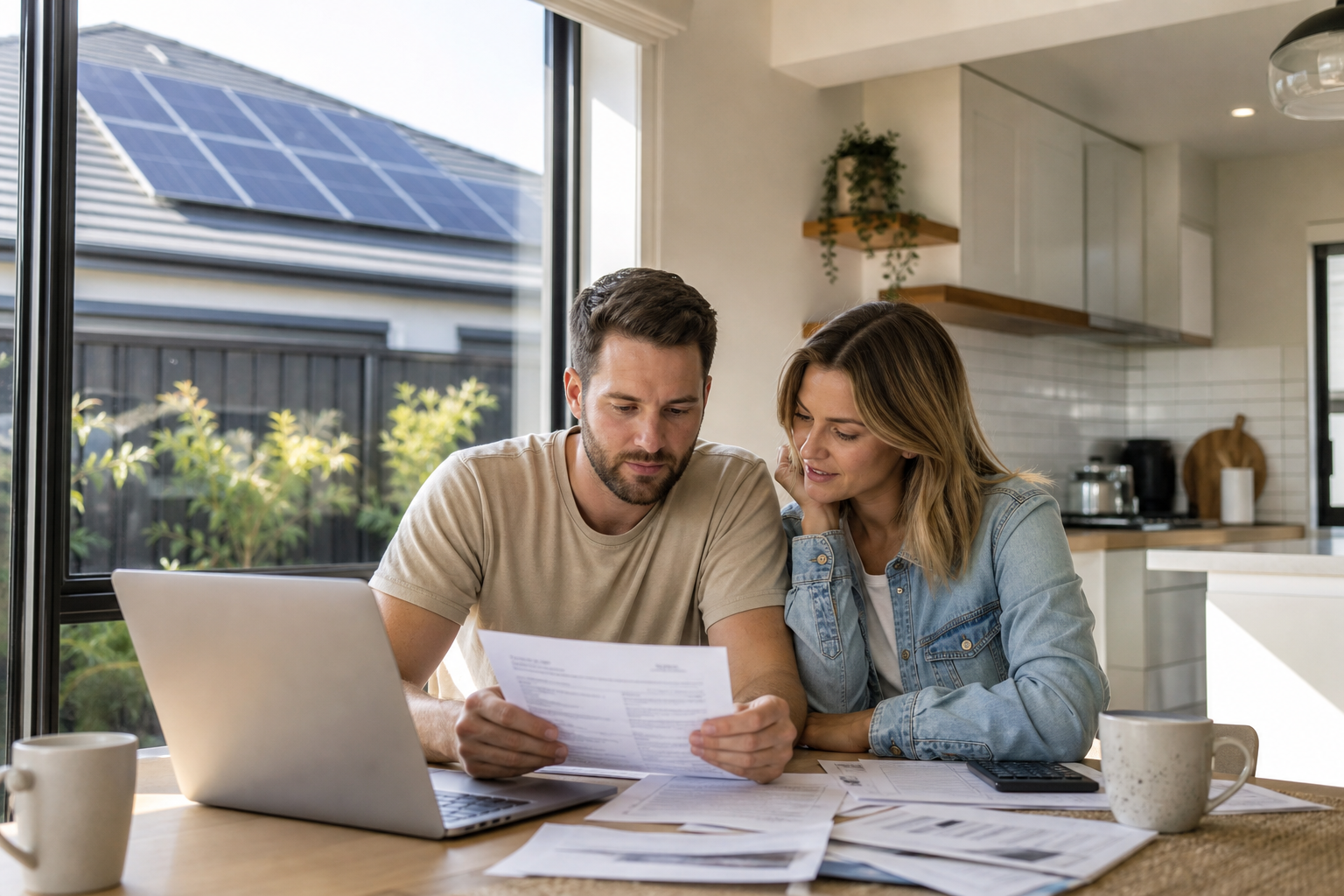
You generally can’t use first‑home grants or the First Home Guarantee (FHBG) to buy solar panels directly, but you can structure your deposit and home loan so adding solar is affordable and doesn’t wreck your borrowing power. The decision this week is whether solar is part of your purchase budget, a short separate loan split, or a stage‑two project once you’ve settled.
1. What the main first‑home schemes actually allow
There are three rulebooks you must satisfy at once: federal schemes like FHBG, your state’s grants/concessions, and the lender’s own policy (Fact 1).
First Home Guarantee (FHBG)
FHBG lets eligible buyers purchase with as little as 5% genuine deposit without paying Lenders Mortgage Insurance, because Housing Australia guarantees the top‑up.
But:
- The guarantee only supports the property purchase price.
- Lenders and Housing Australia do not treat solar panels as part of the guarantee “shortfall”.
- You can’t “top up” the FHBG amount to cover solar.
You can still roll solar into the total loan if:
- The overall loan (home + solar) fits within normal LVR limits and
- Your borrowing power, tested with at least a 3% APRA buffer, still works.
For self‑employed buyers, that borrowing power test is already tight. See how FHBG works in practice for business owners in /insights/first-home-guarantee-self-employed-small-business-owners.
State first‑home grants and stamp duty concessions
Each state is different, but a few patterns are consistent:
- First Home Owner Grants (FHOG) are almost always tied to building or buying a new home.
- The grant usually must go toward:
- your purchase costs (e.g. reducing your loan at settlement), or
- construction/renovation costs claimed under your building contract.
- Solar panels not in the main building contract are rarely an eligible use.
Stamp duty concessions (or exemptions) don’t give you cash – they just reduce a cost line. That can free up your own savings which you might then choose to put toward solar.
The strategy continues below
You've seen the problem and the groundwork — now unlock the exact steps our CPA-certified brokers use, including 3 more sections. Enter your email for instant, free full access.
Free access. No spam — unsubscribe anytime. Your details stay confidential.
Frequently asked questions
Can I use the First Home Owner Grant to pay for solar panels?▾
Can the First Home Guarantee cover the cost of solar panels?▾
Is it smarter to delay solar until after I’ve bought my first home?▾
Speak with a specialist advisor
Confidential consultation, bespoke advice for your situation.