Article
How to Fund a Mascot Café or Retail Fit‑Out Without Strangling Cashflow
A practical Mascot‑focused guide to funding your café, restaurant or retail fit‑out without draining working capital or putting your home at unnecessary risk.
Key Takeaway
Mascot cafés, restaurants and retailers can fund a fit‑out safely by matching finance type to asset life, keeping total equipment repayments within roughly 15–25% of stable revenue, and avoiding long‑term property‑backed debt for short‑life assets. Purpose‑built equipment finance, unsecured business loans and landlord incentives typically form the core mix, with property security used sparingly and within a 70–75% LVR cap. A clear staged budget and repayment test lets owners commit this week without crippling cashflow.
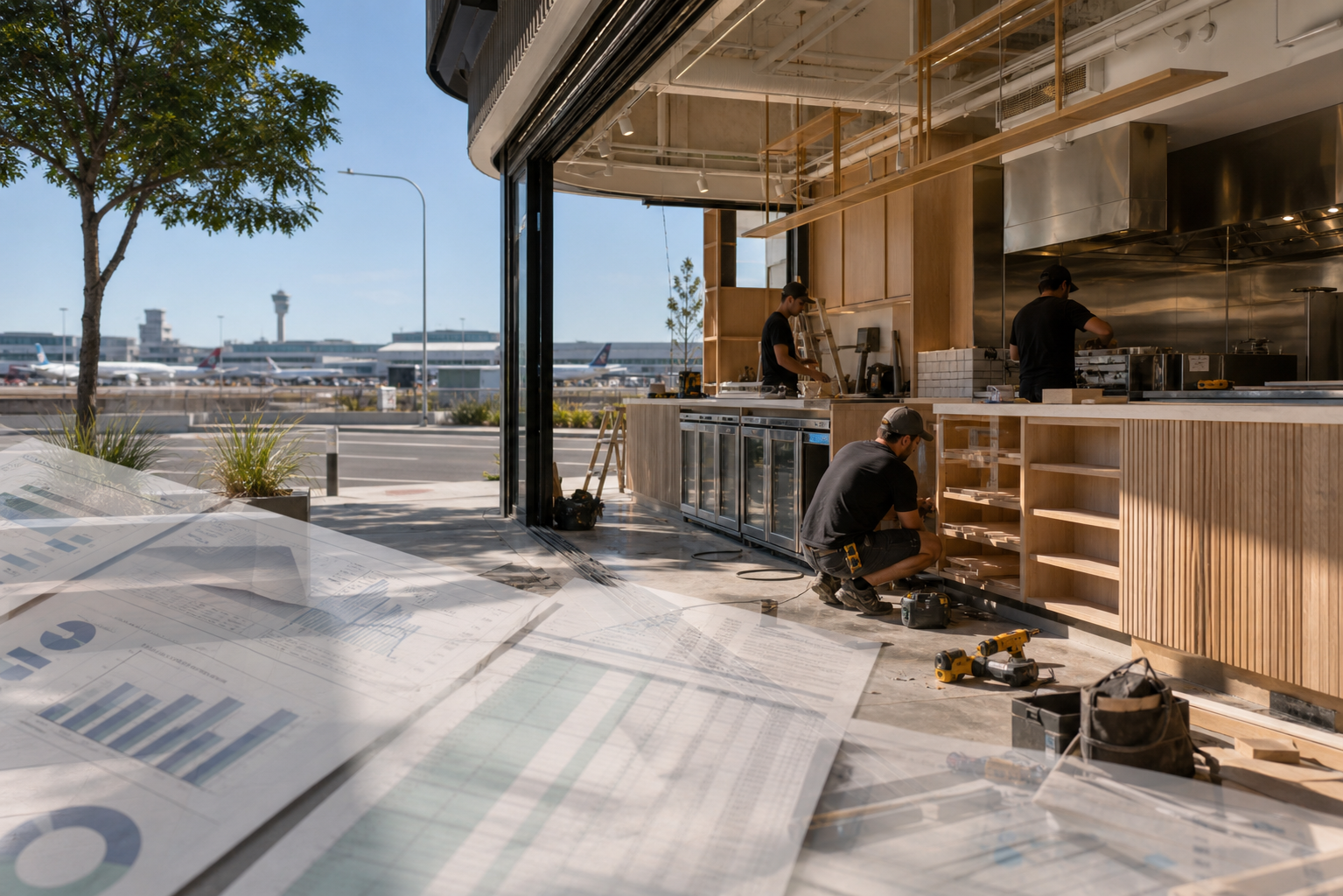
Opening a café, restaurant or retail shop in Mascot usually lives or dies on one thing: cashflow.
The fit‑out is where many good concepts go wrong. Borrowed the wrong way, it can soak up working capital, make BAS time stressful, and quietly tie your family home to every slow Tuesday.
This guide walks through how to fund a Mascot café, restaurant or retail fit‑out without killing cashflow. You’ll see what to fund, which type of finance suits each piece, how to keep repayments safe, and what you can realistically decide and move on this week.
1. Start with the real fit‑out picture (before you talk to a lender)
Before you think about loans, you need a clear, decision‑grade picture of what you’re actually funding.
1.1 Break your Mascot fit‑out into funding chunks
For most Mascot cafés, eateries and shops, the fit‑out falls into four buckets:
-
Movable equipment (plant and equipment)
- Coffee machine, grinders, ovens, cooktops, refrigeration, POS, display fridges
- Shelving, some counters, loose furniture
- Often good candidates for equipment finance or leases.
-
Fixed works (leasehold improvements / building works)
- Plumbing, grease trap, electrical wiring, lighting, walls, flooring, extraction
- Built‑in counters, banquettes
- Usually funded with unsecured or semi‑secured business loans.
-
Soft costs & opening stock
- Architect / designer, approvals, project management
- Initial stock, staff training, marketing launch
- Typically covered by working capital, unsecured loans or landlord incentives.
-
Buffers & contingencies
- At least 10–15% of total project cost for blowouts or delays
- Should be built into your finance ask, not left as an afterthought.
A core principle from /insights/funding-cafe-retail-fit-out-finance-options-beyond-overdraft applies here: movable assets and fixed works are different beasts and should rarely be lumped into one undifferentiated facility.
1.2 A realistic Mascot café budget (illustrative)
For a 60–80 seat café or casual diner in Mascot:
| Component | Indicative range (AUD) |
|---|---|
| Commercial kitchen & coffee gear | $120,000 – $220,000 |
| Refrigeration & display | $40,000 – $80,000 |
| Furniture & loose fittings | $40,000 – $70,000 |
| Building works & services | $180,000 – $350,000 |
| Professional fees & approvals | $20,000 – $40,000 |
| Opening stock & launch marketing | $20,000 – $40,000 |
| Contingency (10–15%) | $40,000 – $70,000 |
| Total project | $460,000 – $770,000 |
Even at the lower end, you’re often looking at $400k+ all‑in. That’s why throwing it all on an overdraft or home loan redraw is so risky.
2. Fit‑out funding options in Mascot: what they are and where they fit
2.1 Equipment finance for movable café and retail gear
Equipment finance (or chattel mortgage / equipment loan) is purpose‑built to fund business gear over its useful life.
Best for:
- Coffee machines, grinders
- Ovens, cooktops, dishwashers, refrigeration
- POS systems, display cabinets, some furniture
Typical features (illustrative):
- Terms: 3–7 years
- Amount: often up to 100% of purchase price for standard, new gear
- Security: mainly the equipment itself
- Fixed or variable rate options
- Possible balloon / residual at end
Key ideas from /insights/true-cost-equipment-finance-rates-fees-residuals-explained apply strongly: don’t just chase the lowest monthly repayment – match the term and any balloon to the realistic working life and resale value of the gear.
2.2 Unsecured business loans (cashflow‑based)
Unsecured loans can be quick to arrange and don’t usually require property as security.
Best for:
- Parts of your Mascot café fit out finance that aren’t easy to repossess (joinery, plumbing)
- Professional fees, opening stock, marketing
- Topping up landlord incentives.
Typical features (indicative):
- Terms: 1–5 years
- Amounts: commonly $20k – $300k+ depending on revenue and time trading
- Security: usually a director’s guarantee, no property mortgage
- Faster approvals, higher rates than equipment loans.
From /insights/low-doc-no-financials-equipment-loans-guide, remember: don’t use unsecured loans to hide weak cashflow. They’re tools for speed and flexibility, not band‑aids for a broken model.
2.3 Semi‑secured business loans
These sit between equipment loans and unsecured loans.
Best for:
- Larger fit‑out works where an unsecured line is too expensive or small
- Owners who can offer secondary security (e.g. a charge over business assets) but don’t want a full property mortgage.
Features can include:
- Higher limits than pure unsecured
- Slightly sharper pricing than fully unsecured
- Security over business assets or a second‑ranking position behind another lender.
2.4 Property‑secured loans (when, and when not)
Some Mascot owners want to use home equity to fund a fit‑out.
Pros:
- Lower headline interest rate
- Higher amounts possible
- Longer terms = lower monthly repayments.
Cons:
- Your home is on the line – a form of cross‑collateralisation
- Full mortgage paperwork and APRA‑style serviceability testing on your household income [/insights/equipment-finance-paperwork-step-by-step-list]
- Short‑life assets spread over 25–30 years means several times more interest overall [/insights/using-property-as-security-business-equipment-guide].
A useful rule from /insights/how-much-can-i-borrow-for-business-equipment-lvrs-terms-security: if you do use property, try to keep total secured LVR at or below 70–75% and match the term to the asset life, not the 30‑year maximum.
For Mascot specifically, /insights/using-mascot-home-equity-support-small-business-safely sets out how to do this carefully.
2.5 Landlord contributions and incentives
In Mascot’s competitive retail and hospitality strips, landlords may offer:
- Rent‑free periods (e.g. 3–6 months)
- Fit‑out contributions as cash or works done
- A stepped rent (lower in year one, rising later).
Negotiating these well can reduce how much you need to borrow at all. In many cases, a sharper lease deal is worth more than a slightly lower loan rate.
3. Unsecured vs secured business loans in Mascot: how they really compare
A core decision is whether to use secured or unsecured business loan Mascot options for your fit‑out. Here’s a practical comparison.
3.1 Side‑by‑side comparison table
| Feature | Unsecured business loan Mascot | Secured / property‑backed loan Mascot |
|---|---|---|
| Security needed | None over property; director guarantee | Mortgage over home / commercial property |
| Typical amounts (indicative) | $20k – $300k+ | $100k – $1m+ (subject to equity) |
| Approval speed | Often 24–72 hours once docs provided | 1–4 weeks, full credit assessment |
| Term length | 1–5 years | Up to 25–30 years (but shouldn’t for fit‑out) |
| Monthly repayment size | Higher (short term) | Lower (long term) |
| Total interest over life | Lower (short term) | Can be much higher if spread over decades |
| Impact on home | None directly | Home at risk if business struggles |
| Paperwork & stress | Lighter | Heavier – APRA serviceability rules apply |
This is why /insights/using-property-security-mascot-business-equipment-risks-alternatives and related pieces emphasise: for modest amounts, unsecured or cashflow‑based facilities can be safer, even at a higher rate, because your total exposure is capped and your home is not on the hook.
3.2 Worked example: $150k of joinery and building works
Assume you need $150,000 for building works that can’t be easily repossessed.
Option A – Unsecured business loan (3‑year term, indicative only)
- Amount: $150,000
- Term: 3 years (36 months)
- Assume blended interest & fee cost equates to ~15% p.a. (illustrative)
Approximate monthly repayment: ~$5,200 – $5,400
Total repaid over 3 years: ~$187,000 – $194,000
Option B – Property‑secured split on home loan (15‑year term)
- Amount: $150,000
- Term: 15 years (180 months)
- Assume rate ~7% p.a. interest only for the example (illustrative)
Approximate monthly repayment (P&I 15 years, 7%): ~$1,350 – $1,400
Total repaid over 15 years: ~$240,000 – $250,000
Observation:
Option B looks friendlier monthly, but you:
- Pay $50k–$60k+ more interest overall
- Carry business debt for 15 years
- Tie your home to your café or retail store.
For most Mascot operators, especially first‑time owners, Option A (or a mix) is often safer – it turns the fit‑out into a defined, medium‑term business expense, not a generational mortgage.
The strategy continues below
You've seen the problem and the groundwork — now unlock the exact steps our CPA-certified brokers use, including 10 more sections. Enter your email for instant, free full access.
Free access. No spam — unsubscribe anytime. Your details stay confidential.
Frequently asked questions
How much can I borrow for a Mascot café or retail fit‑out?▾
Is equipment finance or an unsecured business loan better for café gear?▾
Should I use my Mascot home equity to fund the fit‑out?▾
What’s a safe level of repayments for a new Mascot café?▾
How quickly can I arrange a hospitality equipment loan in Mascot?▾
Can I upgrade my café equipment before the loan term ends?▾
Are low‑doc equipment loans a good idea for new Mascot venues?▾
Speak with a specialist advisor
Confidential consultation, bespoke advice for your situation.