Article
Geared Property: Choosing Between High-Yield and Growth Suburbs
When you’re geared, the yield vs growth choice is really a risk and cashflow decision. Here’s how to decide, using numbers you can model this week.
Key Takeaway
Geared investors should choose between high-yield and growth suburbs by starting with after‑tax cashflow at current interest rates, then stress-testing a 2–3% rate rise and weaker rents. With 2027 reforms set to quarantine many rental losses and impose a 30% minimum CGT tax, relying on heavy negative gearing is risky. A practical rule is to target near‑neutral or modestly positive cashflow first, then favour areas with credible long‑term growth drivers. Model both scenarios before buying or reshaping your portfolio.

When you’re geared, you should choose between high‑yield and growth suburbs by starting with cashflow, not suburbs lists. The right answer is usually: aim for near‑neutral or slightly positive cashflow at today’s rates, then choose the best growth suburb you can afford inside that cashflow band. Only accept a low‑yield “pure growth” play if your buffers, income stability and tax position are rock‑solid.
Quick rule of thumb: if a 2–3% rate rise or 10% rent drop would make you lose sleep, lean higher yield. If you can comfortably carry a shortfall even under stress tests, you can tilt more to growth.
Step 1: Know what “high yield” and “growth” really mean
For geared investors, these terms are about cash in vs cash out at a given LVR and interest rate.
Working definitions
-
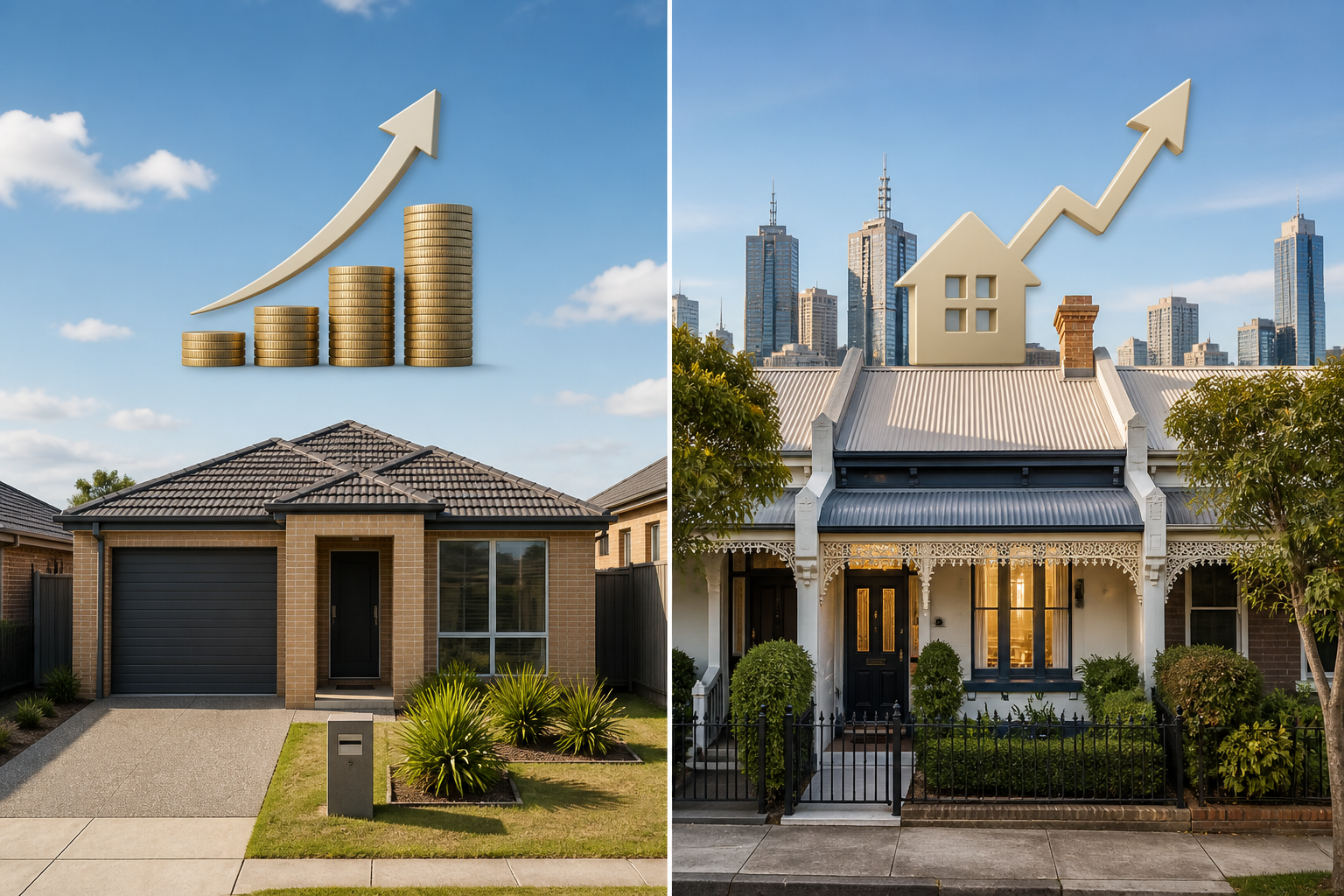
High‑yield suburb: Gross yield say 5–7%+ on houses, 6–8%+ on units.
- Often regional centres, outer suburbs, older stock, higher tenant churn.
- Cashflow stronger, long‑term growth can be patchier.
-
Growth suburb: Gross yield more like 2.5–4.5%.
- Often inner‑ to middle‑ring metro, land‑scarce or gentrifying pockets.
- Historically stronger capital growth, weaker cashflow.
Neither is automatically ‘better’. The question is: which fits your risk, buffers and lending position today?
Step 2: Run the cashflow maths before thinking about suburbs
Start with the debt, not the postcode. Two quick examples at 80% LVR, interest‑only, 6.5% illustrative rate.
Example A: High‑yield suburb
- Purchase price: $500,000
- Loan: $400,000
- Gross yield: 6.5% ($32,500 rent)
- Interest: $26,000 p.a.
- Other costs (rates, insurance, maintenance, agency, etc.): say $6,000–$7,000 p.a.
Result: roughly cashflow‑neutral before tax.
Stress test:
- Rate 8.5% → interest $34,000 (extra $8,000); now you’re about −$150/week before tax.
Example B: Growth suburb
- Purchase price: $900,000
- Loan: $720,000
- Gross yield: 3.2% ($28,800 rent)
- Interest: $46,800 p.a.
- Other costs: $7,000–$8,000 p.a.
Result: around −$500/week before tax at 6.5%.
Stress test:
- Rate 8.5% → interest $61,200; now −$800–$900/week before tax.
Under the 2026–27 reforms, a lot of that loss may not be offset against your salary, especially for established properties bought after 12 May 2026. You should assume pre‑tax cashflow needs to stand on its own (see /insights/negative-gearing-high-income-professionals-eastern-suburbs-tax-changes).
The strategy continues below
You've seen the problem and the groundwork — now unlock the exact steps our CPA-certified brokers use, including 4 more sections. Enter your email for instant, free full access.
Free access. No spam — unsubscribe anytime. Your details stay confidential.
Frequently asked questions
Is a high-yield property always better for cashflow when you’re geared?▾
How do I know if a growth suburb is too risky for my situation?▾
Should I sell a low-yield property to buy in a higher-yield suburb?▾
Speak with a specialist advisor
Confidential consultation, bespoke advice for your situation.