Article
Understanding Business Equipment Finance in Australia Today
Business equipment finance lets Australian SMEs fund vehicles, machinery, tech and fit‑outs over 3–7 years using the asset as security, instead of draining cash. This guide explains the main structures, how repayments and balloons work, what lenders check, and a clear one‑week plan to move from idea to approval‑ready.
Key Takeaway
Business equipment finance in Australia works by funding vehicles, machinery, technology and fit-outs with the asset itself as security, usually over 3–7 years, instead of using cash or an overdraft. Mainstream lenders can often fund up to 100% of the purchase price for standard, resaleable assets. Understanding the structures, how terms and balloons affect repayments, and what lenders check on cashflow and credit helps small businesses choose the right option and prepare an approval-ready application this week.

This topic is covered in full on Local Knowledge Finance
Business equipment finance lets Australian SMEs fund vehicles, machinery, tech and fit‑outs over 3–7 years using the asset as security, instead of draining cash. This guide explains the main structures, how repayments and balloons work, what lenders check, and a clear one‑week plan to move from idea to approval‑ready.
Read the full guide on ding.financialHow business equipment finance really works in Australia
Business equipment finance in Australia lets you buy or use vehicles, machinery, technology and fit‑outs over time while the asset itself secures the debt. Instead of paying the full price upfront, a lender funds most or all of the cost, you make fixed repayments over 3–7 years, and you own or control the asset during that period depending on the structure. Done well, it preserves cashflow, can be tax‑effective and avoids tying up your home.
This guide breaks down the main finance types, how repayments and balloons are calculated, what lenders actually look at, and a practical one‑week plan to get moving.
1. What is business equipment finance, exactly?
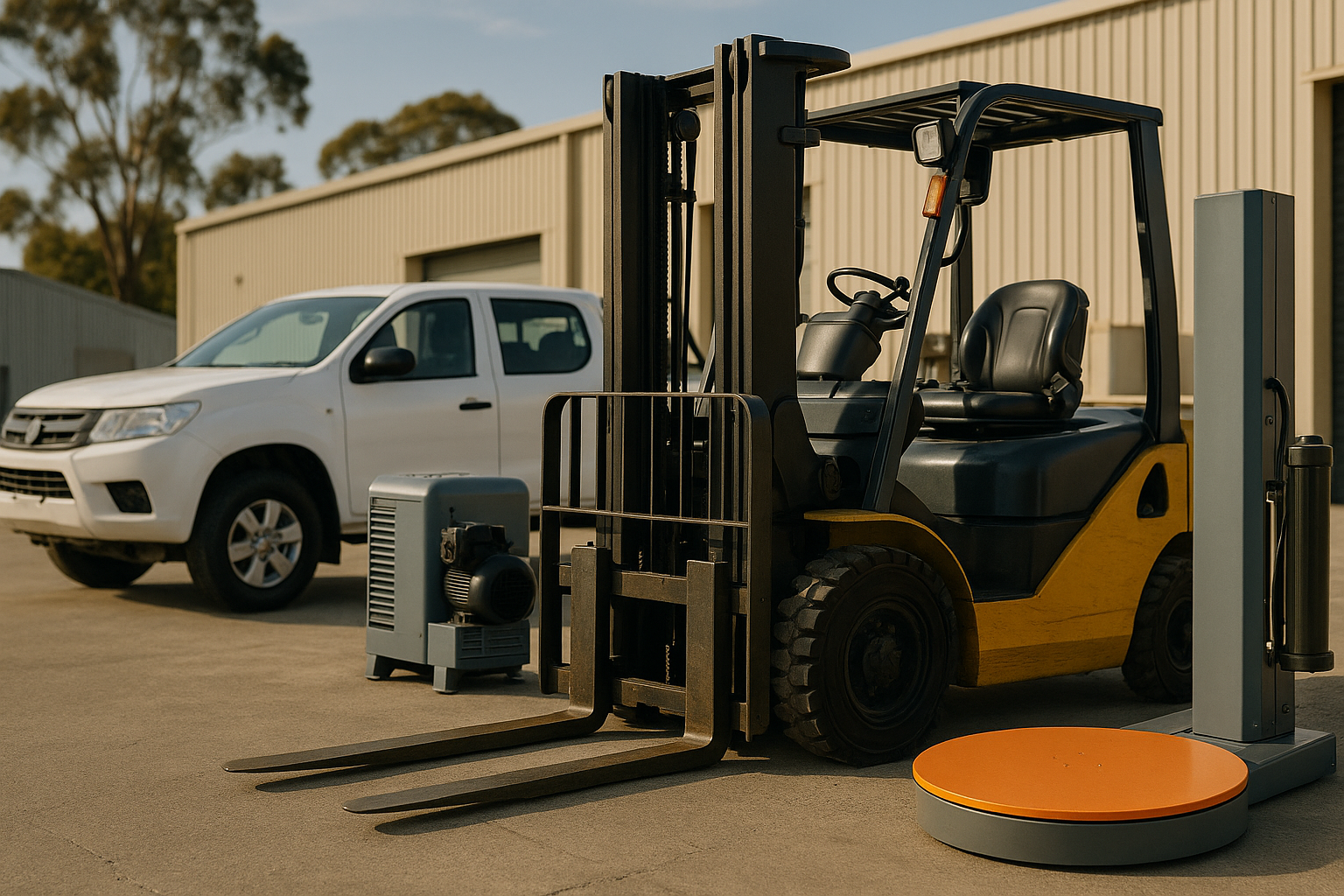
Equipment finance is a business funding facility used to acquire income‑producing assets – think utes, trucks, excavators, CNC machines, commercial ovens, medical equipment, IT systems or office fit‑outs.
Instead of a generic unsecured loan, the lender takes security over the specific asset (and sometimes extra security as well). Because the asset reduces the lender’s risk, you can usually:
- Borrow a higher percentage of the purchase price, sometimes up to 100% for standard assets (indicative only)
- Access sharper pricing than unsecured business loans
- Align the loan term to the asset’s effective working life (commonly 3–7 years for vehicles and standard machinery [3])
1.1 What kinds of assets can you finance?
Most lenders prefer assets that are:
- Standard and resaleable – vehicles, yellow goods, mainstream machinery, common medical and dental equipment, major brand IT
- Income‑producing – the asset helps generate revenue or reduce costs
- Durable – a working life long enough to support a multi‑year loan
Highly customised, niche or hard‑to‑resell equipment is still financeable, but often needs stronger financials, a bigger deposit or extra security such as property [7].
1.2 How is this different from using cash or an overdraft?
Compared with paying cash:
- You preserve working capital for wages, materials and marketing
- You can usually claim interest and depreciation or lease payments as deductions (ATO rules apply; get tax advice)
- The cost is spread over the period you use the equipment
Compared with an overdraft or generic business loan:
- The asset itself secures the debt
- Terms are aligned to the asset’s life instead of being on‑demand
- Pricing is typically sharper for the same risk profile
For a deeper dive into how lenders look at your business and the asset, see our practical guide to equipment finance eligibility.
2. Common equipment finance structures (in plain English)
There are several ways to structure equipment finance. The right one depends on how you use the asset, how you’re taxed and whether you want ownership from day one.
2.1 Chattel mortgage / equipment loan
This is the workhorse structure for many SMEs.
- Your business owns the asset from settlement
- The lender takes a mortgage (security interest) over the asset
- You make principal and interest repayments, often with an optional balloon at the end
Tax‑wise, businesses usually claim interest and depreciation, and may claim the GST on the purchase price in their BAS (subject to ATO rules and thresholds like instant asset write‑off when available).
2.2 Finance lease / commercial hire purchase
Here, the lender (or lessor) owns the asset during the term and your business has the right to use it.
- You pay regular rentals/repayments
- Often there’s a residual value at the end
- Ownership may transfer when you pay the residual or a nominal amount, depending on structure
This can suit businesses wanting to keep debt off certain parts of their balance sheet or align payments closely with usage.
2.3 Operating lease / rental
An operating lease is closer to an equipment rental arrangement.
- You don’t aim to own the asset
- The term may be shorter than the asset’s life
- You may have options to extend, upgrade or hand back the equipment
These can work for fast‑moving technology or equipment that dates quickly, where flexibility is more important than ownership.
2.4 Quick comparison of structures
Below is a simplified comparison. Actual tax outcomes depend on your structure, turnover and the law at the time – always check with your accountant.
| Feature | Chattel mortgage / equipment loan | Finance lease / hire purchase | Operating lease / rental |
|---|---|---|---|
| Who owns asset during term? | Your business | Lender/lessor | Lender/lessor |
| Typical term | 3–7 years | 3–7 years | 2–5 years |
| Balloon/residual at end? | Optional balloon | Often a set residual | Sometimes (or hand-back/upgrade) |
| How repayments are treated | Principal + interest | Lease/hire payments | Rental/lease payments |
| Security | Asset (plus sometimes extra) | Asset | Asset |
| Common uses | Vehicles, plant, machinery | Vehicles, plant, machinery | IT, tech, short-life equipment |
For vehicle‑specific options, including novated leasing if you pay yourself a salary, see smart vehicle finance options for tradies and small businesses.
The strategy continues below
You've seen the problem and the groundwork — now unlock the exact steps our CPA-certified brokers use, including 7 more sections. Enter your email for instant, free full access.
Free access. No spam — unsubscribe anytime. Your details stay confidential.
Frequently asked questions
How does equipment finance work in Australia?▾
Do I need financials to get equipment finance?▾
Can I get 100% finance for business equipment?▾
How long can I finance equipment for?▾
Is equipment finance tax deductible?▾
Can equipment finance affect my personal credit?▾
Speak with a specialist advisor
Confidential consultation, bespoke advice for your situation.