Article
How Valuers Really Price Luxury Homes And One‑Of‑A‑Kind Properties
A practical Australian guide to how valuers assess luxury and one‑of‑a‑kind properties, why bank valuations differ from agent price guides, and what you can do this week to reduce valuation shortfall risk.
Key Takeaway
Valuers assess luxury and one‑of‑a‑kind properties in Australia by anchoring to recent comparable sales, then adjusting for land value, build quality, uniqueness, and risk, which makes bank valuations for homes above $3 million more conservative and variable. They must satisfy lender credit policies and APRA’s prudential standards, not match agent guides. Buyers can reduce valuation shortfall risk by preparing evidence, selecting lender panels carefully, and structuring deposits and buffers before they bid.
Watch the short answer
Private lending isn’t always a desperation move
Wondering if private lending is only for trouble This video reframes when it can be a smart tool.
Read the transcript
Private lending isn't a desperation move. It is a sophisticated tool used by elite property investors to execute at lightning speed. When an undervalued asset hits the market, waiting months for institutional red tape means losing the deal. Private capital bypasses the standard bureaucracy, focusing purely on asset backing so you can close the transaction in days and exit cleanly later. Move faster than the market. DM me 'PRIVATE' to connect.
General information only, not personal advice. Your situation is assessed before any recommendation.

Buying or refinancing a luxury home is different because valuers don’t just look at floor area and bedroom count. For prestige and one‑of‑a‑kind properties, a bank valuation is an evidence‑driven risk assessment built around recent comparable sales, land value, build quality and how hard the property would be to sell in a downturn. That’s why the valuation on a $3–5 million home can sit well below an agent’s guide — and why you need a plan before you sign.
This guide breaks down how valuers actually assess high‑end and unique properties in Australia, where deals often involve tight timelines, complex income and big dollars. The aim is simple: give you enough insight to make one or two clear, decision‑grade moves this week.
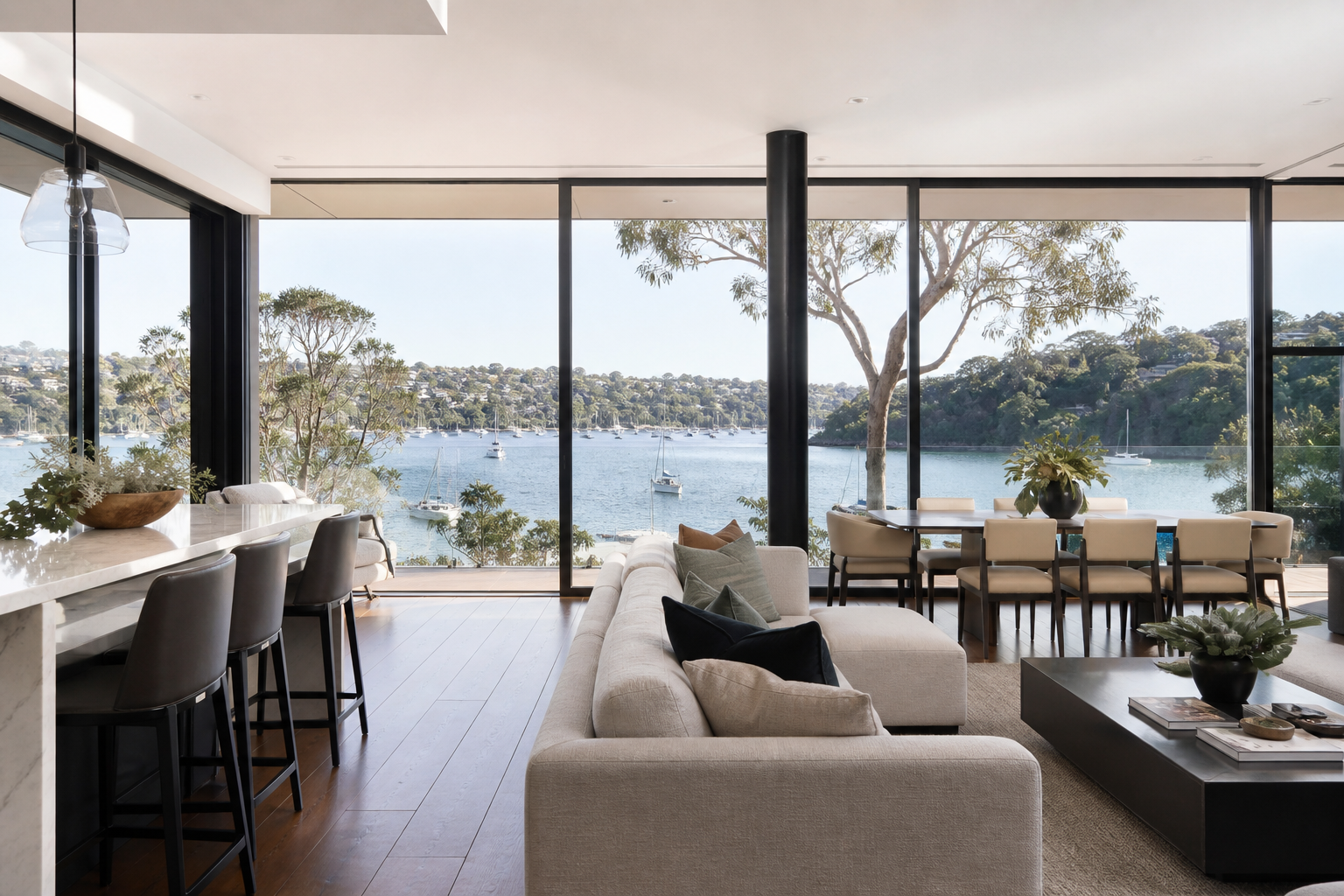
1. What makes a home “luxury” or “one‑of‑a‑kind” for valuers?
From a valuer’s point of view, a prestige or unique property is anything that can’t be priced reliably using standard, cookie‑cutter comparisons.
1.1 Common triggers for “prestige/unique” treatment
Valuers and banks start treating a property as prestige, specialised or unique when one or more of these apply:
- Price point: Typically above the top 5–10% of local sales, often $3m+ in major capitals.
- Location: Harbourside, absolute beachfront, clifftop, or trophy positions with few true peers.
- Design: Architect‑designed or heavily customised homes, unusual floorplans, extensive glazing, statement staircases, bespoke joinery.
- Construction: Complex builds like suspended pools, basement garages, heavy cantilevers, or homes built into cliffs or steep slopes.
- Land attributes: Rare views, amalgamated sites, unusual shapes, access issues or development potential.
- Market depth: Very few qualified buyers at that price level (illiquidity risk).
In these cases, the usual “three or four similar sales within six months” rule often breaks down. As we covered in /insights/valuations-unique-dover-heights-homes-bank-pricing, banks then lean harder on land value, risk factors and conservative assumptions.
1.2 Why “unique” is a double‑edged sword
Uniqueness can boost lifestyle and long‑term scarcity value, but from a lender’s perspective it also:
- Makes resale harder to predict.
- Narrows the buyer pool in a downturn.
- Increases the chance repairs or rectification work will be expensive.
The result is simple: the more unique the property, the more discounting and caution tends to appear in the valuation.
2. The core valuation methods used on prestige property
Valuers don’t reinvent the wheel for every luxury home; they use standard methods, but adjust how heavily they rely on each.
2.1 Direct comparison (still the main tool)
The “direct comparison” method compares your property to recent local sales, then adjusts for:
- Land size and usability
- View and outlook
- Bedrooms, bathrooms, parking
- Internal area and layout
- Renovation level and overall appeal
For prestige homes, the challenge is finding truly comparable sales. Valuers may use:
- Sales over a longer time frame (e.g. 12–18 months instead of 6).
- A broader geography (e.g. across multiple blue‑chip suburbs).
- A mix of “inferior” and “superior” properties and adjust heavily.
If they can’t find enough evidence, they’ll lean more on the next two methods.
2.2 Land value plus improvement value
This is critical for high‑end houses and architect‑designed builds.
- Land value – estimated from recent land or knock‑down sales in similar positions.
- Improvements – what a well‑informed buyer would pay today for the house/works on top of the land.
Important nuance: the improvement value is rarely equal to build cost. Valuers factor in:
- Depreciation and remaining economic life
- Market taste (e.g. ultra‑bold design that only suits a few buyers)
- Functional layout vs. pure aesthetics
So spending $2m on a build doesn’t automatically add $2m to value.
2.3 Capitalisation of income (for some prestige assets)
If a property earns market‑level rent (e.g. a luxury investment home, penthouse or short‑stay asset), valuers may cross‑check with an income method:
Value ≈ Net market rent ÷ yield
For instance, if a prestige home could rent for $5,000 per week (≈$260k p.a.) and the appropriate yield is 3.0%–3.5%, the cross‑check range might be ~$7.4m–$8.7m.
2.4 Worked example: architect‑designed harbourside home
Assume:
- Land value (based on recent knock‑down sales): $5.0m
- Construction cost five years ago: $4.0m
- Current replacement cost: $4.5m
- But design is quite specific; valuer judges the market would pay only ~70% of replacement cost today.
Improvement value ≈ $4.5m × 70% = $3.15m
Indicative valuation ≈ $5.0m (land) + $3.15m (improvements) = $8.15m
If the listing agent is quoting “$9m+” based on buyer interest, you can see where tension arises.

3. How bank instructions shape the valuation outcome
Bank valuations are not neutral essays. They are tightly framed by lender instructions, credit policies and APRA’s prudential standards.
3.1 Bank brief vs. selling agent brief
| Factor | Bank‑ordered valuation | Selling agent price guide |
|---|---|---|
| Primary purpose | Protect lender capital, meet APRA standards | Attract interest, maximise sale price |
| Basis | Evidence‑based, conservative, documented | Market sentiment, negotiation strategy |
| Time horizon | What could it sell for in 90–180 days? | What might the best buyer pay next month? |
| Treatment of outliers | Often ignored or heavily discounted | Heavily relied on for headline expectations |
| Level of risk tolerance | Low – assume downturn and forced sale risk | Higher – focus on current competition |
Understanding this gap is essential before you sign a contract or bid at auction.
3.2 APRA and liquidity: why lenders dislike illiquid assets
APRA requires banks to hold more capital against riskier loans. For prestige property that is:
- Hard to sell quickly
- Located on clifftops, flood zones or exposed foreshore
- Highly bespoke in design
…lenders often respond with:
- Lower maximum LVRs (e.g. 60–70% instead of 80%+)
- Tighter serviceability hurdles
- More conservative valuation assumptions
We see this clearly with clifftop Dover Heights assets in /insights/valuations-unique-dover-heights-homes-bank-pricing and harbourside stock in /insights/financing-harbourside-rose-bay-homes-lending-rules-risks.
3.3 Different valuation types – and why they matter
For luxury and unique properties, the type of valuation ordered can materially change the outcome and speed:
- Desktop: Based on data only. Generally unsuitable for true prestige or highly unique homes.
- Kerbside (drive‑by): Valuer inspects externally only. Limited for complex builds.
- Short form / restricted: More detail, but still brief; used for lower‑risk or lower‑LVR files.
- Full valuation: Internal inspection, comprehensive report and photos. This is the norm for $2m+ loans, unusual security or high LVR.
If a bank is trying to rely on a desktop or drive‑by for a clearly unique property, that’s a red flag. The more complex the property, the more you want a full valuation.
The strategy continues below
You've seen the problem and the groundwork — now unlock the exact steps our CPA-certified brokers use, including 7 more sections. Enter your email for instant, free full access.
Free access. No spam — unsubscribe anytime. Your details stay confidential.
Frequently asked questions
Why is my luxury home’s bank valuation lower than the agent’s estimate?▾
Can I use my own valuer for a bank loan on a prestige property?▾
How do valuers treat expensive renovations and architect design?▾
What if I think the valuation for my unique property is wrong?▾
Are luxury apartments and penthouses harder to value than houses?▾
How much buffer should I allow for a valuation shortfall on a $3m+ home?▾
Speak with a specialist advisor
Confidential consultation, bespoke advice for your situation.