Article
Should You Keep Your Alexandria Unit When You Upgrade Homes?
Thinking of keeping your Alexandria unit as an investment when you upgrade? This guide explains lender rules, rent shading, cashflow tests and post‑2027 tax changes so you can decide with clear numbers, not guesswork.
Key Takeaway
This guide explains when it makes financial sense to keep an Alexandria unit as an investment while upgrading homes, focusing on lender rules and cashflow tests. It covers rent shading (often 70–80% of rent counted), APRA’s 3% serviceability buffer, and how negative gearing tax benefits are largely ignored in borrowing capacity. Readers get worked examples, suburb-specific considerations, and a one-week checklist so they can test their own numbers and decide whether to hold or sell before committing to a new property.
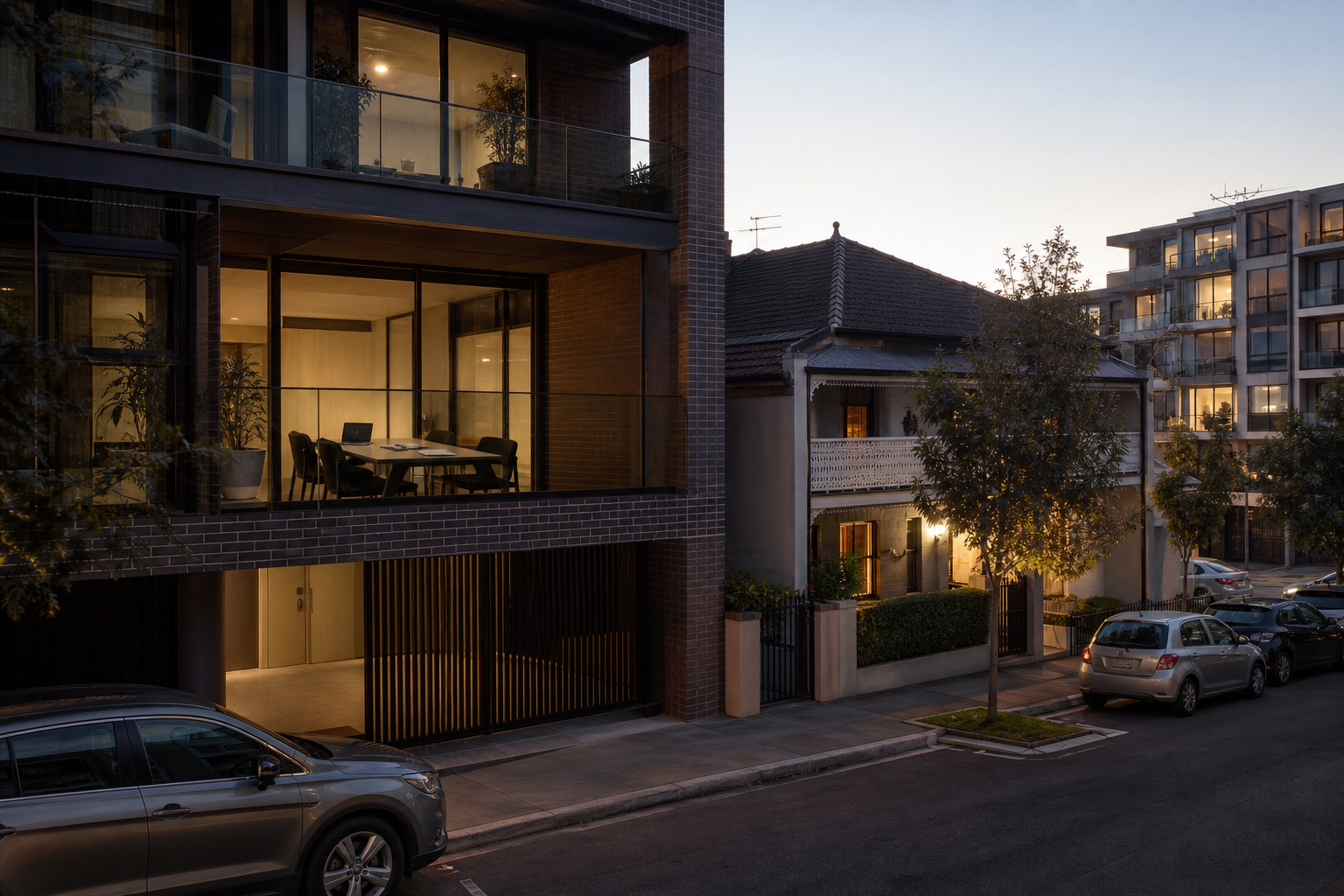
Upgrading from an Alexandria unit to a bigger place in the inner south is a common path. The key decision is whether you sell the unit to fund the upgrade or keep it as an investment. Keeping it can work well, but only if it passes two tests: (1) lender rules and borrowing capacity, and (2) your own cashflow and risk limits. Lenders shade rent, apply buffers and largely ignore negative gearing, so your real borrowing capacity is often very different to what spreadsheets suggest.
This guide is written so you can make a decision this week. We’ll walk through lender policy, realistic Alexandria rent and cost assumptions, post‑2027 tax changes, and practical cashflow tests. By the end, you’ll know whether keeping your unit is likely to help or harm your upgrade plans – and what to check with your broker and accountant before you sign anything.
1. The real question: should you keep the Alexandria unit at all?
Before we dive into lender policy, it’s worth stating the decision in plain terms.
If you keep your Alexandria unit when you upgrade, you’re effectively choosing to:
- Run a small property business on the side, with its own income, costs and risks; and
- Take on more total debt than if you sold – often with tighter personal cashflow for a few years.
That can be worth it if:
- The unit has good long‑term prospects (rental demand, infrastructure, scarcity in its segment);
- You can comfortably carry the combined home and investment loans under stress (higher rates, vacancy, lower bonuses or business drawings); and
- The strategy still makes sense under the 2026–27 negative gearing and CGT reforms.
But it’s a poor move if:
- Your upgrade becomes marginal to service, forcing you into cheaper areas, poor layouts or heavy compromises; or
- You’re counting on tax refunds to make the numbers work, when lenders base approvals on pre‑tax cashflow.
If you want to see how we translate complex tax changes into clear numbers for Alexandria properties, including your specific unit, see the worked examples approach in /insights/cpa-mortgage-broker-alexandria-tax-cashflow-modelling.
2. How lenders actually treat “keep the unit and upgrade” scenarios
2.1 The four moving parts lenders care about
When you keep your Alexandria unit as an investment and buy a new home, most lenders run your situation through four key filters:
-
Existing Alexandria unit loan
- Balance, interest rate, remaining term
- Whether it’s P&I or interest‑only
-
New owner‑occupied loan
- Proposed amount, product, rate
- Whether it’s P&I (almost always required) or IO in limited cases
-
Rental income from the Alexandria unit
- Market rent (often from a valuation or agent estimate)
- Rent shading – typically only 70–80% counted
-
Your income and other debts
- Salary, bonus, commissions, or self‑employed income
- Credit cards, HECS/HELP, car loans, business debts
Lenders then apply the APRA‑guided serviceability test, assessing whether you can afford all loans at a rate at least 3% higher than today (the standard serviceability buffer).
2.2 Rent shading: why your $900 per week rent doesn’t count as $900
If your Alexandria unit currently rents (or could rent) for, say, $900 per week (~$46,800 per year), lenders usually only count 70–80% of that as income.
Typical policy ranges:
- Conservative lender: 70% of rent
- Mainstream majors: ~75% of rent
- More generous lender: up to 80% of rent
This is to cover vacancies, management fees and basic costs without the lender having to model your full expense schedule.
So your $46,800 annual rent might become only $32,760–$37,440 of assessable income in the calculator.
2.3 How they treat the Alexandria unit’s running costs
Most lenders assume the shaded rent has to cover:
- Agent management fees
- Council and water rates
- Strata levies
- Landlord insurance
- Ongoing maintenance
They don’t explicitly ask you to list all these line‑by‑line in the loan calculator (though they’ll expect to see them in your personal budget). Instead, they:
- Shade rent as above; and
- Rely on a Household Expenditure Measure (HEM) for your living costs, which doesn’t include investment property overheads specifically.
That means the effective cashflow test is: does shaded rent + your income comfortably cover all mortgages, with the buffer?
2.4 Why negative gearing rarely helps borrowing capacity
From a tax perspective, a negatively geared Alexandria unit can reduce your taxable income and generate a tax refund.
From a bank perspective, it usually reduces borrowing power, because:
- They count gross shaded rent, not after‑tax outcomes; and
- They load in P&I repayments at buffered rates, even if your current loan is interest‑only.
This is the same insight we explore more broadly for investors in /insights/broker-balance-negative-gearing-cashflow-borrowing-power: lenders lend on pre‑tax repayment capacity, not on how much tax the property might save you.
3. A worked example: Alexandria unit held, moving to a $1.8m house
Let’s run a simplified worked example so you can anchor your own numbers.
3.1 Current position – Alexandria unit as your home
- Alexandria unit value: $950,000
- Current home loan: $600,000, P&I, 5.9% variable
- Term remaining: 28 years
- Household gross income: $260,000 (combined salaries or salary + stable business drawings)
- Other debts: $10,000 credit card limit, no car loan, no HECS
Approximate existing monthly repayment on the unit at 5.9%, 28 years:
- Repayment ≈ $3,610 per month (~$833 per week)
3.2 The upgrade plan
You’d like to buy a $1.8m house in the inner south (e.g. larger terrace, garden, or family home). Options:
-
Option A – Sell the unit:
Sell Alexandria unit, clear the $600k loan, use net equity as deposit. -
Option B – Keep the unit:
Convert the unit to an investment, keep the $600k loan (or refinance it), and borrow for the new home.
We’ll focus on Option B, because that’s where lender rules and cashflow get tricky.
3.3 Market rent and shaded rent
Assume market rent for your unit:
- Expected rent: $900 per week (~$46,800 per year)
Lender shading at 75%:
- Assessable rent: $675 per week, or $35,100 per year
3.4 New home loan size and repayments
Let’s say you have $250,000 cash between savings and potential gifts, but you want to keep a $50,000 buffer post‑purchase, leaving $200,000 for costs + deposit.
Estimated transaction costs on $1.8m purchase (NSW):
- Stamp duty: roughly $80,000–$85,000 (illustrative only)
- Legals, inspections, misc: say $5,000
So about $90,000 in costs, leaving $110,000 as deposit.
Loan required for new home:
- Purchase price: $1,800,000
- Less deposit: $110,000
- New home loan needed ≈ $1,690,000
(LVR ~94% after costs – this is high; LMI premiums would be significant and some lenders may cap LVRs lower for upgraders keeping an existing property.)
For illustration, assume you can limit the new home loan to $1.5m by adding some extra savings or a small family gift, and accept LMI.
Indicative monthly repayments (P&I) at 5.7%, 30 years:
- On $1,500,000: ≈ $8,700 per month (~$2,007 per week)
3.5 Serviceability test – what lenders actually plug in
Under APRA’s buffer, lenders must test both loans at ~3% higher than actual rates.
Let’s assume buffer rate of 8.7% (5.7% + 3%).
Existing investment loan (Alexandria unit)
Convert existing $600k loan to an investment loan, still P&I, 28‑year term assumed.
- Test rate: 8.7%
- Repayment on $600k over 28 years @ 8.7%: ≈ $4,840 per month (~$1,118 per week)
New owner‑occupied loan
- Principal: $1,500,000
- Test rate: 8.7%
- Term: 30 years
- Repayment: ≈ $11,900 per month (~$2,746 per week)
So in the calculator, your total monthly debt repayments at buffer rates are roughly:
- $4,840 (investment) + $11,900 (home) ≈ $16,740 per month
Shaded rental income in calculator:
- $35,100 per year ≈ $2,925 per month
Lenders then apply your income, HEM living costs and tax assumptions to see if there’s enough surplus.
On $260,000 household income, this scenario may be right on the edge with many lenders. Some might say yes, some no, depending on:
- Your exact living expenses compared to HEM;
- Whether you have kids and childcare costs;
- How they treat bonuses or business drawings; and
- Their rent shading and loan assessment settings.
This is why a local, strategy‑focused broker who understands both tax and borrowing power is critical – they can model several lender policies and structure options quickly, as we explain in /insights/fast-track-finance-alexandria-off-market-opportunities-local-broker.
The strategy continues below
You've seen the problem and the groundwork — now unlock the exact steps our CPA-certified brokers use, including 8 more sections. Enter your email for instant, free full access.
Free access. No spam — unsubscribe anytime. Your details stay confidential.
Frequently asked questions
Can I keep my Alexandria unit as an investment and still upgrade to a house?▾
How do banks treat the rent from my Alexandria unit when I upgrade?▾
Will negative gearing on my Alexandria unit help my borrowing capacity?▾
How will the 2026–27 negative gearing changes affect my decision to keep the unit?▾
What cash buffer should I have if I keep my Alexandria unit and upgrade?▾
Is interest‑only better for my Alexandria investment unit when I upgrade?▾
I’m self‑employed in Alexandria. Is it riskier to keep my unit when upgrading?▾
Speak with a specialist advisor
Confidential consultation, bespoke advice for your situation.