Article
Buying a Rose Bay knockdown or duplex site: what banks see first
Looking at a Rose Bay knockdown or duplex site? Lenders won’t just treat it as a normal house. Here’s how valuers and banks look at land, zoning and development potential so you don’t get caught by a down‑valuation or funding gap.
Key Takeaway
Buying a Rose Bay knockdown or duplex site is assessed very differently from a standard house purchase: valuers prioritise land, zoning (R2/R3) and development potential, while banks mostly lend against current use and impose lower LVRs on higher‑risk sites. With Eastern Suburbs prices, a 10% down‑valuation on a $4m site can create a $400k funding gap. Buyers should confirm valuation assumptions, serviceability under a 3% buffer, and total build plus holding costs before committing.
Watch the short answer
Home loans when you earn foreign income or live overseas
If you’re weighing up a Rose Bay knockdown or duplex site, this video shows how foreign income or expat status can affect your home loan options.
Read the transcript
Earning foreign income or living overseas? Australian banks make it incredibly painful to buy local property. Foreign income shading, complex exchange rate calculations, and strict residency matrices mean most expats give up on Australian property investment. You need a broker who navigates the non-resident and expat lending policies daily. We cut through the red tape, maximising your foreign currency income to secure premium Australian real estate. Expand your portfolio back home. DM me the word 'EXPAT' to learn how.
General information only, not personal advice. Your situation is assessed before any recommendation.
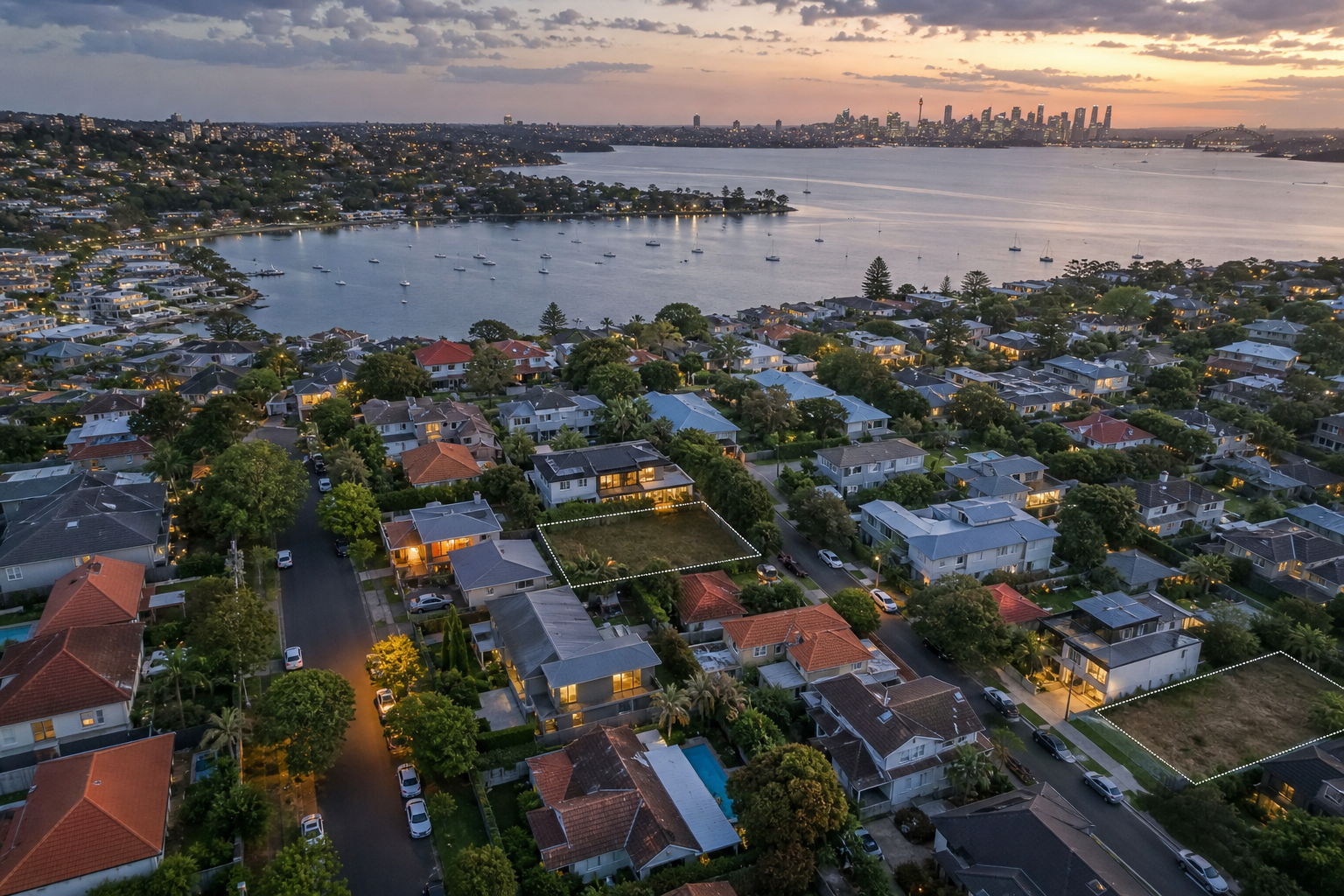
A Rose Bay knockdown or duplex site is usually valued mainly on land and zoning, then filtered through conservative bank policy that often ignores your future build profit.
That means two big risks: (1) a lower-than-expected valuation, and (2) tighter lending terms than a standard house. If you’re signing a 66W or a short settlement, you need those rules clear this week, before you exchange.
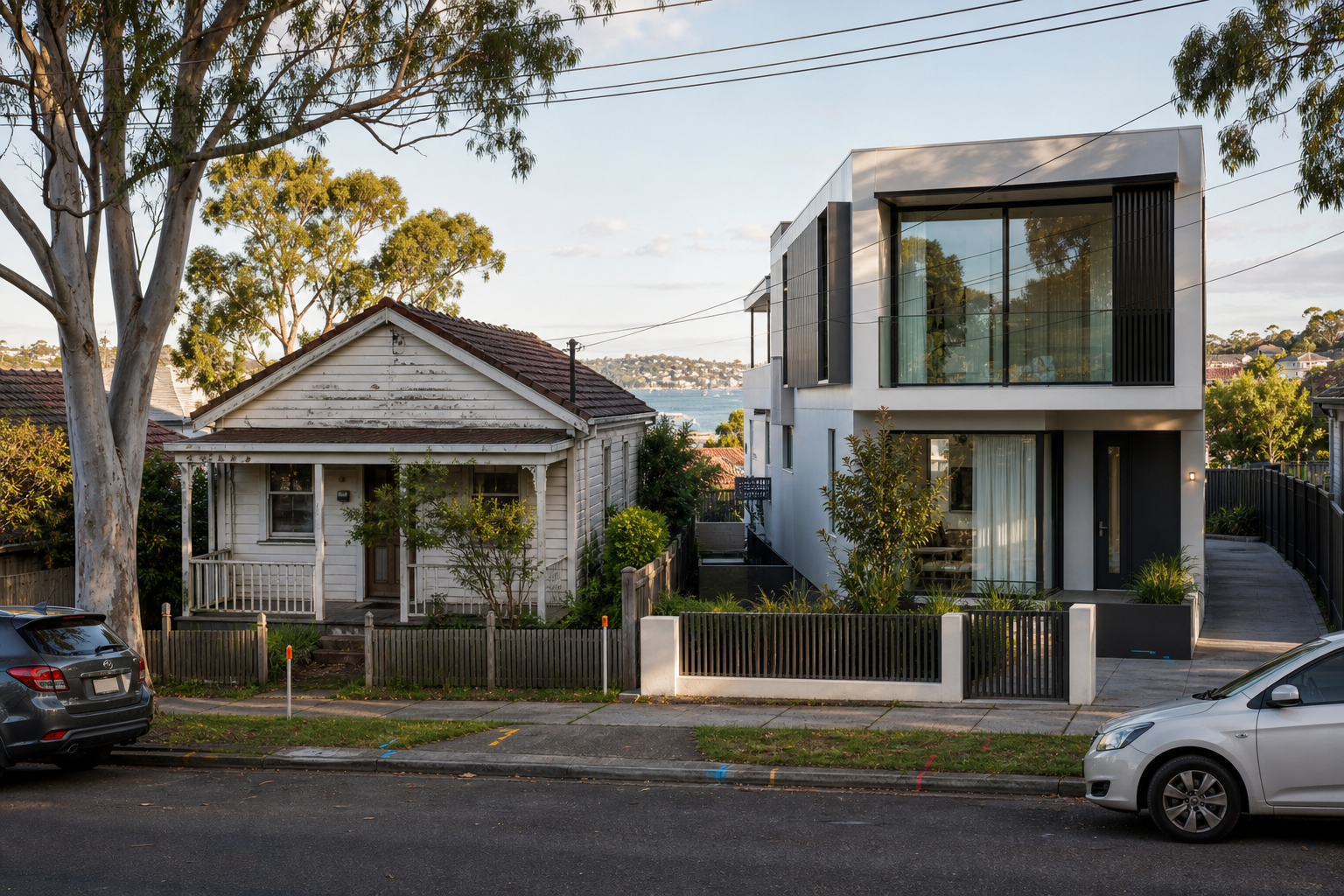
1. How valuers look at Rose Bay knockdown and duplex sites
For knockdown and duplex blocks, valuers focus much more on the dirt than the building.
Key valuation drivers in Rose Bay:
- Land size and shape – usable land, width and slope all matter for duplex feasibility.
- Zoning and FSR – R2 vs R3, floor-space ratio and height limits guide what you can build.
- Precedent sales – recent duplex sites, not just renovated homes, set the tone.
- Demolition and constraint factors – easements, sewers, heritage, flood/overland flow.
Worked example (purely indicative):
- Existing house: tired 3‑bed, limited value as a home.
- Land: 620 m², good frontage, duplexes already in street.
- Recent sales: similar duplex site at $4.0m, renovated homes $4.5m–$5.0m.
The valuer might land around $4.0m because the highest and best use is as a development site, even if the current dwelling looks “livable”.
For a deeper comparison with a nearby suburb, see how we break this down in Dover Heights here: Making Sense of Older Duplexes, Semis and Knockdown Sites in Dover Heights.
Why ‘development potential’ doesn’t always show up in the valuation
Valuers must evidence their number with comparable sales.
If:
- there are few recent duplex site sales, or
- your concept plan is more ambitious than what’s typical,
they’ll usually sit at the lower end of the range.
Your architect’s feasibility or agent’s price guide doesn’t override that – the bank goes with the valuer.
2. How banks lend against Rose Bay sites (current use vs future use)
Lenders split these properties into two broad buckets.
A. Standard residential with future potential
Examples:
- Livable house on R2 land, duplex possible but not obvious.
- No DA lodged yet.
Common bank treatment:
- Treat as normal home or investment security.
- LVRs up to ~80% common (higher only with strong income and LMI).
- Valuer may still lean on land, but policy treats it as a dwelling, not a development.
B. Obvious development / duplex site
Examples:
- House in very poor condition.
- Clear subdivision/duplex precedent in the street.
- DA/CDC lodged or approved for duplex.
Common bank treatment:
- Some majors cap LVR at ~60–70%.
- Some will only lend under construction / development terms.
- They may shade or ignore speculative end values.
The key rule: banks lend against what exists today, not the profit you hope to create.
The strategy continues below
You've seen the problem and the groundwork — now unlock the exact steps our CPA-certified brokers use, including 4 more sections. Enter your email for instant, free full access.
Free access. No spam — unsubscribe anytime. Your details stay confidential.
Frequently asked questions
Do banks value a Rose Bay knockdown at land value only?▾
Can I borrow based on the end value of a Rose Bay duplex?▾
Is a 5% deposit and 66W realistic for a duplex site?▾
Speak with a specialist advisor
Confidential consultation, bespoke advice for your situation.