Article
How Quiet Streets, Views and Walkability Change What Banks Will Lend
In Sydney’s east, quiet streets, views and walkability drive huge price gaps. Banks recognise some of that premium but not all. This guide shows how lenders actually treat those features, where valuations often fall short of auction prices, and what you can do this week to protect your borrowing strategy, bids and buffers.
Key Takeaway
Location premiums for quiet streets, views and walkability in Sydney’s Eastern Suburbs do affect how much banks will lend, but lenders often value them more conservatively than buyers, especially for ocean and harbour views. Valuers typically recognise 5–15% premiums for quiet streets and strong walkability, while view premiums may be shaded back to 50–70% of market hype. Borrowers can respond by sequencing valuations, choosing lenders carefully and stress-testing buffers before bidding.
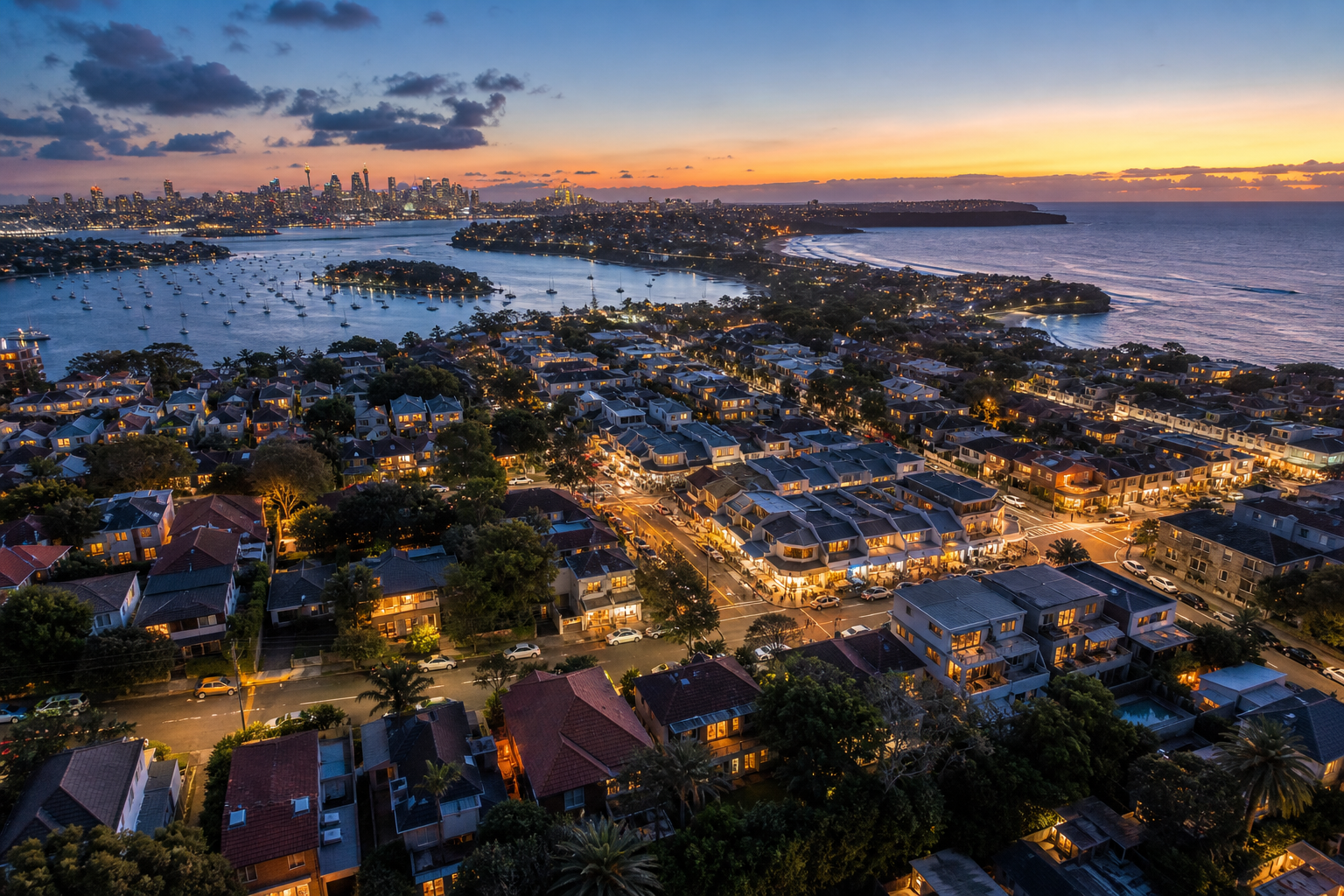
In Sydney’s east, quiet streets, views and walkability can shift prices by hundreds of thousands of dollars – but banks don’t always see those premiums the way buyers do.
From a lender’s perspective, a “location premium” is only useful if it’s predictable, supported by comparable sales, and likely to survive the next downturn. That gap between buyer emotion and bank logic is exactly where people overbid, under‑plan or find their valuation coming in short after the auction.
This guide unpacks how banks and valuers actually treat quiet streets, views and walkability in the Eastern Suburbs, and what you can do this week to adjust your budget, bidding and buffers.
1. How lenders really think about location premiums
1.1 What “location premium” means in bank language
When valuers talk about a location premium, they’re usually adjusting their model for three things:
- Micro-position – quiet street vs main road, elevation, aspect, privacy.
- Amenity access – walkability to transport, cafes, beaches, schools, employment.
- Scarcity – how many similar properties sell in a typical year.
Banks don’t care that a property is “special” in your eyes. They care whether another rational buyer would pay similar money within six months if they had to sell you up.
That’s why lender valuations can trail auction results in prestige pockets like Double Bay and Bellevue Hill, where emotion, status and family money often drive bidding beyond what comparable evidence can justify.
If you haven’t read it yet, it’s worth pairing this guide with Sydney’s Eastern Suburbs Postcode Risk: What Banks Really Worry About, because postcode risk overlays everything we’re talking about here.
1.2 The four questions valuers ask
A valuer standing outside your target property is effectively asking:
- What would this fetch at a conservative, well‑run auction next month?
- What did similar homes in similar streets sell for in the last 3–6 months?
- What discounts do buyers apply for flaws – noise, parking, overshadowing?
- If the market falls 10–15%, does this home still trade reasonably well?
Quiet streets, views and walkability matter because they tend to improve that last answer. But the way they’re priced into valuations is more rules‑based and less romantic than buyer behaviour.
2. Quiet streets vs main roads: how much value do banks really give?
2.1 The real-world price gap
Sales data across inner‑Sydney consistently shows a discount for busy roads and a premium for quiet, well‑located side streets. In parts of the east, that gap can easily run to 5–15% for very similar housing stock.
On a $3.0m house, that’s a $150k–$450k swing purely based on the street.
Valuers typically recognise this, but the way they do it matters:
- A very similar house on the same main road becomes the “inferior” comp, adjusted up to approximate a quiet street result.
- A very similar house in the quiet street becomes the “superior” comp, adjusted down if your property has any flaws (worse parking, overshadowing, smaller land).
2.2 Worked example: quiet street vs main road
Assume:
- Lender max LVR: 80% (no LMI)
- Contract price: $3,000,000
- Your savings/cash: $700,000 (hoping for 80% lend)
Two scenarios.
A. Quiet street house
Auction result: $3.0m
Valuer sees recent quiet-street sales at $2.9–3.0m and a main road sale at $2.7m.
They adopt a $2.95m valuation.
- Max loan @ 80%: $2.36m
- Shortfall vs purchase price: $3.0m – ($2.36m + $0.7m) = -$60k
You need to tip in an extra $60k or accept a slightly higher LVR with LMI (if allowed).
B. Almost identical house on a main road
Auction result: $2.7m
Valuer lands at $2.65m.
- Max loan @ 80%: $2.12m
- Your $700k cash is enough. No shortfall.
Takeaway: the premium is real, but the bank may not fully match the auction result. If you stretch to secure the quiet street, build in a buffer for a 2–3% valuation haircut.
2.3 When banks shade quiet-street premiums
Banks and valuers are most conservative on quiet‑street premiums when:
- The street is technically quiet but functionally a rat‑run during peak hours.
- There’s a nearby development risk (planned apartments, road widening, school expansion).
- The street is quiet, but zoning is less favourable than nearby blocks.
In those cases, you may pay a premium to avoid noise… but the valuer may see only a modest uplift versus a better‑zoned or more future‑proof main street.
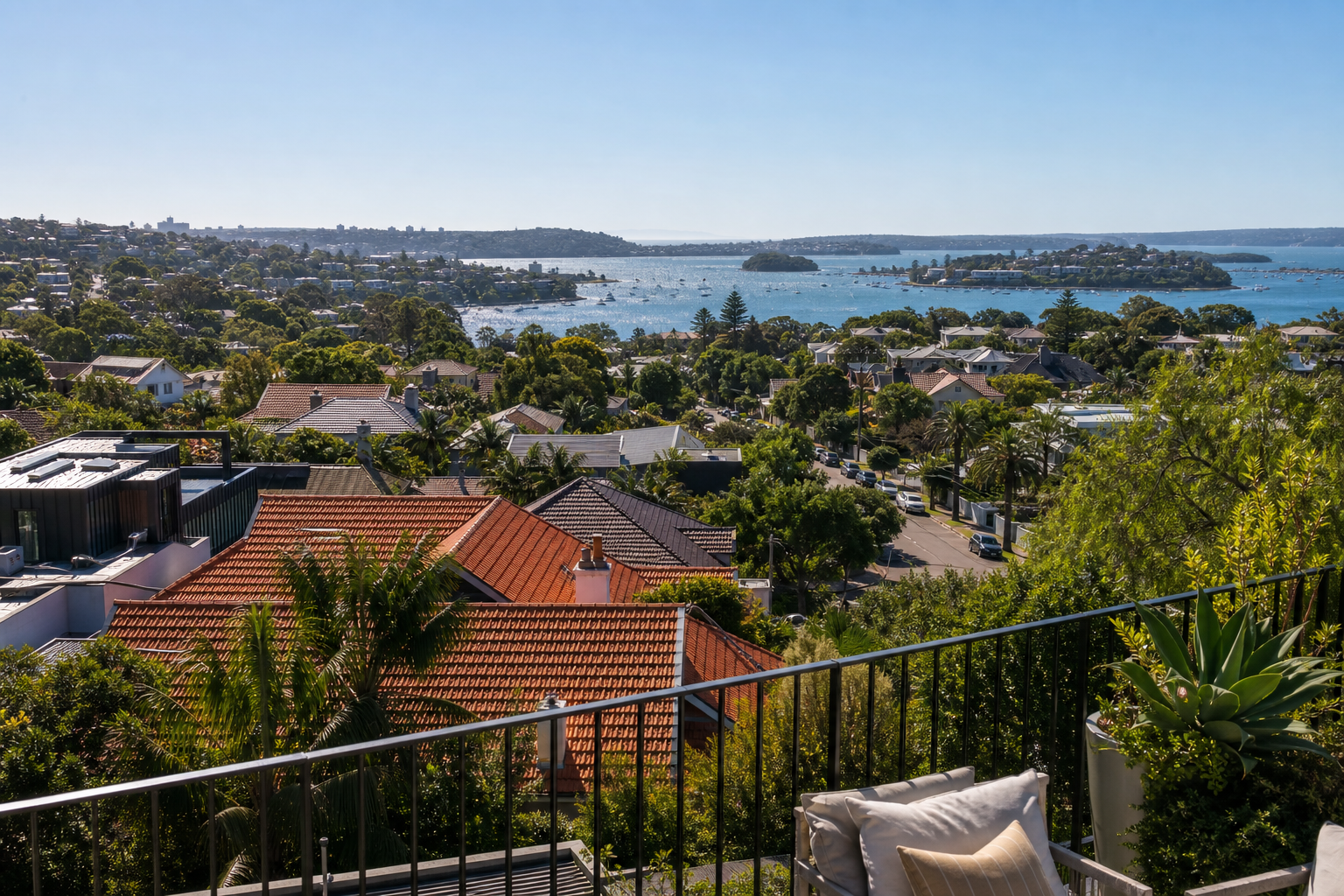 Harbour and ocean views can drive big emotional premiums that lenders only partially recognise. ### 3.1 Emotional value vs lending value Views are where the gap between buyer emotion and bank logic blows widest. - Owner-occupiers in the east will often stretch 20–30% for a view. - Banks usually want comparable evidence of other view properties – not just one crazy sale. If your premium is driven by a unique, never-to-be-repeated view, a valuer may acknowledge it… but still **shade…
The strategy continues below
You've seen the problem and the groundwork — now unlock the exact steps our CPA-certified brokers use, including 7 more sections. Enter your email for instant, free full access.
Free access. No spam — unsubscribe anytime. Your details stay confidential.
Frequently asked questions
Do banks really pay extra for quiet streets in Sydney’s Eastern Suburbs?▾
How much of a harbour or ocean view premium will a bank recognise?▾
Does walkability really affect how much a lender will lend?▾
Why do valuations in Double Bay and Bellevue Hill often come in low?▾
How can I reduce valuation risk when buying a premium-located property?▾
Is it safer for investors to pay a premium for views or for walkability?▾
Speak with a specialist advisor
Confidential consultation, bespoke advice for your situation.