Article
How to Keep Your Cashflow Safe During an Off‑the‑Plan Build
A practical, numbers-based guide to managing cashflow while your off‑the‑plan apartment is being built, including buffers, renting decisions and self‑employed risk.
Key Takeaway
Managing cashflow during an off‑the‑plan apartment build means planning all income, living costs and future settlement expenses over 2–4 years and holding buffers—typically 3–6 months of expenses for employees and 6–12 months for small business owners. Because lenders apply at least a 3% serviceability buffer to the interest rate, income volatility or new debts during the build can materially cut borrowing power. Buyers should model best‑ and worst‑case scenarios now and set a defined cash and credit buffer for settlement.

How to Keep Your Cashflow Safe During an Off‑the‑Plan Build
Managing cashflow during the build period for an off‑the‑plan apartment means planning your income, expenses and buffers from today until at least six months after settlement, so you can settle without stress even if things go wrong. It’s about having a clear view of rent, mortgage, business cashflow and tax, then locking in a realistic buffer for valuation changes, delays or income shocks.
In this guide, we’ll turn that into numbers you can actually work with this week.
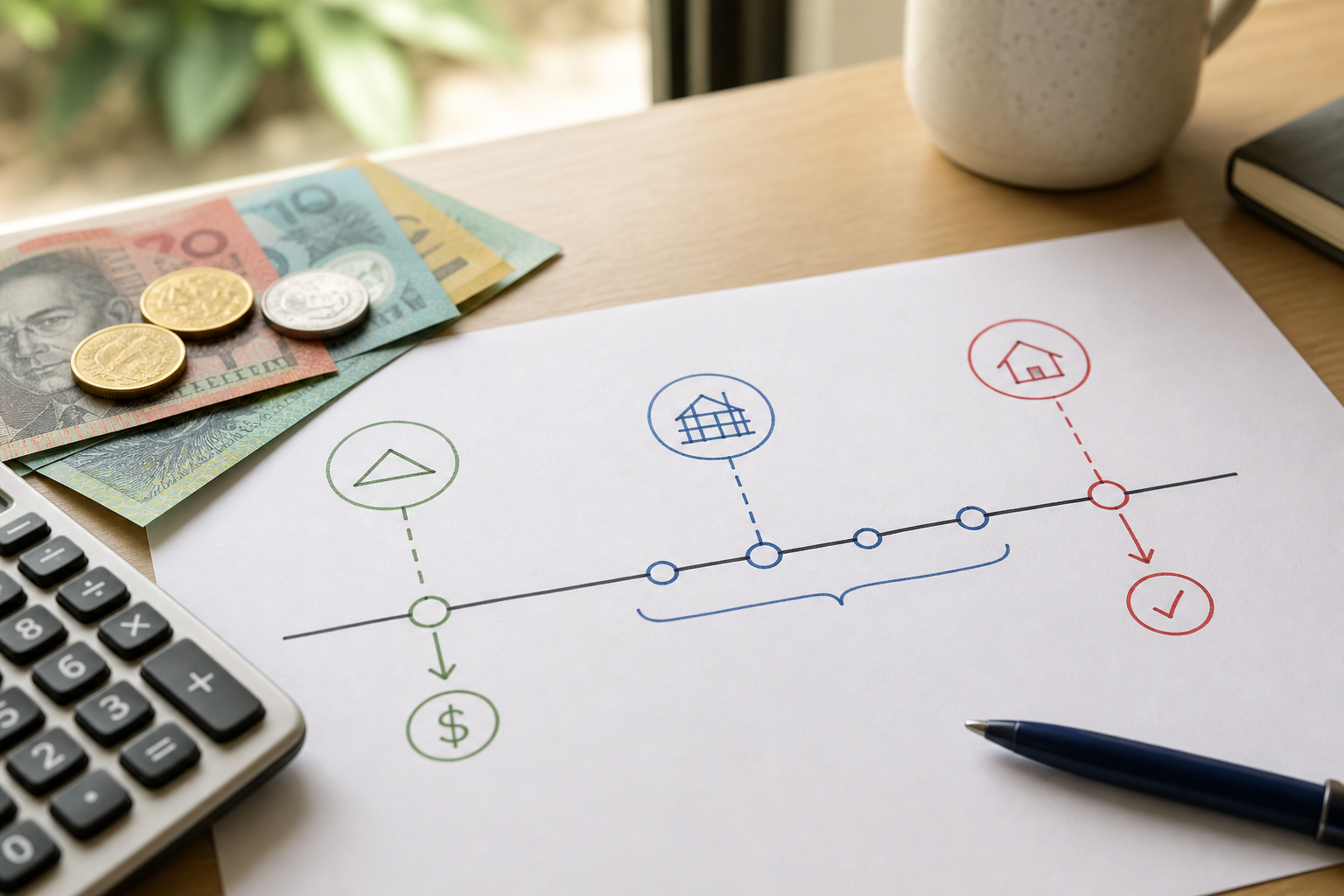
1. What “cashflow planning” really means for off‑the‑plan buyers
Most people focus on the deposit and forget the 2–4 years in between.
For off‑the‑plan, good cashflow management over the build period means:
- Modelling your money from now until at least six months after settlement.
- Stress‑testing that model for income drops, rate rises and cost overruns.
- Setting buffers for both living costs and settlement risk.
- Avoiding moves (like new car loans or draining business cash) that slash your borrowing power.
If you haven’t already, it’s worth reading the broader context in our guides on off‑the‑plan finance basics and eligibility and deposits and upfront costs for off‑the‑plan apartments. This article zooms in on the build period itself.
2. Map your build-period timeline and commitments
2.1 A typical off‑the‑plan cashflow timeline
Most apartment projects follow a rough pattern (yours will have its own dates):
- Month 0: Pay 5–10% deposit on exchange.
- Months 1–24 (or 36+): You’re waiting. You may be renting, living with family, or still in your existing home.
- 6–9 months before completion: Start updating financials, checking borrowing capacity and planning buffers.
- 3–6 months before completion: Valuation ordered; formal loan approval and loan docs.
- Settlement month: Pay the balance (usually 90–95%), stamp duty and other costs.
Unlike a construction loan on land, you usually don’t make progress payments during the build on a standard off‑the‑plan apartment. That sounds easy, but it can lull buyers into under‑planning.
2.2 What actually gets paid when
You’ll typically face:
-
At exchange:
- 5–10% deposit.
- Legal fees.
-
During the build:
- Ongoing rent or existing mortgage.
- Life costs (kids, business, holidays, cars, etc.).
- Possibly higher rent if you move closer to work or upgrade.
-
At settlement:
- 90–95% of purchase price (funded by your loan and/or extra cash).
- Stamp duty (often tens of thousands of dollars).
- Lender fees, government charges, strata pre‑payments, insurance.
The real cashflow risk is not usually the deposit. It’s whether you can:
- Save or protect enough cash for settlement costs and buffers; and
- Keep your borrowing capacity intact so the bank will actually lend you the balance.
2.3 Extra moving parts for self‑employed and investors
If you run a business or practice, you may also be juggling:
- Irregular income and project‑based cashflow.
- BAS and tax payments (and the temptation to delay them).
- Business loans and equipment finance.
- Plans to expand, hire staff or upgrade vehicles.
Remember that in Australia, most lenders treat business facilities with a personal guarantee as personal commitments when assessing your home loan. That means business debt can directly reduce how much you can borrow.
3. Build a simple 2–4 year cashflow map
You don’t need a fancy model. A spreadsheet or even a notebook is fine, as long as it’s honest.
3.1 Step 1: Lock in your baseline living costs
Start with your bare‑bones monthly household budget — not your ideal lifestyle:
- Rent or mortgage
- Utilities and internet
- Groceries
- Transport
- Insurance
- School/daycare
- Minimum loan repayments and credit cards
Ignore holidays, new furniture and take‑away for now. Banks use benchmarks like HEM (Household Expenditure Measure); you should use your real numbers plus a margin.
If your bare‑bones cost is $5,000 per month, write that down. This will drive your buffer.
3.2 Step 2: Map income by year, not just today
For PAYG employees, ask:
- Is your income likely to rise steadily, or could it drop (e.g. going part‑time, parental leave, industry changes)?
- Are bonuses guaranteed, variable, or at your manager’s discretion?
For self‑employed clients, it’s more complex:
- Lenders often use the lower or an average of your last two years’ taxable income.
- A drop in taxable income between now and settlement can materially reduce borrowing capacity.
- If you’re planning to intentionally lower taxable income (e.g. extra deductions, big asset purchase), factor in how that may hurt your borrowing.
Sketch your best‑case, likely, and conservative income for each year until settlement.
3.3 Step 3: Add known big-ticket events
Over a 2–4 year build you may also face:
- Weddings, babies or school fees.
- Business expansion or relocation.
- Vehicle upgrades.
- Overseas trips.
Anything over, say, $5,000 should go into your model. You don’t have to cancel big life events; you just need them on the page so you can see whether the numbers still work.
 Separate buffers for living costs, settlement risk and business cashflow reduce overall stress. ### 4.1 Household living buffer For most small business owners, a 6–12 month buffer of bare‑bones household expenses is a reasonable target when income is volatile or project‑based. For more stable PAYG employees, 3–6 months is often workable. Using our earlier example: - Bare‑bones cost = $5,000 per month -…
The strategy continues below
You've seen the problem and the groundwork — now unlock the exact steps our CPA-certified brokers use, including 6 more sections. Enter your email for instant, free full access.
Free access. No spam — unsubscribe anytime. Your details stay confidential.
Frequently asked questions
How much cash buffer do I need for an off-the-plan settlement?▾
Is it risky to keep renting while I wait for my off-the-plan apartment?▾
What if my income drops before my off-the-plan apartment settles?▾
Can I buy a car or take a personal loan during the build period?▾
How should self-employed buyers manage tax and business cashflow during the build?▾
What happens if the final valuation is lower than my off-the-plan contract price?▾
Speak with a specialist advisor
Confidential consultation, bespoke advice for your situation.