Article
Turn Your Mascot Home Loan into a 10‑Year Property Strategy
How a Mascot-focused mortgage broker can turn your next home loan or refinance into a 10‑year property and finance plan, with practical case studies for first‑home buyers, investors, self‑employed and small business owners.
Key Takeaway
A Mascot-focused mortgage broker can turn a single home loan into a 10‑year property and finance strategy by mapping life stages, structuring loans for flexibility, and building cash buffers so repayments stay under roughly 30–40% of net income. With around 70% of new Australian home loans now written through brokers, local expertise and building knowledge matter. The key actionable step is booking a strategy session to map your next decade of moves before locking in any new loan.
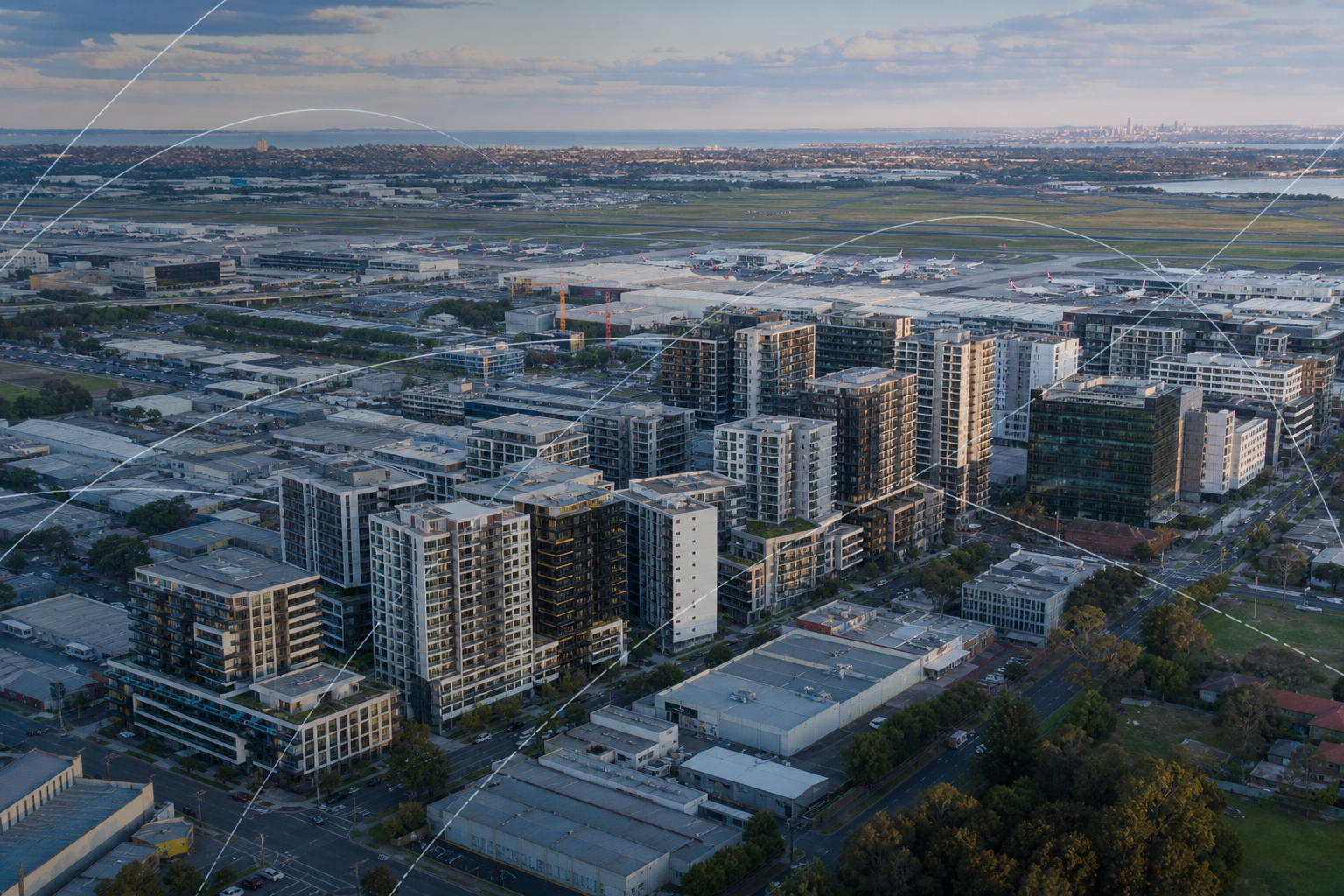
Most Mascot borrowers don’t just want a loan approved; they want to know that one decision fits a 10‑year plan. A Mascot‑focused broker can turn your next purchase or refinance into a roadmap covering upgrades, kids, career changes and even a small business, rather than a one‑off rate hunt.
In practice, that means three things: 1) mapping likely life and property moves over the next decade, 2) choosing loan structures that stay flexible as rates change, and 3) building buffers so repayments stay safely under roughly 30–40% of your net income. This guide uses Mascot‑style case studies to show what that looks like.

Turning a Mascot apartment purchase into a stepping stone, not a dead end.
Why long‑term planning matters in Mascot right now
Mascot is dense, fast‑changing and exposed to interest rates. You’ve got a lot of apartments, a big chunk of investor stock, and many borrowers tied to aviation, logistics and hospitality around the airport. That can be rewarding in good times and stressful when rates or work hours shift.
Roy Morgan research shows about 28% of Australian mortgage holders were already “at risk” of mortgage stress in early 2026, with more pressure expected if the Reserve Bank keeps lifting rates. The RBA’s own statements make it clear they’re targeting inflation back to about 2.5% over time, and that means higher‑for‑longer rates are a real possibility.
Why Mascot borrowers feel changes quickly
Mascot borrowers are often:
- Buying high‑density units with body corporate fees
- On variable incomes (overtime, shift work, bonuses, self‑employed)
- Carrying earlier personal or car loans
- Looking to upgrade or invest within 5–10 years
Without a plan, each change (new car, new baby, pay cut, second property) becomes a separate scramble. With a plan, you make each move assuming higher rates, APRA’s 3% assessment buffer and realistic worst‑case scenarios, not just today’s rate.
If you’re comparing broker options, it’s worth reading how a Green Square‑focused broker builds a 10‑year plan in a very similar market to Mascot in [/insights/green-square-broker-case-studies-long-term-planning].
How a Mascot‑focused broker actually builds a 10‑year plan
A good broker in Mascot should act like a long‑term planner, not a loan salesperson. Around 70% of new Australian home loans already go through brokers, largely because lender rules are complex and most people want strategy, not just product.
Here’s the process we typically use.
1. Map your next decade in broad strokes
You can’t predict everything, but you can sketch rough timing for:
- Kids or schooling changes
- Job or business shifts
- Likely upgrade or downsize points
- Possible investment property purchases
- Major life events (parental care, relocations, sabbaticals)
We then translate those into rough years: “upgrade around year 5”, “add one investment around year 7”, “reduce to one income in year 3 for 12 months”.
2. Set safe borrowing and repayment limits
We look at your true net household income and essential expenses. Then we set a ceiling where housing costs (loan repayments, strata, rates, insurance) stay under roughly 30–40% of take‑home pay, which is where financial stress tends to spike if you go above it.
We stress‑test against:
- An extra 3% interest rate (APRA’s typical buffer)
- Reduced overtime or one partner off work
- Higher energy and living costs
We also use proper buffer design principles from [/insights/risk-management-buffers-worst-case-planning-broker]: your cash buffer is sized to your real essential costs, not just an arbitrary savings target.
3. Choose flexible loan structures, not just cheap ones
Depending on your goals, a Mascot broker might recommend:
- Principal & interest on the home, interest‑only on investments
- 100% offset accounts instead of relying solely on redraw
- Fixed/variable splits that can handle rate rises and refinancing windows
- Avoiding dangerous cross‑collateralisation between properties
The difference isn’t just technical. It’s about leaving the door open for the next move without needing to start again from scratch.
4. Plan for equity releases and refinances in advance
We assume:
- You’ll want to release equity for an upgrade or investment at some point
- Banks will tighten or loosen credit rules over the next 10 years
- Valuations in certain Mascot buildings may be conservative due to internal lender risk lists, cladding or mixed‑use issues
So we flag which buildings and structures make future equity releases easier and which to avoid. That local building knowledge is a real edge in Mascot, just as it is in Green Square and other dense suburbs where some complexes appear on lender restriction lists.
5. Put it into a simple 10‑year roadmap
A 10‑year plan doesn’t need to be complicated. It can be one or two pages showing:
- Year‑by‑year “likely moves”
- Target LVRs (loan‑to‑value ratios)
- Planned refinances or equity releases
- Minimum cash buffer targets
That’s the same style of roadmap we design for Eastern Suburbs clients (see [/insights/long-term-property-mortgage-planning-eastern-suburbs]) but tailored to Mascot incomes, unit stock and aviation‑heavy employment.
One‑off loan vs 10‑year strategy
| Approach | What you focus on now | What you risk over 10 years | What a Mascot broker changes |
|---|---|---|---|
| One‑off loan | Lowest rate today, fastest approval | Hitting borrowing walls, paying more LMI, panic refinances, limited options if a building is blacklisted | No real change – you stay reactive |
| 10‑year plan | Rate and structure, buffers, future moves | Smoother upgrades, cleaner equity releases, better tax outcomes, more negotiating power at each refinance | Broker designs loans to fit a roadmap, not just a rate sheet |

Using Mascot unit equity wisely can open options without over‑stretching.
Case study 1: First‑home buyer in a Mascot unit, planning to upgrade
Profile
- Couple, 29 and 31, both working near the airport
- Combined net income: ~$10,000 per month
- Savings: $120,000
- Target purchase: $800,000 Mascot unit
The problem
They want to “get into the market now” but also hope to upgrade to a townhouse in 6–8 years when they have kids. They’re tempted to stretch to the maximum borrowing the bank offers and roll a $20,000 car loan into the mortgage to “keep things simple”.
What the Mascot plan looked like
-
Set a safe limit
Instead of borrowing to the bank’s maximum, we cap repayments so total housing costs stay under about 35% of their net income, even if rates rise 3%.- At 6% interest, a $680,000 loan over 30 years is about $4,079/month P&I.
- Add $800/month for strata, utilities and insurance and you’re at ~$4,879 (~49% of their income) – too high.
- So we target a lower loan size and more deposit.
-
Avoid turning short‑term debt into 30‑year debt
We keep the $20,000 car loan separate and aim to clear it within 3 years. Rolling it into a 30‑year mortgage, even at a lower rate, would multiply the total interest cost several times over the life of the loan. -
Structure for the upgrade
- 100% offset account for surplus income and future parental leave savings
- Variable rate so we can refinance or release equity more easily
- No cross‑collateralisation with any future home
-
Map the upgrade
- Years 1–3: Focus on smashing the car loan and building a 3–6 month cash buffer
- Years 4–6: Increase extra repayments to build equity and watch local prices
- Years 6–8: Target 80% LVR on the Mascot unit so they can upgrade with minimal or no LMI on the new home
What they did this week
- Capped their search at $750,000 instead of $800,000
- Set up a shared spreadsheet showing their buffer and repayment targets
- Booked a pre‑approval with a lender whose policy fits future parental leave plans
Key lesson
Your first Mascot unit doesn’t need to be your “forever home”. But it should be structured so it becomes a stepping stone—either a kept investment or a sale that funds a low‑stress upgrade. That only happens if you set safe repayment limits and avoid dragging short‑term debts into a 30‑year term.
Case study 2: Self‑employed Mascot tradie using unit equity
Profile
- Self‑employed electrician, 36
- Owns a Mascot unit bought for $650,000, now valued around $820,000
- Home loan ~$520,000, repayments at 6% P&I ≈ $3,118/month
- Wants to access equity to renovate and invest
The problem
His taxable income looks lower due to legitimate deductions, which makes some lenders nervous. He’s also been offered a “debt consolidation” refinance that would roll a $15,000 credit card and $25,000 ute loan into the home loan.
The Mascot plan
-
Pick the right lenders for self‑employed income
A Mascot broker with tax and financial experience can help present two years of financials, add‑backs (like one‑off expenses) and sometimes use alt‑doc options if needed. -
Keep short‑term debt short term
We refinance the home loan for a sharper rate and longer term only on the mortgage portion. The card is paid off within 12 months; the ute within 3–5 years, so they don’t become a 30‑year drag. -
Controlled equity release
With an $820,000 valuation and a $520,000 loan:- At 80% LVR, usable equity ≈ $136,000
- We release $90,000: $40,000 for renovations, $50,000 as a seed for a future investment deposit
-
Future‑proofing for income swings
We build a buffer equal to at least six months of essential costs, per the buffer principles in [/insights/risk-management-buffers-worst-case-planning-broker]. If work slows or rates lift further, he has time to adjust.
Key lesson
The goal isn’t “max equity now at any cost”. It’s keeping options open for the next 10 years while staying resilient to income swings and further rate moves.
Separating home and business risk is central to a resilient 10‑year plan.
Case study 3: Building an investment portfolio from a Mascot base
Profile
- Single, 38, aviation professional
- Owns an owner‑occupied Mascot unit worth ~$900,000
- Home loan $540,000 (60% LVR), solid surplus cashflow
- Wants to build a 3‑property portfolio over 10 years
The problem
He’s talked to a bank that will happily fund a second property but wants to secure all loans against both properties (cross‑collateralisation). That makes things simple now, but risky later.
The Mascot plan
-
Separate securities
We avoid cross‑collateralisation. The home secures its own loan; the investment secures its own, with standalone equity releases instead of master limits. This is classic portfolio‑builder discipline, as outlined in [/insights/mortgage-brokers-property-investors-portfolio-builders]. -
Stage the portfolio
- Years 0–2: Refinance home loan for sharper rate and structure (offset; correct splits)
- Years 2–5: Buy first investment, possibly in Mascot or another inner‑south suburb
- Years 5–8: Second investment, maybe outside Sydney for diversification
- Years 8–10: Consolidate, reduce non‑deductible debt
-
Serviceability management
With multiple loans, bank calculators become the main constraint. We:- Model how each purchase affects borrowing power
- Avoid lenders that shade rental income too harshly for his situation
- Keep personal spending realistic so HEM‑based living expense estimates don’t bite at the worst time
-
Cashflow and risk
We don’t rely on interest‑only forever to prop up a weak plan. Interest‑only can be useful for investments, but using it to cover structurally unaffordable living costs just pushes risk into the future.
Key lesson
A Mascot base can absolutely support a multi‑property portfolio. The difference between “two well‑structured investments” and “a messy tangle of loans and guarantees” is usually a broker who’s thinking three purchases ahead.
Case study 4: Small business owner balancing home, shop and buffers
Profile
- Couple, 42 and 45, own a small café in Mascot
- Home in Mascot worth $1.5m, mortgage $800,000
- Business needs $150,000 for a fit‑out and equipment as the lease is renewed
The problem
Their bank has suggested topping up the home loan. It’s quick and “cheap”, but no one has walked them through the risk of tying business exposure to the family home.
The Mascot plan
-
Separate business and home risk where possible
We explore a blend of options:- Modest equity release against the home for part of the fit‑out
- A dedicated business loan or equipment finance for the rest
- Clear targets to pay down the business debt within 5–7 years
-
Keep housing stress in the safe zone
If their net household income is around $15,000/month, total housing costs (home loan, rates, insurance) need to stay safely under ~$6,000/month. That leaves enough room to handle business variability and higher energy prices. -
Buffer first, expansion second
We set a rule: maintain at least three months of combined home + business essential costs in cash or accessible offset. Only then do they commit fully to the fit‑out schedule. -
Contingency planning
We model:- A 20% drop in café turnover
- A 2% higher interest rate on all debts
- One partner taking time out due to illness or family needs
If they can survive those scenarios without fire‑selling the home, we’re comfortable proceeding.
For more on this way of thinking, see [/insights/risk-management-buffers-worst-case-planning-broker].
Key lesson
Your Mascot home can be a powerful business backer, but it shouldn’t be your only line of defence. Using a CPA‑level broker who understands home, investment and business lending together makes it easier to expand without betting everything on one property.
What you can realistically do this week
You don’t need a 40‑page plan. You just need enough clarity to avoid locking in a loan that blocks future moves. Here’s a simple one‑week action list.
1. Sketch your next 10 years (30 minutes)
Grab a blank page and jot down:
- Likely moves in the next decade (kids, schools, upgrades, business, downsizing)
- Rough timing (early / mid / late in the decade)
- Which moves need money from property (equity release, selling, extra borrowing)
This becomes the starting point for any broker meeting.
2. Check your current risk position (30–45 minutes)
- Add up current home and investment repayments, strata, council rates and insurance
- Calculate the % of your net income that goes to housing costs
- Check your current cash or offset buffer in months of essential expenses
If housing is above ~40% of net income or your buffer is under three months of essentials, that’s a flag to discuss with a broker.
3. Decide how you want to work with a broker (15 minutes)
Read [/insights/mascot-mortgage-broker-vs-banks-non-local] to see when a local Mascot broker beats going straight to a bank or online lender. If your situation is anything more than ultra‑simple, a local face‑to‑face or video‑based broker who knows Mascot’s buildings is usually worth it.
Also run through the checklist in [/insights/signs-of-a-good-mortgage-broker-red-flags] so you know what to look for – and what to avoid – in that first conversation.
4. Book a focused strategy call (15 minutes)
Before you sign or refinance anything, book a 15–30 minute strategy call with a Mascot‑focused, fully qualified broker who can look at:
- Your 10‑year sketch
- Current loans and structures
- Risk position and buffers
- How lenders are likely to see you (especially if you’re self‑employed or an investor)
Use the call to answer one question: “What’s the next sensible step this year that fits my longer plan?”
5. Tidy your numbers (1–2 hours over the week)
Gather and update:
- Last 3–6 months of bank statements
- Payslips or business financials
- Current loan statements and rate details
- A simple list of all debts and limits (credit cards, cars, BNPL, business loans)
This lets a broker quickly model scenarios and show you, in dollars, how your choices today play out over the next decade.
FAQs: Mascot brokers and long‑term planning
1. Do I really need a 10‑year plan if I’m just buying my first Mascot unit?
Yes, because the way you structure your very first loan affects every move after that – upgrades, investments and even business borrowing.
A simple one‑page 10‑year sketch is enough to guide key choices, like whether to use an offset, how much to borrow and how fast to pay it down.
2. How often should I review my plan with a Mascot broker?
At least annually, or when something big changes: new job, new baby, major rate moves or a planned purchase/sale.
An annual review keeps you aligned with RBA rate changes, lender policy shifts and any new risks in specific Mascot buildings or complexes.
3. What if my income is complex – bonuses, overtime or self‑employed?
That’s exactly when a local broker helps most.
They can explain how different lenders treat overtime, bonuses and self‑employed profits, and choose the right mix of full‑doc or alt‑doc options.
With complex income, planning your next 5–10 years in advance makes it much easier to keep borrowing capacity intact.
4. Is it safer to fix my rate long‑term if I’m worried about repayments?
Fixing can help with certainty for a few years, but it can also limit flexibility to refinance, restructure or release equity.
A Mascot broker will usually model fixed, variable and split options so you can balance cashflow certainty with the ability to adapt as your plan evolves.
5. Can I still build a portfolio if my first home is a Mascot unit?
Yes – many investors start exactly that way.
The key is to avoid over‑stretching on your first purchase, build a solid equity and cash buffer, and set up loans so each future property stands on its own security.
That’s the difference between a manageable portfolio and a fragile one.
6. How do I know if I’m already in mortgage stress?
If housing costs are creeping above 40% of your net income, you’re dipping into savings each month, or you’d struggle with another 1–2% rate rise, you’re in the risk zone.
A broker can help you restructure, refinance or adjust your plan before it becomes a crisis.
Key takeaways
- A Mascot‑focused broker should help you design a 10‑year roadmap, not just a single loan.
- Keeping housing costs under roughly 30–40% of net income and building real cash buffers is critical for resilience.
- Avoid turning short‑term debts into 30‑year mortgage baggage, even if the interest rate looks lower.
- Good structures – offsets, separate securities, sensible LVRs – keep your options open for upgrades, investments and business moves.
- A simple one‑week action plan (sketch goals, check risk, choose a broker, tidy your numbers) is enough to get started.
If you’d like help turning your Mascot home, investment or refinance into a practical 10‑year plan, book a free 15‑minute strategy call at https://localknowledge.finance/contact or try our borrowing power calculator at https://localknowledge.finance/calculators/borrowing-power. Your tax, your loan, one expert — a CPA + Tax Agent + Broker in one consultation.
General advice only.
Frequently asked questions
Do I really need a 10‑year plan if I’m just buying my first Mascot unit?▾
How often should I review my mortgage plan with a Mascot broker?▾
What if my income is complex, with bonuses or self‑employed earnings?▾
Is fixing my interest rate the safest option for long‑term planning?▾
Can I still build a property portfolio if my first home is a Mascot unit?▾
How do I know if I’m in mortgage stress and need to change my plan?▾
Speak with a specialist advisor
Confidential consultation, bespoke advice for your situation.