Article
Mascot first‑home buyers: practical steps to buy your first place
A decision‑grade guide for first‑home buyers targeting Mascot and nearby suburbs. Understand prices, rent vs buy maths, scheme caps, Mascot‑specific lending quirks and a one‑week action plan you can start this weekend.
Key Takeaway
First‑home buyers targeting Mascot and nearby suburbs should start by matching realistic entry‑level prices (often $750k–$950k for one‑ and two‑bed units) to NSW stamp duty concessions, Housing Australia scheme caps, and lender postcode rules. Because many lenders flag high‑density postcodes, borrowers must check LVR caps and building restrictions early. Modelling rent vs buy, stacking schemes like FHBG and FHSS, and running a Mascot‑specific borrowing assessment gives buyers a practical 6–24 month plan to purchase sooner and safely.
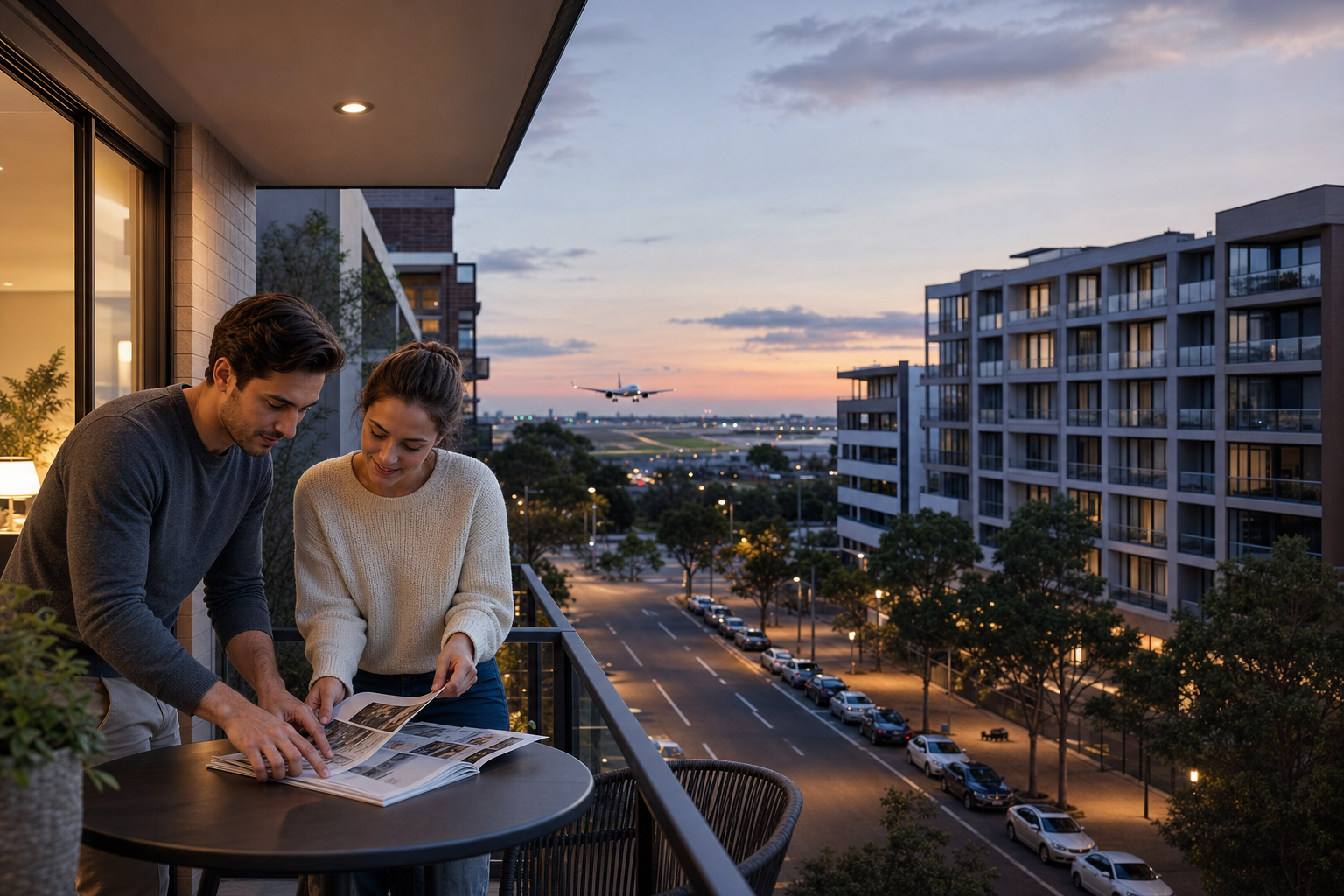
Buying your first home around Mascot means juggling airport‑side apartments, changing lending rules and tight budgets. The goal of this guide is simple: give you a decision‑grade plan you can act on this week, not just more realestate.com.au scrolling.
In Mascot and nearby suburbs, first‑home buyers should focus on three things: (1) realistic local price points, (2) how grants, guarantees and stamp duty concessions interact with those prices, and (3) postcode‑specific lending rules that can quietly limit your borrowing. Once you know those, you can build a 6–24 month roadmap that actually works.
1. Mascot as a first‑home market: where do you actually fit?
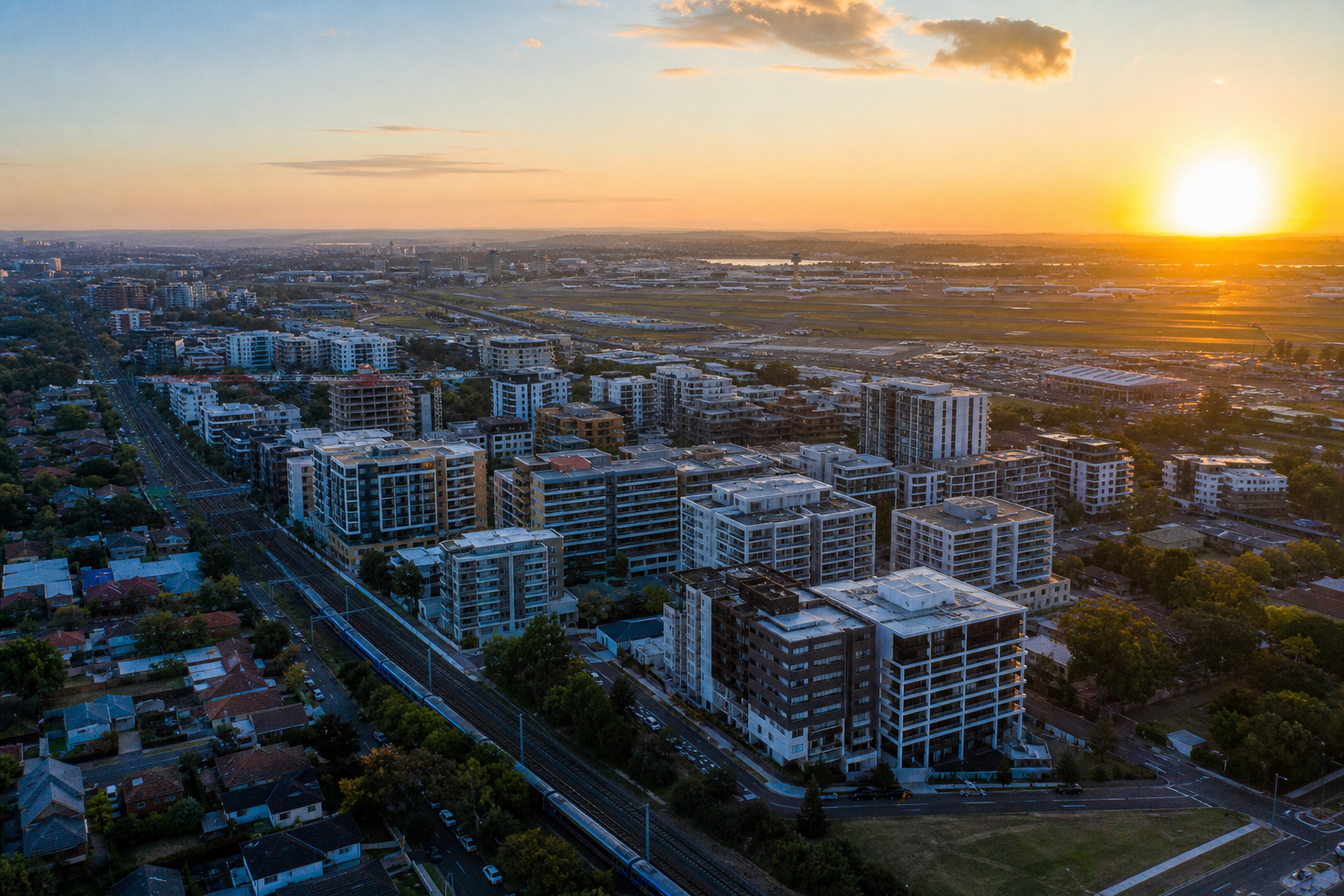
Mascot sits in a pocket of Sydney where infrastructure, density and aircraft noise all collide. That creates both opportunity (more stock, some relative value) and risk (lender postcode flags, building issues, noise corridors).
1.1 What “entry‑level” realistically looks like
Numbers change month to month, but as at 2026, indicative ranges for first‑home‑friendly stock are:
- One‑bed apartment in Mascot: roughly $750k–$850k
- Two‑bed apartment in Mascot: roughly $850k–$1.0m
- Older walk‑up unit in nearby suburbs (Rosebery, Eastlakes): sometimes $700k–$850k
- Townhouses or terraces within a short drive: often $1.2m+
This matters because first‑home buyer price caps for grants and guarantees are set by broad regions, not individual suburbs. Targeting areas where typical prices sit under those caps makes it much more likely you can actually use the schemes you’re reading about (see /insights/first-home-buyers-suburb-knowledge-get-in-sooner).
1.2 Mascot vs neighbouring options
If Mascot proper feels just out of reach, consider its near neighbours as stepping stones:
- Rosebery / Eastlakes – older stock, some smaller complexes, fewer building‑wide amenities. Sometimes better value per square metre.
- Zetland / Green Square – glossier, higher prices and more off‑the‑plan risk, but also strong tenant demand if you later rentvest.
- Alexandria / St Peters – mix of converted warehouses, older units and terraces; good for buyers willing to compromise on size or parking.
Your first decision is whether Mascot is the end goal or a 5–7 year stepping stone. That choice influences what you buy, how much you borrow and whether you lean towards growth, rentability or lifestyle.
2. Rent vs buy in Mascot: the real maths
2.1 A worked example
Let’s compare renting vs buying a two‑bed unit in Mascot.
- Purchase price: $900,000 (indicative)
- Buyer deposit: 10% ($90,000) plus costs
- Loan: $810,000
- Interest rate: 6.0% p.a. P&I (illustrative only)
- Term: 30 years
Approximate monthly repayment at 6.0%: $4,850.
Now compare to renting the same style unit:
- Weekly rent: say $900–$1,000
- Monthly rent: ~$3,900–$4,300
On the surface, renting might look cheaper by $500–$900 per month. But owning builds equity in two ways:
- Principal you pay down every month.
- Any long‑term price growth (which no one can guarantee).
2.2 How to decide in this rate environment
With interest rates higher after the RBA’s moves to contain inflation, many Mascot renters are paying less monthly than they would as owners. That doesn’t automatically make renting smarter.
Consider:
- Stability: fixed repayments vs uncertain rents.
- Discipline: forced savings via principal repayments.
- Flexibility: renting may be better if you’re unsure about staying near the airport corridor for 5+ years.
A pragmatic rule: if you can comfortably pass bank serviceability tests (usually 3 percentage points above the rate you actually get, per APRA guidance), and plan to stay 7+ years, buying often stacks up, even if year‑one cashflow looks worse.
3. Grants, concessions and schemes: Mascot‑friendly combinations
NSW and federal schemes can shave years off your saving timeline, but only if the price caps line up with Mascot’s reality.
3.1 NSW stamp duty concessions around Mascot
NSW offers stamp duty discounts and exemptions for eligible first‑home buyers up to specific price thresholds. The brackets and rules shift from time to time, but in practice:
- There’s usually an exemption or big discount for lower‑price purchases.
- A tapered concession applies up to a higher limit (often around the $800k–$1m range for units, depending on current policy).
For a $900k Mascot apartment, even a partial concession can mean $10k–$30k difference in upfront cash.
Your jobs this week:
- Check the latest thresholds on the NSW Government site.
- Plug two scenarios into a calculator: with and without concession.
- See if adjusting your target price band by $25k–$50k could keep you inside the concession window.
3.2 Federal schemes: FHBG, HBG and more
The Housing Australia schemes are often essential for Mascot buyers who don’t have a 20% deposit.
Common options include:
- First Home Guarantee (FHBG): as little as 5% deposit, no LMI, strict price caps and owner‑occupier rules.
- Regional and specialist guarantees: less relevant to Mascot itself but useful if you later pivot to a regional rentvesting strategy.
Key points for Mascot:
- The FHBG doesn’t care whether you’re PAYG or self‑employed. It’s neutral on employment type; the tougher hurdle is lender policy and proving stable income (see /insights/first-home-guarantee-self-employed-small-business-owners).
- Many Mascot‑suitable units can still sit under the scheme price caps — but two‑bed, newer stock can easily push you over.
- You must move in and meet occupancy rules; FHBG isn’t an investor scheme.
3.3 First Home Super Saver (FHSS)
The FHSS lets you withdraw voluntary super contributions to use as part of your deposit.
For Mascot‑level prices, FHSS rarely covers the whole deposit, but it can:
- Top you up from, say, 7% to a 10% deposit.
- Reduce LMI or combine with FHBG to build a more comfortable cash buffer.
Coordinate contributions with your tax planning. A broker who’s also a CPA and registered tax agent can map out the super, tax and borrowing impacts in one go, rather than you having three separate conversations.
The strategy continues below
You've seen the problem and the groundwork — now unlock the exact steps our CPA-certified brokers use, including 7 more sections. Enter your email for instant, free full access.
Free access. No spam — unsubscribe anytime. Your details stay confidential.
Frequently asked questions
Is Mascot still a good area for first-home buyers, given all the apartments?▾
Can I use the First Home Guarantee for a Mascot apartment?▾
I work at the airport with lots of shift penalties. Will banks count my income?▾
Should I wait for prices to fall before buying in Mascot?▾
Is off-the-plan too risky for Mascot first-home buyers?▾
How much emergency buffer should I keep after buying in Mascot?▾
Speak with a specialist advisor
Confidential consultation, bespoke advice for your situation.