Article
Build a Mascot Home Loan Pre‑Approval That Won’t Collapse at Auction
Many Mascot buyers walk into auction with weak pre-approvals that collapse when the hammer falls. Here’s how to design auction-ready finance that survives bank valuation checks, rate rises and real-world bidding pressure.
Key Takeaway
To design a Mascot home loan pre-approval that survives auction day, borrowers need a fully credit-assessed approval, clear maximum bid limits, and buffers for APRA’s 3% serviceability test and potential bank valuation shortfalls. With roughly 28% of Australian mortgage holders already ‘At Risk’ of stress, conservative limits and stress testing at 3 percentage points above current rates are crucial. The key actionable step is to turn generic system pre-approval into a fully assessed, property‑tested strategy before bidding.
Watch the short answer
Home loans when you earn through digital platforms or rolling contracts
Earning through gigs or platforms This video explains how lenders assess that income.
Read the transcript
If you earn your living through digital platforms or rolling contracts, standard banks will treat you like you're unemployed. Retail credit systems are built for the 1990s definition of a 9-to-5 payslip. When they see fluctuating invoices, they panic. At Local Knowledge Finance, we specialise in the modern economy. We utilise lenders who understand digital revenue, creator funds, and specialised contracting. We smooth out your income using advanced alt-doc policies to present a rock-solid case to a human underwriter. Your modern income needs a modern broker. DM me 'CREATOR' to unlock your actual buying power.
General information only, not personal advice. Your situation is assessed before any recommendation.
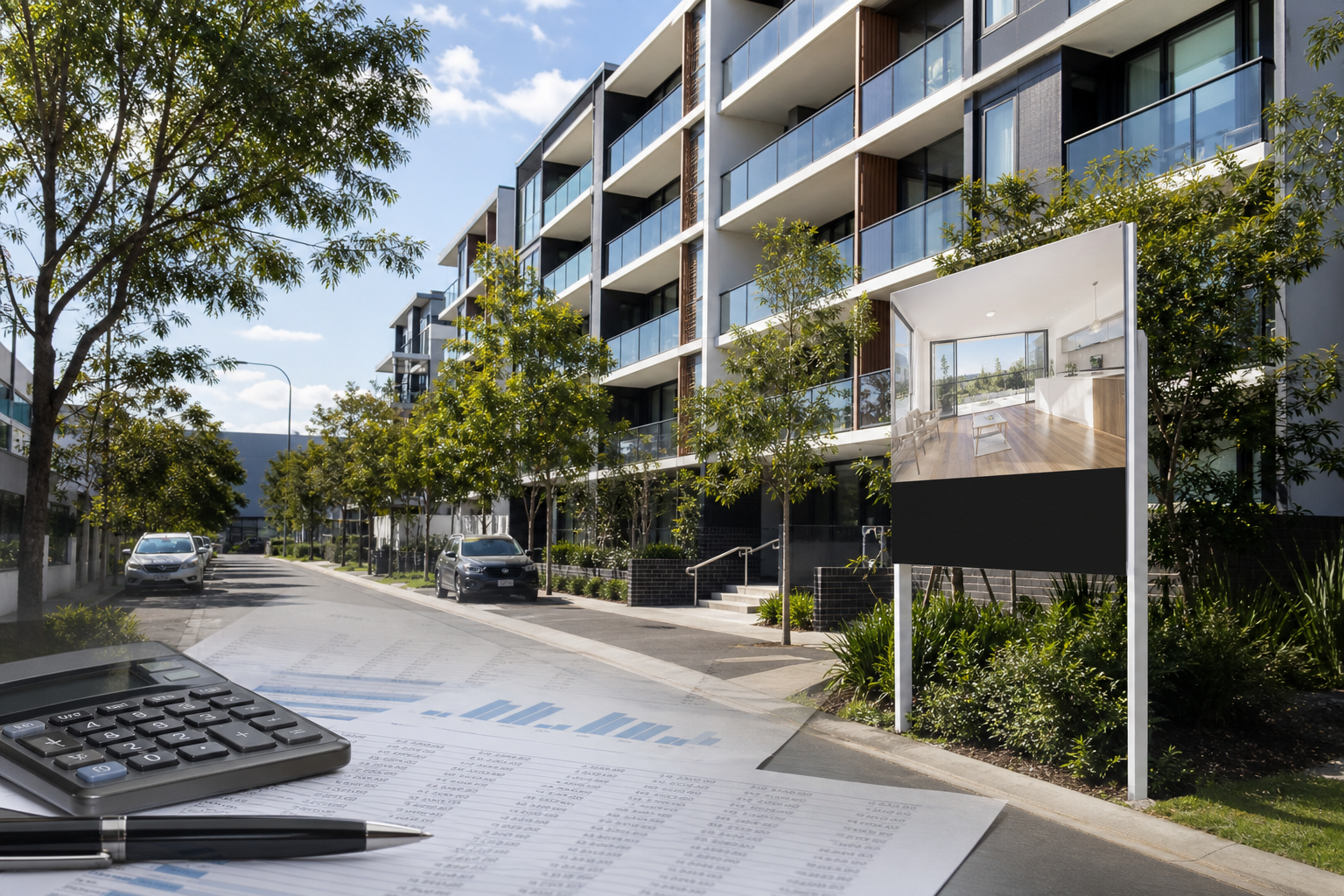
Designing a Mascot home loan pre‑approval that survives auction day means building a fully assessed, conservative finance plan that still stands after bank valuation, rate moves and real‑world bidding pressure – not just getting a generic ‘you’re approved up to $X’ email.
In practical terms, you need: (1) a fully credit‑assessed pre‑approval, (2) a hard bidding ceiling below the bank’s theoretical max, and (3) a plan for bank valuation and settlement timing on Mascot‑specific properties.

1. What “auction‑ready” pre‑approval in Mascot really means
Most Mascot buyers think pre‑approval = safe to bid. It doesn’t. In Australia, there’s no finance clause once the hammer falls, so if your bank later says no, you’re still on the hook for the 10% deposit and potentially damages.
Fully assessed vs “computer says yes” letters
A Mascot auction pre‑approval should be:
- Fully credit‑assessed – a human credit officer has checked your income, debts and living expenses (APRA requires banks to test at least 3% above the actual rate).
- Policy‑checked for your profile – e.g. self‑employed, aviation, contractor, expat or multi‑property investor.
- LVR and property‑type aware – Mascot is unit‑heavy with flight‑path and density issues that some lenders shade.
This builds on the principle that genuinely auction‑ready finance requires a fully assessed pre‑approval, not a quick branch letter (see /insights/auctions-private-treaties-fast-deals-finance-tactics).
Quick comparison: weak vs strong Mascot pre‑approval
| Feature | Weak branch letter | Strong Mascot auction pre‑approval |
|---|---|---|
| Assessment type | Automated only | Full credit assessment |
| Documents reviewed | Maybe payslips | Full income, expenses, debts, statements |
| Property type / postcode checked | Generic | Mascot units, flight‑path, size, use |
| Valuation risk discussed | No | Yes – with strategy for low valuations |
| Bidding limit agreed | Bank max only | Safe ceiling below bank max |
| Stress test at +3% rate rise | Often no | Yes, modelled and documented |
If your current approval looks like the left column, treat it as not auction‑safe.
2. Setting Mascot bidding limits you won’t regret
Work backwards from repayments, not just price
Your maximum bid shouldn’t just be “whatever the pre‑approval says”. With RBA cash rate at 3.85% (Feb 2026 decision) and further rises possible, your risk is repayment shock.
A practical Mascot stress test (from /insights/mascot-home-loan-still-competitive-checklist):
Model repayments at 3 percentage points above today’s rate and ask if you could sustain that for at least six months.
Worked example: setting a safe ceiling
- Target unit in Mascot: $950,000
- You have 15% deposit + costs (approx. $170,000 total)
- Indicative interest rate today: 5.8% p.a. (P&I, owner‑occupied, 30 years – illustrative only)
- Bank max (after APRA’s 3% buffer test) might show you can borrow about $850,000.
- At 5.8%, repayments on $850,000 are roughly $4,980/month.
- Stress test at 8.8% (5.8% + 3% buffer): repayments jump to about $6,670/month.
If $6,670/month would push you near or into debt stress – noting Roy Morgan’s benchmark that borrowers are “At Risk” when repayments exceed roughly 25–45% of after‑tax income – you should lower your bidding ceiling, even if the bank says you qualify.
Define three numbers before you inspect
For every Mascot auction you’re targeting, you want:
- Bank limit – from the fully assessed pre‑approval.
- Personal safety limit – based on the stressed repayment you can actually carry.
- Walk‑away price – the number above which you simply don’t bid.
Write them down and bring them to auction. This is how you avoid the “we went 50k over because it was busy” regret.
For help designing those limits around different strategies (first‑home, investor, upgrader) see /insights/mascot-first-home-investor-upgrader-strategies.
The strategy continues below
You've seen the problem and the groundwork — now unlock the exact steps our CPA-certified brokers use, including 4 more sections. Enter your email for instant, free full access.
Free access. No spam — unsubscribe anytime. Your details stay confidential.
Frequently asked questions
Is a big‑4 bank pre‑approval enough to bid at a Mascot auction?▾
How long does a strong Mascot home loan pre‑approval last?▾
What happens if the valuation is lower than my Mascot auction purchase price?▾
Can self‑employed Mascot buyers be genuinely auction‑ready?▾
Should I sign a 66W or waive cooling‑off in Mascot?▾
Speak with a specialist advisor
Confidential consultation, bespoke advice for your situation.