Article
Mining, Tourism and Single‑Industry Towns: Getting a Safer Home Loan
Thinking about buying in a mining, tourism or single‑industry town? This guide explains how lenders view postcode risk, LVR caps, valuations and income volatility so you can structure a safer loan, negotiate better, and avoid getting stuck if the local economy turns.
Key Takeaway
Australian lenders see mining, tourism and single‑industry towns as high‑risk postcodes, so they often cap LVRs at 70–80%, apply conservative valuations and heavily shade local income. This can limit borrowing power, increase deposit requirements and make refinancing difficult if prices fall 10–30%. Borrowers should stress‑test repayments at current rates plus 3%, plan multiple exit options, and choose loan structures with buffers and flexibility before committing to a property in these locations.

Buying or refinancing in a mining, tourism or single‑industry town is not like getting a home loan in a capital city suburb.
Lenders treat these postcodes as higher risk because house prices and local employment can change quickly when one industry slows. That usually means lower maximum LVRs (more deposit), tougher valuations, and fewer lender options. You can still buy safely – but you need to understand the rules and structure your loan for volatility, not stability.
This guide gives you a decision‑grade reality check you can act on this week – whether you’re a local, a FIFO worker, a tree‑changer, or an investor hunting yield.
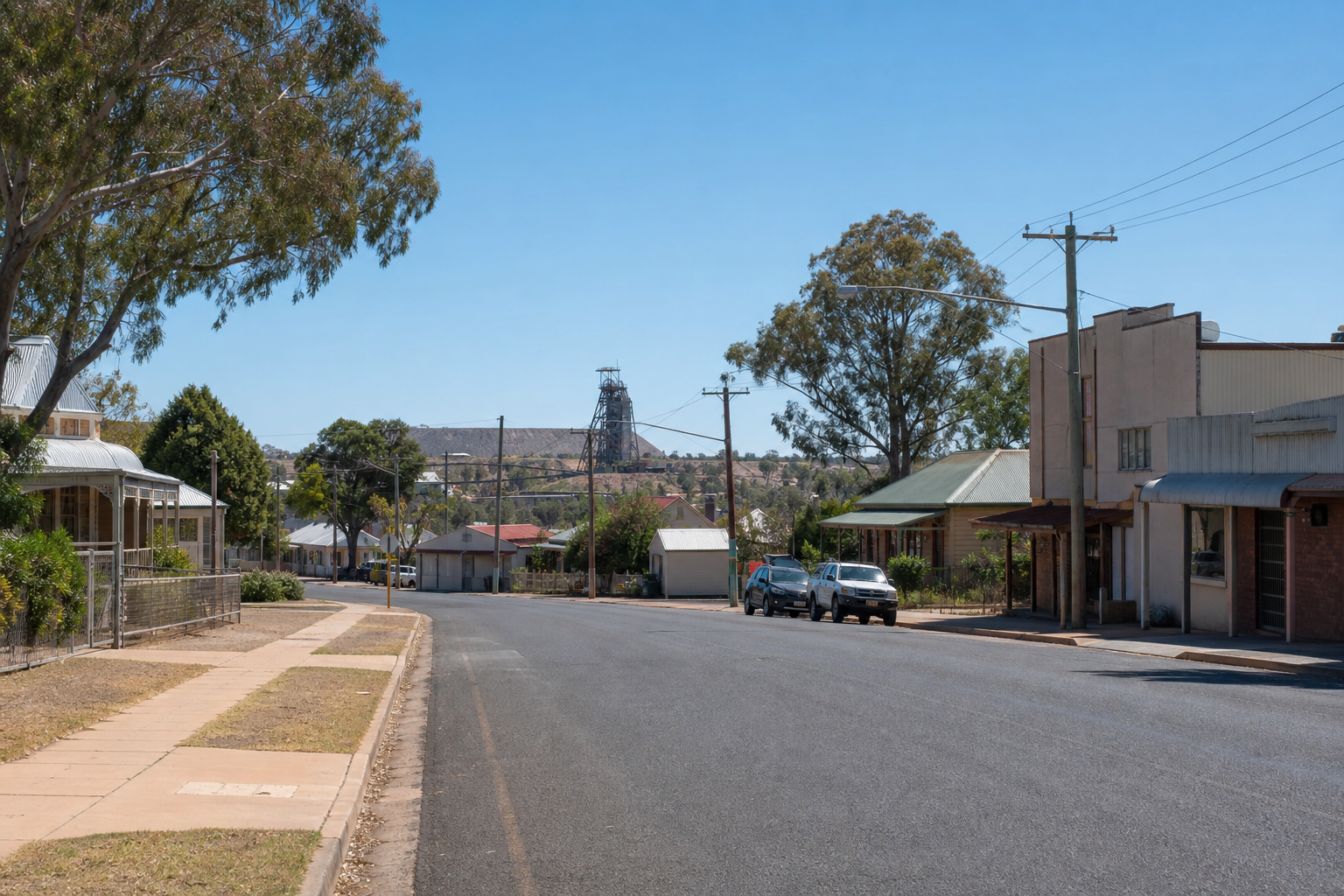
1. Why mining, tourism and single‑industry towns worry lenders
1.1 The core risk: concentration and volatility
Lenders like boring. They prefer postcodes where:
- Jobs are spread across multiple industries.
- Population grows steadily.
- Property prices move in gentle cycles.
Mining, tourism and single‑industry towns are the opposite:
- Mining towns: values can double in a boom and halve when a major project winds down.
- Tourism towns: rely on discretionary spending and open borders. Pandemics, currency moves or airline cuts can hit incomes hard.
- Single‑industry towns: think smelters, meatworks, ports, big manufacturers, defence bases. One decision in a distant boardroom or Cabinet meeting can shift the whole town’s outlook.
From a bank’s credit perspective, these areas share three issues:
- Employment risk – job losses can spike quickly and be hard to replace locally.
- Property liquidity risk – harder to sell quickly without discounting if you hit trouble.
- Valuation volatility – the valuer’s “evidence” may be thin, and comparable sales can shift quarter to quarter.
That’s why these locations often appear on lenders’ internal postcode risk lists, alongside coastal flood zones and high‑density micro‑apartments (covered in more detail in your sibling guides on risk postcodes).
If you haven’t yet read it, pair this article with our broader overview on postcode shading: How Australian Lenders Use Postcode Risk Lists to Shape Your Borrowing (parent topic for this cluster).
1.2 What this means for your actual loan
When a postcode is flagged as high risk, lenders typically respond by:
- Capping LVRs – often 70–80% maximum, even with strong income.
- Refusing high‑density or unusual stock – e.g. mining dongas, relocatable cabins, or tiny tourist apartments.
- Using conservative valuations – valuers lean to the lower end of recent sales.
- Shading income harder – especially for casual, seasonal, FIFO or bonus‑heavy roles.
You feel this as:
- Needing a bigger deposit.
- Being offered less than an online borrowing calculator suggests.
- Having to change lenders at the last minute because of postcode rules.
- Finding refinancing much harder than you expected.
2. How lenders actually price postcode risk
2.1 The layers of risk assessment
Every mainstream lender looks at your loan through three lenses:
- You – income, employment type, credit history, existing debts.
- The property – type, location, and valuation.
- The loan structure – LVR, P&I vs interest‑only, purpose, and buffers.
In mining, tourism and single‑industry towns, the property and location lens suddenly matters a lot more.
Lenders pull data from:
- ABS employment and population numbers.
- Past price volatility through CoreLogic and other data providers.
- Internal arrears and loss experience by postcode.
- Exposure limits – they don’t want too many properties in one economic micro‑cluster.
2.2 Typical policy differences by town type
The table below is illustrative only – each lender is different, and policies change. But it shows the kinds of differences you can expect.
| Town type | Typical max LVR (OO)* | Typical max LVR (INV)* | Common lender settings |
|---|---|---|---|
| Major metro, diversified | 95% with LMI | 90% with LMI | Standard LVRs, wide lender choice, normal valuation assumptions |
| Regional city (diversified) | 90–95% with LMI | 90% with LMI | Some lenders cap LVRs; more focus on local employment and valuations |
| Mining town (high concentration) | 70–80%, some 60–70% | 70–80% | Stricter LVRs, limited lender panel, conservative valuations |
| Tourism town (high seasonality) | 80–90% | 80–90% | Tighter serviceability; short‑stay income heavily shaded |
| Single‑industry town | 70–85% | 70–85% | Caps by postcode, stress on local employer risk |
*OO = owner‑occupier, INV = investor. LVR and settings are indicative only.
This is why the "regional dream" often collides with tighter rules. For a broader regional context, see Financing a Sea‑Change or Tree‑Change: Regional Home Loan Rules Explained.
2.3 The 3% buffer and your personal safety margin
APRA currently expects banks to test your capacity at current interest rates plus 3% (the serviceability buffer). As we’ve explained in multiple guides, a robust self‑check is to:
Model your total home and investment loan repayments at current rates + 3% and keep them under 30–35% of your after‑tax income, even if the bank would approve more.
In a boom‑and‑bust town, that rule of thumb matters even more. When incomes are cyclical and property prices can fall sharply, you want extra slack, not minimum compliance.
3. Mining towns: booms, busts and lending traps
3.1 How banks view mining‑linked postcodes
Mining towns are often the most heavily restricted postcodes in Australia. Lenders worry about:
- Single‑employer risk – if one major mine or contractor closes, unemployment can spike.
- FIFO/contractor income – project‑based, allowance‑heavy pay packets can end suddenly.
- Historical price crashes – some postcodes saw 40–60% price falls after the last boom.
This doesn’t mean you can’t buy; it just means the bank wants more of your own money at risk and less exposure on their books.
If your income is also mining‑related, your profile is seen as double‑exposed: both your job and your home value depend on the same sector.
For how banks read mining and FIFO income specifically, see Home Loans on Irregular Mining, Construction and FIFO Income.
3.2 Worked example: mining town vs capital city
Assume two borrowers, each wanting a $500,000 home:
- Borrower A: metro suburb, diversified economy.
- Borrower B: mining town postcode.
Indicative lender outcomes:
- Metro: up to 95% LVR with LMI. Minimum deposit around $25,000 plus costs.
- Mining town: some lenders cap at 80% LVR. Minimum deposit $100,000 plus costs.
Even if both borrowers earn the same income, Borrower B needs an extra $75,000 up front.
If the mining town property later falls by 20% (to $400,000):
- At 95% original LVR, equity could drop close to zero or negative.
- At 80% original LVR, you’d still have $60,000 equity.
That’s exactly why the bank capped your LVR.
3.3 Common mistakes mining workers make
Mining workers often:
- Over‑borrow for lifestyle – new utes, toys, and a big mortgage while overtime is flowing.
- Ignore buffer building – assuming high income will continue.
- Buy in the project town at peak prices – with no plan B if a project winds down.
In 2026, Roy Morgan estimates over 30% of Australian mortgage holders are ‘At Risk’ of mortgage stress, and around one in five are ‘Extremely At Risk’, based on repayments vs after‑tax income. In a mining downturn, those percentages can spike locally.
A safer approach is to:
- Stress‑test your loan at current rates + 3%.
- Keep repayments under 30–35% of after‑tax income even at that stressed rate.
- Build a 6–12 month cash buffer while income is strong.
The strategy continues below
You've seen the problem and the groundwork — now unlock the exact steps our CPA-certified brokers use, including 7 more sections. Enter your email for instant, free full access.
Free access. No spam — unsubscribe anytime. Your details stay confidential.
Frequently asked questions
Can I still get a 90–95% LVR loan in a mining town?▾
Do banks count Airbnb income in tourism towns?▾
Is it safer to rent instead of buying in a single‑industry town?▾
How often should I review my loan in a high‑risk postcode?▾
Are interest‑only loans too risky in mining or tourism towns?▾
Can I use short‑term contract or FIFO income to buy in a mining town?▾
Speak with a specialist advisor
Confidential consultation, bespoke advice for your situation.