Article
Using Negative Gearing And Capital Works Deductions On Strata Upgrades
A practical guide to how negative gearing, capital works deductions and strata‑funded upgrades really interact for Australian property investors, including worked examples and 2027 reform impacts.
Key Takeaway
Negative gearing still applies to interest and many capital works on strata investment properties, but 2027 reforms will quarantine many rental losses and change capital gains tax treatment. Strata‑funded upgrades are usually claimed as capital works at 2.5% per year, while interest on personal borrowings for levies remains deductible only if used for income‑producing property. Investors should model after‑tax cashflow, including higher levies, using both current and post‑2027 rules before approving major strata projects or refinancing related loans.
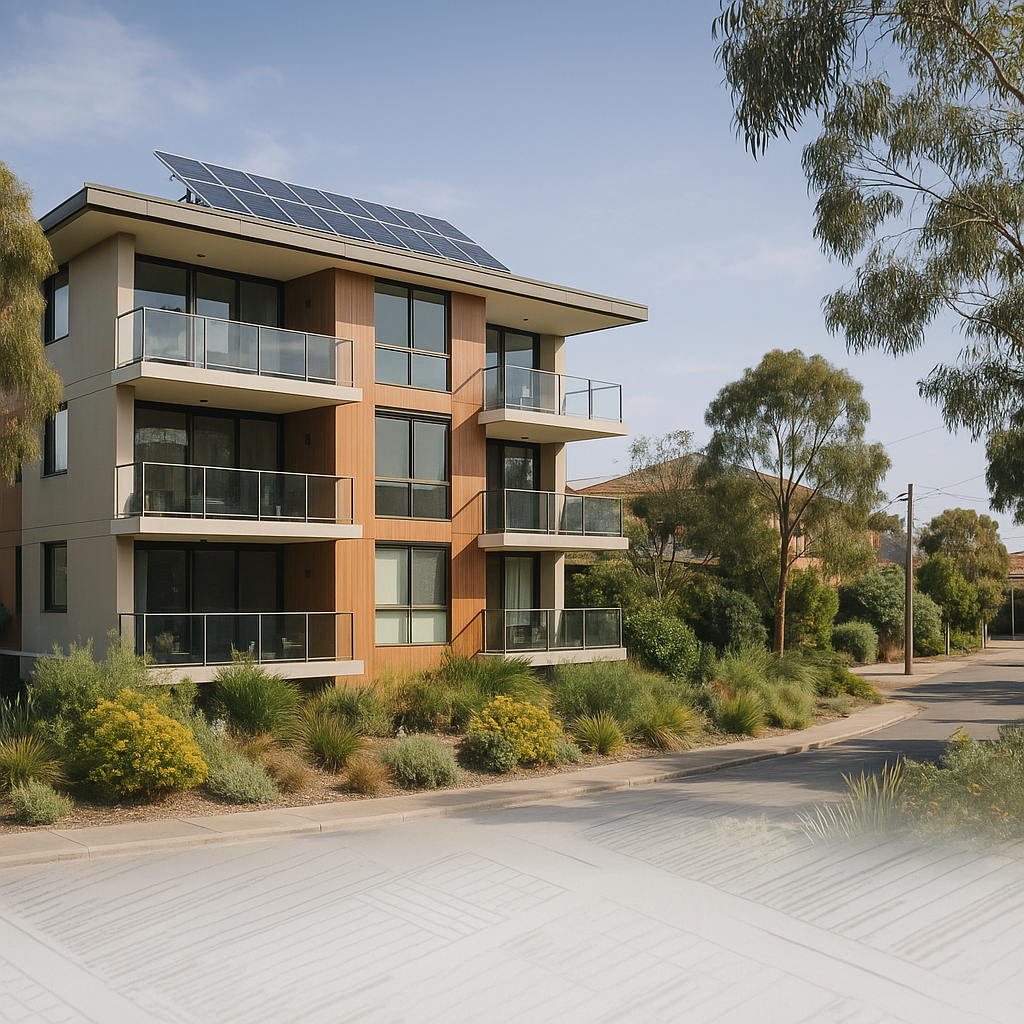
Negative gearing, capital works and strata upgrades — how they really fit together
Negative gearing, capital works deductions and strata‑funded upgrades interact in three main ways:
- your yearly tax position (rental profit or loss),
- how fast you recover the cost of building works via depreciation, and
- your future capital gains tax (CGT) bill when you sell.
If you own (or plan to own) an investment unit or townhouse in a strata scheme, you must understand how higher levies, strata loans and upgrade projects flow through your tax return and your borrowing power — especially with the 2027 negative gearing and CGT reforms on the way.
This guide is written so you can make one or two concrete decisions this week: how to vote at the next strata meeting, whether to borrow personally to fund levies, or whether to refinance or restructure your loans.

1. Quick definitions: get the core concepts straight
1.1 What is negative gearing in plain English?
Negative gearing happens when your deductible property expenses (interest, strata, repairs, agent fees, depreciation etc.) are greater than your rental income.
Today (2026):
- The loss is generally deductible against your other income (salary, business profit) under current rules.
- From 1 July 2027, proposed reforms will quarantine many rental losses so they can only offset rental income and capital gains, not your salary (Treasury Laws Amendment (Tax Reform No. 1) Bill 2026).
Negative gearing is about cashflow timing, not free money. You still spend $1 to maybe save $0.34–$0.47 in tax, depending on your marginal rate.
1.2 What are capital works deductions?
Capital works deductions (Division 43, Income Tax Assessment Act 1997) let you claim certain construction and building improvement costs over time — generally at 2.5% per year over 40 years for residential buildings.
For strata owners, typical capital works include:
- Structural repairs to common property (concrete cancer, waterproofing, balconies)
- Roof replacement
- Major fire, cladding and safety rectification
- Lifts, structural carpark work, basement waterproofing
These are different from repairs and maintenance, which can often be deductible immediately when they simply restore something to its original condition.
1.3 What are strata‑funded upgrades?
Strata‑funded upgrades are building works paid for by the owners corporation (body corporate), usually via:
- Existing sinking/capital works funds
- Special levies on each owner
- A strata building loan, repaid by higher levies
Examples include:
- Fire safety or cladding rectification
(see /insights/financing-urgent-fire-cladding-safety-upgrades-strata) - Solar, batteries and EV chargers
(see /insights/solar-batteries-ev-chargers-strata-finance-dont-own-roof) - Cosmetic upgrades: lobbies, landscaping, pools, gyms
Strata pays the builder. You never own the asset directly, but you do own a share of the building, and that’s what gives you deductions.
2. How strata levies and upgrades show up in your tax return
2.1 Ordinary levies vs special levies — what’s deductible?
On your rental schedule you normally see levies grouped as body corporate fees and charges. In practice they fall into two buckets:
-
Administration fund levies (day‑to‑day):
- Cleaning, gardening, utilities for common areas
- Minor maintenance
- Strata management fees
→ Generally 100% deductible in the year paid.
-
Capital works fund (sinking fund) levies:
- Money set aside or used for major capital repairs or upgrades
→ Usually not directly deductible as levies; instead you claim a Division 43 capital works deduction on the underlying project cost once works are completed.
- Money set aside or used for major capital repairs or upgrades
The ATO’s position is: it’s not the levy label that matters, it’s how the money is used.
2.2 When do levies turn into capital works deductions?
Typical sequence:
- Owners approve $2m in facade rectification.
- Cost per lot (say 40 equal lots) = $50,000.
- Works qualify for Division 43 at 2.5% per year.
- Each owner claims 2.5% x $50,000 = $1,250 per year as a capital works deduction for up to 40 years, starting when works are finished and the property is available for rent.
Your yearly deduction will usually be your lot entitlement share of the building’s eligible capital works costs.
If the project is partly capital and partly repairs, the scheme should obtain proper tax advice and allocations; you’ll want a clear breakdown to substantiate your claims.
2.3 Overnight levies vs strata loans — same tax, different cashflow
Whether the building:
- raises one big special levy now, or
- takes a strata loan and repays it via higher levies
…the total capital works deduction pool is basically the same (the actual construction cost). Interest paid by the owners corporation on a strata loan is normally treated as a deductible administration expense at scheme level and flows through to you via your levies, but the key Division 43 capital works deduction arises from the build cost, not the finance cost.
Where the tax difference really bites is what you do personally:
- If you borrow personally to pay a big special levy on a rental property → your loan interest is generally deductible (because the purpose is improving an income‑producing asset).
- If the scheme takes a strata loan and you just pay higher levies from cash → you may only get indirect benefit via the scheme’s deductible interest, not a personal interest deduction.
That’s why personal gearing decisions and strata finance decisions must be considered together, not in isolation.
For a building‑level perspective on funding structures, see /insights/how-strata-finance-works-structures-rules-lender-appetite.
3. Negative gearing and strata‑funded works: how they interact
3.1 The core rule: loan purpose drives interest deductibility
Across all property structures, a core principle keeps showing up (see also /insights/company-community-strata-alexandria-finance-differences):
Interest deductibility follows the purpose of the borrowing, not what secures the loan.
For strata upgrades, that usually means:
- Borrowings to pay investment‑property levies or special levies for capital works → interest generally deductible.
- Borrowings to pay levies on your main residence → interest generally not deductible (even if the building is mixed home/investment).
This principle also underpins why separating loan splits by purpose is so important when you refinance or uncross security structures.
3.2 Worked example: single investment unit, special levy, personal loan
Assume in 2026–27:
- Investment unit: $700,000 value, $560,000 loan (80% LVR)
- Interest rate: 6.5% p.a. interest‑only (for simplicity)
- Rent: $650/week = $33,800 p.a.
- Ordinary expenses (agent, admin levies, insurance etc.): $9,000 p.a.
- New façade and waterproofing project: $50,000 per lot
- You borrow an extra $50,000 on a separate split to pay your special levy at 6.7% p.a., IO.
Before project
- Interest on $560,000 @ 6.5% = $36,400
- Other expenses = $9,000
- Total deductions = $45,400
- Rent = $33,800
- Net rental loss = $11,600 (negative gearing)
After project – Year 1 (works completed)
-
Interest
- Original loan interest = $36,400
- New $50,000 split @ 6.7% = $3,350
- Total interest = $39,750 (deductible)
-
Capital works deduction
- 2.5% x $50,000 = $1,250
-
Rent (ignore uplift for now): $33,800
-
Other expenses: still $9,000
New net rental loss
- Deductions = $39,750 + $9,000 + $1,250 = $50,000
- Rent = $33,800
- Net loss = $16,200
Compared with the pre‑project position, your yearly negative gearing increases by $4,600.
At a 37% marginal tax rate plus 2% Medicare (39% total effective):
- Extra tax saving ≈ 39% × $4,600 = $1,794.
- But your cash interest cost on the extra loan is $3,350.
- Net cash impact (ignoring rent uplift) is still negative by about $1,556.
This is the heart of negative gearing: tax softens the blow, but does not turn a loss into a gain.
3.3 What changes after 1 July 2027 negative gearing reforms?
Based on current proposals (which may still change in Parliament):
- Many rental losses on established residential properties purchased after the cut‑off will be quarantined.
- Your net rental loss from the example above may no longer reduce your salary income.
- Instead it will be carried forward to offset future rental income or capital gains.
Practical implications:
- For newer investors, the short‑term after‑tax benefit of going deeper into negative gearing for strata upgrades may be much smaller.
- Projects must stack up more on pre‑tax cashflow and capital value uplift, not just tax.
For multi‑property investors, it’s now essential to model two tax regimes side‑by‑side, as outlined in /insights/modelling-tax-deductions-negative-gearing-multiple-off-the-plan-properties.
4. Capital works vs repairs: why the label matters
4.1 Capital works (Division 43)
Capital works deductions generally apply where you:
- construct a building, or
- carry out structural improvements, or
- perform major renovations or additions.
These are claimed at:
- 2.5% p.a. over 40 years for most residential buildings built or improved after 15 September 1987.
Common strata examples:
- Major concrete remediation
- Structural balcony repairs or replacements
- Full roof replacements
- Fire stairs and egress changes
- Permanent disabled access upgrades
4.2 Repairs and maintenance
A repair usually restores something to its original condition, without improving it beyond that condition or changing its character.
Examples that may be repairs (facts matter):
- Patching small areas of concrete
- Replacing a few tiles and fixing a leak
- Repainting flaking paintwork
Repairs are often deductible immediately in the year incurred if they relate to a property already used to produce income. But if they form part of a broader upgrade or initial capital expenditure, they can be treated as capital.
4.3 Why investors need a tax‑aware strata scope
Your tax outcome depends heavily on how the overall project is scoped and documented.
If your building wraps repairs into a large structural upgrade contract without clear break‑up, everything may be treated as capital and only deductible at 2.5% p.a.
A practical step before you vote on major works is to ask:
- Has the scheme obtained tax advice on the repair vs capital split?
- Will owners receive a breakdown capable of supporting individual tax claims?
- Is a capital works schedule being prepared by a quantity surveyor?
The strategy continues below
You've seen the problem and the groundwork — now unlock the exact steps our CPA-certified brokers use, including 9 more sections. Enter your email for instant, free full access.
Free access. No spam — unsubscribe anytime. Your details stay confidential.
Frequently asked questions
Are special strata levies for investment properties tax deductible in Australia?▾
How do 2027 negative gearing reforms affect strata property investors?▾
Can I claim tax deductions for strata loan interest?▾
Do capital works deductions reduce my capital gains tax cost base?▾
How should I structure my loans when borrowing to pay strata levies?▾
Is it better to use cash or borrow to pay for strata upgrades?▾
Do green upgrades like solar and EV chargers give better tax deductions?▾
Speak with a specialist advisor
Confidential consultation, bespoke advice for your situation.