Article
How Pools, Garages and Add‑Ons Really Affect Your Bronte Loan
In Bronte, extras like pools, garages and studios can help or hurt your loan approval depending on how valuers treat them, their condition and bank policy. This guide shows what actually moves valuation and servicing so you can decide what to buy or build this week.
Key Takeaway
Extras like pools, garages and studios affect Bronte loan approvals mainly through bank valuation, not the listing price: valuers lean on comparable sales and may only attribute 25–60% of a pool’s apparent cost as value, while secure parking can shift values by six figures in some streets. These features also raise insurance, maintenance and running costs, which must still pass APRA’s 3% serviceability buffer. Borrowers should stress‑test repayments, allow for higher outgoings, and structure loans conservatively before adding or upgrading extras.
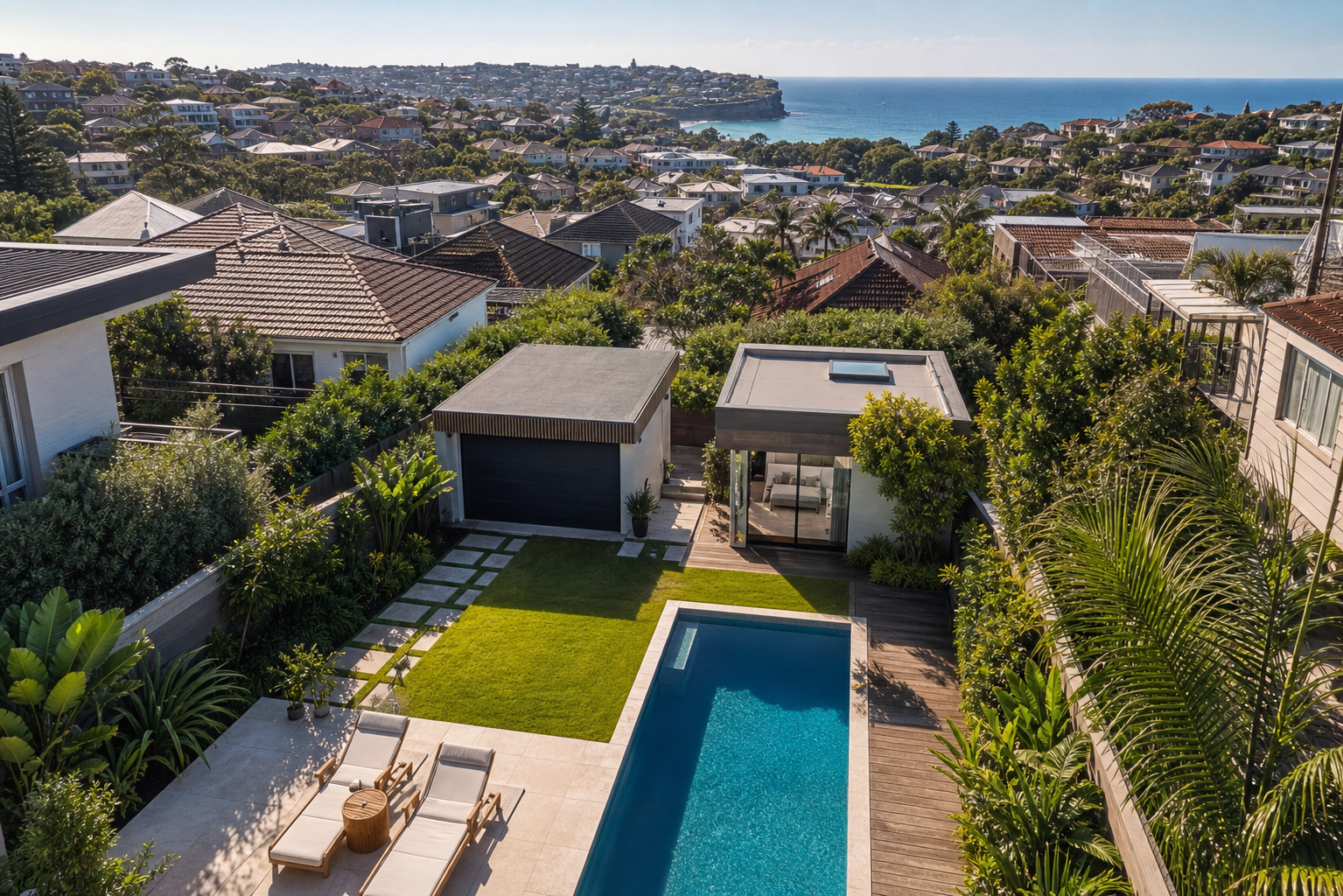
In Bronte, pools, garages and add‑ons only help your loan if they help the bank’s valuation and your serviceability. Lenders care far less about glossy listing photos and much more about what a conservative valuer can prove from recent sales, plus whether the extra costs still work under APRA’s 3% buffer.
Here’s how to tell, before you buy or renovate, whether an ‘extra’ will support or strain your next loan.
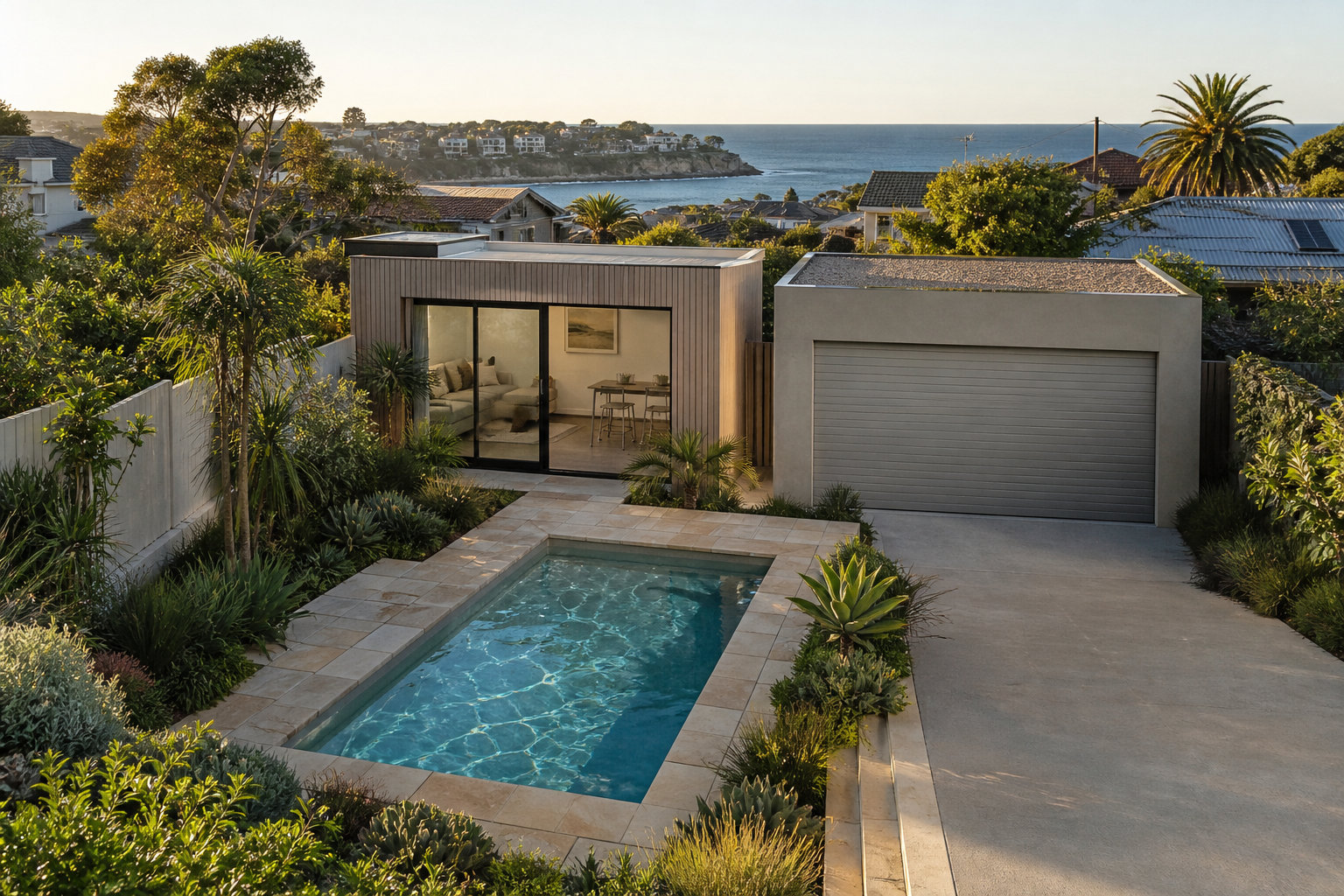
1. How banks and valuers really treat ‘extras’ in Bronte
Valuers in Bronte don’t price pools or garages line‑by‑line.
They start with comparable recent sales, then adjust up or down for features:
- Location and land first. Street, aspect, land size and zoning do most of the heavy lifting in Bronte.
- Core dwelling next. Bedrooms, bathrooms, condition, quality of renovation.
- Extras last. Pool, secure parking, studios, cabanas and landscaping tweak value rather than define it.
That means:
- A basic pool that cost $120k to build might only shift the bank valuation by, say, $40k–$70k if buyers in that pocket don’t consistently pay a big premium for pools.
- A lock‑up garage or secure parking can be worth six figures along certain Bronte ridges where on‑street parking is brutal.
If your contract price assumes a huge premium for extras but the valuation doesn’t, your loan can be cut back or declined – even with strong income.
To reduce that risk, combine local valuer knowledge with a solid pre‑approval. The approach in /insights/real-home-loan-pre-approval-avoid-fake-approvals is exactly what you want before bidding hard on a “loaded” property.
2. Pools: when they help and when they hurt
When a pool can support your loan
A pool is more likely to help the valuation if:
- You’re in a family‑heavy pocket where most comparable homes already have pools.
- It’s modern, compliant and low‑maintenance (think newer equipment, safe fencing, sensible size).
- The overall home still appeals to a broad buyer pool – the pool is a bonus, not a band‑aid for a compromised layout.
In these cases, valuers can point to sales evidence where similar homes with pools sold higher than those without.
When a pool becomes a liability
Pools start to hurt your loan position when:
- The property is over‑capitalised – big pool, small house, compromised indoor space.
- Condition is poor – cracks, leaks, non‑compliant fences or obvious safety issues.
- Ongoing running costs clash with servicing. Higher insurance, power and maintenance hit your surplus cashflow.
Remember Roy Morgan’s July 2026 work: over 32% of owner‑occupier borrowers are now ‘At Risk’ of mortgage stress as rates and living costs rise. Extra outgoings from a pool push you towards that danger zone if your buffer is thin.
A simple test: model your loan at an interest rate 3% higher than today and overlay realistic pool costs. If that takes your total repayments above roughly 35–40% of after‑tax income, you’re getting into stress territory for high‑debt Bronte households (see also /insights/bronte-debt-load-unsustainable-warning-signs).
The strategy continues below
You've seen the problem and the groundwork — now unlock the exact steps our CPA-certified brokers use, including 3 more sections. Enter your email for instant, free full access.
Free access. No spam — unsubscribe anytime. Your details stay confidential.
Frequently asked questions
Do banks lend more for a Bronte property with a pool?▾
How much does a garage add to my Bronte valuation?▾
Will a studio or cabana cause loan problems in Bronte?▾
Speak with a specialist advisor
Confidential consultation, bespoke advice for your situation.