Article
How Your Postcode Changes LVR Limits and Bank Appetite
Australian lenders grade suburbs by risk. Your postcode can quietly cap your LVR, reduce your borrowing power or even block approval. Here’s how postcode risk, LVR limits and bank shading work — and what to do this week.
Key Takeaway
In Australia, postcode risk is how lenders grade suburbs by risk, and it directly affects maximum loan-to-value ratios (LVRs), LMI access and even whether they’ll lend at all. Many high-risk postcodes are capped at 70–80% LVR compared with 90–95% elsewhere, and are subject to stricter serviceability and valuation rules. Understanding your postcode category and adjusting your deposit, lender choice and structure accordingly is the key actionable step for home buyers and investors.
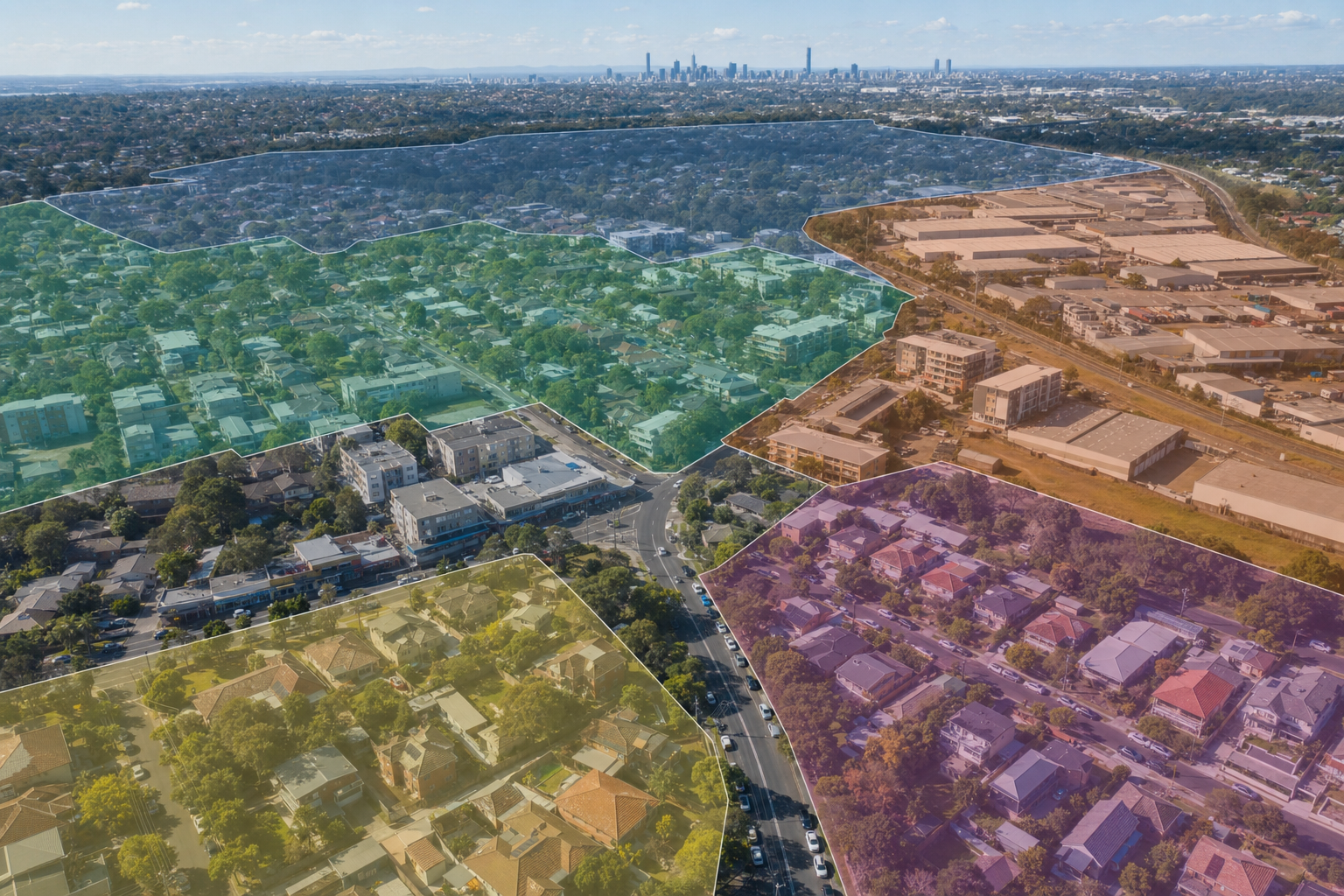
Buying or refinancing in Australia isn’t just about your income and credit score. Every lender also has a view on your suburb. Postcode risk is how banks quietly grade locations by risk, and it directly affects your maximum loan-to-value ratio (LVR), how your rent is assessed, and sometimes whether they’ll lend at all.
In simple terms: the same borrower can be approved at 90–95% LVR in one suburb but capped at 70–80% LVR in another, purely because of postcode risk. Knowing where your address sits – and choosing the right lender and structure – is essential if you want your deal to actually settle.
This guide unpacks postcode risk, LVR limits and bank “shading” by suburb, and gives you clear moves you can make this week, whether you’re an owner‑occupier, investor, self‑employed borrower or small‑business owner.

1. What postcode risk actually means to a lender
Postcode risk is a lender’s assessment of how risky it is to hold property security in a given suburb or region. It’s about how easily they can sell your property and recover their money if things go wrong, not about you personally.
Key drivers include:
- Price volatility – areas that boom and bust (e.g. some mining towns).
- Market depth and liquidity – how many buyers exist if they need to sell quickly.
- Economic base – dependence on a single employer or industry.
- Dwelling mix – grade of stock, concentration of small or specialised apartments.
- Natural disaster exposure – flood, fire, erosion and insurance issues.
Internally, most banks classify each postcode into risk tiers. Names differ, but the logic is similar:
- Standard / Category A – broad market, diverse economy, good resale (e.g. established metro suburbs).
- Monitored / Category B–C – some concerns (e.g. oversupply of units, single‑industry towns, small regionals).
- Restricted / Category D or blacklisted – no high‑LVR lending, sometimes no lending at all.
APRA doesn’t issue postcode blacklists, but it does require banks to manage credit risk properly and to hold extra capital against higher risk lending. Postcode risk is one way lenders meet that obligation.
Bottom line: your postcode changes how much risk a bank is willing to take, so it changes maximum LVRs, pricing and policy.
2. How lenders use postcode risk lists and “shading”
Every mainstream lender maintains internal postcode lists in their credit policy. These aren’t public, change over time, and differ between lenders, which is why one bank can reject a property that another is comfortable with.
2.1 The three main levers lenders pull
When a postcode is tagged as higher risk, banks usually adjust three things:
- Maximum LVR – they cap how high you can gear.
- Lenders Mortgage Insurance (LMI) appetite – LMI providers may refuse high‑LVR loans in that postcode.
- Valuation and income shading – they get more conservative about the property’s value and rental income.
This can show up as policies like:
- “Max 80% LVR for units in this postcode.”
- “No LMI above 80% LVR for investment properties in this postcode.”
- “Serviced apartments in this postcode max 60–70% LVR.”
2.2 Areas that often attract postcode shading
While every lender’s list is different, some patterns are common:
- High‑density inner‑city unit pockets – especially where there’s a lot of investor stock, small apartments or prior valuation shortfalls. In suburbs like Mascot, some lenders also maintain internal watchlists of specific buildings with cladding or defect concerns, which can materially affect borrowing capacity and approval odds (see our Mascot discussion in /insights/mascot-mortgage-broker-vs-banks-non-local).
- Mining towns and single‑industry regions – values can crash when commodity prices or major employers change.
- Lifestyle and holiday areas – markets can be highly seasonal and illiquid in downturns.
- New fringe estates – where many similar homes could hit the market at once if conditions turn.
- Known flood or fire zones – particularly where insurance is expensive, limited or excluded.
2.3 What “bank shading” really means
In higher‑risk postcodes, lenders often shade:
- Valuations – valuers may use more conservative sales evidence or apply discounts to special‑use stock.
- Rental income – they may only count 60–70% of rent instead of 80%+ for investors.
- Unit characteristics – smaller floor areas (e.g. under 40–50m²), poor layouts or mixed‑use buildings attract extra caution.
Combine postcode shading with Australia’s standard 3% serviceability buffer on interest rates that most lenders apply (per APRA guidance and lender policy) and you can see why borrowing power can drop sharply in some suburbs.
3. Typical LVR limits by postcode and property type
Every lender and insurer is different, but the pattern is consistent: the more niche or volatile the property and postcode, the lower the maximum LVR.
Below is an indicative guide only – not a live policy. Real limits change regularly and differ lender‑to‑lender.
| Scenario (illustrative only) | Typical max LVR (OO) | Typical max LVR (INV) | LMI availability (indicative) | Notes |
|---|---|---|---|---|
| Established metro house in diversified suburb | 90–95% | 90% | Often up to 90–95% if strong profile | Broadest choice, sharpest pricing |
| Inner‑city high‑density unit (oversupply postcode) | 80–90% | 80% | Some LMI providers cap at 80% | Extra scrutiny on size and building |
| Small unit (<40m²) in standard postcode | 70–80% | 70–80% | Limited; some lenders/LMI decline entirely | Specialist policies only |
| Mining town house or unit | 70–80% | 70–80% or lower | Often restricted; some lenders avoid | Income/employer concentration risk |
| Prestige property $2m+ in standard postcode | 70–80% | 70–80% | Limited; many lenders avoid high‑LVR jumbos | Large exposure limits apply |
| Flood‑prone or disaster‑exposed location | 60–80% | 60–75% | Very case‑by‑case | Insurance and resale risk |
OO = owner‑occupier, INV = investor. Illustrative only – not a quote or policy.
3.1 Worked example: same borrowers, different suburb
Assume a couple with solid incomes want to buy an $800,000 unit as owner‑occupiers.
- In a standard metro postcode, one lender is comfortable at 90% LVR.
- Loan: $720,000
- Deposit + costs: around $80,000–$100,000 (depending on stamp duty, LMI etc.)
- In a high‑density, shaded postcode, the same lender caps at 80% LVR.
- Loan: $640,000
- Required deposit + costs: more like $160,000–$180,000.
Same borrowers. Same income. Same property price. The only difference is postcode risk.
This is why hitting ≤80% LVR is so powerful: it generally unlocks broader lender choice and sharper pricing, because LMI isn’t required and lender risk is lower (see our broader discussion of LVRs in /insights/risk-management-buffers-worst-case-planning-broker).

The strategy continues below
You've seen the problem and the groundwork — now unlock the exact steps our CPA-certified brokers use, including 7 more sections. Enter your email for instant, free full access.
Free access. No spam — unsubscribe anytime. Your details stay confidential.
Frequently asked questions
How do I find out if my postcode is on a bank’s restricted list?▾
Why do banks cap LVRs in some suburbs but not others?▾
Can postcode risk change after I’ve bought my property?▾
Does postcode risk affect interest rates or just LVR limits?▾
Is it safer to avoid high‑risk postcodes altogether?▾
How does postcode risk interact with government schemes like the First Home Guarantee?▾
Speak with a specialist advisor
Confidential consultation, bespoke advice for your situation.