Article
Beating Prestige FOMO in Sydney’s East Without Overpaying
Prestige FOMO in Sydney’s East pushes smart people into silly prices. Here’s how status, emotion and scarcity skew your judgement – and the practical steps to stop overpaying this week.
Key Takeaway
Prestige FOMO in Sydney’s Eastern Suburbs happens when emotion, status and scarcity push buyers to bid above fair value and even above bank-tested borrowing limits. In tightly held blue-chip pockets, guides can sit 5–20% below final prices, making discipline critical. Buyers can protect themselves by building a conservative borrowing ceiling, pre‑committing a maximum bid, and using a broker to model repayments and buffers before any auction or pre‑auction offer.

Prestige FOMO in Sydney’s East is what happens when status, emotion and genuine scarcity make smart people pay dumb prices. You can’t remove the emotion, but you can contain it: know your true finance ceiling, pre‑commit a maximum bid, and treat every extra $100,000 as a real monthly repayment decision, not just “one more bid”.
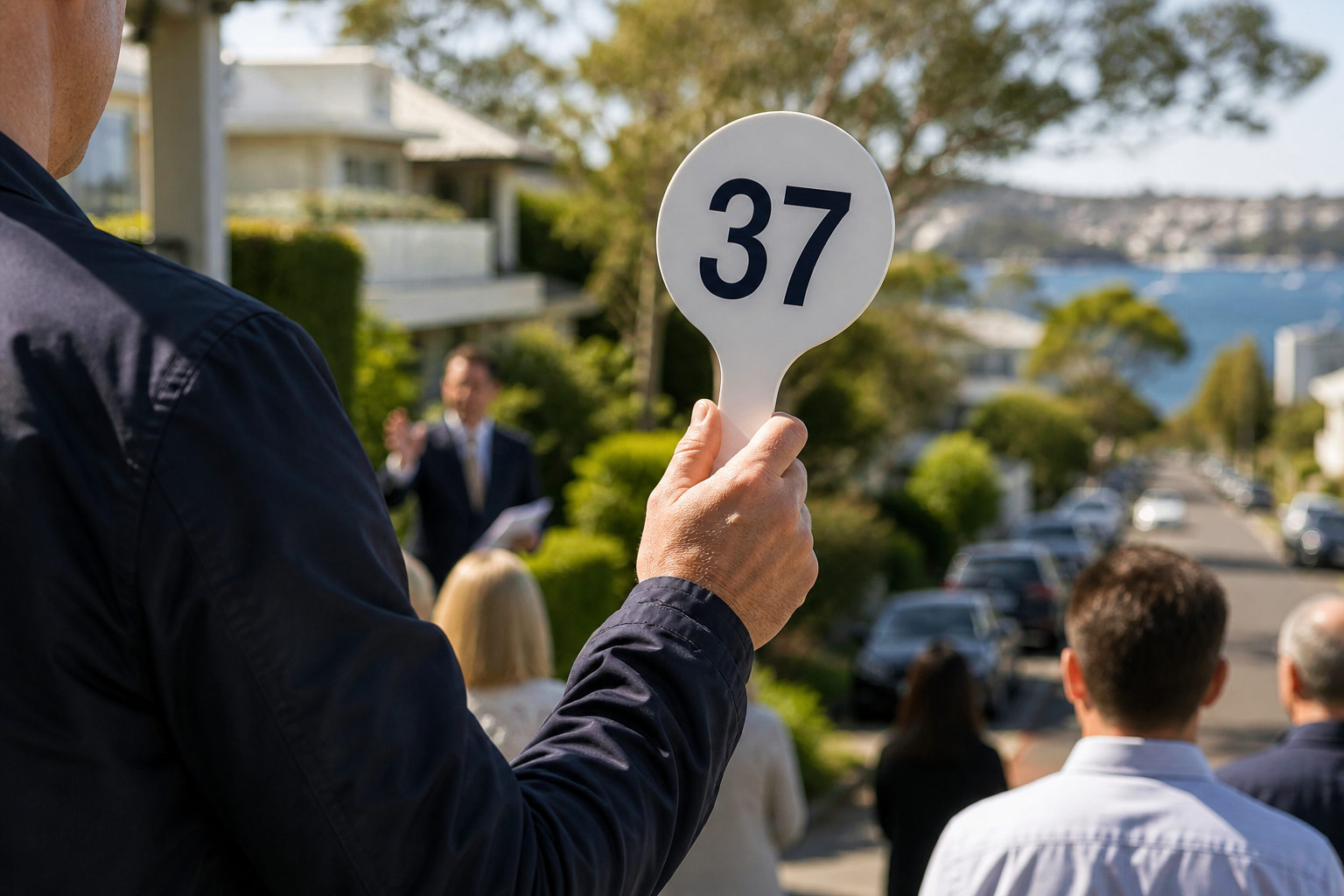
What prestige FOMO looks like in the Eastern Suburbs
Prestige FOMO is the fear of missing a “once-in-a-decade” Eastern Suburbs property – the view, the street, the school catchment – and it’s amplified by three forces:
- Status: The postcode and school gate carry social weight.
- Emotion: You’ve already mentally moved in.
- Scarcity: Very few homes trade in the best pockets each year.
In this environment, guides often sit 5–20% below final prices (see /insights/eastern-suburbs-underquoting-agent-price-guides-auction-surprises), and buyers quietly stretch above safe borrowing and cashflow levels.
A quick worked example
Say you’re eyeing a $4.2m house in Woollahra.
- 80% loan: $3.36m
- At ~6.0% P&I over 30 years (indicative only), repayments ≈ $20,150/month.
If FOMO pushes the price to $4.6m:
- 80% loan: $3.68m
- Same rate/term: ≈ $22,100/month.
That “just $400k more” is roughly $2,000/month after tax for decades. If that takes you past ~30–40% of your net income, you’re in the danger zone for financial stress.
How agents deliberately fuel prestige FOMO
Most Eastern Suburbs agents are pros at nudging you beyond your rational line.
Tactics you’ll actually see this week
- Comparables cherry-picking: They highlight record results, not the normal ones.
- Under‑quoting and tight guides: The guide hooks you; the crowd drags you up.
- Manufactured urgency: “Two buyers circling with contracts out” – sometimes true, often selective.
- Status signalling: “This family is upsizing from X Street” – triggers your social comparison.
On auction day, they’ll place you where you can see your rivals, call out your bids loudly, and talk in big round numbers so $50k jumps feel small in context.
To counter this, anchor your thinking on bank-style value, not the price guide. Use recent settled sales and a conservative valuer-style range, as outlined in /insights/reading-eastern-suburbs-property-cycles-buyers-actions.
The strategy continues below
You've seen the problem and the groundwork — now unlock the exact steps our CPA-certified brokers use, including 3 more sections. Enter your email for instant, free full access.
Free access. No spam — unsubscribe anytime. Your details stay confidential.
Frequently asked questions
How much over the guide is normal in the Eastern Suburbs?▾
Is it ever worth paying overs for a prestige property?▾
How do self-employed buyers avoid prestige FOMO mistakes?▾
Speak with a specialist advisor
Confidential consultation, bespoke advice for your situation.