Article
Stop Renovation Cost Overruns From Smashing Your Apartment Cashflow
Cost overruns are almost guaranteed in inner‑south apartment renovations. This guide shows Green Square and Zetland owners how to size buffers, structure loans and protect both home and business cashflow before the first tile is lifted.
Key Takeaway
Renovation cost overruns in Green Square apartments can easily add 10–25% to your budget, so cashflow protection must be built in before work starts. This guide explains how to size a contingency fund, choose between equity top-ups and personal loans, and keep business and personal buffers separate to avoid mortgage stress. With around 28% of Australian mortgage holders already at risk of stress, a robust renovation buffer and loan structure is a practical, immediate safeguard for inner-south owners and investors.
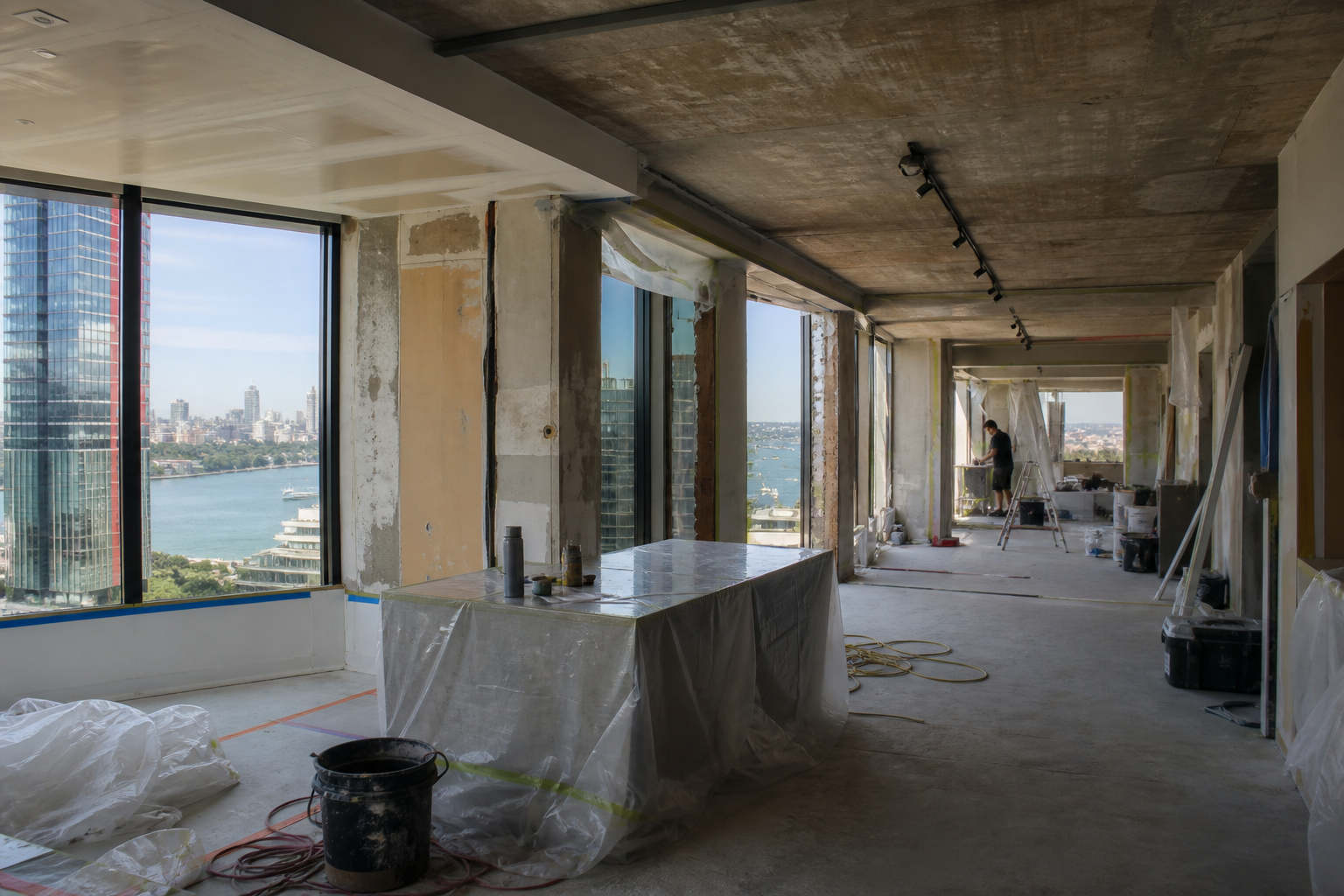
Renovation cost overruns in Green Square and Zetland apartments are almost guaranteed; the question is whether they blow up your cashflow. The safest approach is to assume a 10–25% overrun, lock in the right loan structure, and keep separate buffers for home and business so one project doesn’t drag everything else down.
Here’s the answer in one block: allow at least a 15–20% contingency on any apartment renovation budget, keep 2–3 months’ household expenses in offset after the work is funded, and if you’re self‑employed, hold another 1–2 months of business overheads in a separate business buffer. Line up the finance before you sign a building contract and test your repayments under a 3% higher interest rate.

Why apartment renovations overrun in Green Square
Common cost‑blowout drivers
Inner‑south apartments, especially in Green Square and Zetland, are prone to surprises:
- Hidden services in concrete slabs and risers that force design changes.
- Strata by‑law requirements (acoustic underlay, fire doors, engineering sign‑offs).
- Access restrictions (lifts, loading docks, working hours) that add labour time.
- Variations when older waterproofing, plumbing or wiring is exposed.
Even a ‘simple’ $70,000 kitchen and bathroom package can blow out by $10,000–$15,000 once variations and strata conditions land.
The cashflow risk in today’s rate environment
With mortgage interest a major driver of rising living costs (per recent ABS Living Cost Index releases), any unplanned extra borrowing or time out of the property hits harder than it did a few years ago. Roy Morgan data shows over 28% of owner‑occupier borrowers are already at risk of mortgage stress.
If you’re already stretching for the renovation, an extra $15,000–$25,000 can be the thing that tips you into the red. That’s why the structure and buffers matter more than getting the ‘perfect’ tapware.
How big should your renovation contingency be?
Practical buffer rules for inner‑south apartments
For Green Square apartment renovations, a realistic starting point:
- 10–15% contingency for very cosmetic works (paint, floors, basic kitchen refresh).
- 15–20% contingency for wet areas, wall changes or services (most kitchen/bath jobs).
- 20–25% contingency if you’re touching slabs, moving plumbing stacks or chasing historic leaks.
On top of that, keep a post‑renovation cash buffer:
- 2–3 months of household expenses in your offset after the reno is fully funded (in line with our Alexandria renovation guidance).
- If self‑employed, 1–2 months of business overheads in dedicated business accounts, not in your home loan offset (echoing the four‑account structure from /insights/separating-business-personal-cashflow-mascot).
Worked example: kitchen + bathroom in Zetland
You’re renovating a Zetland two‑bedder:
- Base build quote: $80,000 (kitchen, bathroom, flooring, paint).
- Recommended contingency at 20%: $16,000.
- Total project allowance: $96,000.
If you fund this via an equity top‑up at an indicative 6.5% p.a. over 25 years:
- $80,000 loan split → about $540/month P&I.
- $96,000 loan split → about $650/month P&I.
That extra $110/month is manageable if you’ve tested it in advance. It’s a problem if you only discover it when the builder demands a variation payment and you’re already tight. This is exactly the kind of squeeze that shows up as a debt‑stress red flag in our guide /insights/inner-south-debt-load-red-flags-unsustainable.
The strategy continues below
You've seen the problem and the groundwork — now unlock the exact steps our CPA-certified brokers use, including 4 more sections. Enter your email for instant, free full access.
Free access. No spam — unsubscribe anytime. Your details stay confidential.
Frequently asked questions
How much contingency should I allow for a Green Square apartment renovation?▾
What is the safest way to finance an inner-south apartment renovation?▾
How do self-employed borrowers protect cashflow during renovations?▾
Should I wait until after renovating to refinance my Green Square unit?▾
Can renovation cost overruns cause mortgage stress?▾
Speak with a specialist advisor
Confidential consultation, bespoke advice for your situation.