Article
Renting in Mascot vs Buying Nearby in 2026: A Numbers-First Call
Should you keep renting in Mascot or buy nearby in 2026? This guide runs clear, worked numbers on rent vs mortgage repayments, compares nearby suburbs, and gives a one‑week action plan to test what’s actually affordable for you right now.
Key Takeaway
In 2026, renting a typical Mascot 2‑bed unit is usually $500–$800 per month cheaper in cashflow than owning the same property with an 80–90% mortgage, after strata and other costs, based on indicative Sydney prices and rents. However, buying in nearby inner-south suburbs with slightly lower prices or better yields can narrow or reverse this gap over a 10-year horizon. The actionable step is to model suburb-by-suburb repayments and buffers this week before committing to rent or buy.

In 2026, renting a typical Mascot apartment is still cheaper month‑to‑month than owning the same unit with an 80–90% mortgage, but over 10+ years buying nearby (e.g. Alexandria, Green Square, Zetland) can come out ahead if you choose well and keep strong buffers. The right call depends on your deposit, income, job security and how long you’ll hold.
Here’s a numbers‑first way to decide this week.
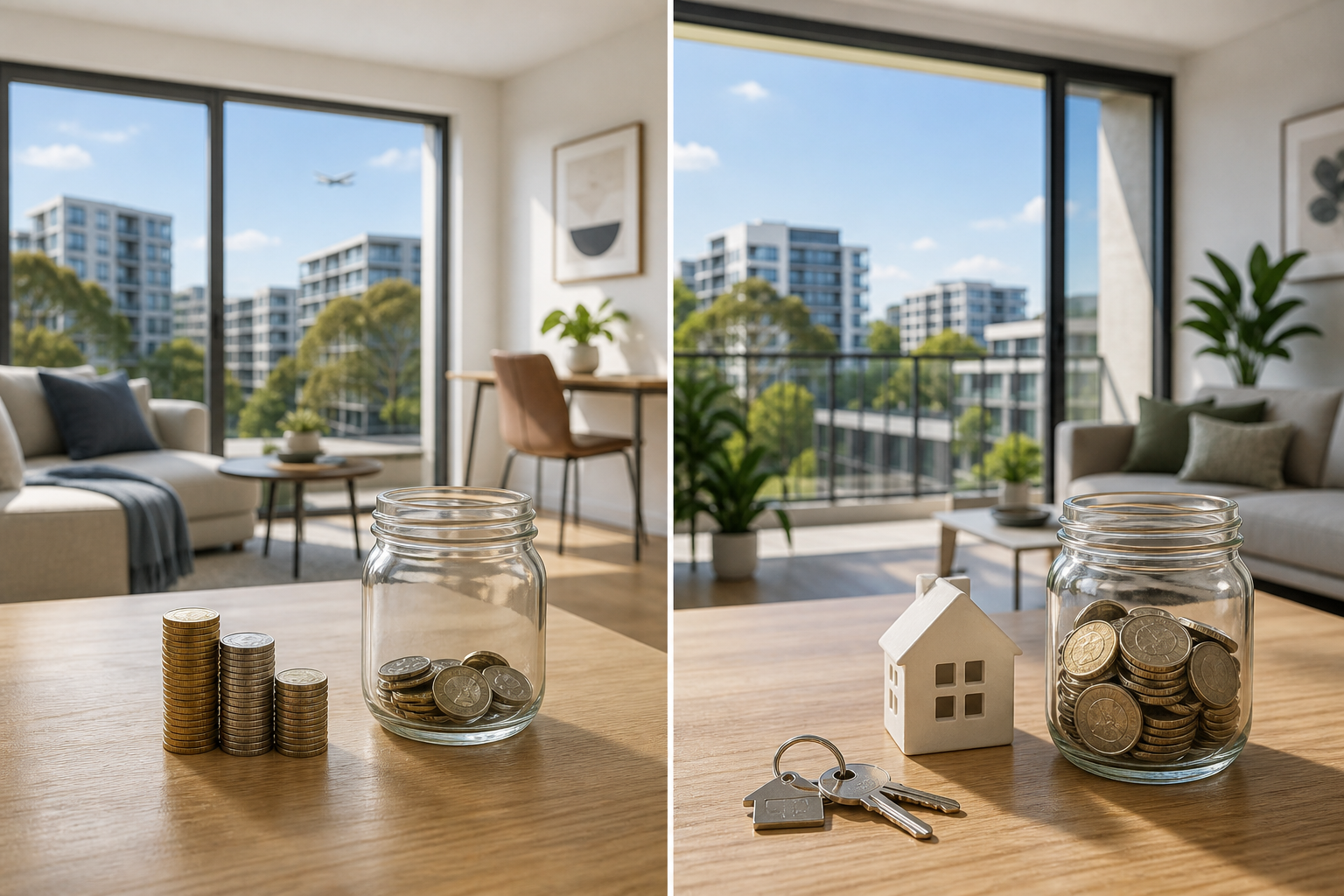
1. What does a Mascot home actually cost in 2026?
1.1 Indicative prices and rents
Indicative only (not advice, not live data), for a modern 2‑bed unit:
- Mascot purchase price band: ~$900k–$1.05m
- Nearby alternative bands in 2026:
- Alexandria: ~$950k–$1.1m (tighter, more owner‑occupier feel)
- Green Square / Zetland: ~$900k–$1.05m
- Cheaper fringe options (Arncliffe / Wolli Creek style): ~$800k–$900k
- Mascot rent: ~$800–$900 per week for a good 2‑bed unit
Assume:
- Interest rate: 5.8% p.a. variable, P&I (illustrative only)
- Term: 30 years
- APRA serviceability buffer: lenders test ~3% above rate
- Strata: $1,200–$1,800 per quarter for lift/amenities buildings
1.2 Worked example: Mascot 2‑bed unit
Assume you buy for $950,000.
- 20% deposit (no LMI): $190,000
- Loan amount: $760,000
Indicative P&I repayment at 5.8% over 30 years:
- Monthly repayment ≈ $4,450
Add other holding costs:
- Strata: ~$1,500/qtr → $500/month
- Council & water (owner): ~$250/month
- Building/contents insurance share: ~$100/month
Total monthly cash out (ignoring tax, maintenance):
- Owner: ~$5,300/month
- Renter in same unit at $850/week: ~$3,700/month
So in Mascot, renting the same apartment can be ~$1,600/month cheaper on cashflow.
2. Mascot rent vs buy vs buy‑nearby: side‑by‑side
2.1 Comparing options for the same household
Assume your household take‑home income is $10,000/month.
| Option | Where you live | Property value (indicative) | Upfront cash needed* | Monthly housing cost (approx) | Pros | Cons |
|---|---|---|---|---|---|---|
| A | Rent Mascot 2‑bed | $950k (landlord’s asset) | Bond + basic setup (~$6k) | $3,700 rent | Lower cash outgo, flexibility, easier to build buffers | No equity growth, rent rises, less control |
| B | Buy Mascot 2‑bed | $950k | $190k + costs | $5,300 | Own your home, potential capital gains, stability | High repayments, strata, less flexibility |
| C | Rent Mascot, buy cheaper inner‑south unit as investment | Live in Mascot, buy $850k unit nearby | ~10–20% deposit on $850k + costs | $3,700 rent + net $800–$1,200/month on investment (after rent in) | Lifestyle + start equity growth (rentvesting) | More complexity, landlord risks, needs strong buffers |
*Excludes stamp duty, legals and moving costs. Check up‑to‑date NSW concessions and federal schemes.
For a deeper look at similar trade‑offs, see "Renting in the East, Buying in the Inner South: the Real Numbers".
2.2 Safety ratios in 2026
Given RBA cash rates around restrictive levels and Roy Morgan estimating over 28% of mortgage holders ‘At Risk’ of stress, a practical rule is:
- Keep total housing costs ≤ 30–35% of net income for most households.
- Maintain 3–6 months of stressed living + loan costs in cash/offset; 6–12 months if self‑employed or highly geared (see facts 2, 10, 20).
In our example:
- Renting: $3,700 ≈ 37% of $10,000 (a bit high but manageable with buffers).
- Owning Mascot: $5,300 = 53% of $10,000 (too tight for most).
The strategy continues below
You've seen the problem and the groundwork — now unlock the exact steps our CPA-certified brokers use, including 4 more sections. Enter your email for instant, free full access.
Free access. No spam — unsubscribe anytime. Your details stay confidential.
Frequently asked questions
Is it cheaper to rent or buy in Mascot in 2026?▾
How much income do I need to buy a unit in Mascot safely?▾
Is rentvesting (renting Mascot, buying nearby) a good idea?▾
How do government schemes change the rent vs buy maths in Mascot?▾
What interest rate should I use to test Mascot repayments?▾
Speak with a specialist advisor
Confidential consultation, bespoke advice for your situation.