Article
Renting in Zetland vs Buying Nearby in 2026: A Clear Numbers Guide
Should you keep renting in Zetland or buy nearby in 2026? This guide walks through realistic numbers, cashflow, buffers and scenarios so you can make a decision you can act on this week without drifting into mortgage stress.
Key Takeaway
In 2026, renting a typical Zetland one‑bed unit at around $750 per week usually costs less month‑to‑month than buying a similar $780,000–$820,000 apartment in Zetland or Waterloo, where mortgage repayments at 6–6.5% plus strata and other costs can exceed $4,500 per month. With mortgage stress in Australia at 32.5% of borrowers, households should stress‑test repayments at 3% higher rates and keep at least 3–6 months of stressed expenses in cash. Many buyers will be better off renting in Zetland or nearby and building a deposit until ownership costs sit under 35% of take‑home pay.
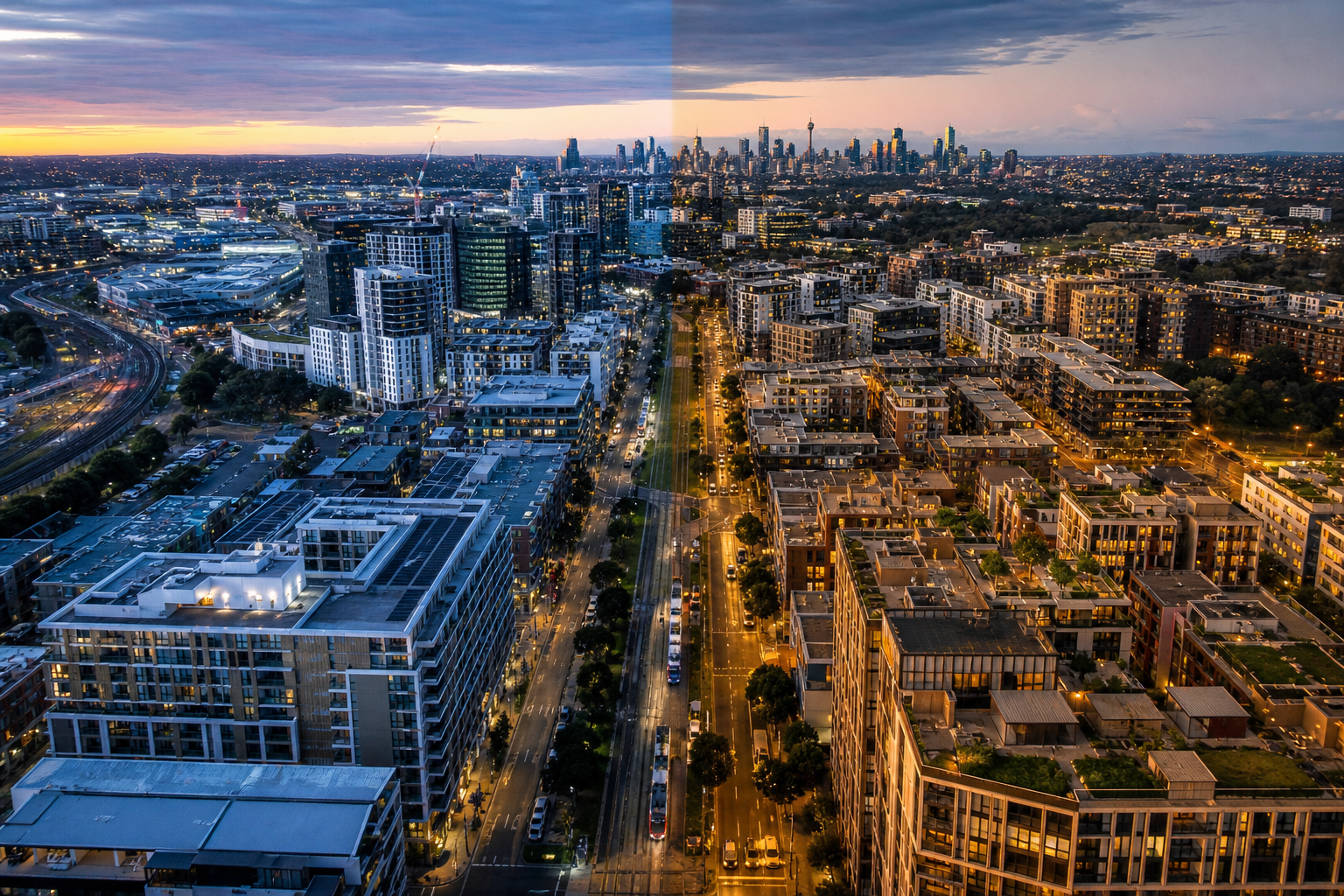
Renting in Zetland vs buying nearby: how to decide in 2026
In 2026, renting a Zetland apartment often looks cheaper month‑to‑month than buying – but ownership builds equity and gives stability. The real decision is whether buying in Zetland or nearby (Waterloo, Rosebery, Alexandria) is safe for your cashflow once you factor in today’s higher interest rates, APRA’s 3% buffer, and your savings goals.
This guide walks through the numbers, gives you realistic worked examples, and shows when it’s smarter to keep renting – and when buying or rentvesting around Green Square actually stacks up.
Fast answer: how to use this guide this week
If you only have 10 minutes, do this:
- Estimate a target purchase (price and deposit) for a unit in Zetland or nearby.
- Plug in a realistic interest rate, then stress‑test at 3% higher.
- Compare total monthly ownership costs (repayments + strata + rates + maintenance – rent saved) against your current rent.
- Make sure ownership costs are under ~35% of your after‑tax income and that you still hold at least 3–6 months of stressed expenses (6–12 if self‑employed) in cash or offset.
If those tests fail, keep renting and follow a focused savings/investment plan for the next 12–24 months.

1. The 2026 backdrop: why caution matters in inner‑south Sydney
1.1 Rates, inflation and mortgage stress
By mid‑2026, the RBA cash rate is back at 4.35% after several hikes, and many owner‑occupier rates sit in the 6–6.5% range, more for investors.
Roy Morgan’s July 2026 research shows:
- 32.5% of Australian owner‑occupier borrowers are now ‘At Risk’ of mortgage stress.
- 22% are ‘Extremely At Risk’ – the highest in 18 years.
At the same time, inflation is still above target (headline 3.9%, trimmed mean 3.6% over the year to June 2026) and unemployment has drifted up to around 4.4%. In other words: incomes are under pressure, costs are high, and higher‑for‑longer rates are not hypothetical.
1.2 What APRA and the banks care about
Lenders must assess your borrowing capacity using at least a 3% serviceability buffer above the actual rate. So if you’re quoted 6.2%, the bank tests you at ~9.2%.
You don’t have to run your life at that stress level, but you should:
- Model repayments 2–3% above current rates.
- Aim for home loan repayments plus essential living costs that leave you with spare cash each month.
- Treat a stressed total cost (repayments at current rate +3% plus realistic living costs) as the baseline for your buffer target.
For PAYG borrowers, a sensible minimum buffer is 3–6 months of stressed costs. For self‑employed or variable income, 6–12 months is safer (see knowledge facts 3, 11, 16).
2. What are you actually comparing: rent vs buy in Zetland
2.1 Typical Zetland and nearby numbers in 2026 (illustrative only)
These figures are indicative, based on mid‑2026 inner‑south conditions. Always check live data.
-
Renting
- 1‑bed apartment in Zetland: around $700–$780/week.
- 2‑bed: $900–$1,050/week depending on building and finish.
-
Buying (owner‑occupier)
- 1‑bed apartment in Zetland: ~$750k–$820k.
- Similar 1‑bed in Waterloo/Rosebery/Alexandria: ~$700k–$800k.
- Strata: often $1,200–$2,000 per quarter, higher for buildings with big facilities.
We’ll use round, realistic numbers in the worked examples so you can quickly map them to your situation.
2.2 The real question: cashflow plus buffer, not just rent vs repayment
Comparing rent vs mortgage repayment alone is misleading.
You need to compare:
- Total cost of owning
- Principal & interest (P&I) repayments
- Strata levies
- Council rates & water
- Insurance & maintenance
- Less any rent you’re no longer paying
Versus
- Total cost of renting
- Rent
- Renters’ contents insurance
- Possibly higher commuting/parking if you live further out
And then layer on:
- How fast you’re building savings/equity.
- How much buffer you have left after your move.

3. Worked example: Zetland 1‑bed – rent vs buy nearby
Let’s say you’re currently renting a 1‑bed in Zetland and thinking of buying something similar in Waterloo or Rosebery.
3.1 Your current renting position
- Current rent: $750/week ($3,250/month approx).
- Household after‑tax income: $10,000/month.
- Current savings: $120,000 in cash.
Your rent is 32.5% of your take‑home pay – high but manageable if you’re saving consistently.
3.2 Buying scenario: 1‑bed Waterloo/Rosebery
Assume:
- Purchase price: $780,000.
- Deposit: $120,000 (about 15%); assume you end up borrowing $663,000 after costs and some LMI. (Round number for illustration.)
- Interest rate: 6.2% p.a. P&I, 30‑year term (indicative, not an offer).
Repayments at 6.2%:
- Monthly repayment on $663,000 ≈ $4,070.
Plus other ownership costs:
- Strata: $1,600/quarter = $533/month.
- Council & water: say $220/month.
- Maintenance/insurances allowance: $150/month.
Total monthly ownership cost (at current rate):
- $4,070 + $533 + $220 + $150 ≈ $4,973/month.
You no longer pay rent, so the change in your monthly cashflow vs renting is:
- Renting: $3,250/month.
- Owning: $4,973/month.
- Extra cash needed: about $1,723/month.
That’s ~49.7% of your take‑home income going to housing costs alone – before groceries, transport, other debts and lifestyle.
3.3 Stress‑testing at +3%
Now stress‑test at 9.2% (6.2% + 3% APRA‑style buffer).
- Monthly repayment (9.2% on $663,000, 30 years) ≈ $5,633.
- Add strata, rates, maintenance ≈ $903/month.
- Stressed total ≈ $6,536/month.
At this level:
- Housing would eat 65%+ of your take‑home.
- Even if rates never get that high, this shows how thin your margin is.
If we apply the inner‑south red‑flag guideline (total stressed repayments above 35–40% of after‑tax income plus less than 3–6 months buffer is danger territory – see knowledge facts 5 and 9), buying this unit is too tight on these numbers.
3.4 What about your buffer?
If you use almost all of your $120,000 as deposit and costs, your left‑over cash buffer after settlement might be close to zero.
Yet a sensible guideline is at least 3–6 months of stressed costs for PAYG, 6–12 months if self‑employed.
Using the stressed monthly cost of $6,536, you ideally want:
- PAYG: $19,600–$39,200 in cash/offset.
- Self‑employed: $39,200–$78,400.
If you can’t keep that after settlement, it’s another sign that now may not be the time to buy at this price point.
The strategy continues below
You've seen the problem and the groundwork — now unlock the exact steps our CPA-certified brokers use, including 7 more sections. Enter your email for instant, free full access.
Free access. No spam — unsubscribe anytime. Your details stay confidential.
Frequently asked questions
Is it cheaper to rent or buy in Zetland in 2026?▾
How much buffer should I keep if I buy in Green Square?▾
Should I buy in Zetland or a cheaper nearby suburb like Alexandria?▾
What is rentvesting and does it work around Green Square?▾
How long should I plan to hold a Green Square apartment if I buy?▾
What income multiple can I safely borrow at for a Zetland unit?▾
Speak with a specialist advisor
Confidential consultation, bespoke advice for your situation.