Article
Getting Machinery Finance Approved On Seasonal or Contract Income
A practical guide for seasonal, project-based and contract workers on getting machinery and equipment finance approved without wrecking cashflow or risking the family home.
Key Takeaway
Seasonal and contract-based income borrowers can get machinery finance approved by proving recurring cashflow across at least 12–24 months, backing it with contracts, BAS, and bank statements, and structuring repayments around peak earning periods. Lenders typically stress test servicing at interest rates about 3% higher than current and want to see 3–6 months of cash buffers. The most effective step is to present clean, separated business accounts and a realistic repayment structure that matches actual cash cycles.
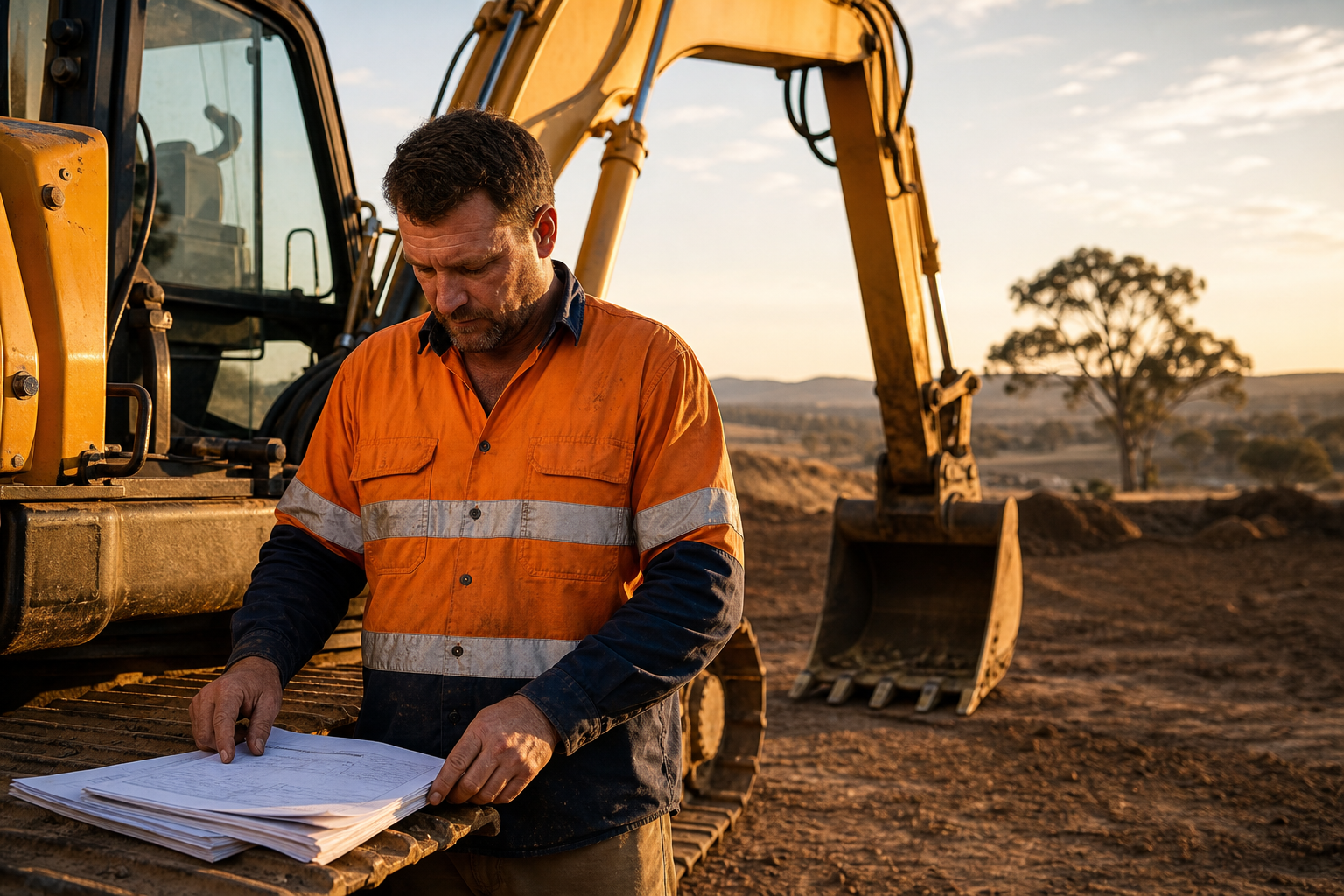
If your income rises and falls with harvests, contracts or rosters, you can still get machinery finance approved — you just have to prove that cashflow is real, recurring and can handle the repayments even in the slow months. For seasonal and contract-based income, lenders lean harder on contracts, bank statements, BAS and buffers than on one shiny tax return. Get those aligned and you can buy the gear you need without putting the family home on the line.
In this guide, we’ll walk through what lenders really look at, which documents matter, how to structure repayments around your cash cycles, and how to avoid the classic traps that leave borrowers stretched when the season turns.
1. How lenders see seasonal and contract income
1.1 The core problem: irregular but real income
Seasonal, project and contract income is common across Australia:
- Farmers and agribusiness
- Earthmoving and civil contractors
- Owner-drivers and transport subcontractors
- Mining, construction and FIFO workers
- Tourism and events operators
The challenge is not that the income is “bad” — it’s that it’s uneven. Lenders are nervous about borrowers who look rich in October and broke in March.
So with machinery finance, lenders usually ask two questions:
- Is this income genuinely repeatable? (not a one-off boom year)
- Can you cover repayments in the quiet periods?
If you can answer both with evidence, approval becomes much easier.
1.2 How banks and non-banks typically assess you
Most mainstream equipment lenders will:
- Average 12–24 months of income to smooth out cycles.
- Apply a serviceability buffer (often modelling your repayments at an interest rate ~3% higher than current, similar to APRA’s home loan guidance).
- Use realistic living expense benchmarks for any personal guarantees, often based on HEM.
For contract-based income (e.g. civil works, mining services, transport):
- They want to see current contracts and evidence of continuity (extensions, tender pipelines, repeat clients).
- They check that any key contract isn’t due to expire before the loan term makes sense.
If you also have a home loan, lenders will look at your total debt picture, and the same stressed cashflow thinking used in home loan guides like [/insights/mining-construction-fifo-irregular-income-home-loans] applies here.
2. Documents that prove irregular income is reliable
2.1 The minimum paperwork most lenders want
For seasonal or contract-based machinery finance, expect to provide:
- ABN details and GST registration (if applicable)
- Last 12–24 months of business bank statements
- Most recent 1–2 years’ tax returns and financials (personal + business)
- Current contracts, work orders or rate agreements
- BAS statements for the last 4–8 quarters (if registered)
- Aged receivables list (if you invoice customers)
For smaller ticket items (say under $150,000), some specialist lenders might rely more heavily on bank statements and contracts and less on full financials, but good paperwork still makes approvals faster and cheaper.
2.2 Why separate accounts matter more for seasonal income
If you’re a sole trader and everything runs through one messy personal account, the income looks more volatile than it really is. Separating personal and business accounts is one of the highest‑impact actions for sole traders seeking finance, reducing perceived volatility and simplifying lender assessment (see fact 1 from our regional tradies guide).
At a practical level:
- Run all income and business expenses through a dedicated business account.
- Pay yourself a regular “wage” or drawings into a personal account.
- Keep a separate savings or offset as your business buffer.
Within 3–6 months, your bank statements start telling a much clearer story — which directly lifts your chances of an approval on reasonable terms.
2.3 Showing stability when contracts roll on and off
If your work is contract-based or FIFO-style, lenders get nervous about gaps. To reduce that:
- Provide a contract history for the last 2–3 years (employers/clients, roles, day rates).
- Highlight extensions and repeat work — this proves your work is ongoing, even if each contract has an end date.
- Keep email or portal evidence of upcoming work (letters of intent, awarded tenders, rosters).
For some borrowers, it’s worth preparing a simple one-page summary mapping contracts and income across the last two years — like a mini CV for your business. Lenders won’t build this for you, but they will quietly reward it.

3. Structuring machinery finance around seasonal cashflow
Getting approved is only half the job. The other half is structuring repayments so they fit your real cash cycles — and don’t push you into stress when work slows.
3.1 When standard monthly repayments work — and when they don’t
For businesses with reasonably steady cashflow, standard monthly repayments on a chattel mortgage or equipment loan can be fine.
But if your revenue is lumpy (harvests, project milestones, tourist seasons), a straight monthly repayment schedule can cause:
- Tight cashflow in off-season
- Over-reliance on overdrafts and credit cards
- Constant stress around tax time
In those cases, you should look at seasonal or structured repayments, where instalments are higher in peak periods and lighter in off-season. Our guide on [/insights/seasonal-structured-equipment-loan-repayments-irregular-cashflow] goes deeper, but the core idea is simple: make repayments line up with when money actually lands in the account.
3.2 Example: earthmoving contractor on project-based work
Assume:
- You win a 3-year civil contract
- Expected net profit from this contract: $240,000 over 3 years (about $6,700 per month on average)
- You want a $180,000 excavator on a 5-year term
- Indicative interest rate: 8% p.a. (for illustration only)
Approximate monthly repayment on a standard 5-year principal & interest chattel mortgage at 8%:
- About $3,650 per month.
If your income arrives in big chunks on project milestones, you could instead:
- Set a structured schedule where repayments cluster after milestone payments.
- Keep a cash buffer equal to at least 3–6 months of repayments (i.e. $11,000–$22,000) to smooth any client delays.
Lenders will often agree to this if:
- The contract is strong and clear on payment timing, and
- Your history shows you can manage cash sensibly.
3.3 Aligning loan term with asset life and contracts
Never let the loan term outlive:
- The realistic working life of the machinery, or
- The contract horizon that’s paying for it.
You generally want the debt gone or very small before the gear stops earning well. See [/insights/aligning-equipment-loan-terms-with-asset-life] for a detailed framework.
As a rule of thumb:
- Light vehicles: 3–5 years
- Trucks and yellow goods: 4–7 years
- Specialist gear: varies, but be conservative
If your major contract is 3 years, a 5-year term with a balloon (residual) at the end might work, provided you’re sure there’s:
- Resale value in the machine, or
- Ongoing contracts to clear the balloon.
The strategy continues below
You've seen the problem and the groundwork — now unlock the exact steps our CPA-certified brokers use, including 6 more sections. Enter your email for instant, free full access.
Free access. No spam — unsubscribe anytime. Your details stay confidential.
Frequently asked questions
Can I get machinery finance if I’ve only had my ABN for one year?▾
Do lenders accept seasonal farm or harvest income for machinery loans?▾
How can I improve my chances of approval on contract-based income?▾
Is a balloon payment safe if my income is lumpy?▾
Should I use my home as security for machinery finance?▾
Speak with a specialist advisor
Confidential consultation, bespoke advice for your situation.