Article
Using Airbnb Income to Finance Prestige Apartments in Sydney’s East
Buying or refinancing a prestige Eastern Suburbs apartment with Airbnb or short‑stay income? This guide explains, in plain English, which parts of your holiday‑let income banks actually count, how they shade it, and what to fix this week to avoid a nasty borrowing‑power surprise.
Key Takeaway
Australian lenders will often only partially recognise Airbnb or short‑stay income for prestige apartments, typically shading it by 20–50% and sometimes ignoring it entirely in higher‑risk Eastern Suburbs postcodes. They prefer two years of tax returns, Airbnb or agent statements, and may substitute lower long‑term lease estimates when stress‑testing serviceability. Borrowers should model borrowing power assuming conservative or zero short‑stay income and align loan structure, buffers and ownership with both tax and lender rules before committing to a purchase.
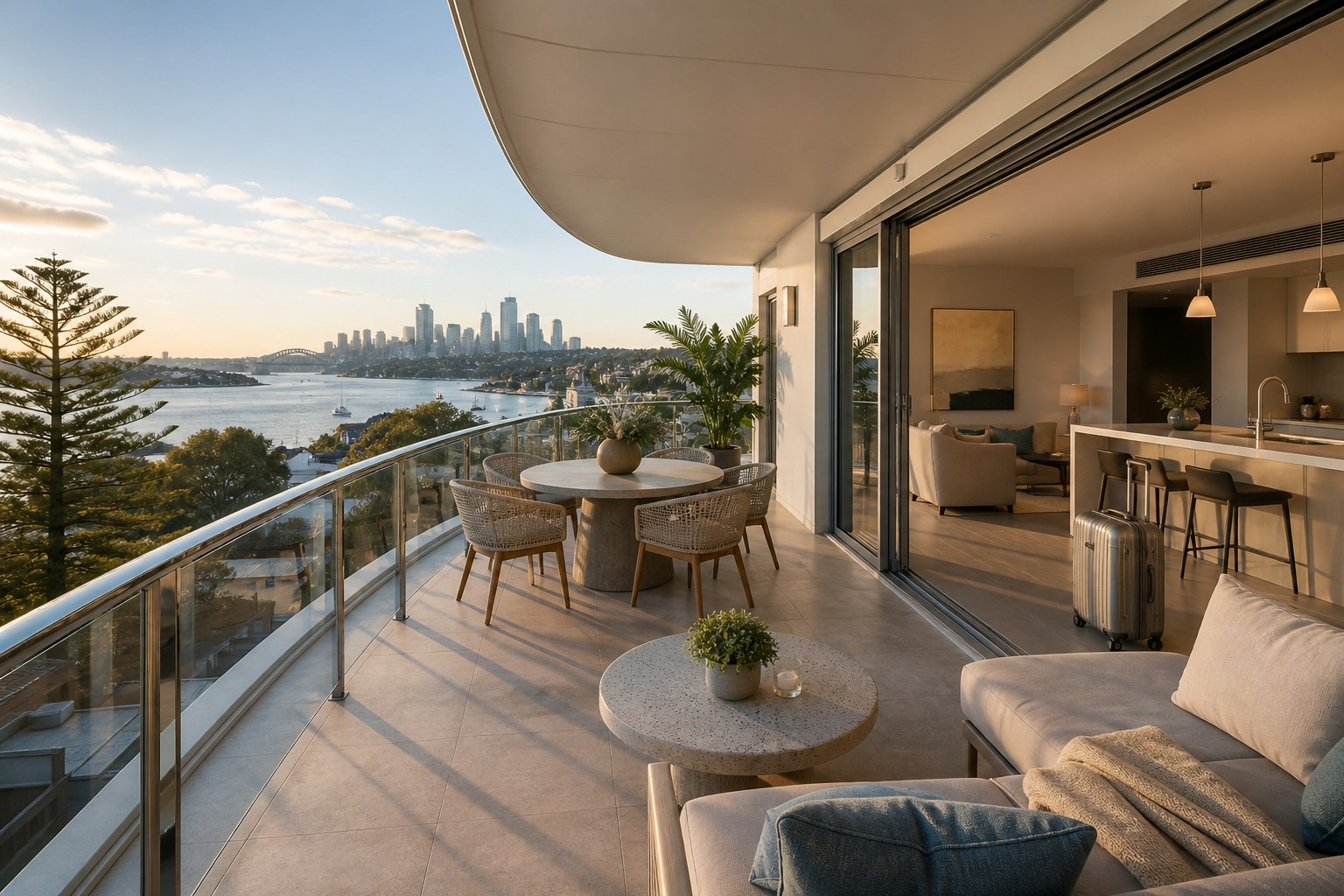
If you’re banking on Airbnb or short‑stay income to help pay for a prestige apartment in Double Bay, Rose Bay or Bellevue Hill, most lenders will not see that income the way you do.
In practice, banks usually only count short‑stay income if it looks stable, well‑documented and fits their risk appetite for the building and postcode. Even then, they often discount it heavily and stress‑test the loan as if you earned less, or nothing, from holiday guests.
This guide explains what lenders will and won’t count, how that affects borrowing power, and what you can do this week to avoid a nasty surprise at approval time.
1. Why short‑stay income on prestige apartments is different
1.1 The basic lending rules still apply
Under Australian lending standards (APRA guidance and responsible‑lending obligations), lenders must:
- Verify your income using reliable evidence.
- Test that you can afford repayments at a rate at least 3% above the actual rate (the APRA buffer).
- Apply realistic assumptions to variable income such as rent, bonuses, overtime and business profits.
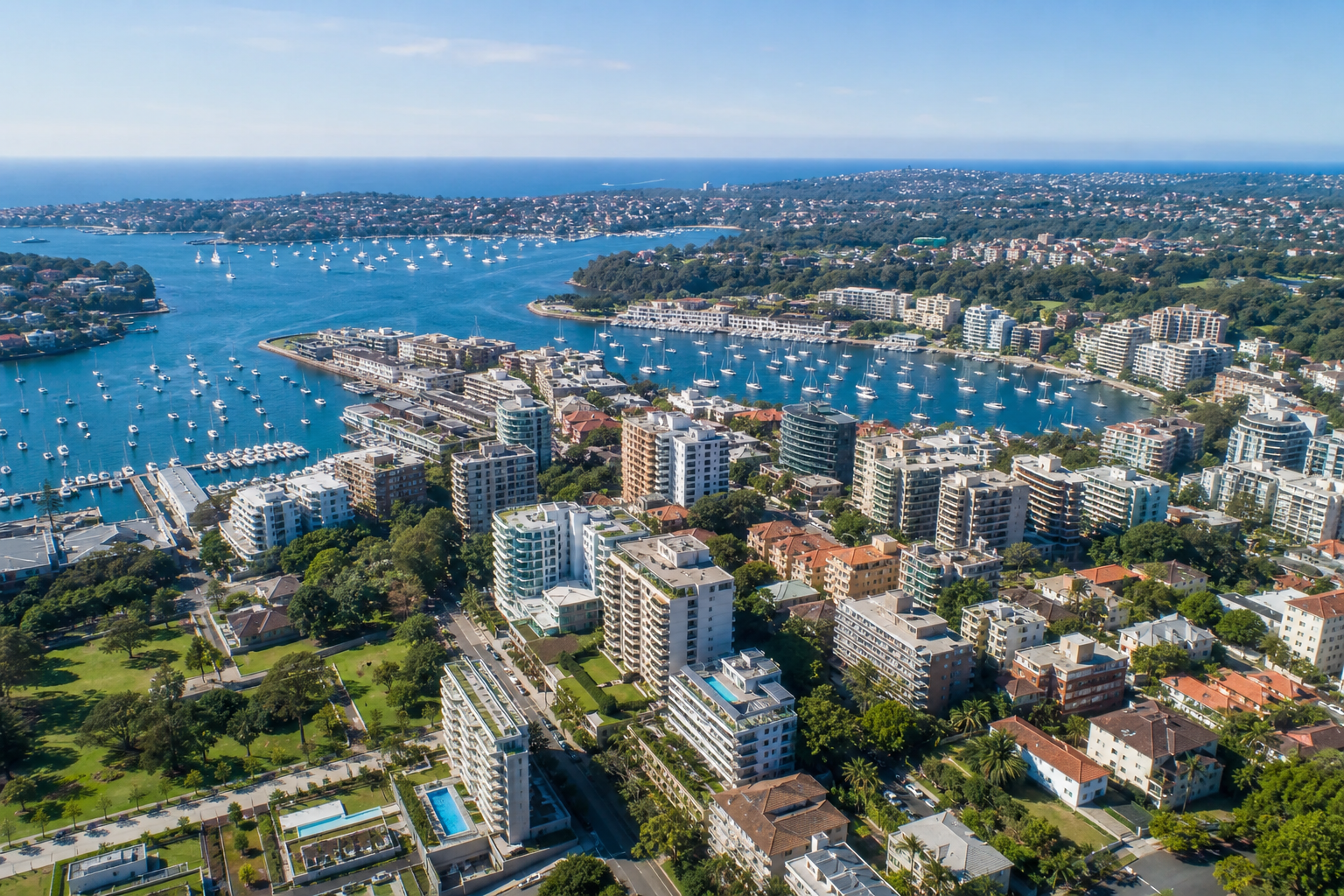
For an Eastern Suburbs purchase, that general framework sits on top of local risk settings, jumbo‑loan rules and postcode overlays. As explained in /insights/eastern-suburbs-postcode-risk-lists-where-banks-get-cautious, some Double Bay and harbourside postcodes attract lower LVR caps and more conservative treatment of income.
Short‑stay income sits in the middle of all this: technically rental income, but more volatile and operational than a standard 12‑month lease.
1.2 Why prestige apartments attract more scrutiny
Prestige Eastern Suburbs apartments are different to regional holiday shacks:
- Purchase prices and loan sizes are far higher.
- Postcodes can already be on “heightened risk” lists.
- Buildings can be high‑density or boutique, with varying demand.
- Many buyers are professionals or business owners with complex income.
From a bank’s point of view, that means:
- More to lose if the plan fails.
- Higher sensitivity to vacancies, regulation changes or body corporate bans.
- Less willingness to rely on optimistic income from Airbnb or holiday platforms.
2. What lenders like and don’t like in short‑stay income
2.1 Common lender comfort factors
Most mainstream lenders will look more favourably on short‑stay income if:
- You have a strong PAYG or business income and could service the debt without the Airbnb income if needed.
- There’s a consistent 2‑year history of short‑stay earnings in your tax returns.
- Income is paid through traceable channels (Airbnb, Stayz, a licensed letting agent) with proper statements.
- Occupancy and nightly rates look stable, not just one good summer.
- The property could readily be leased long‑term at a solid rent if regulations or building rules changed.
For high‑income professionals, ensuring your core income is structured cleanly and documented well (for example, by following the principles in /insights/doctors-lawyers-consultants-eastern-suburbs-structuring-income-banks-say-yes) often does more for borrowing power than any fine‑tuning of short‑stay projections.
2.2 Red flags that make banks discount or ignore Airbnb income
Lenders may heavily shade, or simply ignore, Airbnb income when:
- You’re buying, and the income is only an estimate with no history.
- The building’s by‑laws are ambiguous or actively restricting short‑stay letting.
- There’s council or strata enforcement activity against other short‑stay operators.
- The postcode is already on an internal risk list for high‑density or prestige stock.
- You’ve had large swings in income that are hard to explain, or poor record‑keeping.
In these cases, lenders might instead use a conservative long‑term rental estimate, or even assume zero rent when stress‑testing your loan.

3. How banks actually treat Airbnb and short‑stay income
3.1 Shading: why banks won’t use the full amount
Almost no lender will use 100% of your Airbnb income for borrowing power. Common approaches (illustrative only; actual policies vary and change):
- Long‑term rent from a lease: use 70–90% of gross rent after vacancies.
- Documented short‑stay income with 2+ years’ history: use 50–80% of average gross income.
- New or projected short‑stay income: ignore, or substitute a small percentage of estimated long‑term rent.
Shading is applied to allow for:
- Vacancy and seasonal swings.
- Platform fees and cleaning costs.
- Higher management intensity and compliance risks.
3.2 Quick example: impact of shading on borrowing power
Assume:
- Prestige apartment in Double Bay.
- Proposed Airbnb gross income: $180,000 p.a.
- Bank will shade this to 60% for servicing.
- So they use $108,000 p.a. ($9,000 per month) in their calculator.
If your long‑term lease alternative is $120,000 p.a. and the bank would use 80% of that ($96,000 p.a.), your extra borrowing power from the Airbnb strategy might be far smaller than expected — roughly equivalent to only $12,000 p.a. of extra assessable income.
Once you layer in a 3% APRA buffer on a large loan, that $12,000 p.a. may add much less than $300,000 of additional borrowing capacity, and sometimes almost none if you’re already near the bank’s internal caps.
3.3 Treatment on purchase vs refinance
-
On purchase: lenders tend to be conservative. For a prestige apartment you plan to Airbnb, many banks will either:
- use an independent long‑term rental estimate instead of projected Airbnb income, or
- cap the Airbnb income at a share of that long‑term rent.
-
On refinance after 2–3 years of operation: with tax returns and platform statements, some lenders will give more credit, though still shaded.
This difference matters if you’ve got a staged plan: buy now, use short‑stay income to prove the concept, then refinance to release equity or fund further investments.
The strategy continues below
You've seen the problem and the groundwork — now unlock the exact steps our CPA-certified brokers use, including 7 more sections. Enter your email for instant, free full access.
Free access. No spam — unsubscribe anytime. Your details stay confidential.
Frequently asked questions
Will banks use my projected Airbnb income to approve a loan for a prestige apartment?▾
How many years of Airbnb income do lenders need to see?▾
Do banks treat Airbnb income differently to normal rent in Sydney’s Eastern Suburbs?▾
Can I buy a prestige apartment in a company or trust for Airbnb use?▾
What happens if Airbnb regulations change after I buy a prestige apartment?▾
Can short‑stay income help me refinance a prestige apartment loan?▾
Speak with a specialist advisor
Confidential consultation, bespoke advice for your situation.