Article
Upsizing in Dover Heights: how to set a safe borrowing limit
Planning a bigger family home in Dover Heights? Learn how much more you can safely borrow, how lenders really assess you, and simple rules to avoid cashflow stress after you move.
Key Takeaway
To safely upsize within Dover Heights, borrowers should calculate how much extra they can borrow while keeping total home loan repayments below roughly 30–35% of net household income, even if banks offer a higher limit. On a $2.5m home with a $1.2m mortgage, many families can safely add $400k–$700k if equity and cash buffers remain solid. The key actionable step is to run conservative scenarios with your broker before committing to a specific price range.
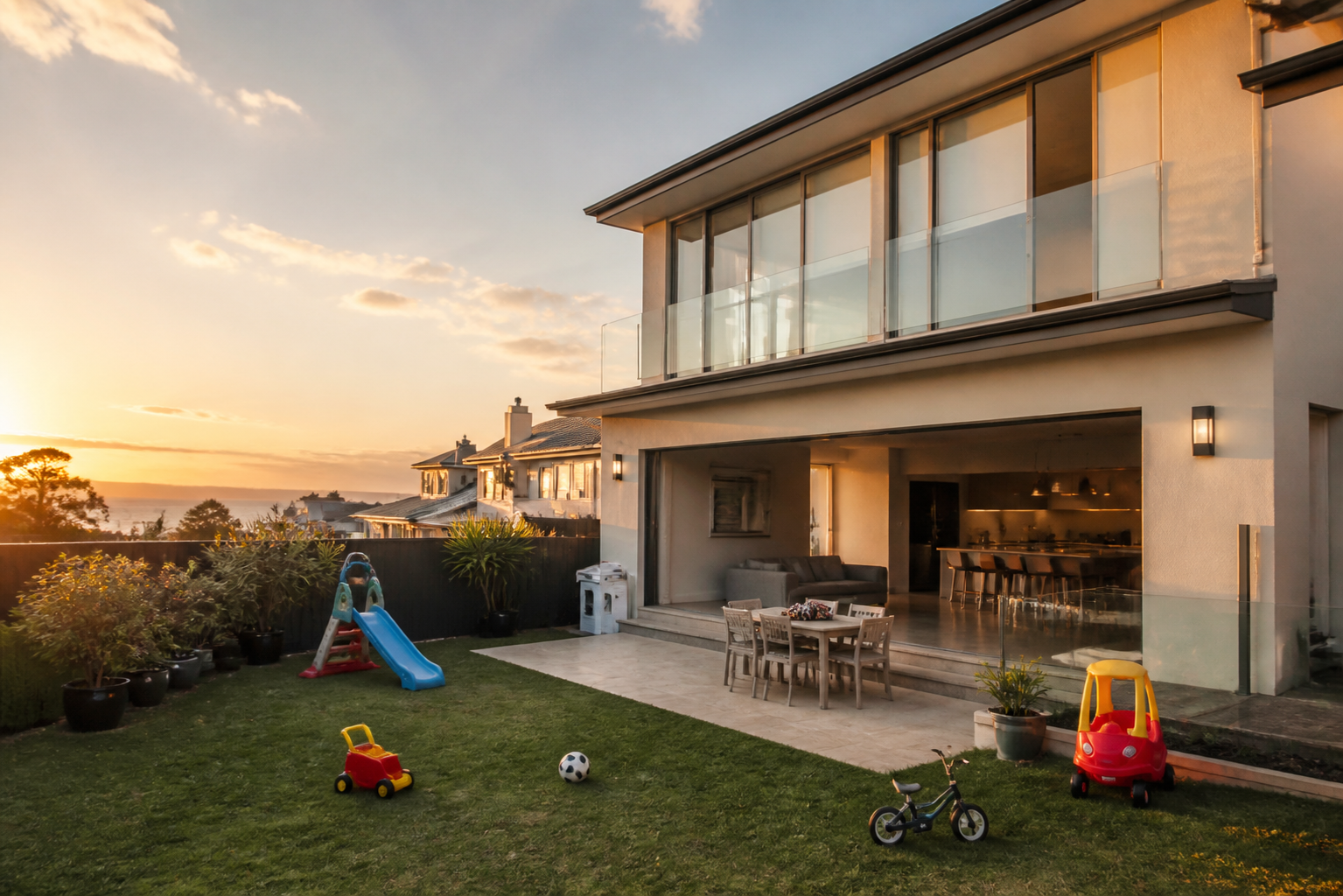
If you already own in Dover Heights and want a bigger family home, the real question isn’t “How much will the bank lend?” but “How much more can we safely borrow without wrecking cashflow?” For most Eastern Suburbs families, a sensible ceiling is the loan size that keeps total home repayments around 30–35% of net household income and leaves at least 6 months’ living costs in cash or offset.
Step 1: Define your “safe, not maximum” borrowing limit
Lenders will often approve more than is comfortable. You need a separate, stricter rule for your family.
Practical safety rules for Dover Heights upgraders:
- Repayments cap: Aim to keep combined home loan repayments at 25–35% of after‑tax household income (consistent with renovation guidance used across the Eastern Suburbs).
- Buffer rule: Hold 6–12 months of living costs plus repayments in offset or easily accessible cash.
- Equity rule: After upsizing, keep your family home LVR at or under ~80% where possible, to avoid or minimise LMI and protect flexibility. See also the broader equity framework in How Much Equity Can You Safely Tap From a Dover Heights Home?.
If the bank will lend more than these rules allow, treat the excess as off‑limits.

Step 2: Map where you are now (equity and cashflow)
2.1 Work out usable equity
Start with a conservative estimate of your home’s value.
- Current home value (realistic, not agent’s top number)
- Less: current mortgage
- Equals: total equity
Then apply a safe LVR target.
Example – current position
- Dover Heights house: $3.0m (conservative)
- Current mortgage: $1.4m
- Equity: $1.6m
- 80% of value: $2.4m
- Maximum debt at 80% LVR: $2.4m
- Headroom (extra debt before hitting 80%): $1.0m
That $1.0m is the theoretical bank‑friendly headroom. Your real limit will be lower once you apply your income and buffer rules.
2.2 Check income versus repayments
Next, compare current and potential repayments to your income. Use an interest rate at least 2–3% above today’s to mirror how lenders stress test (APRA currently expects a 3% buffer).
Illustrative rate assumptions (not offers):
- Current rate: say 6.0% p.a. P&I
- Stress‑test rate: 8.0–9.0% p.a.
2.3 Worked example – how much extra debt looks sensible?
Assume:
- Combined after‑tax income: $26,000 per month
- Current mortgage: $1.4m over 25 years, 6.0% P&I
- Repayments ≈ $9,040 per month
- That’s 35% of net income already.
If you add another $600k (total $2.0m debt) at the same term and rate:
- New repayments ≈ $12,915 per month
- That’s almost 50% of net income – too high for most families.
A safer upgrade might be an extra $300–400k, especially if school fees or a future income drop are on the horizon.
Step 3: Translate equity and income into a realistic price range
Upsizing within Dover Heights usually means staying in the same school catchments but chasing more bedrooms, a yard, or better parking. The numbers become clearer when you compare a few scenarios.
3.1 Comparing safe versus stretched options
| Scenario | Target purchase price | Total debt after move | LVR on new home | Monthly repayment (6.0%, 25 yrs) | Repayments as % of $26k net |
|---|---|---|---|---|---|
| A. Modest upgrade | $3.5m | $1.7m | ~49% | ~$10,980 | ~42% |
| B. Bigger upgrade (borderline) | $4.0m | $2.0m | ~50% | ~$12,915 | ~50% |
| C. Aggressive, prestige upgrade | $4.5m | $2.3m | ~51% | ~$14,850 | ~57% |
Assumes you sell your current home and roll net sale proceeds into the new purchase. Figures are indicative only.
Scenario A sits near the top of a sensible range for many high‑income professionals. Scenario C might still pass a bank’s calculator but leaves little room for school fees, renovations or career changes.
For buyers looking at $3m+ clifftop or view properties, also see Buying a $3m+ clifftop in Dover Heights or Vaucluse: lending rules – lenders can tighten LVRs and buffers further in that bracket.
The strategy continues below
You've seen the problem and the groundwork — now unlock the exact steps our CPA-certified brokers use, including 4 more sections. Enter your email for instant, free full access.
Free access. No spam — unsubscribe anytime. Your details stay confidential.
Frequently asked questions
How much more can I usually borrow to upsize in Dover Heights?▾
Is it safe to go over 80% LVR for a Dover Heights family upgrade?▾
Should we buy or sell first when upsizing within Dover Heights?▾
How do school fees affect how much we can safely borrow?▾
What if one of us plans to cut back work hours soon?▾
Speak with a specialist advisor
Confidential consultation, bespoke advice for your situation.