Loading the latest on mortgages, RBA & inflation…

Article

Why Sensible Gearing Still Works for Many Property Investors in 2026

Gearing is under political fire in 2026, but for many Australians it still works when used conservatively, with realistic cashflow and a clear de‑gearing plan.

23 July 2026Updated 23 July 20268 min read

Key Takeaway

Gearing can still be worthwhile for many Australian property investors in 2026 if used conservatively, with decisions based on pre‑tax cashflow and risk rather than negative gearing tax benefits. With about 28% of mortgage holders already at risk of stress, highly leveraged, loss‑making established properties are far more dangerous under post‑2026–27 reforms. Investors should focus on asset quality, moderate LVRs, stress‑tested repayments, and a clear de‑gearing window to ensure gearing supports long‑term wealth instead of creating unsustainable pressure.

Why Sensible Gearing Still Works for Many Property Investors in 2026

Borrowing to invest (gearing) still makes sense for many Australian property investors in 2026 – but only if you assume no negative gearing benefit, test pre‑tax cashflow and keep leverage conservative. The new rules hurt heavily negatively geared, loss‑making properties, not sensible, stress‑tested strategies over 10–20 years.

This week, your decision is simple: if the numbers work before tax, survive a 3% rate rise and fit your household risk profile, gearing can still be a rational tool.
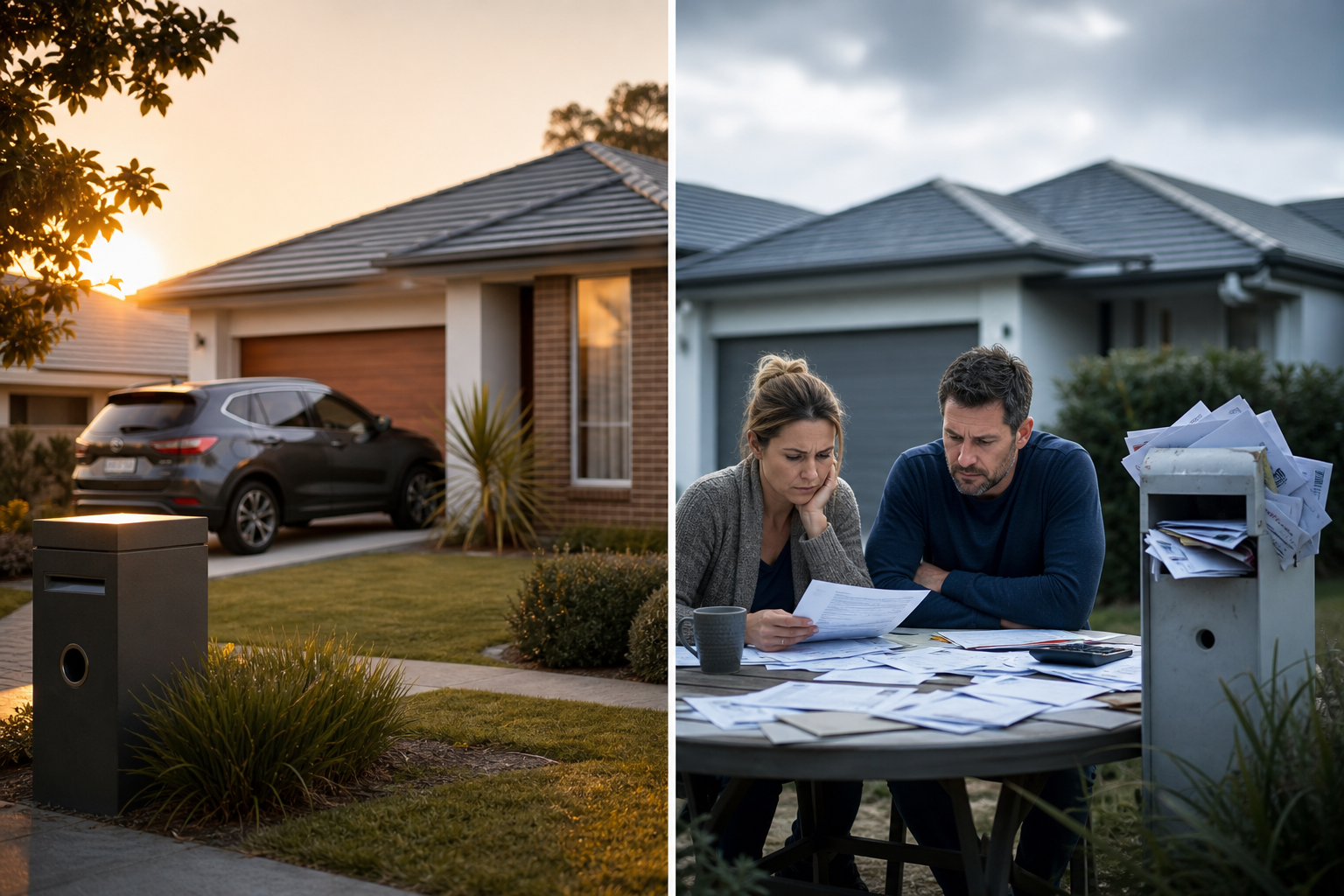
Cashflow comparison for geared property under old and new negative gearing rules Modelling pre-tax and post-tax cashflow is critical under the 2026–27 reforms.

1. What’s changed – and what hasn’t – for gearing in 2026

1.1 The big rule shift

From 1 July 2027, negative gearing on established residential properties bought at or after 7:30pm on 12 May 2026 will effectively be abolished for salary income. Rental losses are expected to be quarantined to rental income, not wages.

By contrast, qualifying new builds keep negative gearing and the existing CGT settings, creating a dual system (old vs new, established vs new build) for residential investors.

So for any property assessed now, the default rule is:

Model every new established property as if rental losses give you no wage-based tax refund at all.

For a plain-English refresher on what gearing is and how the reforms work, see /insights/plain-english-gearing-basics-australian-property-investors.

1.2 What hasn’t changed

  1. Leverage still magnifies gains and losses. A small deposit still controls a big asset.
  2. Banks still apply a ~3% serviceability buffer above actual rates.
  3. Quality of the asset (location, scarcity, rental demand) still drives long‑term returns more than any tax rule.
  4. Debt risk increases with life stage. Most people should still start deliberately de‑gearing 5–10 years before retirement.

The policy settings have changed, but the maths of leverage hasn’t.

2. When gearing still stacks up in 2026

2.1 The core test: is gearing still worth it?

Gearing can still be worth it in 2026 when all three of these are true:

  1. Pre‑tax cashflow is manageable under conservative assumptions.
  2. Long‑term total return (rent plus capital growth) looks meaningfully higher than your loan rate.
  3. You have a clear exit or de‑gearing timeline, not “set and forget” high debt for decades.

If any of those fail, gearing is usually not worth the risk – regardless of tax.

2.2 Worked example: established property, no tax help

Assume you’re considering an established investment unit in Brisbane in late 2026:

  • Purchase price: $800,000
  • Deposit: 20% ($160,000) + costs from savings/equity
  • Loan: $640,000 interest‑only at 6.5% p.a. (illustrative only)
  • Annual interest: $41,600
  • Rent: $800/week = $41,600/year
  • Other costs (rates, insurance, maintenance, management, etc.): $10,000/year

Pre‑tax cashflow:

  • Rental income: $41,600
  • Less interest: $41,600
  • Less other costs: $10,000
  • Net cashflow: –$10,000/year (–$833/month)

Under the 2027 rules for a post‑12 May 2026 established property, that –$10,000 is a real cash cost. No salary offset.

Is that still sensible?

  • If your household surplus after lifestyle and buffers is $3,000/month, you might accept –$833/month for the potential long‑term upside.
  • If your surplus is only $1,000/month, this is dangerous – especially with rates and costs able to rise further.

Now stress test with a 3% rate rise (to 9.5%): interest jumps to ~$60,800, and your negative cashflow blows out to around –$29,200/year (–$2,433/month). If that would put you near mortgage stress, the gearing doesn’t stack up for you.

For more detailed modelling, see /insights/cashflow-modelling-real-world-numbers-geared-property.

3. Negative vs positive gearing in the new rules

Gearing in 2026 is less about “chasing negative gearing” and more about choosing your risk profile.

Strategy typeTypical profileTax benefit post‑2027 (established, post‑12 May 2026)Cashflow risk levelWhen it can still make sense
Strongly negativeBig cash lossesLittle or none (loss quarantined)HighRarely – only for high surplus, high certainty households
Mildly negative/near‑neutralSmall shortfallLimited, assume zeroMediumCommon for long‑term investors with buffers
Positive/strongly positiveCash surplusYou pay tax on profitLowerAttractive for pre‑retirees and risk‑aware investors

For many households, the new sweet spot is near‑neutral or mildly positive gearing: lower risk, less dependence on changing tax rules, and more flexibility to de‑gear earlier.

4. Real risks of borrowing to invest in property now

4.1 Cashflow and interest‑rate risk

Roy Morgan data shows around 28% of Australian mortgage holders are already “At Risk” of mortgage stress in 2026. Adding more leveraged property without serious stress testing is reckless.

Always test:

  • A 3% rise in rates on all your loans.
  • 2–3 months of vacancy each year.
  • 10–15% higher expenses than your first estimate.

If you’re close to breaking even under current numbers, these shocks will push you into fast‑moving trouble.

4.2 Policy and tax risk

You now have to assume:

  • Negative gearing on many established properties won’t rescue you.
  • CGT concessions are less generous and more complex.
  • Future governments can and will change the rules again.

That’s why most new decisions should be based on asset quality and pre‑tax numbers first, with tax as a secondary bonus.

4.3 Concentration and life‑stage risk

Two common 2026 mistakes:

  1. Over‑concentrating in one city or one property type.
  2. Carrying high leverage into your 50s and 60s with no de‑gearing plan.

If you’re within 10 years of your “work optional” age, read /insights/keep-or-reduce-gearing-50s-60s-decision-framework and /insights/when-to-start-degearing-paying-down-investment-debt and treat gearing as something to wind back deliberately, not drift with.

Australian investors planning a de-gearing timeline for property loans A clear de-gearing plan is now as important as the initial purchase decision.

5. When gearing is clearly a bad idea in 2026

You probably shouldn’t gear (or should reduce gearing) if:

5.1 Your buffers are thin

  • Less than 3–6 months’ total expenses in cash/offset.
  • No separate buffer for investment property costs.

5.2 Your income or household is unstable

  • Self‑employed with volatile earnings and no multi‑year track record.
  • Single‑income household with dependants and no income protection.

5.3 You’re buying just for tax

  • The property is clearly cashflow‑negative before tax, in a weak rental market.
  • The selling point is almost entirely “tax benefits” or “government will never touch this”.

Under the new rules, those are red flags, not selling points.

6. A practical one‑week decision checklist

If you’re asking “is gearing still worth it for me in 2026?”, work through this in the next seven days:

6.1 Clarify your time frame

  • How long can you comfortably hold a geared asset – 10, 15, 20 years?
  • When do you want the option to work less or retire?

6.2 Run the numbers properly

  • Build a simple 12‑month cashflow with rent, interest, other costs.
  • Stress test 3% higher rates, 2 months’ vacancy, 10–15% higher costs.
  • Assume no negative gearing benefit for any new established property.

If you’re unsure, use the framework in /insights/five-safety-rules-before-you-gear-into-property.

6.3 Decide your gearing “speed limit”

  • Set a maximum LVR for your next purchase (e.g. 60–70%, not 90%).
  • Decide the maximum monthly shortfall you’re prepared to fund – and stick to it.

6.4 Lock in your de‑gearing plan

  • Nominate a target year to start paying down or selling down.
  • Tie that to specific events: kids finishing school, super balance milestones, age 55‑60.

If the plan only works if everything goes right, it’s too aggressive.


FAQs

Is gearing still worth it in Australia after the 2026–27 Budget?

Gearing can still be worth it, but not as a tax play. For many new established properties, you must assume no negative gearing on wage income from 1 July 2027. It only makes sense if the property is sound, the pre‑tax cashflow is manageable under stress tests, and the leverage fits your broader life and retirement plan.

Should I still negatively gear an investment property in 2026?

Deliberately running large tax‑driven losses on new established properties is now high‑risk. For qualifying new builds, limited negative gearing may still work, but you should view any tax benefit as icing, not the cake. For most investors, aiming for near‑neutral or mildly positive cashflow is safer than chasing big negative gearing deductions.

What is the main risk of borrowing to invest in property now?

The primary risk is cashflow stress if interest rates, vacancies or expenses move against you while tax benefits shrink. Policy risk is also higher: negative gearing and CGT settings are now clearly on the political menu. Over‑gearing can force you to sell at the wrong time or derail retirement plans.

Does positive gearing still make sense under the new rules?

Yes. Positive gearing usually means stronger pre‑tax cashflow and less dependence on shifting tax policy. You’ll pay tax on net rental income, but you gain resilience and flexibility – especially valuable for families, business owners and anyone within 10–15 years of retirement.

How much should I de‑gear before retirement?

A useful rule of thumb is to start deliberately de‑gearing 5–10 years before your target “work optional” age. That usually means paying down investment loans faster, shifting towards neutral or positive cashflow, or selectively selling. The right level depends on your super balance, other assets, and how stable your income will be in later life.


Key takeaways

  • Gearing still works in 2026 when pre‑tax cashflow is sound, leverage is moderate and you’re not relying on negative gearing.
  • Established properties bought after 12 May 2026 should be modelled with no wage-based negative gearing, turning rental losses into pure cash costs.
  • Sensible investors now target near‑neutral or positive cashflow, strong buffers and a clear de‑gearing timeline.
  • The real decision is not “can I gear?” but “can I safely carry this debt through the next 10–20 years?”

Next step: Want a decision‑ready view on your own gearing limits and property numbers? Book a free 15‑minute strategy call at /contact and get your tax, your loan and your risk tested in one conversation with a CPA, Tax Agent and Mortgage Broker.

General advice only: this information is generic and does not take into account your personal objectives, financial situation or needs.

Frequently asked questions

Is gearing still worth it in Australia after the 2026–27 Budget?
Gearing can still be worthwhile, but it is no longer a simple tax play. For many new established properties bought after 12 May 2026, you should assume rental losses will not offset your salary from 1 July 2027. Gearing only makes sense if the pre-tax cashflow is manageable under stress tests and the asset quality and time horizon justify the risk.
Should I still negatively gear an investment property in 2026?
Large, deliberate negative gearing on established properties is now much riskier because tax offsets will be restricted. For qualifying new builds, limited negative gearing can still work, but the property should stand up on pre-tax numbers first. Most investors are better off aiming for near-neutral or mildly positive cashflow rather than chasing big tax deductions.
What is the main risk of borrowing to invest in property now?
The main risk is cashflow stress if interest rates rise, vacancies increase or expenses blow out while tax benefits shrink. With around a quarter of mortgage holders already at risk of stress, adding more high-LVR debt can quickly become unmanageable. Policy risk is also higher, as governments are more willing to change negative gearing and capital gains rules.
Does positive gearing still make sense under the new tax rules?
Yes. Positive gearing generally provides stronger cashflow and less dependence on shifting tax policies. While you pay tax on net rental income, you gain resilience and flexibility, which is especially important for families, self-employed people and pre-retirees. Many investors in 2026 will be better served by prioritising stable, positive cashflow over maximising deductions.
How much should I de-gear before retirement?
Many Australians should start reducing gearing 5–10 years before their intended retirement or “work optional” age. That may involve paying down investment debt faster, moving towards neutral or positive cashflow, or selling selected properties. The right level of de-gearing depends on your superannuation, other assets, and how secure your income will be in later life.

Speak with a specialist advisor

Confidential consultation, bespoke advice for your situation.