Article
Borrowing for Small Strata, Studios and Company Title Units in Sydney’s East
How lenders really treat small strata, studios and company title units in Sydney’s Eastern Suburbs – and how to structure your finance so you can buy safely and on time.
Key Takeaway
Borrowing for small strata, studios and company title units in Sydney’s Eastern Suburbs is harder because most lenders cap loan-to-value ratios at 70–80% for apartments under 40–50 m² or with non‑standard titles, and many apply a hard minimum internal size of 35 m². Lenders also scrutinise building quality, location concentration risk, and rentability. Buyers should confirm lender policy before offering, build a strong pre‑approval, and stress-test repayments at 3% above current rates to avoid mortgage stress and settlement risk.
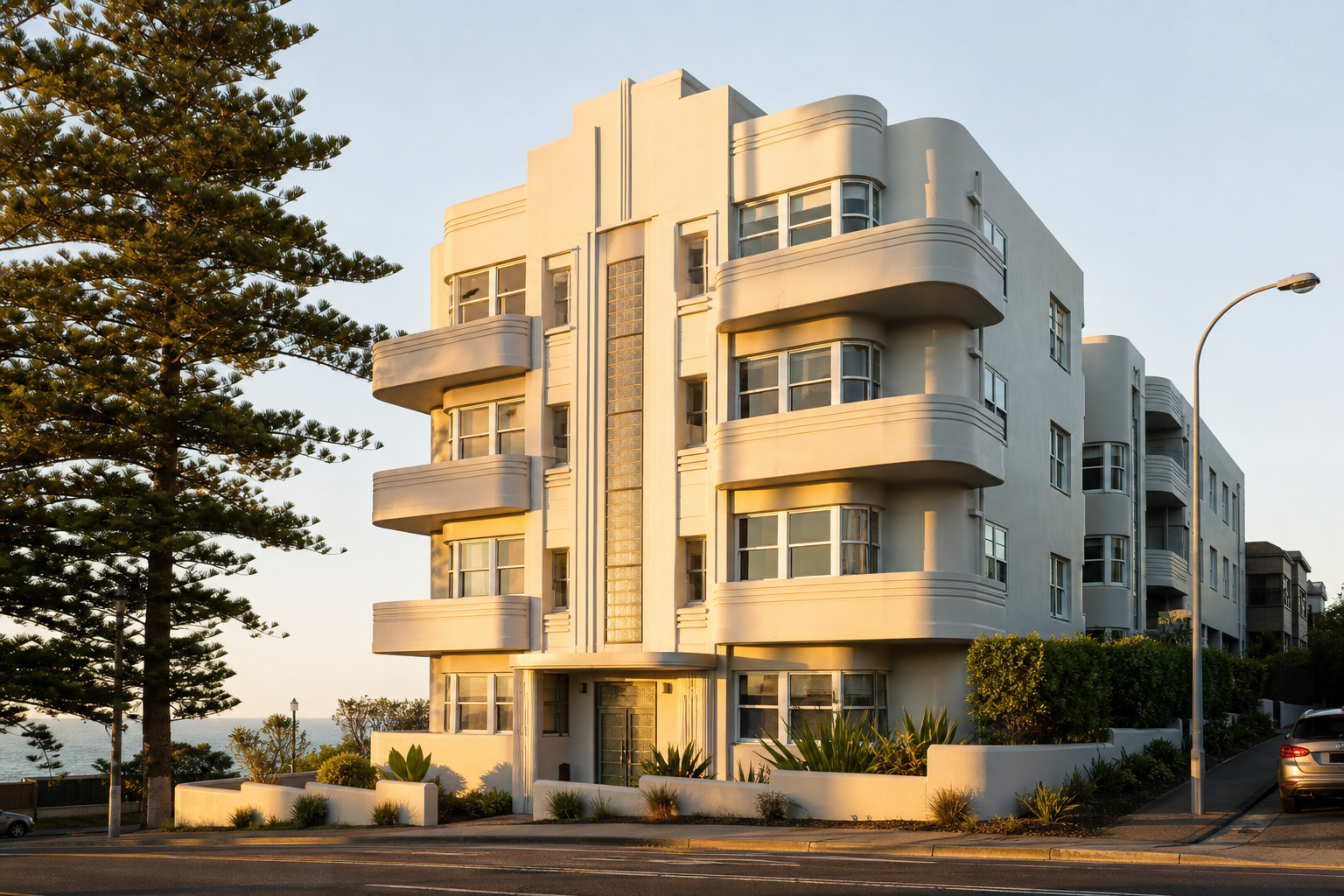
Buying a small strata unit, studio or company title flat in Sydney’s East can be smart – they’re often cheaper, highly rentable and in blue‑chip postcodes.
But from a lender’s point of view, these are non‑standard securities.
That means tighter size rules, lower maximum LVRs, extra valuation hurdles and more room for last‑minute surprises if you don’t plan properly.
In this guide, we’ll unpack how lenders actually treat these properties, what it means for your deposit, and the exact steps to take this week so your finance holds up when you find the right place.
1. What counts as a ‘small’ or non‑standard unit – and why lenders care
1.1 Definitions that matter for your loan
While every bank has its own policy, for Sydney Eastern Suburbs lending you’ll often see:
- Small apartment: typically <50 m² internal (excluding balcony and car space).
- Micro or studio unit: often <40 m² internal, or any apartment without a separate bedroom.
- Company title unit: you buy shares in a company that give you the right to occupy a flat, rather than a Torrens or strata title.
- Small strata scheme: blocks with <20 lots, sometimes <10, where lender risk settings differ.
Lenders see these as higher risk because:
- Resale risk – fewer buyers can get finance, which can reduce demand in a downturn.
- Valuation volatility – small units can swing more in value with changes in investor sentiment.
- Concentration risk – some suburbs have many similar stock types; if one goes off, they all do.
- Title complexity – company title or unusual strata rules can limit market and tenancy options.
If you’re looking at high‑density or CBD‑adjacent stock, also read Financing High‑Density, Small and Studio Apartments Without Nasty Surprises – the policies overlap heavily.
1.2 How this changes a standard home loan
For a standard 2‑bed strata unit in the East, a strong borrower might achieve up to 90–95% LVR (with LMI) from some lenders.
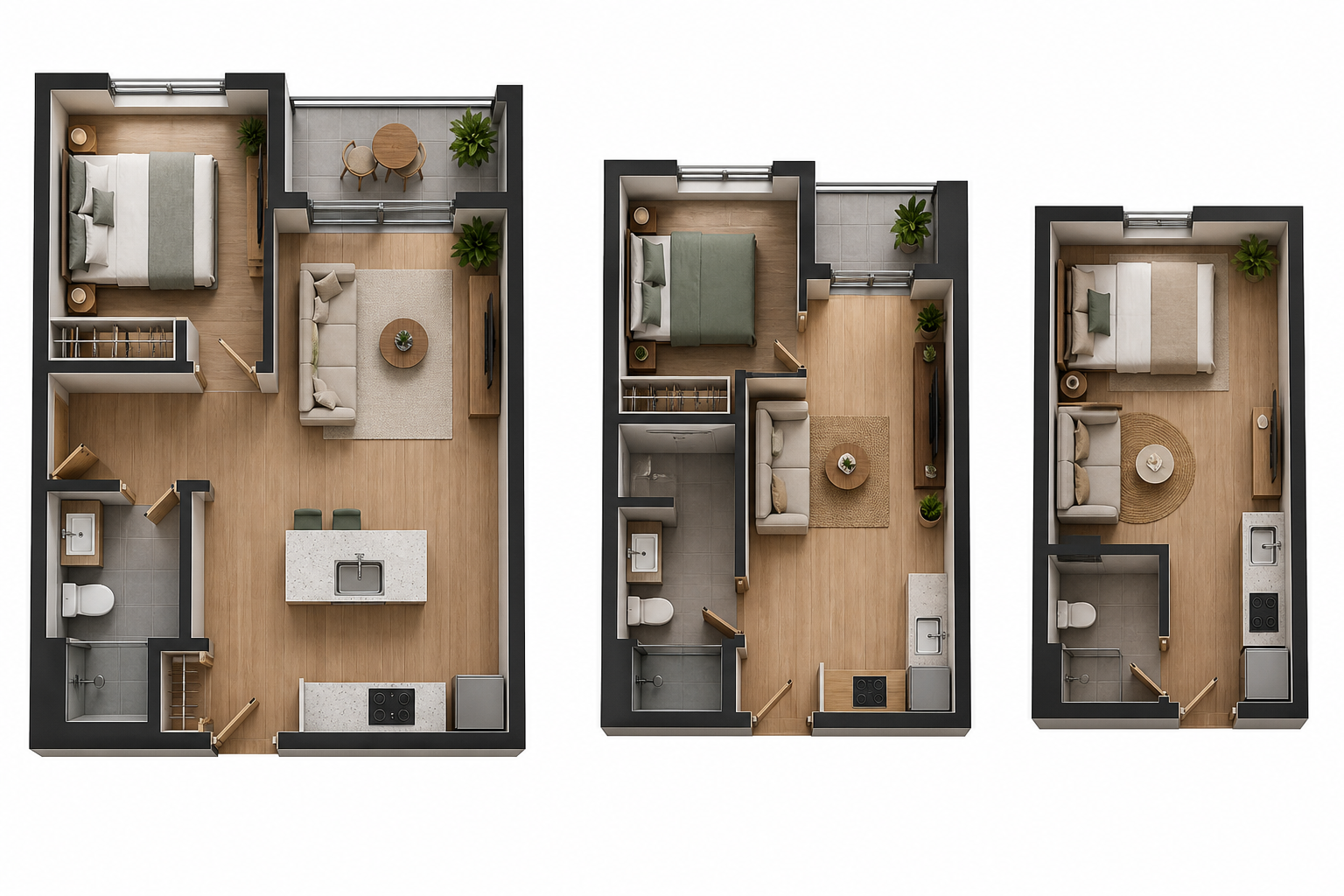
For a 35–40 m² studio or a company title art‑deco flat, common changes include:
- Lower maximum LVR – often 70–80% instead of 90–95%.
- Higher valuation scrutiny – valuers may add comments about marketability.
- Fewer lender options – many majors simply say no below certain sizes or for company title.
That directly affects your minimum deposit, borrowing power, and your ability to refinance later.
2. Minimum size rules: where lenders usually draw the line
2.1 Typical size thresholds (illustrative)
Policies change, but broadly you’ll see something like this for Sydney metro:
| Property type | Common internal size cut‑off* | Typical max LVR (OO) | Typical max LVR (Inv.) |
|---|---|---|---|
| Standard strata unit (≥50 m²) | ≥50 m² | Up to 90–95%** | Up to 90%** |
| Small unit (40–49 m²) | ≥40 m² | 80–90% | 80–90% |
| Micro / studio (35–39 m²) | ≥35 m² | 70–80% | 70–80% |
| Sub‑35 m² internal | <35 m² | 60–70% or declined | Often declined |
| Company title (varied sizes) | No fixed m² but complex title | 60–80% | 60–75% |
* Internal area usually excludes balcony and car space.
**Above 80% usually involves Lenders Mortgage Insurance (LMI) and tighter serviceability.
These are indicative only, but they show how a 5–10 m² difference can add tens of thousands to your deposit requirement.
2.2 Worked example: same buyer, different unit sizes
Assume you’re a professional couple looking at units in Randwick:
- Budget: around $700,000.
- After APRA’s 3% serviceability buffer, you comfortably qualify for a $630,000 loan.
Scenario A – 55 m² 1‑bed strata (standard)
- Max LVR: say 90% (OO, subject to LMI).
- Max loan: 90% × $700,000 = $630,000.
- Minimum deposit (excluding costs): $70,000.
Scenario B – 38 m² studio in Coogee
- Lender caps LVR at 80% due to size.
- Max loan: 80% × $700,000 = $560,000.
- Required deposit: $140,000.
Your income and profile haven’t changed. The property type alone doubles the deposit required to buy at the same price point.
That’s why it’s critical to align your pre‑approval and property type – see Build a Sydney Home Loan Pre‑Approval That Survives Auction Day.
3. Small strata schemes: charming blocks, quirky risk
Many Eastern Suburbs buyers love boutique art‑deco blocks in Waverley, Randwick and Woollahra. But small schemes come with unique lending angles.
3.1 What lenders worry about in small schemes
In a 6–12 unit block, issues that don’t matter much in a 100‑lot complex suddenly loom larger:
- Levy concentration – a big special levy (say $600k façade repair) split across 8 lots is $75k each.
- Governance risk – one difficult owner can stall decisions.
- Cash flow – if 1–2 owners fall behind on levies, the scheme’s finances may suffer.
Lenders and valuers look closely at:
- Strata reports and AGM minutes – any big works or disputes flagged.
- Sinking fund balance – relative to upcoming capital works.
- Insurance cover – is it adequately insured and up to date?
3.2 How this feeds into loan terms
Most lenders don’t have a black‑and‑white “small scheme” policy, but you’ll see effects like:
- More conservative valuation commentary on marketability.
- Closer scrutiny for high LVR applications (above 80%).
- Occasional requirement for lower LVR if big defects are noted.
If you’re comparing a boutique block with a larger complex, also read Buying into a Boutique Block vs High‑Rise: How Lenders See the Risk once that article is live – it will sit alongside this guide in the property‑type cluster.
The strategy continues below
You've seen the problem and the groundwork — now unlock the exact steps our CPA-certified brokers use, including 7 more sections. Enter your email for instant, free full access.
Free access. No spam — unsubscribe anytime. Your details stay confidential.
Frequently asked questions
What is the minimum apartment size banks will lend on in Sydney’s Eastern Suburbs?▾
Can I get 90–95% LVR on a studio apartment?▾
Are company title apartments harder to finance than strata?▾
Will buying a small or company title unit affect my ability to refinance later?▾
Is a studio or company title unit a good investment in the Eastern Suburbs?▾
How can self-employed borrowers buy a small studio or company title unit?▾
Speak with a specialist advisor
Confidential consultation, bespoke advice for your situation.