Article
Bridging Loans for Rose Bay Upgraders: Decide Whether to Keep or Sell
A decision‑grade guide for Rose Bay owners weighing a bridging loan to upgrade, and whether to keep, rent out or sell their current home first.
Key Takeaway
For Rose Bay upgraders, a bridging loan can work when peak debt repayments stay under roughly 35% of after‑tax income under a 3% rate buffer and you still hold at least 3–6 months of essential living costs plus all loan repayments in cash or offset. This article explains how bridging debt is calculated, compares keep vs rent vs sell scenarios, and outlines a practical one‑week plan to test your own numbers and choose a safer upgrade path.
Watch the short answer
Home loans when your wealth is in family trusts
Using trusts or companies This video explains how structures affect borrowing.
Read the transcript
If your wealth is tied up in family trusts and holding companies, a standard retail mortgage broker is going to slow you down. Complexity scares mainstream lenders. When your income flows through multiple entities, standard algorithms can't calculate your true servicing capacity. You need a team that speaks the language of complex corporate structures. We untangle your financials, working directly with your accountant to present your consolidated wealth to specialised credit managers who understand business logic. Don't let your smart tax structures ruin your lending potential. DM me the word 'STRUCTURE' for an expert review.
General information only, not personal advice. Your situation is assessed before any recommendation.
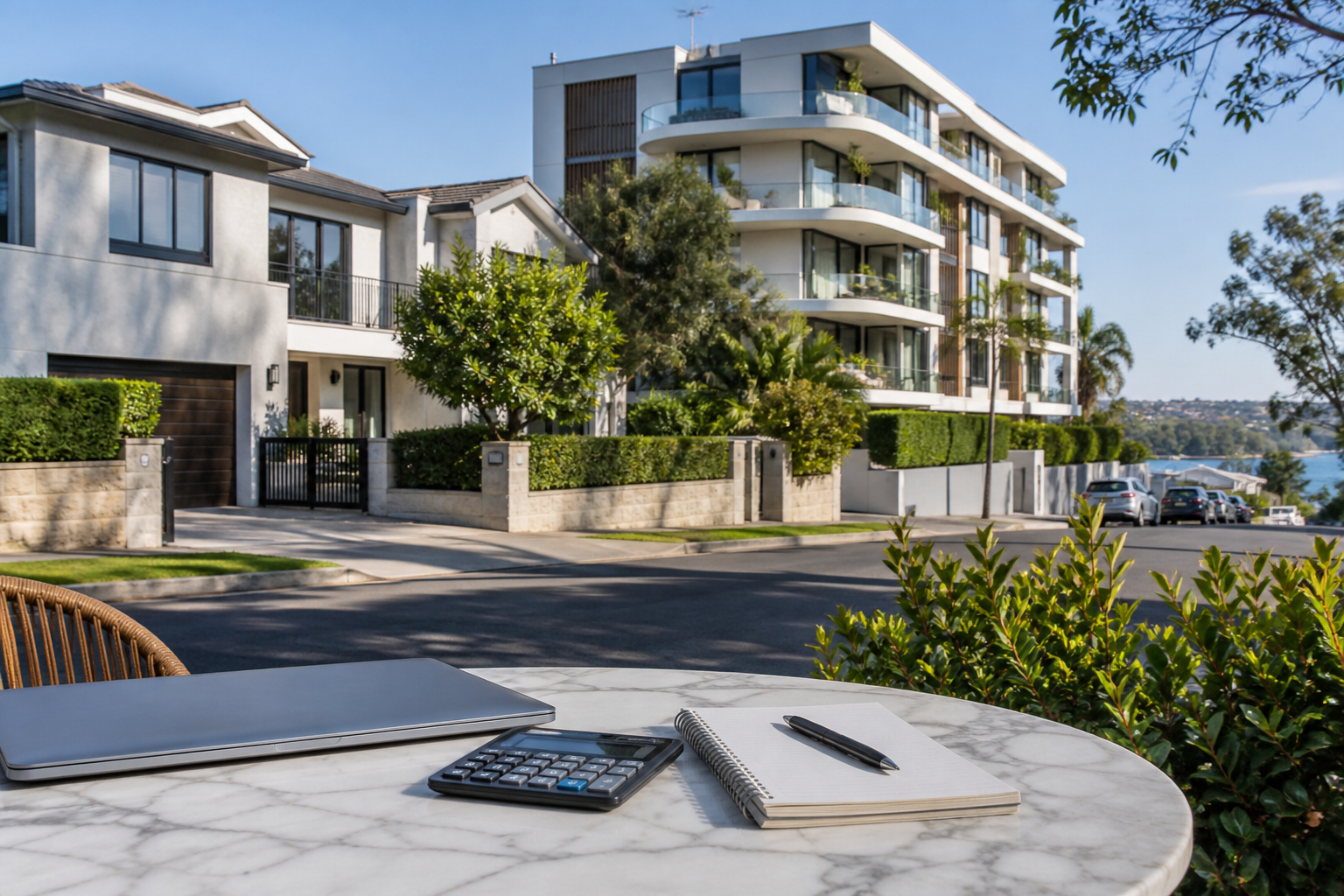
Upgrading in Rose Bay while keeping your current home – even briefly – means one thing: for a period, you’ll be carrying two properties. A bridging loan is simply a short‑term facility that lets you buy the new home before you sell the old one, but the real decision is bigger: should you keep your current place as an investment, rent it out for a while, or sell it cleanly and reduce risk?
This guide walks through how bridging loans work specifically for Rose Bay and the Eastern Suburbs, when they’re sensible, and the numbers that decide whether you keep, rent or sell first.
1. Bridging loans in Rose Bay – what they really are
A bridging loan is a short‑term loan that lets you:
- Buy your next home before selling your current one; and
- Temporarily carry “peak debt” across both properties.
Most mainstream lenders in Australia treat bridging as:
- A temporary facility, usually 6–12 months, sometimes up to 18 months for construction.
- Secured against both properties.
- Assessed using an APRA‑style 3% serviceability buffer above the actual rate.
Your “bridging amount” is essentially:
New purchase price + purchase costs – (expected sale price of current home – selling costs – any existing loan)
During the bridging period you might pay:
- Interest only on total peak debt; or
- Interest capitalised (added to the balance) if the lender allows and your equity is strong.
In Rose Bay, where price tags and volatility are higher than average, that peak debt number and your buffers matter more than the technical loan label.
2. The real question: keep, rent or sell first?
For most Rose Bay upgraders, the structure decision is bigger than the product decision.
You’re usually choosing between three paths:
- Sell first, then buy – lower risk, more certainty, potentially more renting and disruption.
- Buy with a bridging loan, then sell – less disruption, higher temporary debt, some market risk.
- Buy with a bridging loan and keep your current home as a long‑term investment – highest complexity and ongoing debt.
A bridging loan can be used in options 2 and 3. The question is: which option still lets you sleep at night under realistic worst‑case numbers?
If you haven’t already, it’s worth reading the Eastern Suburbs borrowing and upgrade pieces alongside this one:
- How Much You Can Borrow To Upgrade In Sydney’s Eastern Suburbs
- Planning a Safe Upgrade From Rose Bay Apartment to House
- Upgrade in Alexandria This Week: Bridging Loan or Sell‑Then‑Buy?
- Upgrade from Your First Green Square Apartment Without Regret
Those articles give the broader numbers; this guide applies them to Rose Bay bridging decisions.
3. How lenders calculate a bridging loan (with Rose Bay examples)
3.1 Key definitions
- Current home value – realistic sale price today, not peak 2021.
- Existing home loan – outstanding balance on current property.
- New home price – your target house, semi or larger apartment.
- Peak debt – total loan balance while you still own both properties.
- End debt – loan balance after you sell (if you plan to sell) and use proceeds to pay down.
3.2 Example 1 – Rose Bay apartment to house, sell after buying
Assume:
- Current Rose Bay apartment value: $1.8m
- Existing loan: $800k
- Selling costs (agent, marketing, legals): 2.5% ≈ $45k
- Target Rose Bay house: $3.2m
- Purchase costs (stamp duty, legals, inspections): ≈$180k (illustrative)
Step 1 – Net sale proceeds (current home)
- Sale price: $1.8m
- Less selling costs: $45k
- Less existing loan: $800k
= $955k net proceeds once sold.
Step 2 – Total cost of new home
- Purchase price: $3.2m
- Purchase costs: $180k
= $3.38m total cost.
Step 3 – Peak debt
Most lenders will set peak debt as:
- Existing loan: $800k
- Plus new property purchase + costs: $3.38m
= $4.18m peak debt.
Once you sell and use the $955k:
- End debt ≈ $4.18m – $955k = $3.225m.
The key question: can you really afford a $3.225m loan when stress‑tested at rates 3% higher than today, and still keep at least 3–6 months of essential expenses and repayments in cash or offset? (See the Rose Bay borrowing walkthrough at /insights/can-you-afford-rose-bay-home-practical-numbers-walkthrough.)
3.3 Example 2 – Keep the apartment as an investment
Same facts, but now you keep the $1.8m apartment.
Your structure might look like:
- Loan A – new Rose Bay house: $3.2m + $180k costs = $3.38m
- Loan B – existing apartment: $800k (may be interest‑only, partly deductible once rented)
Peak debt = $4.18m again – but now there is no sale event to reduce it.
You’ll rely on:
- Rent from the apartment (say $1,500–$1,700 per week before costs);
- Your income; and
- Your buffers.
This is where a lot of households underestimate the strain. You’ve effectively locked in the peak debt as permanent debt.
4. Rose Bay market context: why timing and buffers matter
Woollahra LGA (covering Rose Bay) is a high‑income, high‑debt area with:
- Large shares of professionals and business owners;
- High rents and mortgages compared with Greater Sydney (ABS, Woollahra Community Profile);
- An older age profile and stronger financial buffers on average.
Layer on top:
- RBA cash rate at 4.35% (August 2026 decision), with the Board still prepared to raise if inflation surprises higher.
- CPI still above the 2–3% target band (ABS, June 2026 CPI), with housing a major driver.
That means anyone contemplating two properties at once in Rose Bay needs to be conservative:
- Stress‑test at least 3% above current variable rates.
- Assume higher‑than‑expected holding costs (insurance, rates, maintenance, strata).
- Protect buffers – across multiple articles we’ve found 6–12 months of essential living costs plus all loan repayments in cash or offset is a prudent target for geared professionals and business owners.
5. Bridging vs sell‑then‑buy vs long settlement
5.1 Comparing your main options
Here’s a simplified comparison for a typical Rose Bay upgrader.
| Option | What it involves | Main pros | Main cons | When it suits |
|---|---|---|---|---|
| Sell first, then buy | List, sell, rent or do long settlement, then buy new home | Clear budget, no peak debt, lower risk | May need temporary accommodation, risk of prices moving while you sit out | Risk‑averse, thin buffers, self‑employed with lumpy income |
| Bridging, then sell | Buy first with bridging loan, sell soon after | Less disruption, can secure ideal house, stay in area/school zone | Higher peak debt, interest on two properties, sale‑price risk | Strong equity, good income, can sell quickly if needed |
| Bridging and keep | Buy new home, keep former home as investment | Build portfolio, benefit from long‑term growth, rental income | Highest long‑term debt, cashflow strain, vacancy/maintenance risk | High reliable income, strong buffers, investment mindset |
In Alexandria we’ve shown how bridging can work if you’re disciplined about timelines and buffers (/insights/bridging-loans-vs-sell-then-buy-alexandria-one-week-plan). In Rose Bay, price points and loan sizes are larger, so the room for error is smaller.
5.2 When bridging is too risky
Bridging starts to look unsafe if:
- Peak debt repayments > 35–40% of your after‑tax income when stress‑tested 3% above current rates.
- You’d be left with less than 3–6 months of essential living costs plus loan repayments in cash or true offset after settlement.
- You need a top‑of‑market sale price to make the numbers work.
- Your job or business income is volatile and hard to verify.
For self‑employed professionals and business owners, we generally want to see 6–12 months of stressed costs and repayments in offset after settlement, not just 3 months.
The strategy continues below
You've seen the problem and the groundwork — now unlock the exact steps our CPA-certified brokers use, including 9 more sections. Enter your email for instant, free full access.
Free access. No spam — unsubscribe anytime. Your details stay confidential.
Frequently asked questions
How does a bridging loan work for Rose Bay homeowners?▾
Is it better to sell my Rose Bay home before buying the next one?▾
Can I keep my Rose Bay apartment as an investment when I upgrade to a house?▾
What are the main risks of a bridging loan in the Eastern Suburbs?▾
How much buffer should I have if I’m using a bridging loan?▾
How is tax affected if my former Rose Bay home becomes an investment?▾
Can self‑employed borrowers in Rose Bay still get a bridging loan?▾
Speak with a specialist advisor
Confidential consultation, bespoke advice for your situation.