Article
Bronte Apartments Explained: Old Walk‑Ups, New Builds and Bank Rules
Buying or refinancing a Bronte apartment? This guide breaks down how banks treat old walk‑ups versus new builds, how strata size and building risk change your borrowing power, and the checks to run this week before you sign a contract or order a valuation.
Key Takeaway
Banks assess Bronte apartments very differently depending on age, density and building quality, which can change maximum LVRs by 10–20 percentage points and force larger deposits. Older walk‑ups often benefit from stronger land value and fewer postcode restrictions, while some new or high‑density builds face policy caps, valuation haircuts and defect checks. Buyers should compare total housing cost, stress‑test repayments, and confirm lender treatment of the specific building before signing a contract or refinancing.

Bronte apartments sit in one of Sydney’s tightest, most expensive coastal pockets – but banks don’t see every block the same way. Old walk‑ups, boutique new builds and denser complexes can all sit within a few hundred metres of each other, yet attract very different lending rules, valuations and deposit requirements.
In plain terms: older, solid walk‑ups in Bronte often give you more flexible bank policies and sometimes stronger long‑term value, while some newer or higher‑density stock can mean bigger deposits, more questions and slower approvals. Knowing which is which before you sign a contract is the difference between a smooth settlement and a scrambled Plan B.
Below is a decision‑grade guide you can use this week, whether you’re buying, refinancing or planning your next move.
1. How banks look at Bronte apartments overall
Bronte sits in a high‑income, tightly held part of the Eastern Suburbs. Lenders generally like that: strong incomes, deep buyer demand and limited supply. But price and density bring their own risk rules.
1.1 Key things lenders care about in Bronte
When a bank looks at a Bronte apartment, it’s weighing three broad buckets of risk:
- Borrower risk – your income stability, debts, living costs and buffer.
- Security risk – the property itself: age, location, density, defects, size, use.
- Portfolio risk – postcode concentration, building concentration and total exposure.
Bronte often scores well on borrower quality and long‑term demand. But some lenders actively flag parts of Sydney’s Eastern Suburbs on postcode risk lists, especially for high‑density stock, jumbo loans or very small units. That can mean lower LVR caps, more conservative valuations or tougher income shading. (See the deeper overview in /insights/eastern-suburbs-postcode-risk-lists-where-banks-get-cautious.)
1.2 Old walk‑ups vs new builds: the headline difference
For Bronte apartments, the big lending split is usually:
- Older low‑rise walk‑ups (often 1960s–80s, 3–4 storeys, no lift) – usually small‑ to mid‑size strata, higher land value component per unit, proven performance.
- Newer or redeveloped stock – can range from boutique luxury blocks to larger complexes. Finishes are shinier, but policy risk (and build‑quality uncertainty) often runs higher.
Banks are not sentimental: they care about resale and risk, not how polished the lobby looks. That’s why older blocks often look better on a credit officer’s screen than a just‑finished complex, especially if the new building is heavier on density or has any mixed‑use elements.
2. Old Bronte walk‑ups: why banks often like them
Older Bronte walk‑ups are the backbone of the suburb’s apartment stock: brick, low‑rise, often with simple common property and healthy land content per lot.
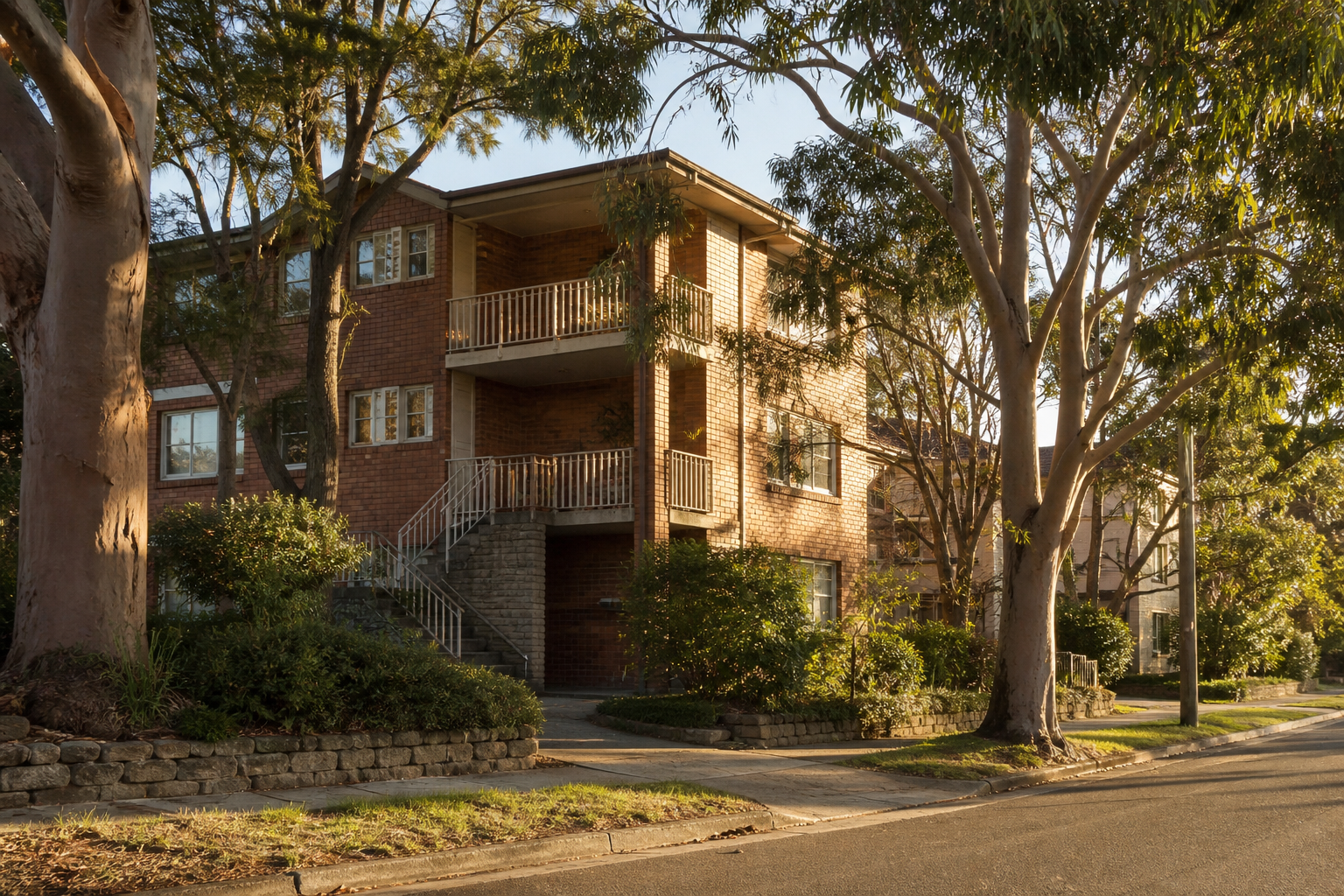
2.1 Lending positives of an older walk‑up
Most lenders see a well‑maintained, standard‑layout walk‑up as vanilla security, which is exactly what you want:
- Fewer policy flags – typically not on high‑density or mixed‑use watchlists.
- Higher land value per unit – land appreciates; buildings wear out. Old Bronte blocks often sit on prime land with fewer units sharing it.
- Proven demand and price history – valuers have comparable sales going back decades.
- Simpler strata – fewer lifts, gyms, pools and complicated mechanical services that can blow out levies.
That often translates to:
- Higher maximum LVRs (e.g. 80–90% for strong borrowers, subject to policy).
- More lender choice – more banks willing to compete on this kind of stock.
- Smoother valuations – fewer valuation shortfalls versus the contract price.
You can see similar reasoning in Double Bay/Bellevue Hill, where older stock often beats glossy new luxury builds on total risk, not just charm (see /insights/old-blocks-vs-new-luxury-builds-double-bay-bellevue-hill-finance).
2.2 Practical issues to check on older Bronte blocks
Old doesn’t mean easy. Banks and valuers will look closely at:
- Building condition – concrete spalling, waterproofing, old plumbing or wiring.
- Strata records – history of leaks, structural reports, fire compliance, asbestos.
- Planned works – lifts being added, balconies being enclosed, major remediation.
- Financials – size of the capital works fund, unpaid levies, insurance.
As a buyer or refinancer, your job this week is to:
- Order a thorough strata report – not just the last AGM minutes.
- Scan for major defect history or special levies in the past 5–10 years.
- Ask the agent about upcoming works and obtain any reports.
From a risk point of view, what really matters is total housing cost at a stressed interest rate: repayments plus levies plus basic running costs, not just the loan. That’s the metric that matters more than the pure purchase price when comparing old vs new (see the logic discussed in /insights/old-blocks-vs-new-luxury-builds-double-bay-bellevue-hill-finance).
2.3 Worked example: servicing an old Bronte walk‑up
Assume:
- Purchase price: $1.6m (2‑bed walk‑up)
- Deposit: 20% ($320,000) plus costs
- Loan: $1.28m, 30‑year P&I, interest rate 6.2% p.a. (illustrative only)
Approximate monthly repayment:
- At 6.2%: ~$7,800 per month
- Stressed at 8.2% (roughly in line with APRA’s 3% buffer expectation): ~$9,650 per month
If strata levies are $1,200 per quarter (older, simpler block), your stressed total housing cashflow might be around $10,450 per month including strata, insurance and basic utilities.
The key question: Can your after‑tax income handle that comfortably while still holding a 6–12 month buffer in cash/offset? For geared professionals and business owners in the Eastern Suburbs, that buffer is a prudent minimum, not a luxury.
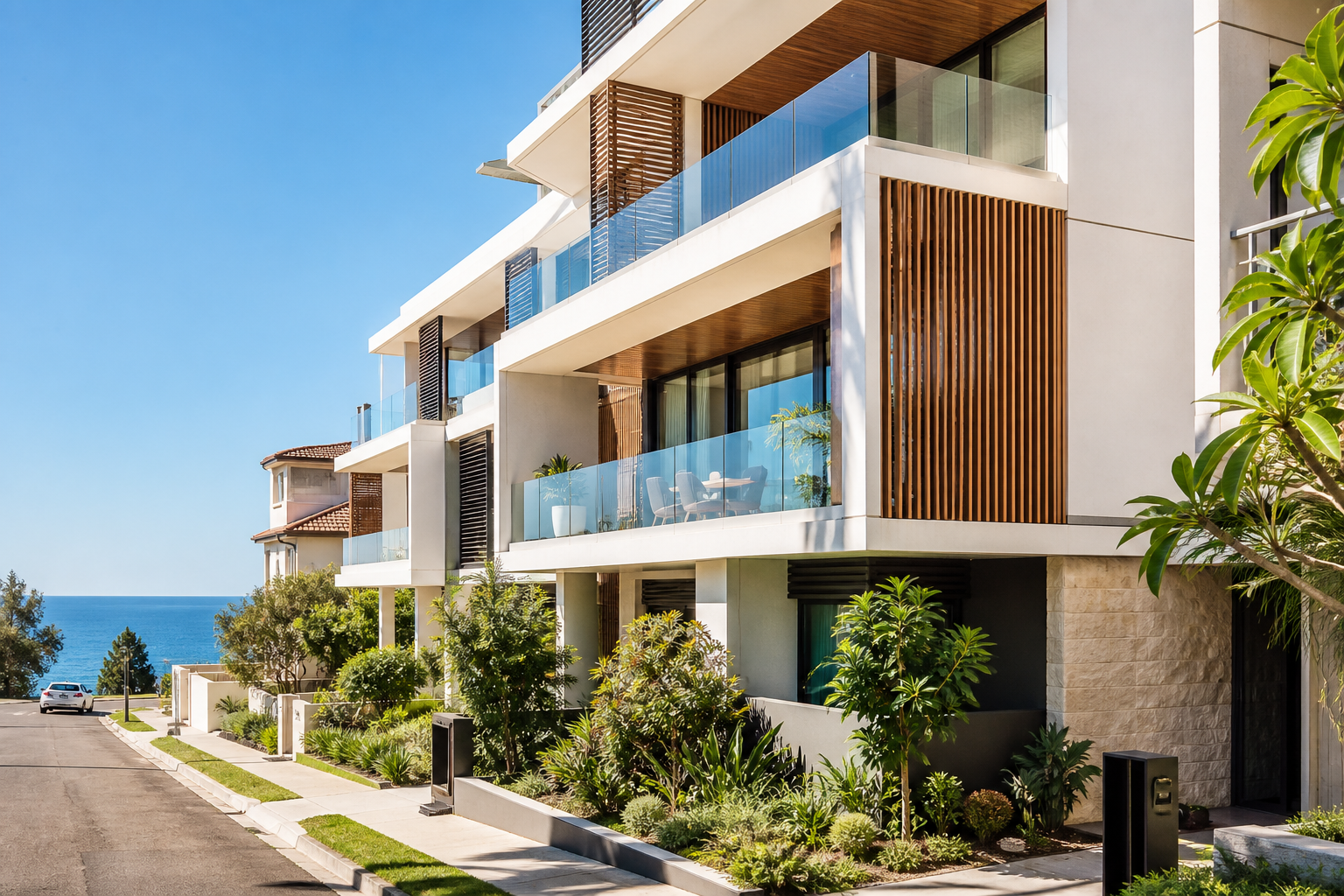 New boutique builds can be attractive but face different lending scrutiny. ### 3.1 Why newer builds attract more questions Even when a building looks perfect, credit teams know the risk profile is different: - Defect risk – waterproofing, cladding, structural and fire safety issues sometimes take years to emerge. -…
The strategy continues below
You've seen the problem and the groundwork — now unlock the exact steps our CPA-certified brokers use, including 6 more sections. Enter your email for instant, free full access.
Free access. No spam — unsubscribe anytime. Your details stay confidential.
Frequently asked questions
Are older Bronte walk‑up apartments easier to finance than new builds?▾
Do banks treat small Bronte strata blocks differently to larger complexes?▾
What deposit do I need for a Bronte apartment as an investor?▾
How do strata levies affect my borrowing power on a Bronte unit?▾
Is it harder for self‑employed borrowers to get a loan for a Bronte apartment?▾
Can negative gearing changes make new Bronte apartments a better choice than old ones?▾
Speak with a specialist advisor
Confidential consultation, bespoke advice for your situation.