Article
Choosing Old Blocks or New Luxury Builds in Double Bay and Bellevue Hill
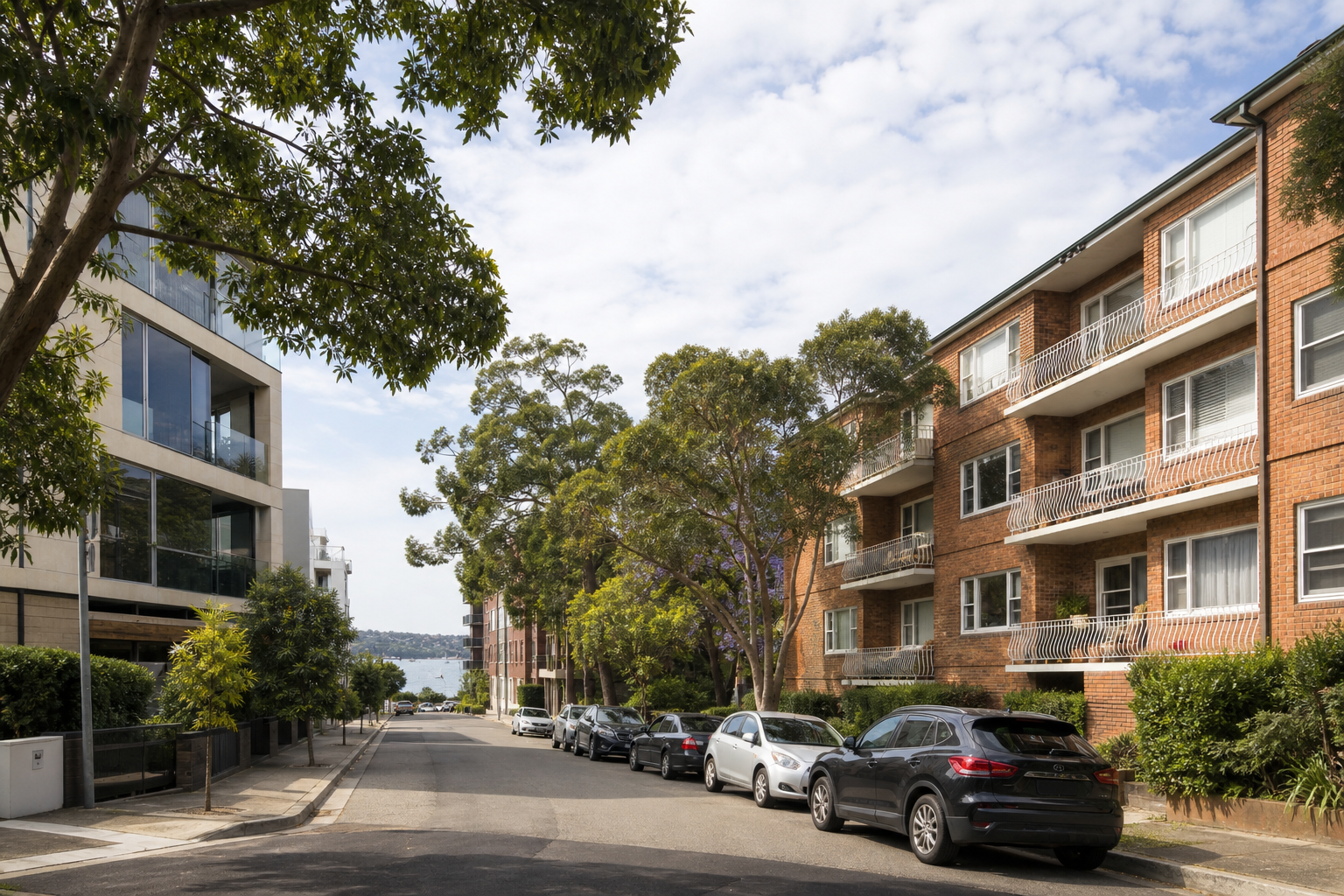
Old character blocks and new luxury builds in Double Bay and Bellevue Hill look similar on realestate.com.au, but banks treat them very differently. This guide breaks down how each type affects borrowing power, cashflow, risk and structure so you can make a decision this week with eyes open.
Key Takeaway
Old blocks and new luxury builds in Double Bay and Bellevue Hill are financed very differently, with lenders often favouring well‑located older strata for valuation stability while tightening policy on some new high‑spec projects. Key issues include stricter LVRs in high‑density or investor‑heavy buildings, rising strata and remediation risks in ageing stock, and serviceability constraints from APRA’s 3% buffer. Buyers should test both scenarios at stressed rates, review strata and defect risk carefully, and align loan structure with tax and cashflow goals before exchanging.

Buying in Double Bay or Bellevue Hill, you’re usually weighing two very different options:
- An older, often unrenovated block with character and good bones.
- A glossy new or near‑new luxury development with lifts, concierge and a big strata budget.
From a lender’s point of view, those aren’t just different aesthetics. They’re different risk profiles, valuation behaviours and policy buckets – which means your borrowing power, deposit requirement and loan structure can shift meaningfully depending on which path you take.
In this guide, we’ll unpack how banks and valuers actually see old blocks versus new luxury builds in Double Bay and Bellevue Hill, and how that should shape your finance plan this week.
Quick answer: How finance differs for old vs new in the East
At a high level, banks often treat well‑located older blocks in Double Bay and Bellevue Hill as safer security than some new luxury projects, because land value and proven demand underpin long‑term prices. New builds can attract tighter lending if they are high‑density, investor‑heavy or untested, or if there’s concern about defects or oversupply.
For you, that usually means:
- Old blocks – more forgiving valuations, more lender options, but closer scrutiny of strata, building works and cashflow for upcoming capital works.
- New luxury builds – higher price points, potential for tougher valuations, sometimes lower maximum LVRs and more focus on building profile and buyer mix.
- Your structure and buffers often matter more than the rate – especially for self‑employed clients, geared professionals and investors juggling multiple loans.
If you remember nothing else: the same household can often safely borrow different amounts depending on whether the target is an old two‑ or three‑storey block or a new prestige development with lifts, pools and concierge.
1. What we mean by “old blocks” and “new luxury builds” here
1.1 Typical old‑block profile in Double Bay and Bellevue Hill
In this article, “old blocks” usually means:
- Walk‑up or three‑storey buildings, roughly 1950s–1980s.
- 6–24 units per block, sometimes larger but not high‑rise.
- No lift, limited common facilities – maybe a shared garden or parking.
- Mix of owner‑occupiers and long‑term investors.
- Often very strong land component per unit – especially in Bellevue Hill.
These assets are common across Woollahra’s medium‑density streets and sit in a high‑income, highly educated local government area. In 2021, over 55% of Woollahra residents held a Bachelor degree or higher, versus around one‑third across Greater Sydney, which often translates to stable demand and resilience in tougher markets.
1.2 Typical new luxury apartment profile
“New luxury builds” for this guide generally means:
- Built or comprehensively refurbished in roughly the last 10–15 years.
- Often $3m+ price tags, sometimes well north of that.
- Premium inclusions – lifts, secure parking, concierge, pools, gyms, high‑end finishes.
- Smaller boutique blocks with big floorplates, or mid‑rise complexes with extensive common facilities.
- Higher strata levies, especially where there’s extensive common infrastructure.
Some are boutique blocks closer in spirit to older strata; others look more like high‑end versions of high‑density developments we discuss in detail in /insights/high-density-small-studio-apartments-extra-lending-rules.
1.3 Why lenders distinguish between them
Banks and valuers aren’t obsessed with the age of the building. They’re focused on:
- Resale demand in good and bad markets.
- Construction quality and defect risk.
- Strata health: adequacy of sinking fund, special levies, disputes.
- Density and investor concentration.
- Price volatility versus land content.
Old blocks often score highly on land content and proven demand. New luxury builds can score highly on appeal, but may be flagged for valuation and policy risk if they’re in a cluster of recent developments, have complex facilities or sit near the edges of lender appetite.
2. How banks look at eastern suburbs apartments by building type
2.1 Valuation behaviour: old vs new
Valuers are conservative by design. They lean on recent comparable sales and adjust for:
- Floor area.
- Outdoor space and parking.
- Renovation standard and views.
- Building profile and demand.
Older blocks:
- Often have a long run of comparable sales, so valuers can evidence numbers easily.
- Land component per unit can anchor values even when finishes are dated.
- Renovated vs unrenovated units give a clear spectrum for comparison.
New luxury builds:
- Fewer directly comparable resales, especially in boutique blocks.
- If a building is still selling developer stock, valuers may shade prices down to reflect incentives or staging.
- In soft patches, prestige price tags can be more volatile than good‑quality older stock.
For buyers, that can translate to more conservative valuations on a glossy new build than you expected, even when the purchase price looks reasonable on paper.
2.2 Policy lenses banks use
Banks apply several policy lenses that play out differently for old and new stock. Some of these are covered in more detail in /insights/apra-buffers-jumbo-rules-lmi-bands-eastern-suburbs.
Key lenses include:
- APRA 3% serviceability buffer – they test repayments at roughly 3% above the actual rate.
- Jumbo loan thresholds – tighter rules for large loans, often from about $1.5m–$2m+.
- Postcode categories – some buildings or blocks within a postcode are flagged as higher risk.
- LVR/LMI bands – maximum loan‑to‑value ratios depending on property type and risk.
Old blocks in Double Bay/Bellevue Hill are often in the “standard residential” bucket if they meet size and quality criteria.
New luxury builds can fall into:
- Standard policy (boutique, well‑located, proven demand), or
- A quasi‑high‑density / prestige bucket with tighter LVRs and more conservative valuations.
2.3 Size and density considerations
While this article focuses on quality apartments rather than micro units, some Double Bay and Bellevue Hill stock edges into territory we cover in /insights/borrowing-small-strata-studios-company-title-eastern-suburbs.
Red flags for tighter lending include:
- Internal area under ~50–55m² (excluding balcony/parking) for many lenders.
- Buildings with 100+ units or clearly part of a high‑density cluster.
- Very high investor concentration, especially in brand‑new stock.
Old walk‑ups in the East rarely trip density thresholds. Some new luxury developments do, especially when part of larger precincts.
3. Side‑by‑side: finance differences old vs new
3.1 Comparison table: how lenders usually treat each
Indicative only – individual deals can differ.
| Factor | Older block (walk‑up / small strata) | New luxury build (boutique / mid‑rise) |
|---|---|---|
| Typical LVR (OO, strong profile) | Up to 90–95% with LMI (subject to price/jumbo rules) | Often 80–90%; some lenders cap at 80% for higher‑risk profiles |
| Valuation risk vs purchase price | Generally lower if comparables exist | Higher, especially where limited resales or developer incentives |
| Postcode policy flags | Often standard residential | Can be flagged if part of high‑density cluster or prestige pocket |
| Strata focus | Capital works, special levies, building age | Defect risk, builder reputation, strata budgeting |
| Insurance concerns | Older wiring, common services, building compliance | Defects, cladding (if relevant), construction methods |
| Rentability (investment view) | Proven rental demand, simpler tenant expectations | Strong demand but more sensitive to economic cycles at high rents |
| Lender choice | Wide, provided size/condition acceptable | Narrower where boutique/high‑end, or in flagged complexes |
3.2 Worked example: how valuation risk bites differently
Assume:
- Purchase price: $3.0m
- Location: similar quality street in Double Bay
- Buyer: high‑income professional couple, owner‑occupier
Scenario A – Renovated 1970s block, 12 units
- Bank valuation comes in at $3.0m in line with recent comparable sales.
- LVR approved at 85% (no LMI due to lending tier / policy in this example).
- Loan = $2.55m; required cash (deposit + costs) ~ $600k–$650k.
Scenario B – New luxury build, boutique block, few resales
- Valuer, being conservative, assesses value at $2.85m.
- Preferred LVR capped at 80% for this building.
- Loan = 80% × $2.85m = $2.28m.
- Buyer must tip in ~$720k–$800k.
Same couple, same suburb, similar out‑of‑pocket purchase price – but the new build forces a lower loan and bigger cash contribution if the valuation comes in light and the lender caps LVR.
4. Strata, defects and ongoing costs: the hidden finance levers
4.1 Old blocks: capital works and special levies
With older buildings, lenders and sensible buyers worry about:
- Roof replacements.
- Plumbing and wiring upgrades.
- Balcony remediation and waterproofing.
- Fire‑safety upgrades to meet current codes.
If the sinking fund is under‑resourced, special levies can run into tens or hundreds of thousands per lot over a decade. That doesn’t stop banks lending, but it does affect your real borrowing power, particularly in a market where around 28% of mortgage holders are already at risk of mortgage stress according to recent Roy Morgan research.
4.2 New builds: defect and litigation risk
The main risk in new luxury projects is not that levies are high now – often they’re artificially low in the first few years – but that they blow out later due to:
- Construction defects.
- Waterproofing, fire‑stopping and cladding issues.
- Legal disputes with builders or developers.
A building with active litigation and large special levies can see valuations shaded or lender appetite reduced.
4.3 Strata levies and cashflow
Older blocks with limited facilities often have more modest levies. New luxury builds can run into five figures per annum per lot, once:
- Concierge salaries.
- Pool/gym maintenance.
- Complex plant and equipment.
are fully costed.
From a bank’s view, they apply a standard living‑expense benchmark (HEM) rather than your exact levies. But from a risk view, high levies tighten your real cashflow margin once you layer on loan repayments stress‑tested with APRA’s buffer.
4.4 Table: typical strata cost profile
| Feature | Older walk‑up (no lift) | New luxury build (lift, pool, concierge) |
|---|---|---|
| Indicative quarterly levies | $1,200–$2,000 | $3,000–$6,000+ |
| Sinking fund strength | Variable – must review reports | Often low early, rises sharply post‑defects period |
| Future capital works profile | Roof, services, façade over time | Plant replacement, façade, high‑spec finishes |
| Impact on finance | More about buyer’s cash buffer | More about long‑term affordability and resale risk |
Numbers are broad ranges, but the relative difference is what matters.
The strategy continues below
You've seen the problem and the groundwork — now unlock the exact steps our CPA-certified brokers use, including 10 more sections. Enter your email for instant, free full access.
Free access. No spam — unsubscribe anytime. Your details stay confidential.
Frequently asked questions
Do banks prefer old or new apartments in Double Bay and Bellevue Hill?▾
Will I always need a bigger deposit for a new luxury build?▾
Are strata levies on new luxury buildings a problem for loan approval?▾
How do defect issues in new buildings affect finance?▾
Are older walk‑up blocks safer for investors in the long run?▾
How should a downsizer choose between an old and a new building?▾
Does buying in a company or trust change the old vs new decision?▾
What’s the most important step to take this week if I’m unsure?▾
Speak with a specialist advisor
Confidential consultation, bespoke advice for your situation.