Article
How To Safely Finance Buying Next Door Or In The Same Building
Thinking about buying next door or in the same building? This guide shows how to coordinate finance across related properties, manage lender exposure limits and protect family relationships and tax outcomes before you sign anything.
Key Takeaway
Buying a neighbouring property or another unit in the same building is viable but adds complexity because lenders look at exposure limits, postcode risk lists, and combined debt-to-income ratios across all related properties. In Australia, most banks apply at least a 3% serviceability buffer and may cap LVRs at 70–80% in higher-risk blocks. Coordinating structures, buffers and lender mix before signing contracts helps protect borrowing power, tax outcomes, and family relationships.
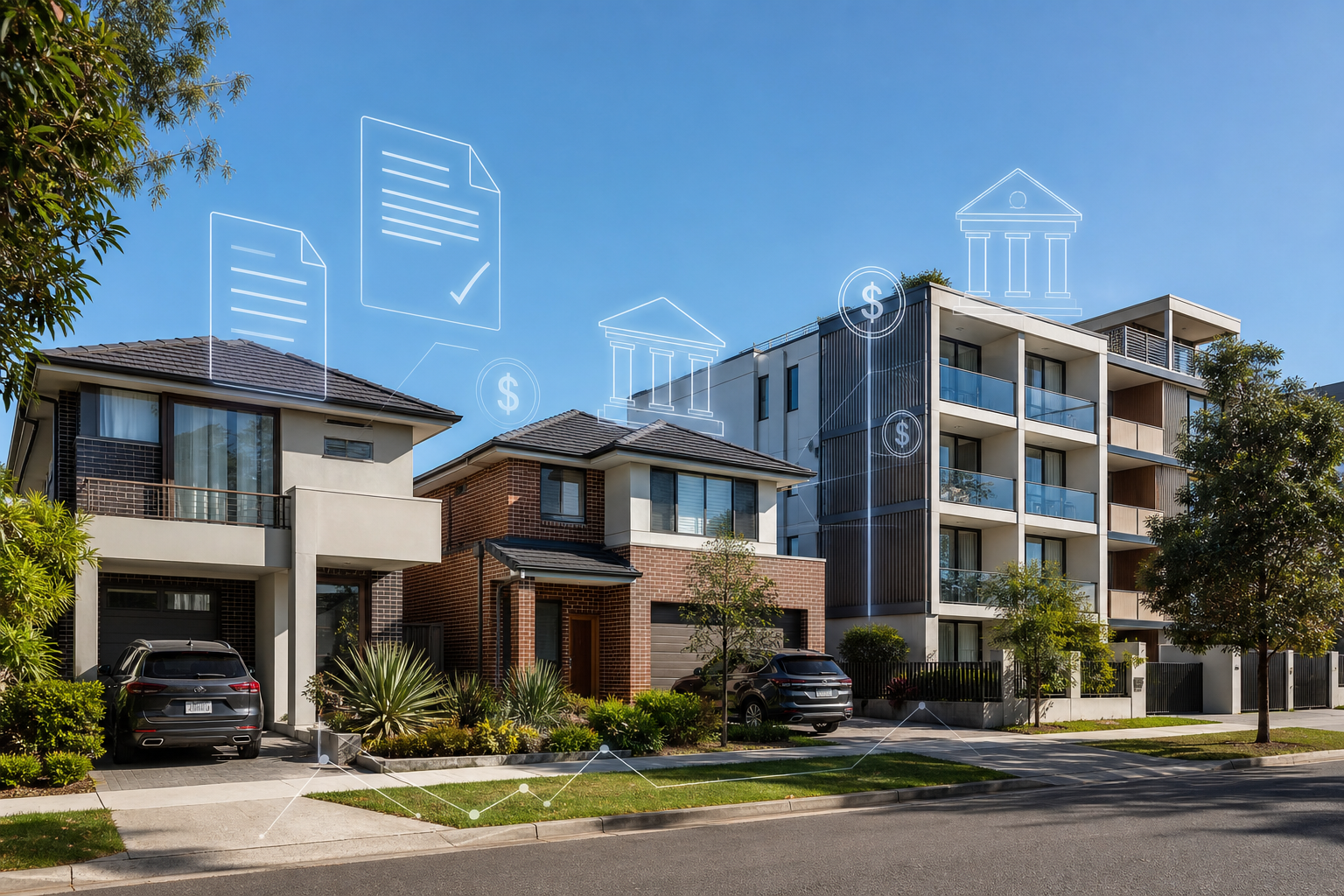
Buying a second place next door or in the same building sounds simple – same street, same strata, same family.
In practice, it changes how lenders view your risk, how much you can borrow, and how easily you can move or refinance later. You need to think in clusters of properties, not one property at a time.
Buying a neighbouring house, terrace or unit can absolutely work – for a family compound, combining apartments, or locking in another investment in a building you already know. But you must coordinate the finance, titles and timing, or you risk hitting lender exposure limits, getting stuck with cross‑collateralised loans, or creating messy tax problems you can’t easily unwind.
This guide steps through the key decisions for Australian borrowers looking to buy next door or in the same building and what you can do this week to set it up safely.
1. How lenders see related properties in the same street or building
When you buy next door or in the same block, lenders don’t just see “another loan”. They see concentration risk:
- A big share of your wealth tied to one micro‑market.
- Correlated values – if one drops, they probably all drop.
- Higher loss risk if there’s a serious building or neighbourhood issue.
1.1 Exposure limits and postcode risk lists
Most banks have internal rules limiting how much total exposure they’ll take in one:
- Building (especially high‑rise apartments)
- Development (e.g. a new estate)
- Postcode or micro‑area
For example (illustrative only):
- A bank might cap total lending to 10–15% of a building’s total value.
- They might restrict lending in postcodes with a history of settlement issues or oversupply, like dense unit corridors.
If you already own in a building or estate, your next purchase may push the bank close to their own comfort threshold.
This is exactly the issue discussed in more detail for inner‑south Sydney apartments in How Green Square and Mascot Lending Rules Differ From Harbourside Homes – lenders don’t treat every postcode or building equally.
1.2 One borrower, many properties: how risk is aggregated
Lenders also look at your personal concentration:
- How much of your net worth is in one postcode or building
- Your debt‑to‑income (DTI) ratio across all loans
- Your ability to hold everything if rents fall or rates rise
The APRA‑guided 3% serviceability buffer still applies: banks test whether you can afford repayments at around 3 percentage points above the actual rate.
If you’re already borrowing near your limit, adding a next‑door or same‑building purchase can quickly push you over the line.
1.3 SMSF, trust or company: still the same risk group
Using:
- an SMSF to buy another unit in your building, or
- a family trust or company to buy next door
…doesn’t magically diversify risk. Banks and regulators treat your group as one risk and cashflow system.
That’s why, when mixing SMSF and trust purchases, you want each entity to have a clear non‑tax role, as explained in SMSF and Family Trust Together for Property: What Still Works Now.
2. Why people buy next door or in the same building
Motivation matters because it drives structure, lender choice and risk.
2.1 Common reasons
-
Family compound / multi‑generational living
Parents, adult children or siblings buying neighbouring homes or units to live close, share care, or future‑proof ageing. -
Combining apartments
Buying two (or more) units side‑by‑side or above/below to create a single larger dwelling. See the worked path in Combining Two Green Square Units: Finance, Titles and Timing. -
Investment in a building you know
You already own in a block, like the strata, and want another for rent or future kids. -
Land assembly for redevelopment
Neighbours buying together to create a more valuable site, or one owner slowly collecting adjoining titles. -
Business plus home
Buying next door as a home office, clinic, or future commercial conversion while keeping current home.
Each motive has different implications for:
- Tax (main residence exemption vs investment, GST for some commercial use)
- LVR and lender appetite
- Future exit strategy (sell individually vs as a package)
2.2 The hidden costs of personal concentration risk
The ABS building approvals data shows big swings between high‑density and detached housing approvals depending on the cycle. If your properties are all in the same building type and area, your exposure to one local downturn is amplified.
You can’t control macro cycles, but you can control how much of your net worth is tied to one block or street.
A simple rule of thumb:
- Try to avoid having >50–60% of your total property value in one building or postcode, unless there is a very deliberate, understood reason.
This is where using different lenders across a portfolio helps, covered in How To Use Different Lenders Strategically Across Your Portfolio.
3. Lender rules for same‑building or next‑door purchases
3.1 LVR bands and security type
LVR (loan‑to‑value ratio) caps change depending on property and postcode risk.
Indicative patterns you may see (illustrative only):
| Scenario | Typical Max LVR* | Notes |
|---|---|---|
| House next door in standard metro suburb | 90–95% (with LMI) | Stronger if owner‑occupied, full‑doc income |
| Second unit in small low‑rise block | 80–90% | Some lenders cap total exposure per borrower per building |
| Second or third unit in high‑rise or flagged postcode | 70–80% | Lower LVR, tougher valuation, more scrutiny |
| SMSF buying another unit in same complex | 70–80% | Stricter SMSF LVR rules and liquidity tests |
*Always subject to policy at the time, your income, and valuation.
For dense unit corridors, lenders may apply strata size minimums, extra valuation checks and lower LVRs, as outlined in the Green Square/Mascot article noted above.
3.2 Cross‑collateralisation: the silent trap
If you already have a loan with a bank on Property A and now you buy next door (Property B), the easiest option is often:
- increase the existing loan and
- secure both properties under one or two cross‑secured facilities.
This looks simple but can cause problems later:
- Harder to sell one property without renegotiating the whole package.
- Valuation issues on one property can block changes on another.
- You can’t easily move one property to a different lender for a sharper rate.
In family compound or multi‑generational setups, cross‑collateralisation across different family members’ homes can be disastrous if one party has financial trouble.
The safer pattern, also emphasised in How To Finance A Family Compound Or Multi‑Generational Property, is:
- One primary loan per property or purpose, with clear splits
- Minimal or no cross‑collateralisation unless there is a very specific, conscious reason
3.3 DTI caps and living cost assumptions
Most banks now run with informal or formal DTI caps (total debt ÷ gross income). For many mainstream borrowers, 6× income is a common soft ceiling, sometimes higher for certain professional cohorts.
When you add a neighbouring property, the bank:
- Aggregates all your personal, investment and sometimes business debts
- Uses HEM‑based minimum living costs, even if your actual costs are lower
- Applies the 3% buffer to all of it
With mortgage stress (Roy Morgan estimates over 28% of mortgage holders at risk in 2026) and living costs rising (ABS LCIs show 3.7–4.7% annual increases), banks are under pressure to stay conservative.
That makes cash buffers even more important when you increase concentration risk. Several of our other guides recommend holding at least 6–12 months of total loan repayments plus essential living costs in offset or cash before and after a new purchase.
The strategy continues below
You've seen the problem and the groundwork — now unlock the exact steps our CPA-certified brokers use, including 9 more sections. Enter your email for instant, free full access.
Free access. No spam — unsubscribe anytime. Your details stay confidential.
Frequently asked questions
Can I use equity from my current unit to buy another in the same building?▾
Will lenders let me own two or three units in the same apartment block?▾
Is buying next door too risky because of concentration in one street?▾
How should family members document arrangements when buying in the same building?▾
Does cross‑collateralisation matter if both properties are next to each other anyway?▾
Are there special lending rules if I’m combining two units into one larger apartment?▾
Should I use the same bank for both my home and the neighbouring investment property?▾
Speak with a specialist advisor
Confidential consultation, bespoke advice for your situation.