Article
Clean up your credit file as a small business owner this week
Self-employed and planning a home loan or refinance? As a small business owner, your personal credit file matters more than you think. Here’s how to clean it up, step-by-step, in the next 3–12 months.
TL;DR
As a small business owner, lenders look hard at your personal credit file for both home loans and many business facilities. Start by ordering all three credit reports, fixing any errors and negotiating old debts. Then clean up hidden facilities, tighten payment habits and plan the right timing for your application. With 3–12 months of tidy conduct, many self-employed borrowers can turn a “maybe” into a “yes” without resorting to expensive credit repair outfits.

Clean up your credit file as a small business owner this week
If you run a business, your personal credit file does a lot of heavy lifting.
It affects whether you can buy a home, refinance, upgrade a vehicle, or secure business finance with sensible terms. When cashflow has been choppy, it’s easy to end up with late payments, overused credit cards or a couple of defaults — and suddenly every bank is nervous.
In plain terms: you can’t rewrite history, but you can clean up mistakes, settle or restructure problem debts, and build a fresh track record that lenders trust. For most small business owners, a focused 3–12 month clean‑up makes a real difference to both approval odds and borrowing power.
This guide shows you exactly what to do this week — and over the next few months — to get your credit file home‑loan‑ready.
1. Why your credit file matters more when you’re self‑employed
How lenders use your credit report
When you apply for a home loan, refinance or even equipment finance, lenders typically look at three things:
- Can you afford the repayments? (income vs expenses, with APRA’s 3% buffer)
- Will you actually pay? (your credit conduct and stability)
- What’s the security worth? (property or asset value)
Your credit report sits squarely in bucket two.
For self‑employed borrowers, your income story can already look more complex than a standard PAYG payslip. As explained in From Self‑Employed to Homeowner: Getting a Mortgage Without Payslips, lenders are already working harder to understand your business income. If they see messy credit on top of that, many will simply decline or push you to a more expensive non‑bank lender.
What’s actually on an Australian credit report
Under comprehensive credit reporting (CCR), your personal file can show:
- Credit enquiries – every time you apply for a card, loan, overdraft, BNPL or post‑paid service
- Open and closed accounts – cards, personal loans, home loans, some utilities and telcos
- Repayment history – generally the last 24 months, including any 14+ day late payments
- Defaults – usually 60+ days overdue and at least $150, listed for up to five years
- Serious credit infringements – like fraud or “clear‑outs”, listed for up to seven years
- Court judgements and bankruptcies
Lenders then layer this over your bank statements and debt profile. One isolated late payment with a clear reason is very different from repeated arrears across multiple accounts.
How business credit leaks into your personal file
Many small business facilities are set up in the company or trading name but backed by personal guarantees. Common examples:
- Business credit cards
- Overdrafts attached to a business account
- Equipment or vehicle finance
- Some trade or fuel cards
These can show up on your personal credit report and are often treated as personal commitments in a home loan application, even if the repayments are made from the business. This is consistent with how lenders treat vehicle finance, as discussed in Smart vehicle finance options for tradies and small businesses.
So cleaning up your credit file isn’t just about past mistakes — it’s also about structuring ongoing business credit so it doesn’t hamstring your personal goals.

2. Step one this week: order and read all your credit reports
Get all three reports (for free)
In Australia there are three main credit reporting bodies:
- Equifax
- Experian
- Illion
You’re entitled to a free copy from each at least once a year, or after your application is declined. Order them directly from the bureaus’ websites — you don’t need a paid subscription or a third‑party “credit repair” firm to do this.
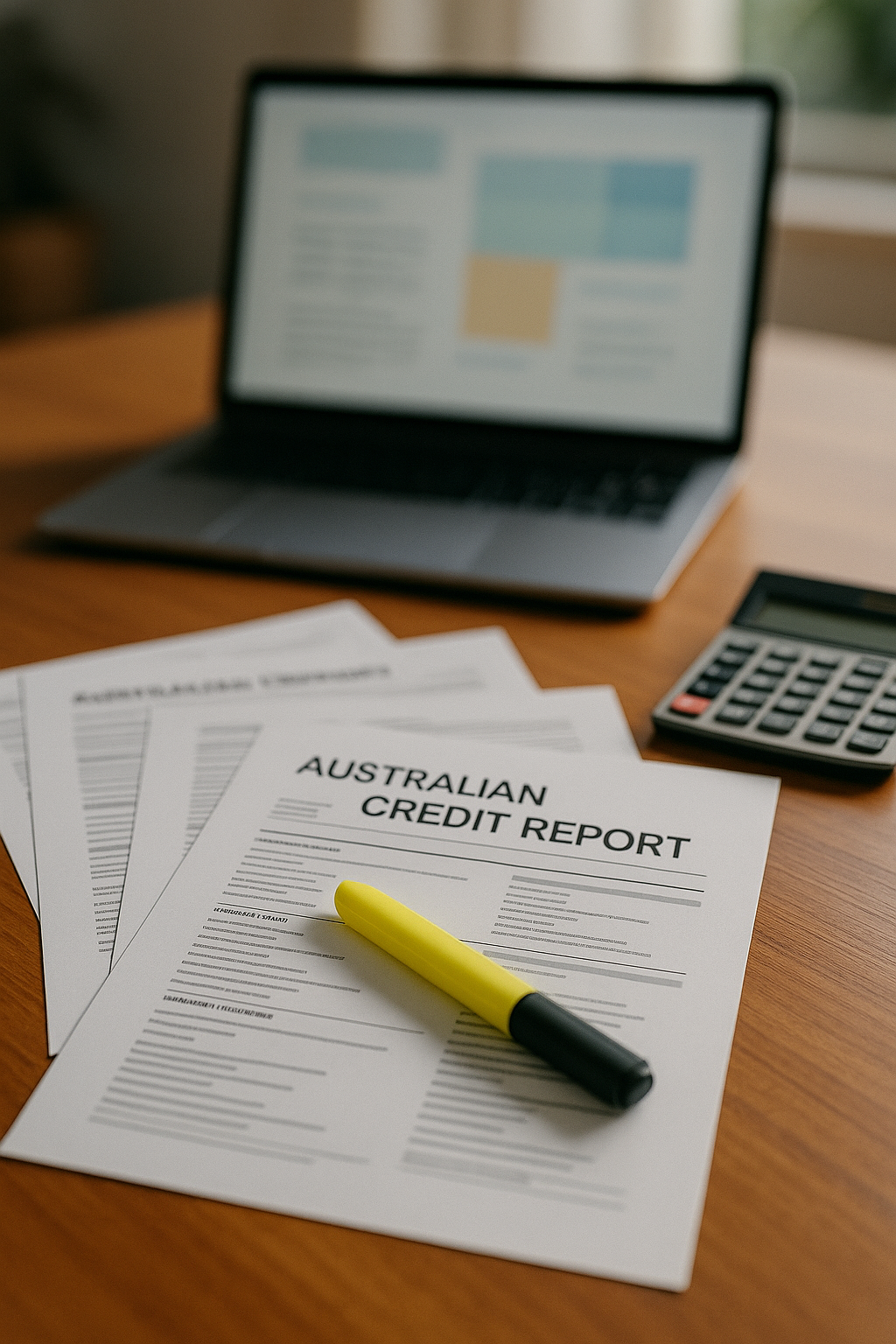
Allow a few days for delivery. Put aside an hour with a highlighter and a notepad once they arrive.
What to look for: quick triage
Work through each report and mark four categories:
- Errors – accounts you don’t recognise, wrong limits, incorrect dates, enquiries you never made.
- Historic negatives – old defaults or judgements that might now be out of date.
- Legit but fixable issues – late payments, small defaults, high card limits, over‑used credit.
- Serious problems – large unpaid defaults, tax or ATO‑related judgements, multiple recent arrears.
A simple table can help you prioritise:
| Issue type | Typical impact on home loan | Indicative clean‑up timeframe* |
|---|---|---|
| Minor error (wrong limit) | Low if corrected | 2–8 weeks |
| Single 30–60 day late payment | Moderate, depends on recency | 6–12 months good conduct |
| Paid default under ~$1,000 | Moderate, some lenders flexible | 6–24 months since payment |
| Multiple unpaid defaults | High – many lenders will decline | 12–36 months after resolving |
| Court judgements/bankruptcy | Very high – major barrier | Case‑by‑case, often years |
*Indicative only – each lender has its own rules.
Link issues back to your goals
Next, get clear on what you’re aiming for:
- Buying your first home in 12–24 months
- Refinancing to a sharper rate or consolidating debt
- Upgrading vehicles or equipment
If your main goal is a home in the next few years, read From start‑up grind to homeowner: a practical five‑year plan alongside this guide. It shows how cleaning up credit fits with building income, savings and a deposit.

The strategy continues below
You've seen the problem and the groundwork — now unlock the exact steps our CPA-certified brokers use, including 7 more sections. Enter your email for instant, free full access.
Free access. No spam — unsubscribe anytime. Your details stay confidential.
Frequently asked questions
How long does it take to fix a bad credit file in Australia?▾
Should I use a credit repair company as a small business owner?▾
Will paid defaults still affect my home loan application?▾
Do business loans and leases show up on my personal credit report?▾
Is it better to pay off credit cards or reduce the limit before applying for a mortgage?▾
Speak with a specialist advisor
Confidential consultation, bespoke advice for your situation.