Article
Buying in Coastal, Flood or Bushfire Areas: How Lenders See Risk
A practical Australian guide to how banks assess coastal, flood and bushfire risk, how it affects LVRs, valuations, insurance and approvals, and what you can do this week to protect your borrowing power.
Key Takeaway
Australian lenders do lend in coastal, flood and bushfire-prone areas, but they often reduce maximum LVRs, shade valuations, and require robust insurance before settlement. Around 720,000 Australian homes already face some level of flood risk, which makes postcode and hazard checks critical. Borrowers should obtain hazard reports, confirm insurability and premiums, and speak with a broker early so loan structure, buffers and lender choice align with the property’s specific environmental risks.
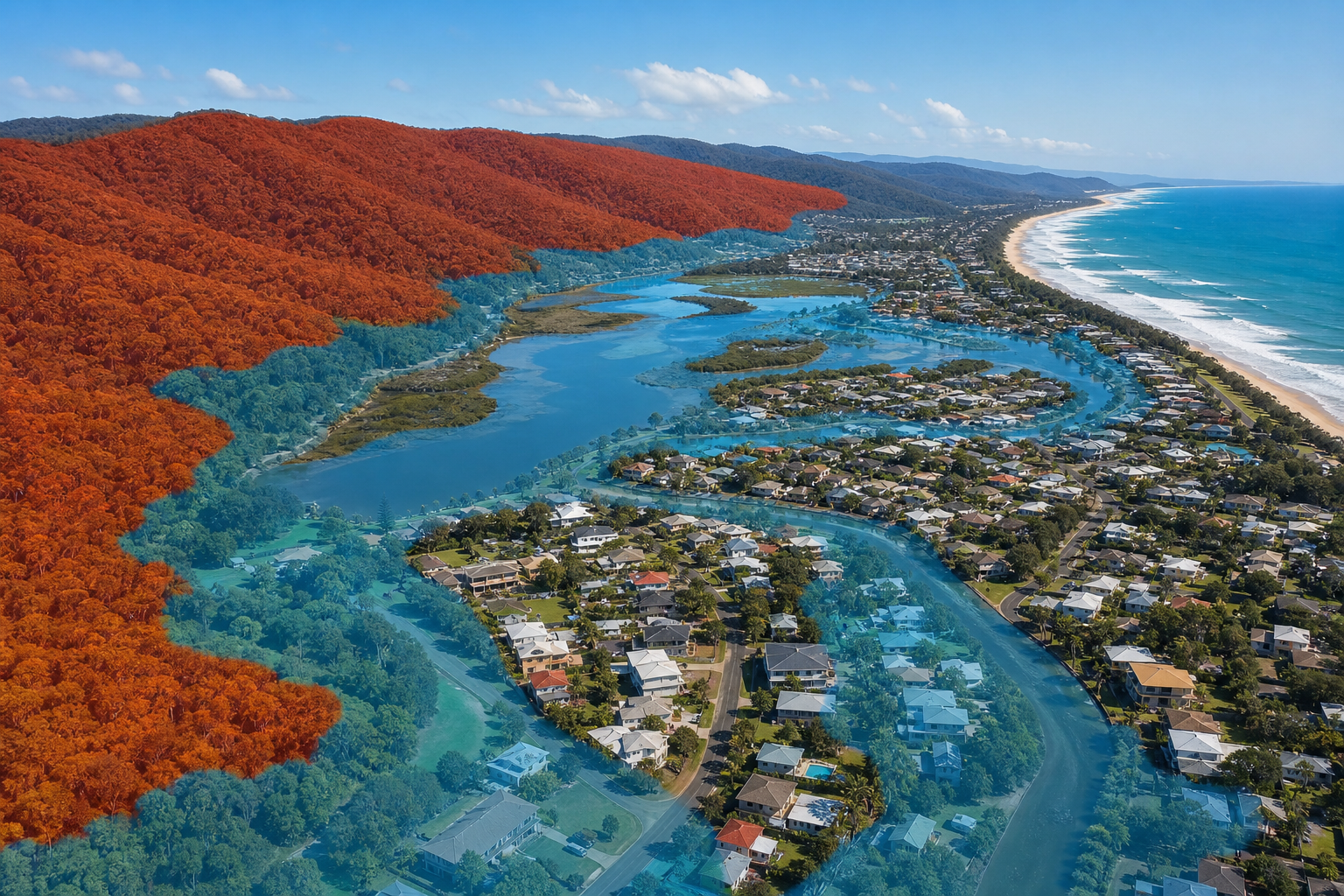
Buying in a coastal, flood or bushfire-prone area doesn’t automatically kill your home loan. Australian banks lend on these properties every day. But they do treat them differently: tighter loan‑to‑value ratios (LVRs), more conservative valuations, and extra conditions around insurance and access.
This guide explains how lenders think about environmental risk, how it flows through to your borrowing power, and what you can do this week to protect your plans.
Quick answer: how banks treat flood, coastal and bushfire risk
Lenders assess environmental risk on three levels:
- Postcode and property flags – internal risk lists, council overlays, flood/bushfire/coastal hazard maps.
- Valuation impacts – valuers may shade market value, limit comparable sales or mark the property as higher risk security.
- Loan settings – lower maximum LVRs, stricter conditions, and clear evidence that the property is insurable at reasonable cost.
If the risk is manageable and insurable, most banks will still lend – just not always at the same LVR or terms as a standard suburban house.

1. Why environmental risk matters so much to lenders
1.1 What a bank really cares about
From a lender’s perspective, environmental risk drives three big questions:
- Can they sell the property quickly if they ever have to?
- Will insurance be available and affordable over the life of the loan?
- Is the risk getting worse over time (e.g. erosion, climate change, fire seasons)?
Anything that makes a property harder to sell, harder to insure, or likely to suffer damage more often will push your file into a higher‑risk bucket.
This is the same logic that underpins postcode risk lists and shading – covered more broadly in our guide on how property types and zoning trip up finance.
1.2 How it shows up in your approval
You’ll usually see environmental risk in one or more of these ways:
- Lower maximum LVR – for example, 80% instead of 90–95%.
- Higher deposit required – especially if Lenders Mortgage Insurance (LMI) providers won’t touch the security.
- Valuation lower than the purchase price – valuers are conservative when risk is hard to quantify.
- Extra conditions – such as proof of insurance, higher excesses, or building reports addressing specific risks.
For prestige or unusual properties – think clifftop, waterfront or architect‑designed – these risks layer on top of already tighter lending standards, as we unpack in detail in Financing Waterfront, Clifftop and Architect Homes Without Nasty Surprises.
2. Flood risk: how banks dissect the details
2.1 How flood risk is identified
Lenders typically use a mix of:
- Council and state flood maps and planning overlays.
- Valuer commentary – floor height, flood history, nearby waterways, drainage.
- Insurance quotes – whether cover is available and at what premium.
Risk can range from “1‑in‑100 year” riverine flooding to localised overland flow. Not all flood overlays are treated equally, but the label alone is enough to trigger more questions.
2.2 What flood risk does to your borrowing
Common lender responses to flood‑affected property include:
- Capped LVR – e.g. max 80% even if your income supports 95%.
- LMI issues – some mortgage insurers decline specific streets or suburbs altogether.
- Valuation shading – the valuer might:
- adopt conservative comparable sales;
- discount value versus unaffected neighbouring streets;
- mark the property as “adverse risk” or “limited market”.
Imagine you’re buying a $900,000 home on a flood‑prone street:
- Standard policy might allow 90% LVR (deposit $90,000).
- Flood policy may cap it at 80% LVR (deposit $180,000).
- If the valuer also shades the value down to $860,000, your 80% LVR is based on $860,000 – so the maximum loan is $688,000 and you need $212,000 plus costs to complete.
That’s a $120,000+ gap you need to find through savings, equity, or a different property.
2.3 Insurance is often the make‑or‑break
Most lenders require building insurance covering at least the replacement value with flood cover included where available.
Issues they care about:
- Is flood cover even offered? If most insurers exclude it, the bank may say no.
- Is the premium extreme? Very high premiums can signal unsustainable ongoing costs.
- Have there been recent claims or payouts? Some lenders get nervous if a property has flooded multiple times in recent years.
If you’re looking at a property in a known flood zone, a pre‑approval alone is not enough. You want indicative insurance quotes upfront and clarity on what’s actually covered.
3. Bushfire‑prone areas: BAL ratings and practical constraints
3.1 Bushfire Attack Level (BAL) and lenders
Most bushfire‑prone locations in Australia now have a Bushfire Attack Level (BAL) rating – from BAL‑LOW through to BAL‑FZ (Flame Zone). Higher BAL ratings usually mean:
- Stricter building standards (AS 3959) and more expensive materials.
- Potentially higher insurance costs.
- Council restrictions on extensions, rebuilds or vegetation removal.
Lenders watch BAL ratings because they influence build cost, insurability and future buyer demand.
3.2 How bushfire risk affects a loan
Typical impacts with high BAL (e.g. BAL‑40 or BAL‑FZ):
- Tighter LVRs – some banks cap at 70–80% for BAL‑FZ.
- Construction loan complexity – higher build costs can strain your budget.
- Valuation caution – valuers consider rebuild cost and local demand post‑fire events.
For example, if a $1.0m rural‑residential home is in BAL‑FZ, a bank might:
- Cap LVR at 75% (max loan $750,000) versus 90% in a standard suburb.
- Require evidence that insurance including bushfire cover is available for at least the full replacement cost.
- Ask for a bushfire assessment or rely on council documentation before full approval.
3.3 Insurance and access considerations
Even if you’re comfortable with bushfire risk personally, lenders and insurers are more clinical. They’ll look at:
- Defendable space and access – is there a safe exit, all‑weather road and fire service access?
- Water supply – tanks, pumps, hydrants.
- Vegetation management – is clearing allowed, and is it being done?
If the only access road is likely to be cut early in a fire, or the home is on a steep, heavily timbered slope, some lenders will step back even if insurance is technically available.
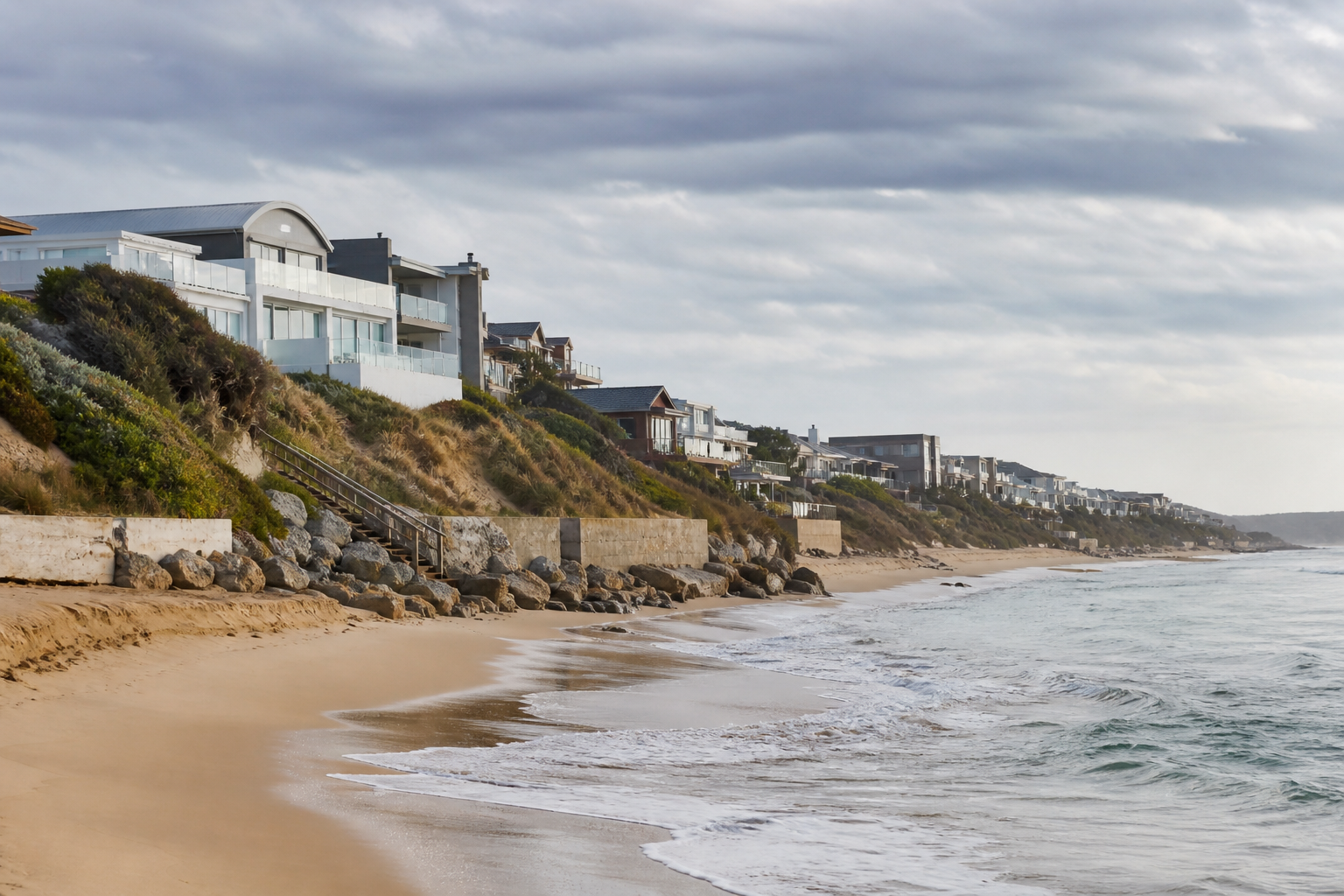 Coastal homes can carry increased erosion and insurance risk that lenders factor into LVRs and valuations. ### 4.1 How banks think about the coast Coastal locations can be high‑value and high‑risk. Lenders and valuers consider: - Coastal erosion and storm surge mapping – council and state hazard maps. - Setbacks and seawalls – whether protective works exist, their condition, and who pays to maintain them. - Building position – distance from the escarpment edge, dune or tidal line. They’re not just worried…
The strategy continues below
You've seen the problem and the groundwork — now unlock the exact steps our CPA-certified brokers use, including 7 more sections. Enter your email for instant, free full access.
Free access. No spam — unsubscribe anytime. Your details stay confidential.
Frequently asked questions
Will a bank lend on a house in a flood zone?▾
Can I get a 90% home loan in a bushfire‑prone area?▾
How does coastal erosion affect mortgage approval?▾
Do higher insurance premiums affect my borrowing power?▾
Is buying in a high-risk flood or bushfire area a bad idea?▾
Should I use a mortgage broker for a property in a risk area?▾
Speak with a specialist advisor
Confidential consultation, bespoke advice for your situation.