Loading the latest on mortgages, RBA & inflation…

Article

Financing Waterfront, Clifftop and Architect Homes Without Nasty Surprises

A deep dive into how Australian lenders view waterfront, clifftop and architect-designed homes – and how to structure your finance so bank risk rules don’t derail your dream property or future plans.

22 July 2026Updated 22 July 202617 min read

Key Takeaway

Australian lenders treat waterfront, clifftop and architect-designed homes as higher-risk security, often capping loan-to-value ratios at 60–80% and relying on conservative valuations, especially where erosion, access or resale demand are issues. Insurability, building complexity and unique design can all reduce usable borrowing power and tighten terms. Borrowers can manage this by stress-testing their budget, shopping lenders with a broker, and confirming valuation and insurance conditions before bidding or signing a contract.

Financing Waterfront, Clifftop and Architect Homes Without Nasty Surprises

You can absolutely get a home loan for a waterfront, clifftop or architect-designed property in Australia, but lenders usually treat these as higher-risk security. That often means tighter loan-to-value ratio (LVR) caps, more conservative valuations, extra conditions and closer scrutiny of insurance. Understanding that framework upfront lets you shape your search, your offer and your loan structure so bank risk rules don’t ambush you at the pointy end.

In other words: with the right prep, you can still buy the one-of-a-kind home – you just need to respect how banks see it.


1. Why these properties make banks nervous

1.1 The three big questions every lender asks

For any home, but especially non‑standard ones, lenders are really asking:

  1. Will this property be easy to sell if we ever have to?
  2. Could something physical make it uninhabitable or hard to insure?
  3. Is there a deep enough buyer pool at this price point?

Waterfront, clifftop and architect-designed homes can stress each of these:

  • Location risk – erosion, flooding, landslip, coastal retreat and sea walls.
  • Design risk – highly bespoke layouts, unusual materials, experimental construction methods.
  • Marketability risk – a narrow pool of buyers in a downturn, especially above $3–4m.

When those risks go up, banks respond by reducing exposure – usually via lower LVR, tough valuations and conditions on insurance and building reports.

This is similar to what happens with other prestige or complex properties explained in our related pieces, like luxury Eastern Suburbs case studies and non-standard Rose Bay homes.

1.2 Standard vs non‑standard security

Most lenders split residential security into two broad buckets:

  • Standard security – typical houses or units in established suburbs, good access, no obvious hazards, easy comparables.
  • Non‑standard / specialised security – clifftops, absolute waterfronts, homes down steep driveways, properties with limited vehicle access, architect-designed one‑offs, large renovations mid‑way, mixed-use, etc.

Non‑standard doesn’t mean “no”. It does mean:

  • Lower maximum LVR (e.g. 70–80% instead of 90–95%).
  • More reliance on a cautious valuer.
  • Potentially slower credit assessment and more questions.

For buyers, the message is clear: you may need more cash or equity and a more robust finance strategy than if you were buying a vanilla brick-and-tile house.


2. How valuations work on unique and prestige properties

2.1 Why valuation matters more than the contract price

For non-standard homes the valuer, not the contract, effectively sets your usable LVR.

If the lender’s valuation comes in under your purchase price, your LVR jumps and you may have to either:

  • Tip in extra cash;
  • Reduce the loan amount; or
  • Re‑work the deal with a different lender/valuation type.

We see this regularly with one-of-a-kind harbourside and clifftop homes – and it’s a core theme in our guide on how banks value unique Rose Bay homes.

2.2 How valuers treat a one‑of‑a‑kind design

Valuers are engaged to protect the bank’s downside, not to validate the seller’s price. For bespoke or architect-designed homes they will:

  • Anchor to comparable sales – recent sales of similar homes in the area, then adjust.
  • Discount “wow factor” – a jaw‑dropping staircase, custom joinery or imported stone may add less value on paper than it cost to build.
  • Cap value for over‑capitalisation – if your build is far above neighbourhood standard, valuation may lag build cost.
  • Consider functional issues – lack of parking, awkward circulation, too many levels, or a floorplan that suits only certain demographics.

For a clifftop or waterfront with high land value, the valuer may prioritise land + basic replacement building and be conservative on premium design features.

2.3 Example: valuation shortfall on a clifftop home

  • Purchase price: $6.0m architect-designed clifftop house.
  • Preferred LVR: 80% (loan $4.8m).
  • Lender valuation: $5.5m (valuer is cautious about erosion and resale depth).

New effective LVR at same loan: 4.8 ÷ 5.5 = 87.3%.

Many prime lenders will not go above 80% for this type of risk. To keep LVR at 80%:

  • Max loan = 5.5 × 80% = $4.4m.
  • Buyer must contribute an extra $400k plus costs beyond what they planned.

This is where pre‑planning value ranges with a broker and understanding likely bank appetite is critical.

2.4 Desktop vs kerbside vs full valuation

For higher-value or complex homes, most large lenders will insist on a full, internal valuation. Cheaper forms (AVM, desktop, kerbside) are less common because:

  • The value swings are larger.
  • The risk of missing a defect is higher.
  • There may be very few comparable sales.

You can sometimes influence the process by:

  • Choosing a lender known to use panel valuers with genuine local prestige experience.
  • Providing a sales evidence pack via your broker.
  • Being realistic about potential downside spreads rather than fixating on the contract number.

3. Specific lender concerns: waterfront property

Waterfront is not one risk category – it ranges from tidal river shacks to absolute Sydney Harbour trophy homes. Lender policy reflects that spectrum.
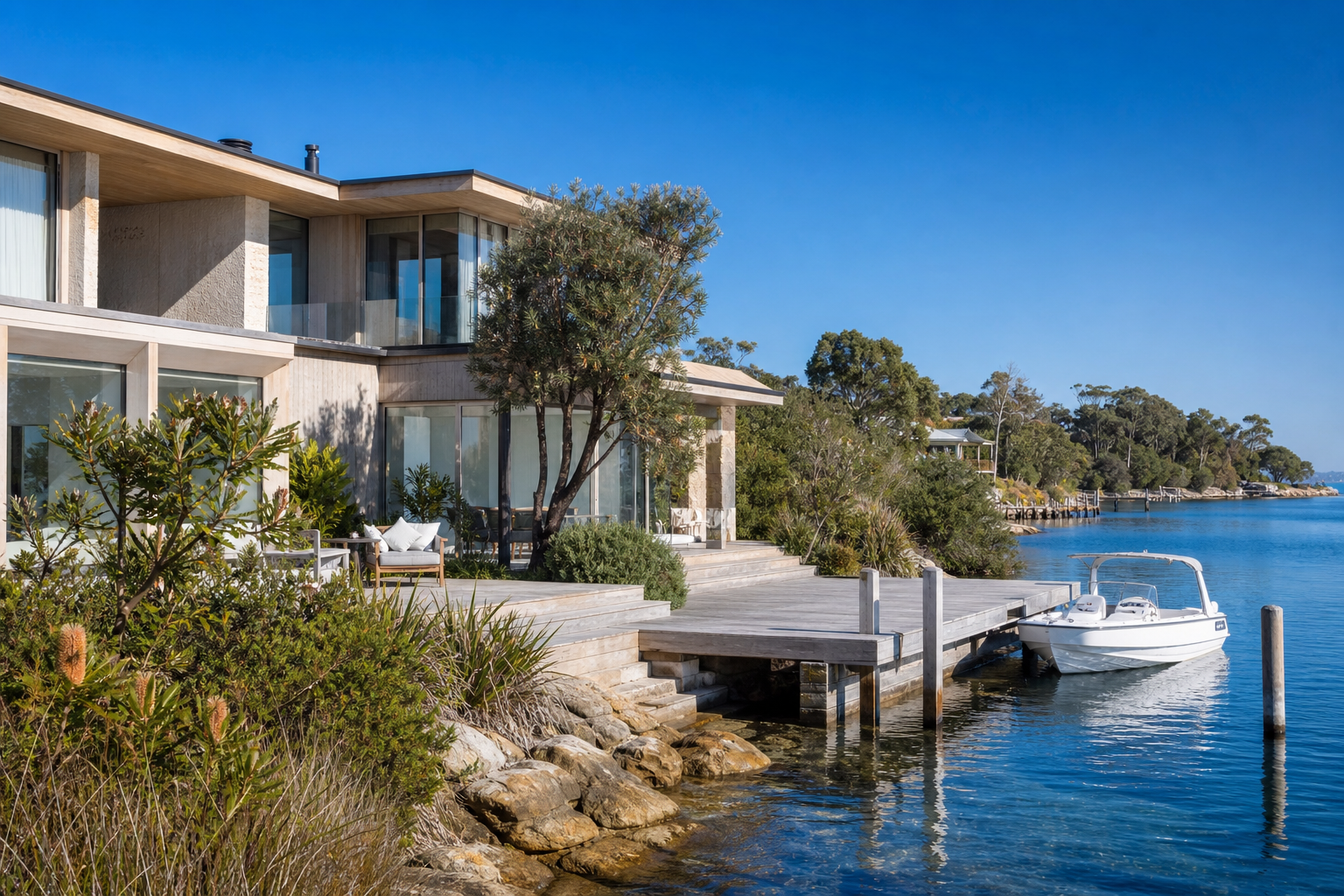
Australian waterfront home with private jetty and boat Waterfront properties combine lifestyle appeal with specific flood and erosion risks that banks must price in.

3.1 The big risk drivers

Banks will probe at least five things on a waterfront security:

  1. Flood and storm surge risk – how often, how severe, what mitigation exists.
  2. Erosion and coastal retreat – is there evidence of bank movement or planned retreat areas?
  3. Sea walls and revetments – age, approvals, maintenance responsibilities and cost.
  4. Access and services – steep stairs, boats-only access, bridges or jetties, private roads.
  5. Insurance availability and cost – can you even insure it for building and liability, and at what premium?

3.2 How this feeds into LVR caps

Typical (illustrative only) patterns we see in lender policy:

Waterfront typeTypical max LVR (prime borrower)*Comments
Near-water, no flood zone80–90%Often treated almost as standard residential.
Tidal river / estuary, low flood risk80–85%Careful check of flood mapping and council reports.
Known flood-affected area (1-in-100)70–80%May require detailed insurance evidence.
Absolute beachfront / dune-front70–80%Coastal erosion and storm surge concerns.
Boats-only or very limited access60–75%Marketability risk if resale relies on niche buyers.

*Indicative only – live policies vary and can change quickly.

3.3 Insurance as a credit condition

For many waterfront loans, evidence of appropriate insurance is a condition of settlement. That might include:

  • Building insurance with flood and storm cover.
  • Liability cover for jetties, pontoons or moorings.
  • Sometimes, evidence that sea walls or protective works are included under a policy or shared body corporate insurance.

Some properties have become nearly uninsurable or prohibitively expensive due to repeated claims or climate data. A lender may:

  • Decline the security altogether; or
  • Cap LVR at a very conservative level.

Your action step this week: if you’re serious about a particular property, get indicative insurance quotes early and stress‑test premiums in your budget. This lines up with the risk‑first mindset in our guide on building safe borrowing plans with buffers.

3.4 Worked example: serviceability stress with high insurance

Assume:

  • Loan: $2.8m at an indicative 6.5% P&I over 30 years.
  • Monthly repayment: ≈ $17,700.
  • Building and liability insurance on a flood‑exposed waterfront: $14,000 p.a. (≈ $1,170/month).

Total monthly housing cost (ignoring rates and maintenance): $18,870.

The APRA 3% serviceability buffer means banks will test your ability to handle repayments at around 9.5%, pushing the assessed repayment up towards $23k+/month. For higher-end waterfronts, non‑mortgage housing costs like insurance can be the tipping point between a yes and a no.


4. Specific lender concerns: clifftop and steep sites

Clifftop homes often come with awe‑inspiring views and equally awe‑inspiring risk files.

Modern clifftop houses on a steep Australian headland Clifftop homes can trigger extra lender scrutiny around geotechnical stability and emergency access.

4.1 Geotechnical and structural risk

Key bank questions for clifftop properties:

  • Is there evidence of landslip, rockfall or instability in the area?
  • What do geotechnical reports say about soil and rock conditions?
  • Are there any protective structures (anchors, retaining walls, rock bolts)?
  • Is the building perched so close to an edge that future retreat might be needed?

Lenders may request:

  • Existing geotech or structural reports;
  • Council notices or development conditions;
  • Engineers’ sign‑offs for recent works.

4.2 Access and emergency egress

Steep sites can cause practical and safety problems:

  • Narrow or very steep driveways.
  • Limited parking or turning circles.
  • Many steps between street and dwelling.
  • Tight access for fire trucks or ambulances.

From a bank’s perspective, these factors can shrink the buyer pool, especially for older purchasers or families with small children.

4.3 LVR patterns for clifftop homes

Again, policies change, but we often see patterns like:

Clifftop scenarioTypical max LVR (prime borrower)*Bank perspective
Elevated site, stable geology, good access80–90%Treated close to standard security.
Steep site, limited parking, no major hazards75–85%Marketability and access risk.
Known or suspected geotech issues60–80%May require engineering reports and lower LVR.
Houses near cliff edge or in landslip overlays60–70%High physical risk; some lenders will simply say no.

*Indicative only.

4.4 Case-style scenario: low LVR as the trade‑off

A client family wants a $4m clifftop home. Engineer’s reports show stable conditions but limited historical data. Two mainstream lenders offer:

  • Lender A: Max LVR 70% (loan $2.8m).
  • Lender B: Max LVR 65% (loan $2.6m), but slightly sharper rate.

They have $1.6m in cash/equity. On paper they could push LVR higher with a niche lender at a higher rate. Instead, after running worst‑case scenarios similar to those in our risk and buffer guide, they accept the lower LVR, choosing resilience over maximum leverage.


5. Architect-designed homes: style vs bankability

Architect-designed isn’t a problem in itself. The risk comes when design choices clash with resale, durability or cost to rectify.

Architect-designed Australian home with dramatic modern design Architect-designed homes can be highly desirable yet harder for valuers to benchmark against local sales.

5.1 What banks like about architect homes

Positives often include:

  • High-quality construction and finishes.
  • Thoughtful environmental design, potentially lower running costs.
  • Strong appeal in certain suburbs with design‑savvy buyers.

In prestige pockets, unique architect homes can be the norm rather than the exception. Lenders with good local experience, as discussed in our Sydney East case studies at /insights/boutique-broking-case-studies-eastern-suburbs, may be more comfortable.

5.2 What makes banks nervous

Red flags include:

  • Experimental materials or systems – unusual claddings, custom windows without local suppliers, unconventional roofing.
  • Very niche layouts – extreme open‑plan, no doors, odd bedroom configurations, or homes aimed at a very narrow demographic.
  • Incomplete or undocumented works – big renovations without approvals, missing occupation certificates, no warranties.
  • Energy and services complexity – integrated home automation, solar, batteries and mechanical systems that are costly to repair.

You might love all of these, but a bank asks: What if the second or third buyer doesn’t?

5.3 LVR and policy nuances

Architect-designed properties with complete documentation in blue‑chip suburbs often still qualify for standard LVRs up to 80–90% for strong borrowers.

Constraints appear when:

  • Documentation is incomplete.
  • There are known defects (leaks, cladding issues, water ingress).
  • The build cost was far above suburb norms.

In those cases, expect reduced LVRs (70–80%) or conditions like rectification works before full approval.

5.4 Renovations, sustainability and solar

Many architect homes feature extensive sustainability upgrades – solar, batteries, green roofs. These can be positives for running costs, but:

  • Lenders and valuers won’t always credit full cost.
  • Panels or systems near the end of life may be a neutral or even a negative.

If you’re adding or upgrading solar or batteries after purchase, funding via your home loan can make sense – but the numbers must be run carefully, as detailed in /insights/using-your-home-loan-to-pay-for-solar.


6. How these risk views hit your borrowing power

6.1 Three main pressure points

Buying a unique, high‑risk property can hit you in three ways:

  1. Lower LVR – you must contribute more cash or equity.
  2. Valuation conservatism – your planned LVR is recalculated off a lower figure.
  3. Tougher serviceability overlay – higher assessed expenses (insurance, maintenance) and APRA’s 3% buffer eat into capacity.

Even if rate and term are similar, the usable loan can be very different from a standard property.

6.2 Comparison: standard vs waterfront vs clifftop (illustrative)

Assume a high‑income household with strong financials looking at three options, each with a contract price of $4m.

ScenarioContract priceLender-assessed valueMax LVR allowedMax loanExtra cash required vs 80% at contract
Standard suburban home$4.0m$4.0m80%$3.2m$0
Tidal river waterfront$4.0m$3.9m80%$3.12m~$80k
High-risk clifftop site$4.0m$3.7m70%$2.59m~$610k

Notice two impacts: the value haircut and the LVR haircut. Together they can shift your cash requirement by hundreds of thousands, even millions, at higher price points.

6.3 Self-employed and small business owners: double scrutiny

If you run a business, lenders are already scrutinising your income, cashflow and business debts, as explained in /insights/how-lenders-really-view-your-small-business-home-loan and /insights/bank-statement-bas-home-loans-alt-doc-income-assessment.

Add a high‑risk property and you can face:

  • More conservative income shading or lower usable income.
  • Reluctance to approve at higher LVR even if policy allows it.
  • A strong push to see emergency buffers and contingency plans.

A practical guide is to keep total home and investment repayments in the 25–35% of net income range, and to model a 2–3% rate rise alongside a 30–50% drop in business income, in line with our stress‑testing suggestion for business owners.


7.1 Insurance pre‑checks

Before you bid or sign a contract on a waterfront, clifftop or complex architect home, line up:

  • Indicative building insurance quotes from at least two providers.
  • Confirmation of flood, storm, landslip, erosion coverage (and exclusions).
  • Understanding of any excesses – some high‑risk areas carry very high excesses or sub-limits.

Feed these costs into your budget, not as an afterthought.

7.2 Council, strata and engineering reports

For these properties, your due diligence should usually include:

  • Planning certificates (s10.7) – checking flood, coastal hazard, bushfire or landslip overlays.
  • Past DA conditions – many approvals for clifftop or waterfront works include ongoing maintenance obligations.
  • Geotechnical / structural reports – especially for steep sites.
  • Strata reports (for waterfront or clifftop apartments) – look for seawall, waterproofing, cladding or structural issues.

Lenders sometimes ask for parts of this documentation; even if they don’t, you should.

7.3 Loan purpose and tax treatment

Remember: in Australia interest deductibility is about loan purpose, not what you offer as security. If you’re using equity in your architect home to fund an investment property or business, it’s the use of those funds that drives deductibility – a principle covered repeatedly in our equity and structuring guides.

Keeping separate loan splits by purpose (home, investment, business) makes tax compliance vastly simpler, especially as the tax system evolves and recent Federal Budget reforms to negative gearing and CGT increase complexity.

Always co‑ordinate advice from your tax adviser, solicitor and broker before signing major contracts.


8. Quick readiness check: are you really finance-ready for this property?

Use this diagnostic to see how close you are to being genuinely ready – not just pre‑approved on paper.

8.1 Equity and cash

  • Do you have at least 20–30% of the likely valuation in cash/equity, plus stamp duty and costs?
  • Could you still proceed if the valuer came in 5–10% below contract?
  • Do you have spare equity or cash buffers after settlement, or will you be “all in”?

8.2 Serviceability and buffers

  • Have you run numbers at 3% above today’s rate, matching APRA’s buffer?
  • After all loans, insurance, rates and typical maintenance, do you still keep housing costs in a safe share of your net household income?
  • Do you hold 6–12 months of essential costs in offset or similar, as a rainy-day fund?
  • Have you got insurance quotes with realistic coverage and excesses?
  • Has your solicitor checked planning overlays, easements, sea walls, geotech and DA history?
  • For architect builds, do you have as‑built plans, warranties and occupation certificates?

8.4 Finance strategy

  • Do you have a written finance plan for this purchase, including Plan B if the valuation disappoints?
  • Are you clear on which lender types are realistically on the table (major bank vs second‑tier vs private)?
  • Do you understand how this loan affects your future investment or lifestyle plans, not just this one purchase?

If you’re shaky on several of these, it’s worth pausing for a week and working through a structured plan with a broker who focuses on risk management, not just approvals – a theme we unpack at /insights/local-broker-insight-manage-risk-not-just-approval.


9. Lender options and structuring tactics that actually help

9.1 Matching the property to the right lender type

Different lenders have different appetites for non‑standard luxury and lifestyle properties.

  • Major banks – often conservative on LVR and valuation but sharp on rates and features. Good for stable, blue‑chip locations with clear documentation.
  • Second‑tier banks and non‑banks – sometimes more flexible on property quirks but with slightly higher pricing or lower LVRs.
  • Private lenders – can be a tactical short‑term bridge when speed or a specific risk issue blocks mainstream approval, but usually at noticeably higher rates and fees.

The goal is to avoid paying private‑lender pricing unless you have a clear, short exit strategy.

9.2 Split loans and purpose tracking

For high‑end properties, it’s common to see multiple purposes tied into one big facility – home, investment, business cashout, renovations. The smarter approach is to split by purpose:

  • Split A – Owner‑occupied home (non‑deductible interest).
  • Split B – Investment or deposit for another property (potentially deductible).
  • Split C – Business or working capital (deductibility tied to business use).

This structure:

  • Makes your tax agent’s life easier.
  • Reduces risk if future tax reforms tighten rules again.
  • Allows you to pay down non‑deductible debt faster without messing up records.

9.3 Offsets and repayment strategy

For large loans on potentially volatile assets, consider:

  • Offset accounts against non‑deductible splits for flexibility.
  • A target to keep 6–12 months of total essential outgoings (including mortgage) in offset, aligning with the risk principles in /insights/risk-management-buffers-worst-case-planning-broker.
  • P&I repayments on your home split and potentially interest‑only on investment splits, depending on your tax and cashflow strategy.

9.4 Sequencing upgrades and investments

If you own a solid, bank‑friendly home already, it might be safer to:

  1. Optimise and de‑risk your existing structure.
  2. Build or grow an investment base with more standard properties.
  3. Then move into a higher‑risk waterfront or architect home once your footing is stronger.

This staged approach can maintain flexibility if property values wobble or lending rules tighten.


10. A one-week action plan to move from idea to decision

If you’re actively looking at – or already under offer on – a waterfront, clifftop or architect-designed property, here’s how to turn this into action this week.

Day 1–2: Clarify the property and your numbers

  • Gather the listing, contract, plans and any available reports.
  • Run basic calculations: target price, deposit, stamp duty, closing costs.
  • Sketch a rough budget including estimated insurance and higher maintenance.

Day 2–3: Early risk and valuation sense-check

  • Have a broker run high‑level lender and valuation sense‑checks based on recent comparable sales.
  • Identify whether the property is likely to be classed as non‑standard security and what LVR band is realistic.
  • Get an initial feel for whether you might require more than 20% equity.
  • Ask your solicitor to order relevant planning certificates and council documents.
  • Request indicative building and liability insurance quotes including any special risks.
  • For apartments, commission a strata report with a focus on waterfront or structure‑related items.

Day 4–5: Finance strategy and buffer design

  • With your broker, map out best‑fit lender options and structures (splits, offsets, P&I vs IO).
  • Run stress tests – higher rates, temporary income drop, special levies, major repair works.
  • Decide on a minimum post‑settlement buffer you’re not willing to break.

Day 5–7: Decide on your line in the sand

  • Set a hard cap on your maximum price that still respects realistic valuations and cash requirements.
  • Agree on non‑negotiable conditions – e.g. finance clause, satisfactory engineering or insurance outcomes.
  • Choose whether to proceed, pause, or walk based on facts, not emotions.

This is exactly the kind of structured, risk‑aware approach we highlight in /insights/local-broker-insight-manage-risk-not-just-approval.


11. When saying “no” (or “not yet”) is the smartest move

In a rising market or bidding war, it’s easy to rationalise away risks: “It’s once‑in‑a‑lifetime”, “We’ll never get another chance like this”. But unique properties amplify both upside and downside.

Consider walking or pausing if:

  • Your finance only works at very high LVRs or relies on optimistic valuations.
  • You’d have minimal cash left after settlement and renovations.
  • Insurance is marginal or heavily restricted.
  • Inspection or engineering reports show unresolved or unpriced major issues.
  • Your broader plans (kids’ schooling, business growth, retirement investing) would be at risk if valuations fell or costs spiked.

A good rule of thumb: if buying this property would make you a forced seller in a realistic downturn, the risk is probably too high.


Key takeaways

  • Lenders treat many waterfront, clifftop and architect-designed homes as non‑standard security, which usually means tighter LVR caps and conservative valuations.
  • The valuer’s number matters more than the contract price; be ready for 5–10% downside and have contingency plans if the valuation is low.
  • Insurance availability and cost can make or break finance, especially in flood, erosion or landslip‑prone locations.
  • Self‑employed and small business borrowers face double scrutiny – income stability plus property risk – and should stress‑test cashflow before committing.
  • Separating loan splits by purpose protects future tax deductibility and keeps your options open as tax rules and your circumstances evolve.
  • A sensible target is to keep total mortgage repayments in the 25–35% of net income range and maintain 6–12 months of essential costs in liquid buffers.
  • The smartest buyers treat these properties as lifestyle decisions wrapped in a risk plan, not just a race to the highest bid.

If you’re weighing up a waterfront, clifftop or architect-designed purchase and want to know exactly how banks will view it, book a free 15‑minute strategy call and we’ll map out your risk profile, realistic LVR range and structure options – your tax, your loan, one expert looking at the full picture. Start at /contact or ask for a loan health check via our online form.

General advice only: this information is not personal advice and does not take into account your objectives, financial situation or needs.

Frequently asked questions

Can I get a 90% loan on a waterfront or clifftop home?
Sometimes, but it’s less common. Many lenders cap loan-to-value ratios around 70–80% for higher-risk waterfront or clifftop properties, especially where flood, erosion or access issues exist. Strong income, great credit and a very bankable location help, but you should plan on needing more than a 10% deposit plus costs.
Why did the bank’s valuation come in lower than my offer on a unique home?
Valuers work for the lender and must take a conservative view, especially with one-of-a-kind designs or locations. They focus on recent comparable sales and may discount highly bespoke features or overcapitalised builds. It’s common for unique properties to value below contract, so buyers should model 5–10% downside before bidding.
Will my home loan be declined if insurance is hard to get?
It can be. For high-risk properties, many lenders make suitable building insurance a condition of approval or settlement. If cover is unavailable, heavily restricted, or extremely expensive, a lender may reduce the maximum LVR or decline the security. Getting indicative insurance quotes early is critical for waterfront or clifftop homes.
Are architect-designed homes harder to finance?
Not always. Well-documented architect-designed homes in strong suburbs often finance like standard properties. Problems arise where there are experimental materials, unresolved defects, missing approvals or very niche layouts that could reduce future buyer demand. In those cases lenders may cap LVRs lower or attach conditions.
How much buffer should I keep if I buy a high-risk prestige property?
As a practical guide, many households aim to keep total home and investment repayments within roughly 25–35% of net income and maintain 6–12 months of essential expenses in offsets or savings. With unique or higher-risk properties, larger buffers are usually sensible given higher insurance, maintenance and potential special levies.
Do banks treat self-employed buyers differently for these properties?
Yes. Self-employed borrowers are already assessed more conservatively on income stability, and adding a high-risk property can magnify bank concerns. Expect closer scrutiny of your business financials, tax compliance and cash buffers. Having clean BAS, bank statements and up-to-date tax returns helps present a stronger case to credit.
Should I use a private lender for a clifftop or waterfront purchase?
Private lenders can work as a short-term bridge if mainstream banks won’t move quickly enough or have strict policy limits. However, rates and fees are usually higher, and you need a clear exit strategy, such as refinancing once works are complete or income stabilises. It’s critical to understand the total cost and risks before relying on this option.

Speak with a specialist advisor

Confidential consultation, bespoke advice for your situation.