Article
How banks really see Double Bay and Bellevue Hill prices
Double Bay and Bellevue Hill often trade miles above Sydney averages — and banks know it. Here’s why prices behave differently, how valuers think, and what that means for your borrowing power and pre‑approval this week.
Key Takeaway
Double Bay and Bellevue Hill prices defy Sydney averages because of extreme land scarcity, global demand and tightly-held stock, and banks recognise this but still rely on conservative comparable sales and postcode rules. Prestige postcodes often attract standard or even favourable LVRs, yet valuers may shade unique homes 5–10% below agent price guides. Buyers and refinancers in these harbourside micro‑markets should run lender‑specific valuation checks and structure finance conservatively before auctions or listings to avoid shortfalls.
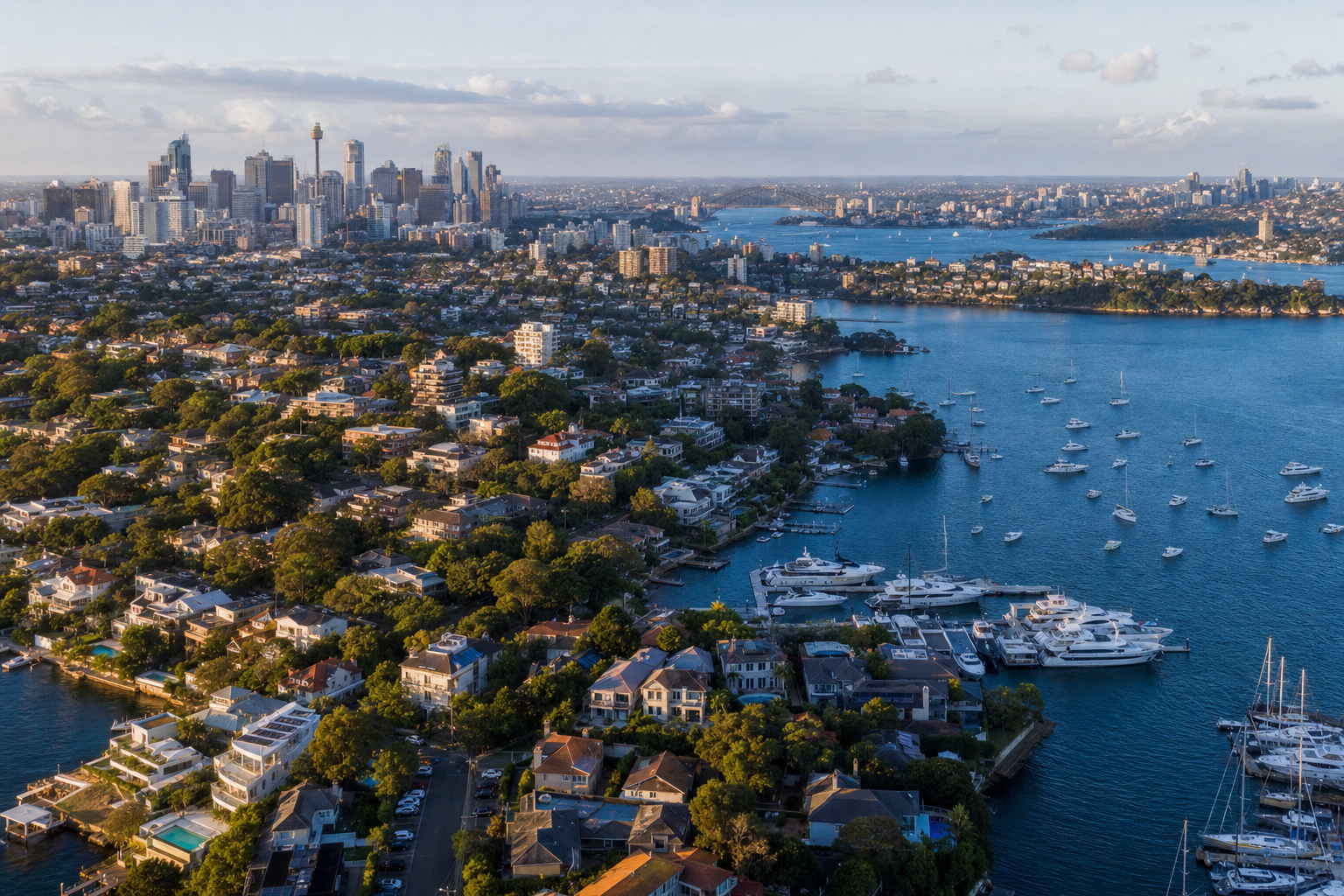
Double Bay and Bellevue Hill sit miles above Sydney averages because they’re true scarcity markets – and banks know it – but valuers still anchor to recent sales, not glossy price guides.
In practice, that means you can see 10–20% swings between what locals are paying and what a conservative bank valuation will support, especially for unique homes and trophy assets.
1. Why prices here ignore the Sydney “average”
These suburbs are their own micro‑market. Median Sydney charts are almost useless once you cross New South Head Road.
Core reasons prices behave differently:
-
Finite, blue‑chip land
Very little new land ever comes on. Most sales are recycled family homes or knocked‑down rebuilds. When you mix small supply with deep pockets, medians drift upwards and rarely come back far. -
Global and inter‑suburb money
Buyers are often upgrading from elsewhere in the East, selling $4–6m homes to buy $7–12m homes, or bringing in offshore capital. Their budget isn’t tied to local wages, so they keep clearing prices even when wider Sydney slows. -
Lifestyle and school premiums
Walk-to-village, walk-to-ferry, school catchments and quick CBD access put a large, enduring premium on relatively few streets. That premium can be hundreds of thousands of dollars between near-identical houses. -
Ultra‑thin, emotional auction stock
With only a handful of quality listings at any time, one emotional under‑bidder can push a result 5–10% beyond the last comp. That doesn’t mean the next valuer will agree.
If you’re planning a 10‑year roadmap in the East, treat Double Bay/Bellevue Hill as their own lane, not just “expensive Eastern Suburbs”. The broader planning approach in /insights/long-term-property-mortgage-planning-eastern-suburbs still applies – the numbers are just bigger and less forgiving.
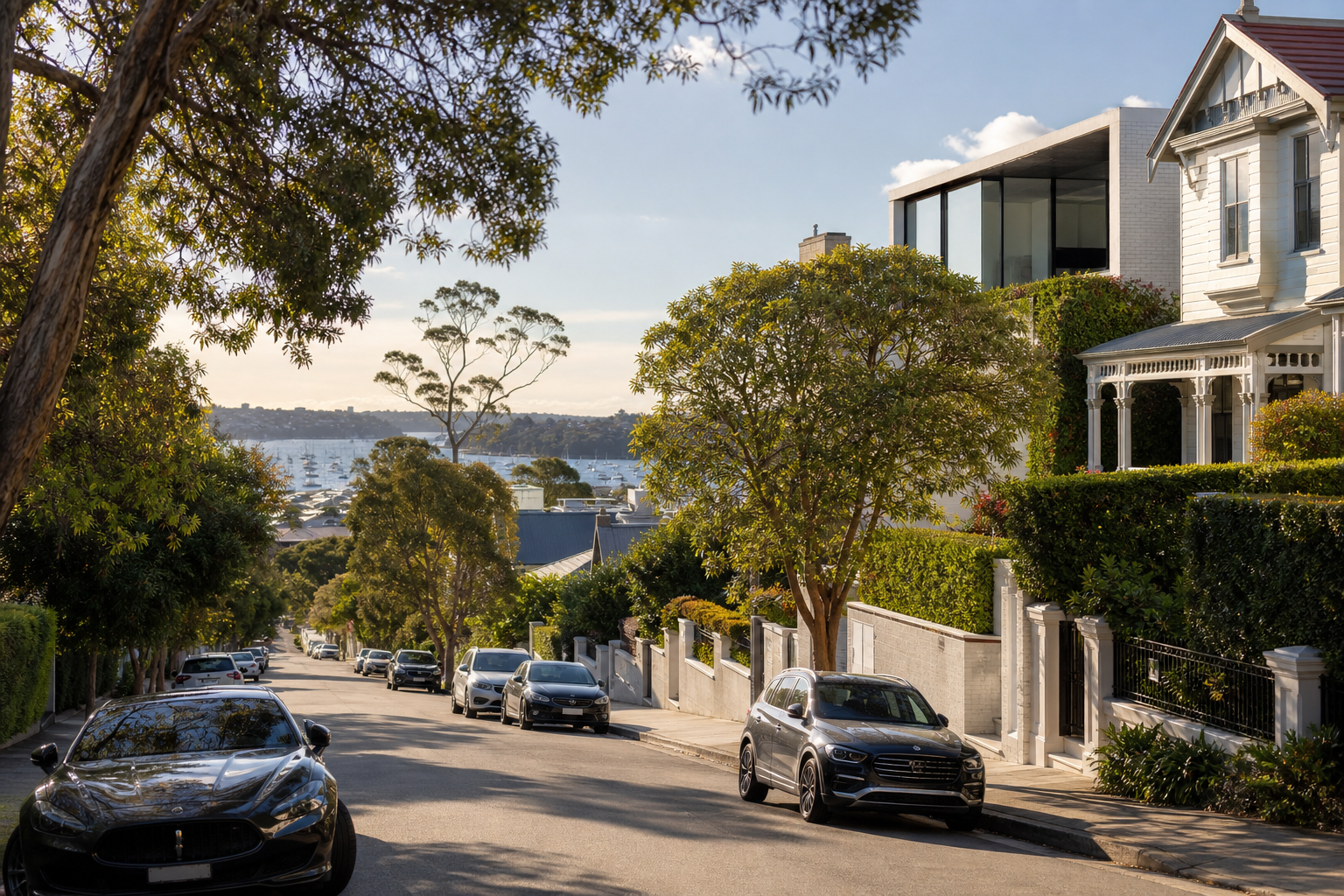
Double Bay and Bellevue Hill are true scarcity markets where valuers focus on recent comparable sales, not just price guides.
2. How banks actually see Double Bay and Bellevue Hill
The good news: prestige Eastern Suburbs postcodes are not on most lenders’ “high‑risk postcode” lists.
Compared with mining towns or high‑density unit pockets, they’re usually seen as:
- Low default risk – strong incomes, diversified borrowers.
- High liquidity – quality stock tends to sell quickly, even in slow markets.
From a credit policy lens, this often means:
- Standard 80% LVR for houses and well‑located units.
- Up to 90–95% with LMI for strong applications (subject to income and property checks).
- Normal rental shading for investment loans.
Where things get tricky is the valuation, not the postcode label.
For more on how postcode lists work, see /insights/postcode-risk-lvr-limits-bank-shading-suburb.
3. How valuers look at Double Bay and Bellevue Hill homes
Valuers aren’t trying to match the agent’s guide. Their brief is: “What would this sell for in a normal, willing‑buyer/willing‑seller scenario today?”
In Double Bay/Bellevue Hill, they’re juggling:
- Very few recent, truly comparable sales.
- Huge differences street‑to‑street and even side‑of‑street.
- Renovation quality that’s hard to price from photos.
Typical valuation patterns we see locally:
- Standard family homes on good streets – often land at or just under contract price if recent comps exist.
- Unique or over‑capitalised builds – more likely to be shaded 5–10% to sit safely in the middle of the comp range.
- Trophy homes with views – if only one or two sales exist, valuers will sometimes sit on the lower side of the range, especially if the campaign result looked emotional.
Numeric example: when a 7% shortfall hurts
- Purchase price: $7,000,000
- Your expected LVR: 80% (loan $5,600,000)
- Bank valuation comes in 7% lower: $6,510,000
- Bank will lend 80% of $6,510,000 = $5,208,000
- New cash gap: $392,000 you must fund from savings, equity, or a different lender/policy.
That’s why serious Eastern Suburbs buyers now treat valuation risk as a separate risk, not just a line item. The same thinking underpins our Green Square settlement guide at /insights/green-square-valuation-settlement-risk.
4. What this means if you’re buying this month
If you’re aiming at Double Bay or Bellevue Hill in the next few weeks, tighten three things:
4.1 Pre‑approval that actually survives local auctions
Online pre‑approvals aren’t enough. You want:
- Fully assessed income and liabilities.
- A lender comfortable with your target price‑point and postcode.
- A buffer for a 5–10% valuation shortfall.
The Rose Bay auction checklist at /insights/rose-bay-auction-home-loan-pre-approval largely applies here – same valuers, similar price dynamics.
4.2 Street‑by‑street property filters
Banks dislike:
- Marginal stock (dark units, compromised access, very busy roads).
- Odd layouts with limited resale appeal.
They are more relaxed on:
- Well‑proportioned family homes with parking.
- Renovated apartments in smaller, quality blocks.
Remember: a bank will happily lend against a boring but liquid house before a spectacular-but-awkward one.
4.3 Buffering for current interest rates
With the cash rate at 4.35% (RBA decision, May 2026), lenders still apply ~3% assessment buffers.
So a 6.3% real rate might be tested around 9.3% on the calculator. In a $5m loan, that’s a huge stress‑test.
As a rule of thumb, try to keep actual home and investment repayments around 25–35% of net income, especially on major Eastern Suburbs purchases.
5. If you’re refinancing or releasing equity
Refinancers in Double Bay and Bellevue Hill often assume their value has “gone up a couple of million”. The bank may see it differently.
To avoid surprises:
-
Run a soft valuation first
Many lenders and brokers can order desktop or kerbside estimates before you commit to a full refinance. -
Be realistic on cash‑out
Equity for renovations, investment or business should be sized so that, even if a valuer comes in 5–10% low, your plan still works. -
Separate loan purposes
Keep home, investment and business splits clean for tax and flexibility, especially with upcoming CGT and negative gearing changes.
If your situation is more complex – multiple properties, business income, SMSF – a boutique broker who understands both tax and local lending quirks usually beats going straight to a single bank. That trade‑off is unpacked in /insights/boutique-broker-vs-banks-eastern-suburbs.
FAQs
Why are some bank valuations in Double Bay and Bellevue Hill higher than expected?
It happens when recent comparable sales are very strong and the valuer is comfortable your property sits in that band. Renovated family homes on prime streets with parking can sometimes value above a cautious agent guide. Don’t bank on this, though – most valuers still aim for the middle of the range.
Do banks cap LVRs specifically for Double Bay or Bellevue Hill?
Most mainstream lenders don’t impose special LVR caps just because of the postcode for standard houses and quality units. Prestige Eastern Suburbs stock is generally seen as low risk. Caps are more common on unusual securities (e.g. very large land holdings, mixed‑use, or unusual construction) than on the suburb itself.
How much valuation buffer should I allow for a $5–8m purchase?
For family homes in these suburbs, many buyers now plan for a 5–10% potential valuation shortfall versus the contract price. The tighter your cash buffer and LVR, the closer to 10% you should assume. A broker can sometimes reduce that risk by matching you with lenders whose panels know the local micro‑market well.
Key takeaways
- Double Bay and Bellevue Hill behave as true scarcity micro‑markets, so Sydney medians tell you very little.
- Banks generally like these postcodes, but valuers may still sit 5–10% below hot auction results.
- Smart buyers and refinancers build pre‑approval, property selection and buffers around that valuation gap.
If you’re planning a purchase or refinance in Double Bay or Bellevue Hill, book a free 15‑minute strategy call at /contact – one conversation with a CPA + Tax Agent + Broker in one saves weeks of second‑guessing.
General advice only.
Frequently asked questions
Why are bank valuations often lower than Double Bay auction results?▾
Are Bellevue Hill homes considered high risk for lenders?▾
Can I rely on online estimates for a Double Bay refinance?▾
Speak with a specialist advisor
Confidential consultation, bespoke advice for your situation.