Article
How a Dover Heights Couple Upgraded Without Selling Too Soon
A Dover Heights couple upgraded from apartment to family home without panic-selling their unit. This case study shows the numbers, the bridging structure, and the safeguards they used so you can test a similar move this week.
Key Takeaway
This case study explains how a Dover Heights couple upgraded from a $1.6m apartment to a $3.2m family home using a time‑boxed bridging loan instead of selling first. By capping total repayments under ~35% of net income and holding 6–9 months of stressed repayments in offset, they avoided forced selling and kept flexibility to retain or sell the unit. Readers can use the same staged‑funding and buffer rules to test their own upgrade this week.
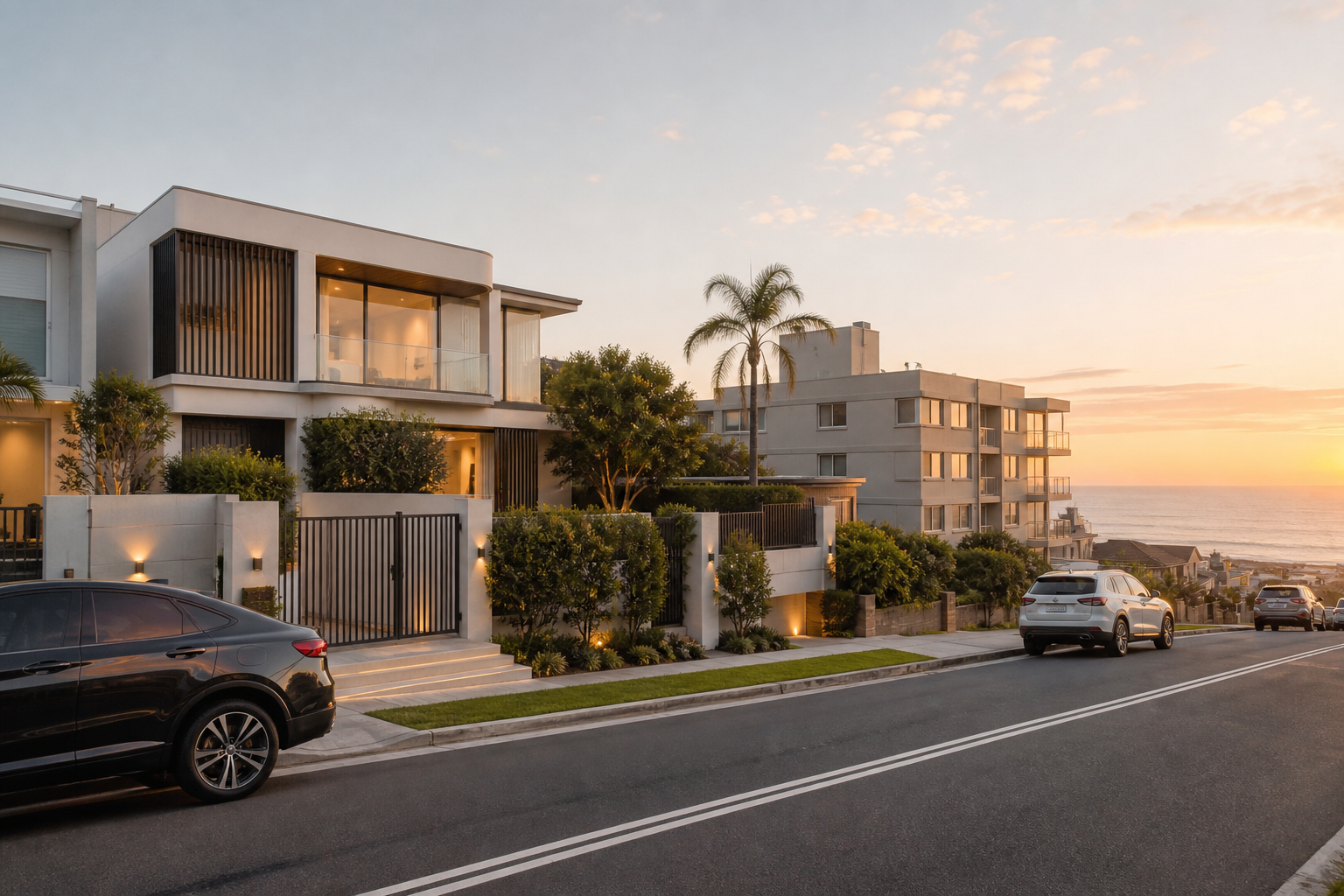
You can upgrade from a Dover Heights apartment to a family home without selling too soon by using a short, tightly‑managed bridging loan, clear loan splits, and strong cash buffers. The key is to size your upgrade so you can safely hold both properties for 6–12 months while you decide whether to keep or sell the unit, instead of being forced into a rushed sale.

The couple and the problem
- Alex and Priya, late‑30s professionals with a young child.
- Own a Dover Heights two‑bed unit worth about $1.6m with a $700k P&I home loan.
- Household net income: ~$420k p.a. after tax and super.
- Want a $3.2m family home nearby but don’t want to sell the unit under pressure.
Their fears:
- Selling the unit too early and missing long‑term growth.
- Overstretching if they keep both and rates rise again.
- Getting stuck in a bad bridging setup with no exit.
Step 1: Clarify upgrade budget and buffers
We started with a blunt rule: even at a stressed rate 3% above current, total repayments (home + any investment) must stay under ~35% of net income and they must keep at least 6–9 months of stressed repayments plus essentials in offset.
Their starting numbers (rounded)
- Current unit loan: $700k at ~6% P&I, ~$4,200/month.
- Stressed test rate: 9% (APRA-style 3% buffer).
- Unit at 9% P&I: roughly $5,600/month.
- Essential living costs: ~$7,000/month.
Target stressed buffer:
- 9 months × (future total repayments + living costs).
We modelled a new home loan of $2.0–2.3m as the comfort zone. Anything bigger would push stressed repayments beyond that ~35% net income guide and quickly eat their buffer.
Step 2: Structure – bridging loan without chaos
They didn’t want to sell first, so a straight simultaneous settlement was off the table.
We set up a peak‑debt bridging structure with clear exit rules.
Key elements of the structure
- Revalued unit at $1.6m, existing $700k debt.
- Target home: around $3.2m with 20% deposit plus costs coming from equity and cash.
- Peak debt during bridging: roughly $700k (existing) + $2.3m (new) = $3.0m.
- Lender capitalised interest on the bridging portion only for up to 12 months.
We kept the loans split for tax clarity if the unit later became an investment (loan purpose, not security, drives deductibility):
- Split 1: $700k – original home loan (becomes investment split if they rent the unit).
- Split 2: $2.3m – new owner‑occupied home loan.
- Short‑term bridging facility: tightly limited, with a maximum 12‑month window.
Capitalised bridging interest was stress‑tested at 9% to avoid surprises.
For a deeper look at these upgrade mechanics, see the Green Square move case study: Smart ways to finance a move from Green Square to a house.
The strategy continues below
You've seen the problem and the groundwork — now unlock the exact steps our CPA-certified brokers use, including 4 more sections. Enter your email for instant, free full access.
Free access. No spam — unsubscribe anytime. Your details stay confidential.
Frequently asked questions
Can I buy a new home before selling my current apartment in Dover Heights?▾
How long is it safe to be on a bridging loan when upgrading?▾
Does keeping my old home as an investment improve my borrowing power?▾
Speak with a specialist advisor
Confidential consultation, bespoke advice for your situation.