Article
Planning a Family Move in Rose Bay: Schools, Space and Lifestyle
Thinking about a family move in Rose Bay? This guide helps you weigh school zones, lifestyle and borrowing capacity, so you can decide whether to stay, upsize or shift slightly out — and gives you a one‑week action plan to move from ideas to clear numbers.
Key Takeaway
This guide explains how Rose Bay families should balance school zones, lifestyle and borrowing capacity when planning a move. It highlights that housing costs above roughly 30–40% of net income can trigger financial stress, especially in premium suburbs, and outlines three main paths: renovate, upgrade locally, or shift to nearby suburbs. The article ends with a practical one-week checklist so households can become decision-ready, aligning property choices with schooling and lifestyle priorities.
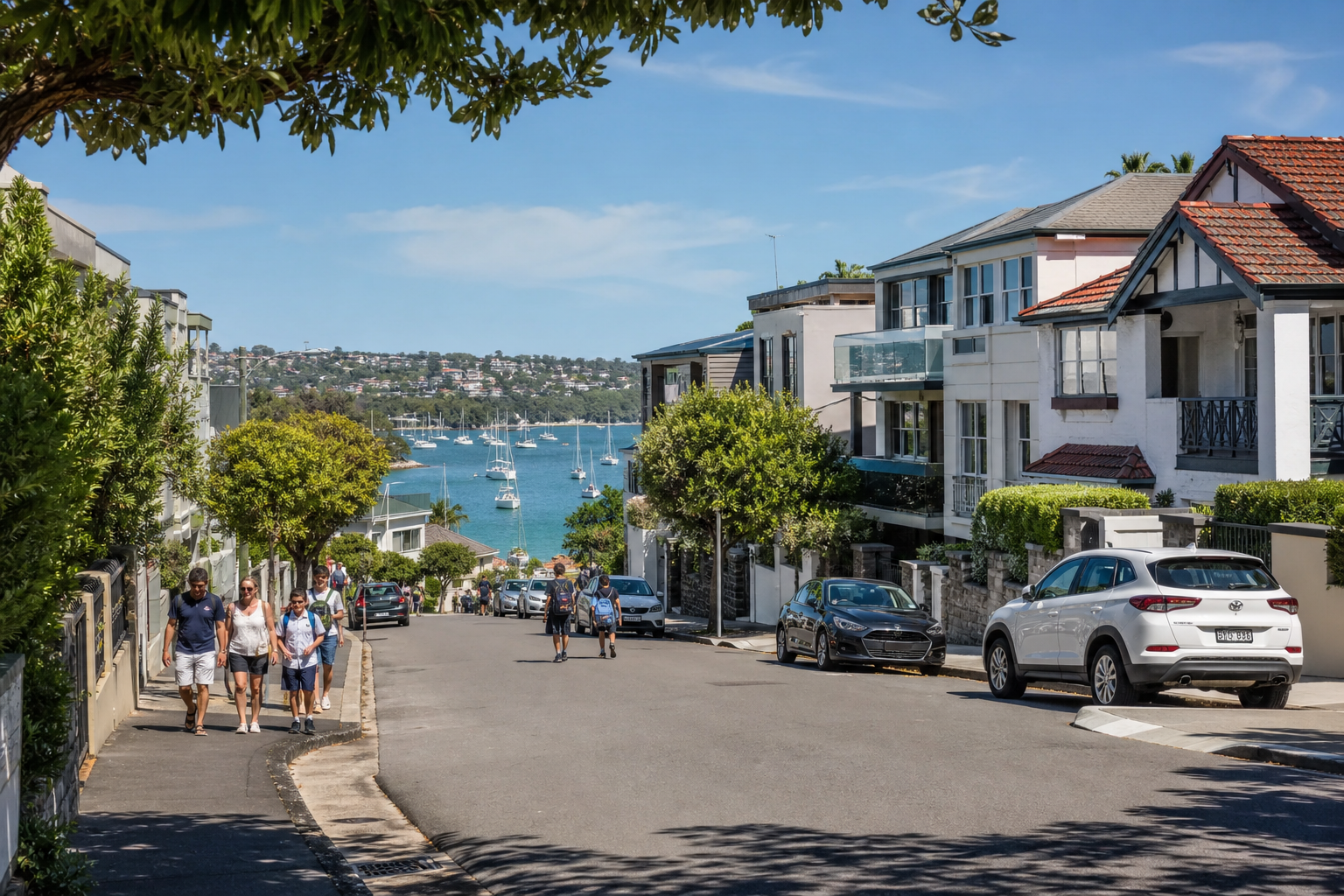
Planning a Family Move in Rose Bay: Schools, Space and Lifestyle
When you’re planning a family move in Rose Bay, the decision should balance three things: the schools you can access, the lifestyle you actually live day‑to‑day, and what you can safely borrow without pushing your budget too far. In a high‑price, tightly held suburb, getting that balance wrong can mean either over‑stretching or needing to move again in a few years. This guide is designed to help you make a decision you’re comfortable with this week, not “one day”.
1. How to think about a Rose Bay family move
Rose Bay sits in that rare pocket of Sydney where beach, harbour and village life overlap. That also means every extra bedroom, school catchment or water glimpse tends to come with a big price tag.
If you’re weighing up a move, start with three framing questions:
-
What problem are we really trying to solve?
Is it school access, more bedrooms, better outdoor space, less commuting, or all of the above? -
How long does this next home need to work?
A 5‑year solution looks very different to a 15‑year “raise the kids here” home. -
What’s our true financial comfort zone?
Housing costs above roughly 30–40% of your net income are linked with higher financial stress, especially when all your wealth is in one expensive property.
In Rose Bay, the most common family crossroads are:
- Young family in an apartment wondering if they should buy a semi or house before school starts.
- Primary school family debating whether to stretch into a “forever” home now or wait.
- Teen-family considering a lifestyle shift (closer to school, less traffic, or different pace) while still staying in or near the Eastern Suburbs.
If you’re not yet clear on the type of property or sequence of moves, it’s worth pairing this guide with the broader strategy work in Practical First and Next‑Home Strategies for Rose Bay Buyers.
2. Schools in and around Rose Bay: what really matters
For most families, school is the anchor around which everything else turns. In Rose Bay, you have a mix of public, Catholic and independent schools within a short radius. Rather than chasing school names, focus on how education and property interact.
2.1 Catchments and enrolment zones
- Public school intake areas change. Boundaries for local public schools are reviewed from time to time by the NSW Department of Education. Always check the current school intake map before assuming a property is “in zone”.
- Similar streets can mean very different options. In Eastern Suburbs pockets, being on the wrong side of a single street can change which public school you’re entitled to.
- Proximity still matters in practice. Even within the right catchment, being closer can help with before/after‑school logistics and social life.
2.2 Private and Catholic schools
Independent and Catholic schools in and around Rose Bay are a major drawcard, but they come with:
- Fees and extras. You’re potentially trading mortgage repayments for school fees, or carrying both.
- Waitlists. Popular schools may expect applications years in advance. If your plan relies on a specific school, confirm the enrolment reality before you buy.
- Travel time. A “10‑minute drive” on a map can be 25 minutes door‑to‑door once you factor in traffic and parking near popular schools.
2.3 Commute patterns, not straight-line distance
For younger kids, walking or a short bus trip is often ideal. For older kids, access to reliable buses or trains might matter more than being within 500 metres. When assessing a property:
- Do a test run at school time from the front door to the school gate.
- Consider how many days you actually work from home vs commute.
- Think about who is doing drop‑offs most days and what that does to their workday.
A property that’s slightly smaller but within an easy walk of school, playgrounds and sport can work better than a bigger home that creates daily traffic battles.
3. Lifestyle trade‑offs: beach, harbour, commute and community
Rose Bay offers a rare blend: harbour walks, ferry wharf, nearby beaches and a village strip with cafes and essential services. But not every pocket offers the same feel.
3.1 Beach and harbour access
- Harbourfront pockets give you quick access to the promenade, parks and the ferry, but often at a steeper buy‑in price.
- Side‑street and hill locations can mean better value and quieter streets, at the cost of a slightly longer walk.
Ask yourself:
- Do we actually get to the beach/harbour several times a week, or mainly on weekends?
- Would we trade a 5‑minute walk for a 12‑minute walk if it meant an extra bedroom or study?
3.2 Commute and transport
- Ferry vs car vs bus. The ferry is a lifestyle feature, but it doesn’t work for every CBD job. If you rely on driving, factor in peak‑hour traffic on New South Head Road.
- Parking pressures. Some streets are heavily parked during school times and evenings. Inspect at different times of day.
3.3 Community, support and activities
If you have younger children, proximity to:
- daycare, kindy and early learning
- kids’ sport (Bondi, Lyne Park, Woollahra Ovals, etc.)
- grandparents or other support
can matter more than an extra 10 square metres of internal space.
Write down your top five weekly routines (for example, daycare drop‑off, swim squad, groceries, morning runs) and check how each potential move affects them.

The strategy continues below
You've seen the problem and the groundwork — now unlock the exact steps our CPA-certified brokers use, including 5 more sections. Enter your email for instant, free full access.
Free access. No spam — unsubscribe anytime. Your details stay confidential.
Frequently asked questions
Is Rose Bay a good place to raise a family?▾
How do school catchments affect property decisions in Rose Bay?▾
What is a safe borrowing level for a Rose Bay family home?▾
Should we prioritise living closer to school or closer to work?▾
Is it better to renovate our Rose Bay home or move to a bigger one?▾
How far in advance should we plan a move around high school?▾
Speak with a specialist advisor
Confidential consultation, bespoke advice for your situation.